












Software, IT, OT & cybersecurity
Will virtual PLCs become the standard?
Text Valérie CouplezImage Audi en iStock

For decades, PLCs have been the cornerstone of industrial automation. Since the 1960s, these small devices have executed control logic directly on the factory floor, ensuring the seamless operation of robots, assembly lines and other critical systems. To date, the core principles have remained largely unchanged: decentralised hardware distributed across the factory floor, with control logic closely tied to vendor-specific devices. However, some major manufacturers are beginning to question this paradigm. One notable example is carmaker Audi, which is opting for virtual PLCs. Will they become the new standard?
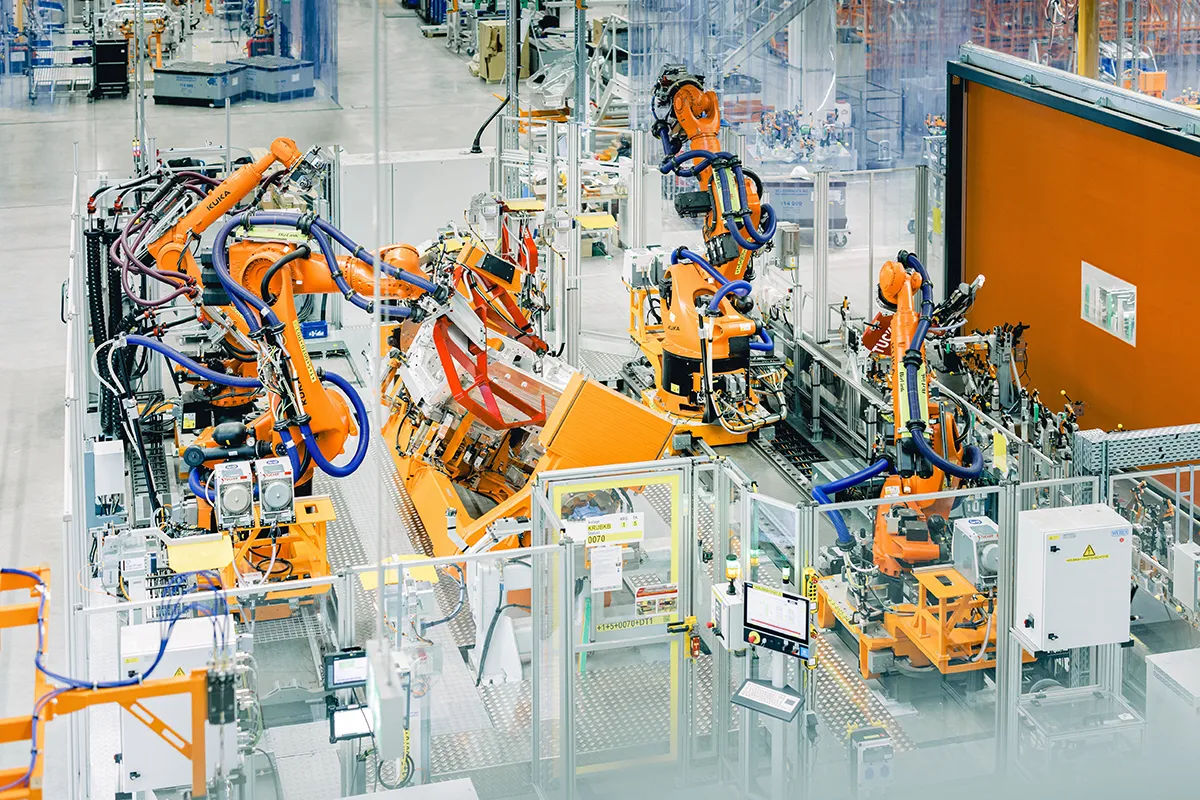
In 2022, Audi launched its Edge Cloud 4 Production (EC4P) initiative, a transformational project aimed at centralising factory control. Instead of relying on multiple standalone PLCs and industrial PCs, Audi plans to consolidate control logic on virtual PLCs (vPLCs) running in data centres kilometres away from the factory floor. Virtualisation technology has transformed IT in recent years. IT/OT convergence is now bringing this technology to OT. As manufacturers prepare their factories of the future for scalability, automation and ease of maintenance, PLC and PLC runtime suppliers are following the example of the IT sector and have begun offering vPLCs.
Still at an early stage of development
Research has identified four key technical requirements suppliers must meet before vPLCs can fully replace traditional PLCs: support for control tasks, functional safety, portability of control logic and redundancy. The more of these requirements suppliers meet and improve on, the more mature their vPLCs become. In general, vPLCs are currently capable of performing basic control tasks, with the following limitations:
- Support for control tasks: no vPLC supports control tasks requiring an execution time of less than 1 ms.
- Functional safety certification: no vPLC currently publicly supports functional safety certifications required where operational safety is paramount (IEC 61508 is the foundational standard for functional safety in electrical, electronic and programmable electronic systems).
- Portability of control logic: most vPLCs cannot switch seamlessly between different runtimes (for example, running on supplier A’s runtime and supplier B’s runtime) without code changes, meaning they are not truly hardware-independent.
- Redundancy: most vPLCs have no redundancy. If several vPLCs are installed on a centralised server and the server fails, the vPLC runtimes and their ability to execute control logic fail too.
Automotive sector leads the way
So far, this low level of maturity has limited wider adoption. Nevertheless, the research finds that early adopters of vPLCs are emerging in the automotive sector, which accounted for almost a quarter of the still nascent vPLC market in 2023. What factors could drive wider implementation?
- Operational improvements: vPLCs can be managed through a single central interface, simplifying tasks such as updates and providing centralised access to all PLC data.
- Flexibility: decoupling the runtime from the hardware avoids vendor lock-in, allowing users to adapt and deploy applications to meet their own requirements without depending on vendor-specific tools. In addition, PLC runtimes can be deployed on the same hardware to meet changing operational needs without increasing hardware requirements.
- Cost efficiency: multiple PLCs can be consolidated on a single hardware platform, eliminating the need to purchase several physical PLCs. vPLCs also offer lower replacement costs, as any non-proprietary hardware can be used and replacing a vPLC is largely a matter of updating it.
The future of vPLCs?
Although manufacturers such as Audi are beginning to use vPLCs, the vPLC market is still in its infancy and currently accounts for only a very small share of the total PLC market. By 2030, however, a quarter of new PLC sales could be virtual. Several suppliers are currently pushing the boundaries of virtual PLCs, making it possible that by 2030 they will achieve SIL3 certification, guarantee low speeds (but not high speeds) and support redundancy. This means vPLCs will be an attractive option for many manufacturers. However, some manufacturers will need a higher level of maturity in 2030 and will therefore still decline to adopt virtual PLCs. At the same time, many manufacturers that could switch to virtual PLCs are likely to continue buying traditional PLCs because of their reliability and low purchase cost.
Question about this story? Ask your question
Keep following this
Get an email when a new story is published. No account needed.
- ThemeFrom design to flexible machine
- SubjectSoftware, IT, OT & cybersecurity







