The new IE5 standard raises the bar for energy efficiency in industry
~ The updated IEC 60034-30-1 framework gives engineers clearer guidance on specifying high-efficiency motors ~
The updated IEC 60034-30-1:2025 standard has introduced IE5 as a defined motor efficiency class, giving manufacturers, engineers and end users a clearer benchmark for specifying high-efficiency motors. For industrial sites where pumps, fans, compressors and conveyors often run continuously, this change can have a significant impact on energy costs over the life cycle. WEG, the global manufacturer of motors and drives, is supporting customers through this transition with an application-focused portfolio that includes motors meeting or exceeding IE5 efficiency levels, alongside technical support to assess compatibility, payback and total cost of ownership (TCO).
The revised standard IEC 60034-30-1 from the International Electrotechnical Commission (IEC) provides a transparent framework for classifying motor efficiency in international markets, making it easier to compare different technologies and applications. By setting minimum efficiency levels for a broad range of motor types, the standard creates a consistent benchmark for manufacturers, engineers and end users.
“As industrial energy demand continues to grow, the updated IE5 standard provides clearer direction for the future development of motors,” said Marcio Yoshikazu Ematsu, European Marketing Manager at WEG. “By combining improved efficiency benchmarks with practical implementation guidance, IEC 60034-30-1 helps industry reduce energy consumption while maintaining performance, reliability and operational flexibility.”
The new standard introduces updated efficiency tables, clearer guidance on requirements for standard power classes and practical insight into higher-efficiency motor technologies. It also enables more consistent global classification, making it easier to compare products, meet regional performance requirements and simplify specifications, procurement and system design across multiple markets.
“WEG already manufactures and supplies motors that can exceed IE5,” added Ematsu. “Our portfolio covers the full range of IE efficiency classes. This is backed by technical expertise that helps customers evaluate potential energy savings, assess compatibility with existing installations and identify the most cost-effective upgrade route.”
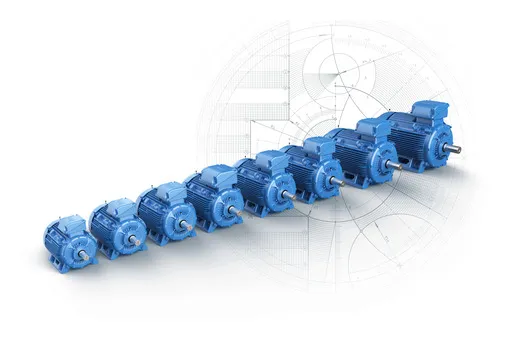
Technologies already available on the market that meet these higher efficiency levels include WEG’s W22 series of induction motors. The W22 motor series has recently been expanded with the W22 Prime, which delivers IE4 and IE5 efficiency while retaining direct-on-line (DOL) operation and compatibility with standard frame sizes, enabling straightforward upgrades without additional system complexity.
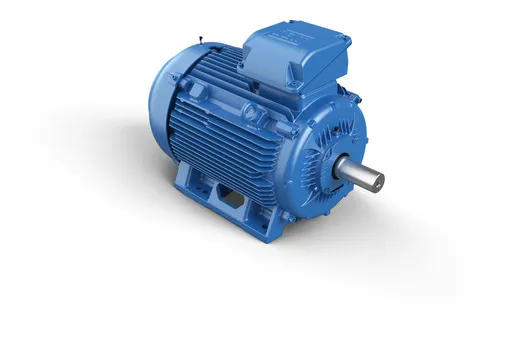
In addition, the W23 Sync+ and W23 Sync+ ULTRA motor range uses synchronous reluctance permanent magnet technology to achieve higher efficiency and power density, reducing losses in continuous-duty applications such as pumps, fans and compressors.
For industry, the impact of IE5 is closely linked to long-term performance. Motors in applications such as pumps, fans, compressors and conveyors often run continuously for years, so even small efficiency gains can significantly reduce energy consumption and TCO.
Compared with IE3 motors, IE4 technologies can reduce energy losses by around 15 to 20 per cent, while IE5 technologies can deliver a reduction of 30 to 40 per cent, depending on the application.
The standard also emphasises that the highest efficiency class is not always the most suitable solution for every application. Factors such as the duty cycle, starting requirements, installation constraints and system integration must be carefully weighed to ensure optimum performance and cost-effectiveness.
“Understanding how efficiency improvements translate into actual operational savings is crucial, particularly in applications where motors run continuously and energy consumption accounts for a significant share of life-cycle costs,” added Ematsu. “We support customers in meeting IEC 60034-30-1 and related standards through a combination of compliant motor technologies and application-focused engineering.”
The new IE5 classification also provides a clearer basis for technical discussions between manufacturers, specifiers and end users. Because efficiency can now be assessed more consistently across different power classes, frequencies and motor technologies, customers can compare upgrade options more accurately and select motors based on the specific conditions of their application.
Visit WEG’s website for more information about WEG’s high-efficiency motors and technical support.
Een zakelijke vraag aan WEG Benelux S.A.? Get in touch
Companies in this story
Keep following this
Get an email when a new story is published. No account needed.
- SubjectMotion, gears & drives
- CompanyWEG Benelux S.A.