Investing in vision technology pays for itself quickly
Text Valérie CouplezImage Induvido
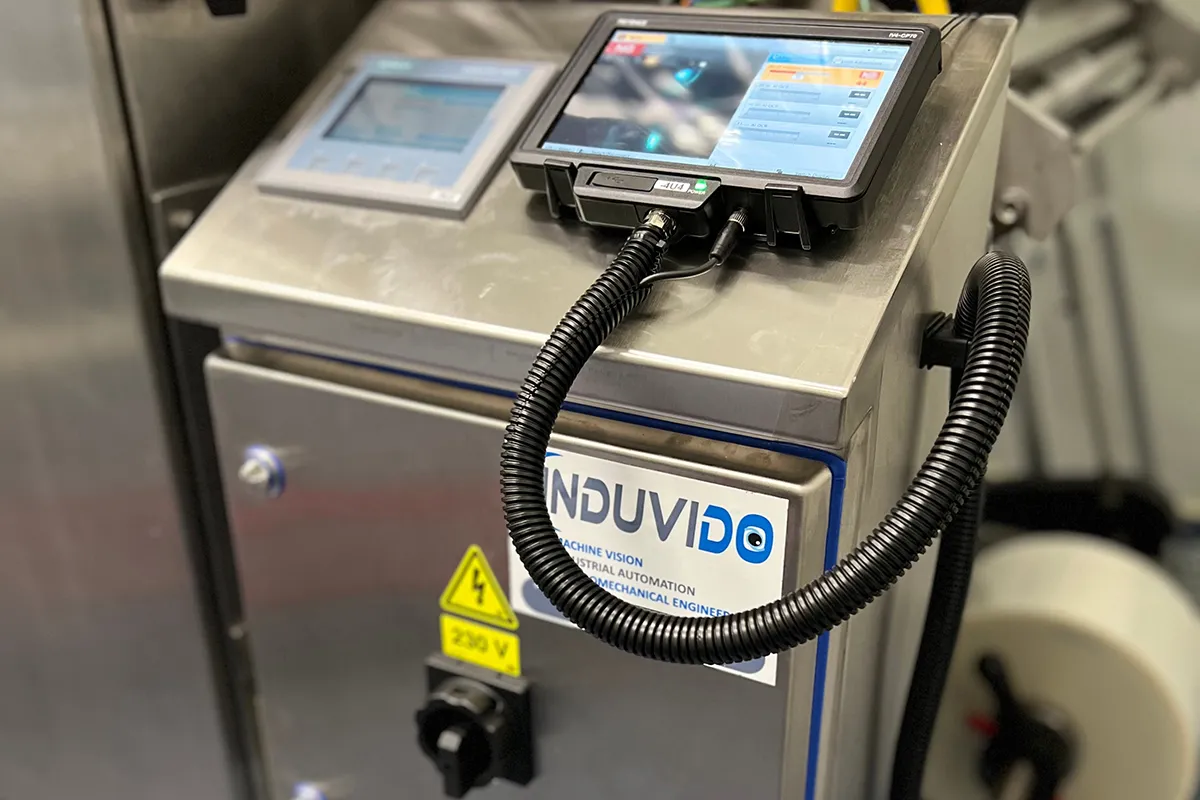
Vision and the AI revolution
There is no field where the AI revolution has gained such a firm foothold as vision technology. What is possible today is a world away from how quality control used to be carried out. The barriers to getting started are falling, while the impact on efficiency and costs is growing. Yet one factor remains crucial: application expertise. The right combination of technology, integration and process insight still makes the difference between a camera that is simply ‘there’ and a vision solution that delivers value every day.
A classic example is a blister pack containing five chocolates. In the past, a vision system was built entirely around a single inspection task:
- Do you want to count the items?
- Do you want to check for breakages or other defects?
The software was trained using standard tools to recognise what was ‘good’ and ‘bad’, and you had to decide in advance exactly which deviations you wanted to detect. With AI-based vision, the system looks at the product much like a human would. It searches for different types of defects, foreign objects, colour deviations and contrast differences on its own, without having to explicitly programme every possible fault. This makes inspections more targeted, robust and much more accurate.
The power of Keyence in practice
Programming has not disappeared entirely, but it is no longer rocket science. Keyence technology gives companies access to user-friendly tools that enable them to:
- refine existing detections
- add new products to a line
- retrain or test inspections
Keyence’s high level of innovation plays a major role here. Updates are released regularly, particularly in the field of AI, and the machine vision and lighting portfolio is broad enough to put together a tailored solution each time. The software is also almost always freeware, further lowering the barrier to entry.
Lower barriers, but expertise is still essential
There are several reasons why vision technology is gaining ground:
- AI makes systems smarter and more flexible;
- systems have become much easier to use;
- the price of cameras and lighting has fallen.
Companies looking only at the hardware, the camera and lighting, can now build a simple application for around 6,000 euros. But hardware alone does not deliver reliable quality control, as many companies have learnt the hard way in recent years. There are still plenty of cameras in industry that have never really worked, often because the technology was not yet mature or because integration and automation were underestimated. A good vision system takes more than mounting a camera. It requires knowledge of the process, lighting, optics, data and machine integration. A vision test or proof of concept is an effective way to bridge this gap: within a few hours, it can establish whether the technology can reliably handle an application, either as a retrofit on an existing line or in a separate inspection cell, what the investment will be, and what savings or quality improvements it can deliver.
Where the gains lie: automated quality control
There is still enormous untapped potential in automated quality control. In many production environments, operators still spend entire shifts alongside the line visually inspecting every product. A camera system does not get tired, take industrial action or sleep. It can only improve as it is further trained and optimised. Companies that experience the savings and consistency of automated vision soon roll out the technology to other products and lines. In time, machine vision will no longer be a luxury but a necessity: scarce employees can be assigned to more meaningful, higher-value tasks, while cameras take over repetitive inspections.
From custom solutions to standardised systems
Today, the focus is mainly on retrofits and turnkey solutions:
- integrating vision into existing lines
- engineering and automation around the inspection
- custom-designed inspection cells for more complex applications
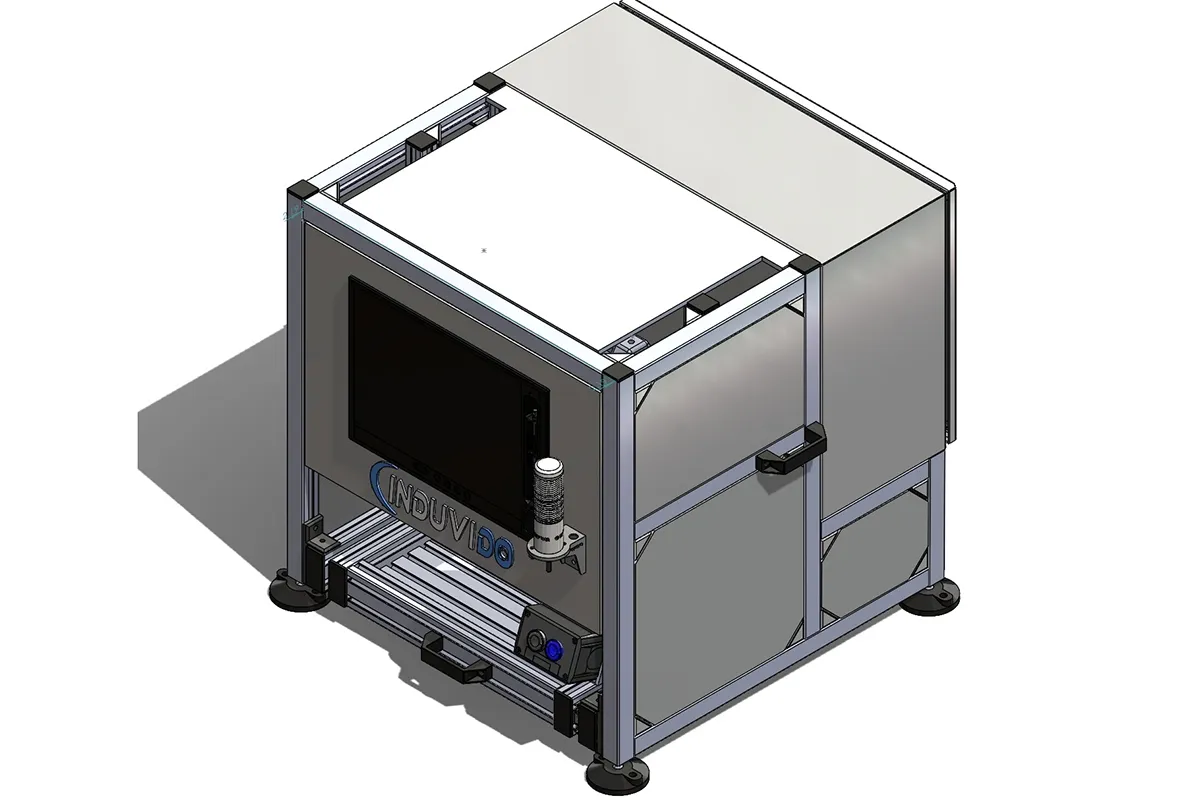
Inspection cells are becoming particularly important. It is not always possible to get everything just right on an existing line, whereas a separate cell makes it possible to inspect every critical corner of a product under ideal conditions. In the longer term, vision technology is moving increasingly towards standardised solutions for recurring needs in the market. These include turnkey vision solutions for typical inspections, which can be rolled out and adapted quickly. The coming years will be shaped by this professionalisation and standardisation. Companies that get started now will build up experience and reap the benefits of a structured approach to vision sooner.
Een zakelijke vraag aan INDUVIDO? Get in touch
Companies in this story
Keep following this
Get an email when a new story is published. No account needed.
- ThemeProcess measurement and control
- SubjectSensors & vision
- CompanyINDUVIDO