Industry 4.0, energy management and sensor technology: Koen Vermeren (Gefran Benelux) on the factory of the future
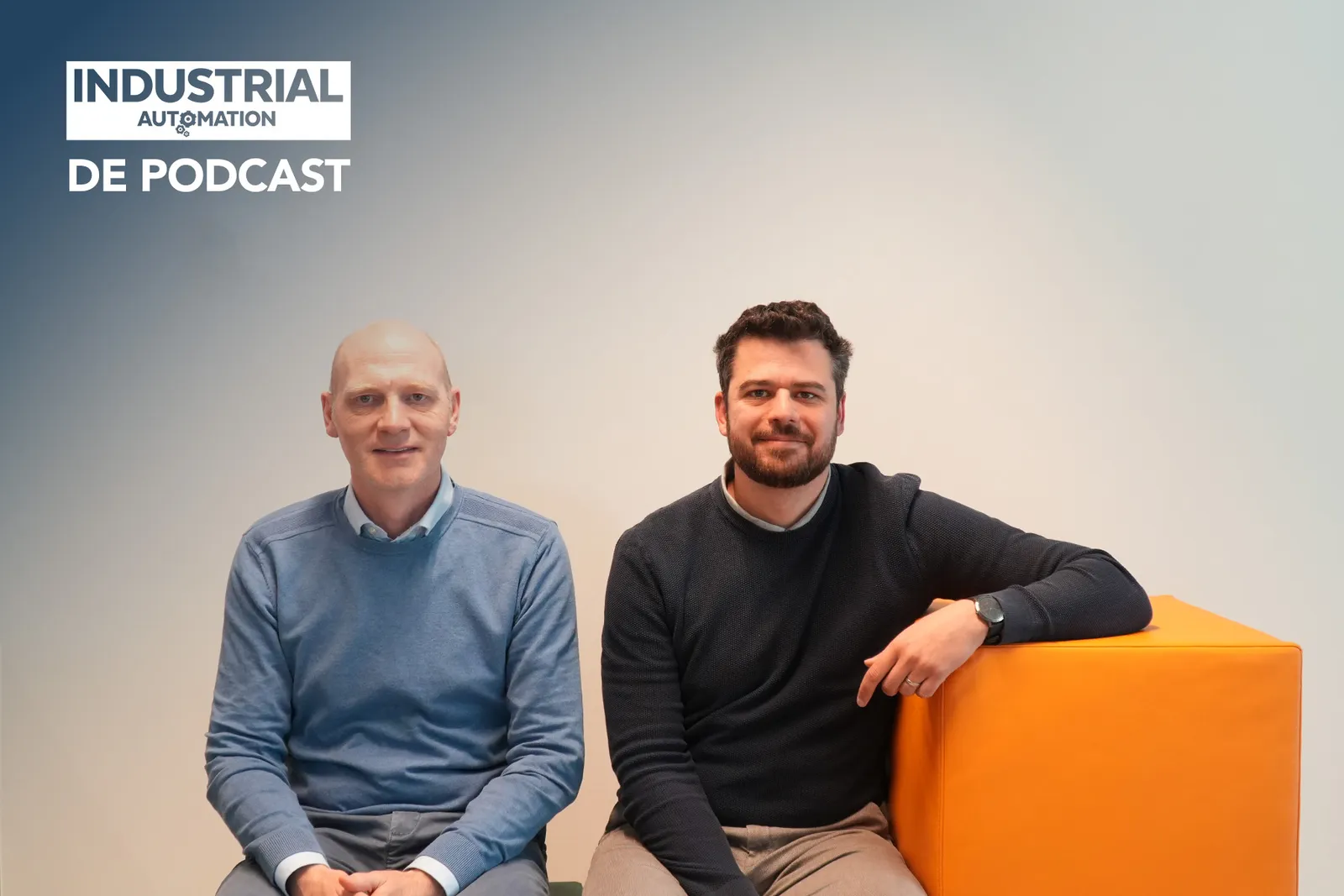
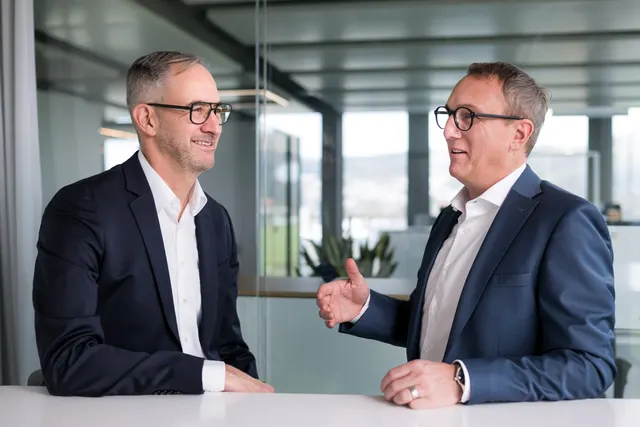
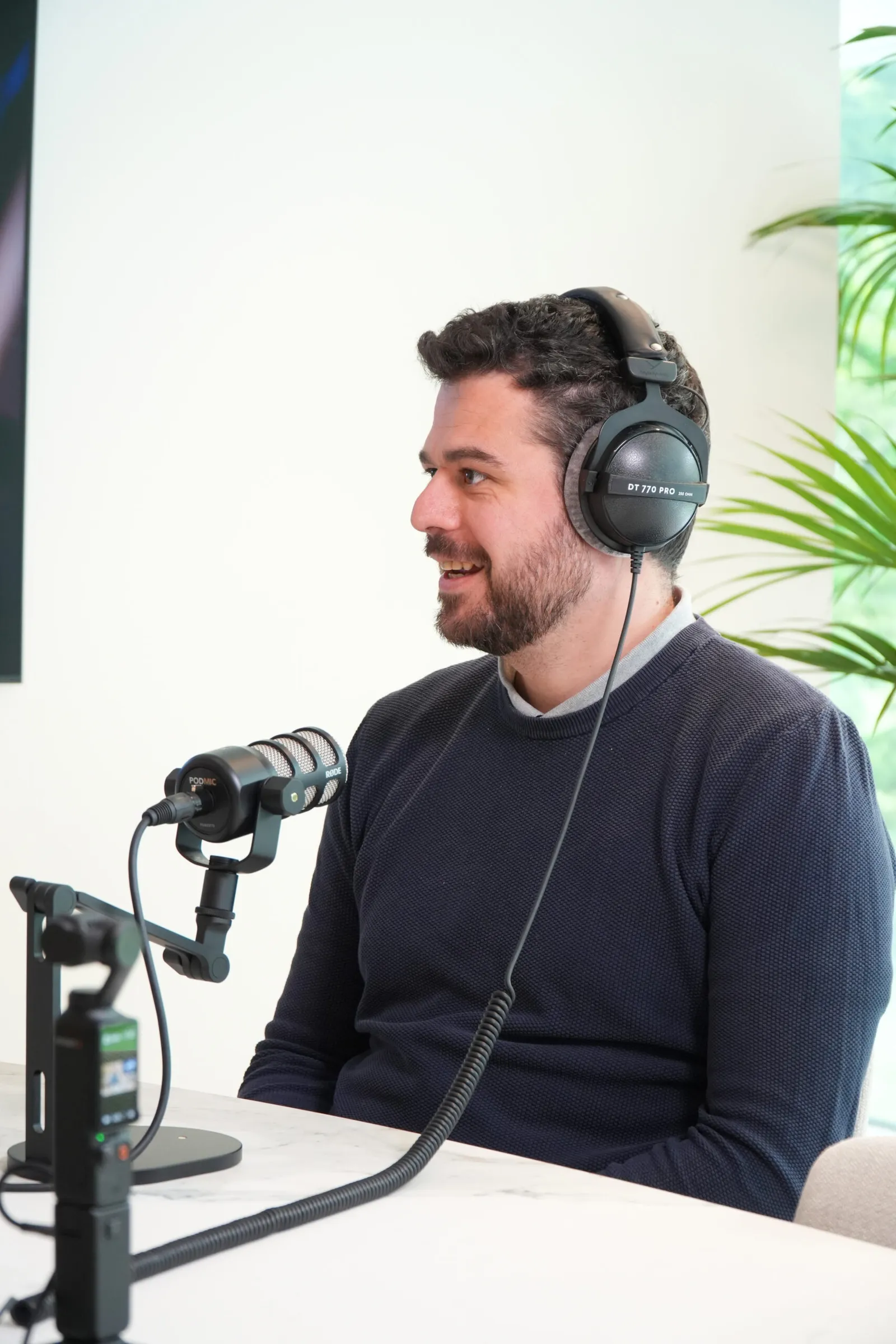
How can sensors, measurement and control technology contribute to more efficient and sustainable production processes? In this episode of the Industrial Automation Podcast, Björn Crul speaks to Koen Vermeren, General Manager of Gefran Benelux. They discuss the role of sensor technology in the plastics industry, energy efficiency through smart power controllers, the rise of Plastic to Chemicals and the challenges of digitalisation, connectivity and Industry 4.0. Koen also offers an insight into Gefran’s culture of innovation and shares his vision for the future of energy management, industrial automation and smart machines.
A business enquiry for Gefran Benelux? Get in touch
Full transcript
All chapters (15)
- Introducing Gefran Benelux and measurement and control technology
- Gefran’s origins in the plastics industry
- Expanding into other sectors across the Benelux
- Challenges facing industrial SMEs and the role of automation
- Technical challenges with power controllers
- Measurement, energy consumption and safety
- Innovation and new applications
- Mercury-free sensors
- Connectivity, data and cybersecurity
- Plastic to Chemicals as a growth market
- Family-run culture and growth at Gefran
- From inside sales to General Manager
- Training and roles at Gefran
- Looking ahead: energy management and smart machines
- Closing remarks
Introducing Gefran Benelux and measurement and control technology
Björn Crul Hello listeners, and welcome to this new Industrial Automation podcast. Our industry is in the midst of a major transition to Industry 4.0, with extensive digitalisation and automation being introduced in so-called Factories of the Future. One supplier playing a prominent role in this process is Gefran Benelux, which specialises in measurement and control technology for automation. My name is Björn Crul, and my guest today is Koen Vermeren, General Manager of Gefran Benelux. Hello Koen, welcome.
Koen Vermeren Hi, hello.
Gefran’s origins in the plastics industry
Björn Crul Gefran began as a supplier to the plastics industry, developing measurement and control technology for companies in the sector. Could you explain what that means in practice, and why it is such a technical challenge?
Koen Vermeren Gefran is indeed an Italian company. It was founded in 1969. Its main business at the time was supplying sensors and measurement and control technology to the plastics industry. Why is that so important? You might think: plastic is easy, it just involves an extruder or an injection moulding machine. But it is actually a very delicate process. What we mainly want to measure is the pressure and temperature of the material, the polymer, because these determine the quality of the end product. Absolutely, yes. And that is precisely where it is so important. A deviation in pressure or temperature can prevent the polymer from being extruded correctly. This results in lost production. And lost production also means lost money, because a lot of product has to be thrown away. This is the area in which Gefran initially specialised to a great extent. Gefran’s flagship sensor is the melt pressure sensor, which measures pressure at high temperatures. It is not just a standard pressure sensor, because it gets far too hot close to the polymer. The electronics have to be positioned further back. Gefran is a global leader in this field, and it has grown substantially on the strength of this technology. It still accounts for a very large part of our core business.
Read the full transcriptCollapse transcript13 more chapters
Expanding into other sectors across the Benelux
Björn Crul That is one part of the business. Of course, over the years you have also expanded into other sectors. What types of customers do you serve in the Benelux?
Koen Vermeren The plastics industry remains our biggest sector. But over the years we have also expanded into various other industries that can use our technology and sensors. We now supply more than just melt pressure sensors: position sensors, standard pressure sensors, load cells and so on. But we also supply everything that goes with them. To go back to the extruder, that includes controlling the heating elements around its barrel. We did that from the beginning, initially with solid-state relays and now increasingly with power controllers. Those power controllers have opened up a whole new field. We now cover everything where electricity needs to be controlled. This is very topical today, so there are quite a lot of applications. As for sensors, one example is what we call the mobile machine market. Think of tractors and machinery used in construction, such as tipper trucks, which are fitted with our sensors to measure tilt or angular displacement. We also serve the food industry, for example with chocolate-making machines. We are active in pharma and metallurgy too. It is a very broad range. And you will never really see us as an end user. When you eat a praline, you are not going to think, ‘Oh, Gefran.’ We are a component in the machine that makes the praline. So you will never see us, but we are very much present in a wide range of industries and applications.
Challenges facing industrial SMEs and the role of automation
Björn Crul There are a great many industries and applications, and of course many industrial SMEs in this country too, all facing multiple challenges and transitions at the same time. The energy transition, the need to become more sustainable, regulation. Automation can be part of the solution. When you talk to customers today, what are they working on? What questions do they ask you?
Koen Vermeren When you talk about automation and energy, it is really about efficiency and saving energy or costs. In terms of efficiency, plastic used to be extruded without measurement or control. It was a matter of trial and error, resulting in a lot of lost production. When we introduce technology and sensors, we can measure the process and get production up and running correctly more quickly. That is the efficiency aspect. Energy management brings us back to our power controllers, which take into account how to minimise the load on the electricity network. A conventional solid-state relay is either on or off, allowing everything through or nothing at all. A power controller does the same job for conventional heating elements, but we can connect them in a network so that they communicate with each other, with the solid-state relays, and determine when each relay should switch on and when each circuit should be activated. This keeps the total load on the network as low as possible. There is a lot of interest in this today, especially when you consider that we are charged for peak power and peak currents. We definitely want to keep that under control and avoid everything switching on at the same time. That sounds very simple, and it is in principle if you need 100 per cent. But anything in between makes it more difficult. The controllers need a certain level of intelligence to make the process as energy efficient as possible.
Technical challenges with power controllers
Björn Crul I imagine power controllers are one of the challenges for you too. They range from 40 to 600, perhaps even 1,000 amps. What challenges does that pose for you as the people who have to develop them?
Koen Vermeren The main challenge is heat. That is a major issue, because these devices generate an enormous amount of heat. It has to be dissipated correctly. There is also a lot of diagnostic data behind them. Today, we want to know: is it working, is it efficient, is there a problem with the load or not? The technology built into these devices ensures, or checks, that the load I am controlling is actually doing something. If you have a single conventional resistor, that is simple. If it breaks, no current flows. But if you have several resistors in parallel, for example because you have several zones, we can detect if one, two or three of those resistors have failed. You can then tell the controller what you want it to do with the process. Either you stop, because three failed resistors would be disastrous for the process. Or you say, ‘No, it doesn’t really matter. I want the remaining resistors to compensate for the three that have failed. I’ll replace them later.’ That depends very much on the production process in question. If the resistors are heating a tank of water, for example, it does not matter if other resistors compensate by heating more. The overall heat in the tank, or the total energy in the heated tank, needs to be right. But if we are talking about laminate, where the top layer is heated to create a characteristic print or imprint, every centimetre of the laminate board is heated. If a resistor on the left has failed, I do not want all the resistors on the right to compensate, because that would result in a huge amount of lost production. The right-hand side would be overheated, so the quality would be poor. The left-hand side would not be heated enough, so the quality would be poor there too. The controller needs to say: ‘OK, stop. You need to replace it, then we can start again.’ That is also part of the quest for efficiency.
Measurement, energy consumption and safety
Björn Crul It really comes down to the principle that you can only manage what you measure, and being able to clearly monitor what is happening in production. Do your applications also play a role in areas such as safety or measuring energy consumption?
Koen Vermeren Not really when it comes to safety. Measuring energy consumption, yes, of course. The load you control already gives you that information. We can use it to calculate actual energy consumption. So they do play a role there. Not so much in terms of safety. We are really a component in the electrical cabinet. We do not build the entire electrical cabinet ourselves. We have partners we work with on projects, and they take care of safety. Of course, there are systems that can detect a short circuit, for instance. If my power controller detects one, it generates an alarm and can switch off, depending on what the user wants. It can also detect things like earth leakage or overcurrent. So our role in safety is limited in scope.
Innovation and new applications
Björn Crul We have talked a little about the products you have developed, what they are used in and what they do. Let’s return to Gefran, a highly innovation-driven company. How do you go about developing new applications?
Koen Vermeren New applications? Ultimately, our products are developed mainly in Italy, where our headquarters are based. There is extensive collaboration with all the universities in the northern Italian region, which is also where most industrial activity takes place. R&D works very closely with various universities in Milan, Bergamo and elsewhere. For example, they have a programme that brings doctoral students into the company to set up a working group for an academic year. This may continue in the years that follow, and it does lead to new products. One of our sensors, the Twist, for example, is based on the Hall effect. It is very specific, but not the standard Hall effect. There is a special technology behind it, developed by students at Politecnico di Milano. There is no development locally in Benelux. What I can say is that our components are used by all the universities in Belgium, though that is more for research. Not necessarily research into those components, but, for example, a pressure sensor may be used in existing university research.
Mercury-free sensors
Björn Crul So there is a lot of work going on on new applications based on your technology. One of the solutions you are currently working on is mercury-free sensors. What is the alternative, and how far have you got with it?
Koen Vermeren Mercury-free sensors have been a topic for a long time. Initially, melt pressure sensors were made using mercury as the filling medium. A melt pressure sensor contains a small capillary that transfers the pressure to the electronics.
Björn Crul It’s a mini barometer.
Koen Vermeren Yes, that’s right. You can compare it to that. Why use mercury? Because its physical properties do not change much at high temperatures. I’m talking about compressibility, or changes in volume. Mercury is no longer a particularly good choice from an environmental point of view, so we need to look for alternatives. It was around ten years ago that a wide range of options and alternatives came onto the market. Before that, sodium-potassium was already being used as a liquid, as it has roughly the same incompressible properties. In the meantime, however, we have also developed a fluid-free sensor. This sensor no longer needs a filling medium, as the problem is solved entirely through technology. There are applications where mercury is still wanted and required. We do try to limit its use as much as possible, but sometimes that simply isn’t possible.
Connectivity, data and cybersecurity
Björn Crul Another trend is connectivity, data analytics and, of course, AI today. You told me that your sensors do not connect to the internet automatically. That is a deliberate choice.
Koen Vermeren Yes, that’s right. In a way, it isn’t our responsibility. We provide data. Our sensors can generate and measure data, then send it to a higher-level system. It is up to the end user to decide whether to share that data over the internet. We won’t do that on our own initiative, because it simply isn’t our responsibility. Some industries have intellectual property they want to keep to themselves. Not everyone just puts their data on the internet. Personally, we may not be too keen on doing that either.
Björn Crul It also creates a clear separation between operational technology and IT, which I imagine has advantages for cybersecurity too.
Koen Vermeren Yes, the main point is that we make all the available data accessible to the end user. That’s what it comes down to. Ultimately, I can certainly imagine, and this is also the case with the Internet of Things, that you can monitor your factory from a hundred kilometres away. That can be useful. But I’m not sure whether every parameter needs to be sent over the internet straight away. The key is to share the parameters that are useful. And, of course, you need to be careful about cybersecurity too. That’s not my cup of tea. That’s for IT specialists. We provide the sensors and actuators. That’s where our contribution ends.
Plastic to Chemicals as a growth market
Björn Crul Looking to the future, you’ve already said that there is still a lot of potential for your company. One of those new markets is Plastic to Chemicals, a growth market. Which projects are you helping to deliver in this area? And what role does your technology play in these processes?
Koen Vermeren That market is actually a great fit, because plastics is the sector where Gefran grew up. Power controllers have become very topical in recent years. Plastic to Chemicals brings the two together. It’s not so much about melt pressure sensors, but we do use our power controllers in the plastics industry. What we’re seeing a lot of is that recycling is very much in focus. Reusing plastics is very much in focus. With Plastic to Chemicals, we break plastic back down into its essential components so it can be reused. This happens in very large heating installations. In the past, these were typically gas-fired. We all know that energy prices are not great, whether based on gas or sometimes electricity. So we want to electrify these systems, replacing the gas-fired components with electric ones. That’s where our power controllers come in again. It goes back to what I mentioned earlier: how do we supply enough power? We’re talking about huge power levels, but we need to do it as energy-efficiently and cost-effectively as possible. We want to stop using gas and switch to electricity. Fine, but it has to be cost-effective. We are actively developing solutions with various parties, or they approach us to help support them or think things through with them. We have already completed a number of projects in this area, but it remains very much a current topic. In particular, we are now seeing hybrid installations where users can choose between gas and electricity, depending on which is most cost-effective at the time. This is something we need to pay close attention to in Belgium. Belgium is a fairly expensive country, so any opportunity to improve cost efficiency is welcome.
Family-run culture and growth at Gefran
Björn Crul I hear there is still plenty of potential for growth at your company. Looking back, the company has been around for almost 60 years and is still family-owned, under the leadership of the Franceschetti family. Is that family aspect still important? Does it play a role?
Koen Vermeren I honestly find it a very pleasant place to work. You can sense it too. The family is still very much involved. One of the founders sadly passed away about two years ago. His children, for example, are still actively involved in the company, and now his grandchildren have joined as well, which makes it a very pleasant place to work. In some ways, communication is also less hierarchical as a result. When I’m in Italy, for example, it’s always very pleasant and open. That may be where you notice the family atmosphere. As I said, it’s a great place to work. I think that has also helped me to grow personally within the company. That must have something to do with it too.
From inside sales to General Manager
Björn Crul Tell us about your career. You’ve been with Gefran Benelux for 14 years now, I think. How did you get started, and where are you today?
Koen Vermeren I started in inside sales. We don’t have production in Benelux, of course, so it’s all office work or technical advice. I simply started in inside sales, which was a great way to learn everything and become familiar with the subject matter, as well as get to know plenty of customers. We’re a small, close-knit team in Benelux. We can say anything to one another, and we’re constantly coaching each other too. I then moved from inside sales into the field as a sales engineer. At one point, I was given the opportunity to become General Manager, which was great. They gave me that opportunity even though I had no previous experience in the role. They believed in my potential, and I was able to take additional training courses. That helped me develop my skills. I’m very pleased with what I’ve achieved so far, and continue to achieve. That’s more or less been my career path.
Training and roles at Gefran
Björn Crul Are these the kinds of training programmes you still offer your staff today? I imagine you can’t just pick someone straight out of school who knows this niche inside out.
Koen Vermeren We actually do try to do that. Ideally, we hire someone for inside sales who has only recently left school. Why? Because we can still mould them to work the way we want. Of course, that has its advantages and disadvantages.
Björn Crul And what kind of people are you looking for?
Koen Vermeren We usually look for people with a technical background. Engineers, graduates, that sort of thing. Technical people who also have a certain commercial flair. They’re very hard to find.
Björn Crul You can teach someone with technical skills how to sell, whereas it may be harder to teach a salesperson the technical knowledge.
Koen Vermeren Yes, exactly. The other way around is harder. The questions we get tend to require a certain technical grounding. You need to understand the subject. And when you visit a customer and they explain a particular process, you need to be able to understand how it works and where we can help. But if we can’t help, we need to be able to say so. We don’t just sell something for the sake of making a sale. We genuinely want to add value and work with the customer to see how best to approach things and whether we really are the right solution to their problem. If you have purely commercial training, it’s harder to add the technical side than the other way round. So far, this approach has always worked. Everyone here, in inside sales, field sales and sales management, has a technical qualification or technical training from school. It’s working for now. We’re a very pleasant, close-knit team.
Looking ahead: energy management and smart machines
Björn Crul Well Koen, we’re almost out of time. Looking at all the developments in your markets, what do you expect over the next few years? And where would Gefran like to be in about five years’ time?
Koen Vermeren I think the evolution will continue to be in the energy business. Especially when we look at what we are already hearing a little about in China and elsewhere: battery technology, or how we can store energy. The first step may still be: how can we use energy efficiently? The next step will be how we can store energy. Power controllers are also suitable for this. We have even used melt pressure sensors in molten salt applications. There will be a lot of development in that area. Also, when I look at the mobile machinery sector, it really comes down to this: what gets measured gets managed. Capture as much data as possible from all the moving parts on, for example, a bulldozer or a crane. Why? For predictive maintenance, but also simply to find out: what is my machine doing? What is my machine doing wrong? What must my machine not do? How many operating cycles does my machine have left? Things like that. I think that is where the future lies, especially in energy management. I think we can still make a lot of progress there.
Closing remarks
Björn Crul Well Koen, I think that is a fitting conclusion to round off with. Thank you for this conversation. Ladies and gentlemen, if you would like to find out more about industrial automation, be sure to listen to our next podcast or visit the website industrialautomation.be. Thank you for listening, and until next time.
Companies in this story
Keep following this
Get an email when a new story is published. No account needed.
- ThemeProcess measurement and control
- SubjectProcess & instrumentation
- CompanyGefran Benelux