












Software, IT, OT & cybersecurity
The new Eplan Platform 2027: AI-integrated engineering and centralised cloud data
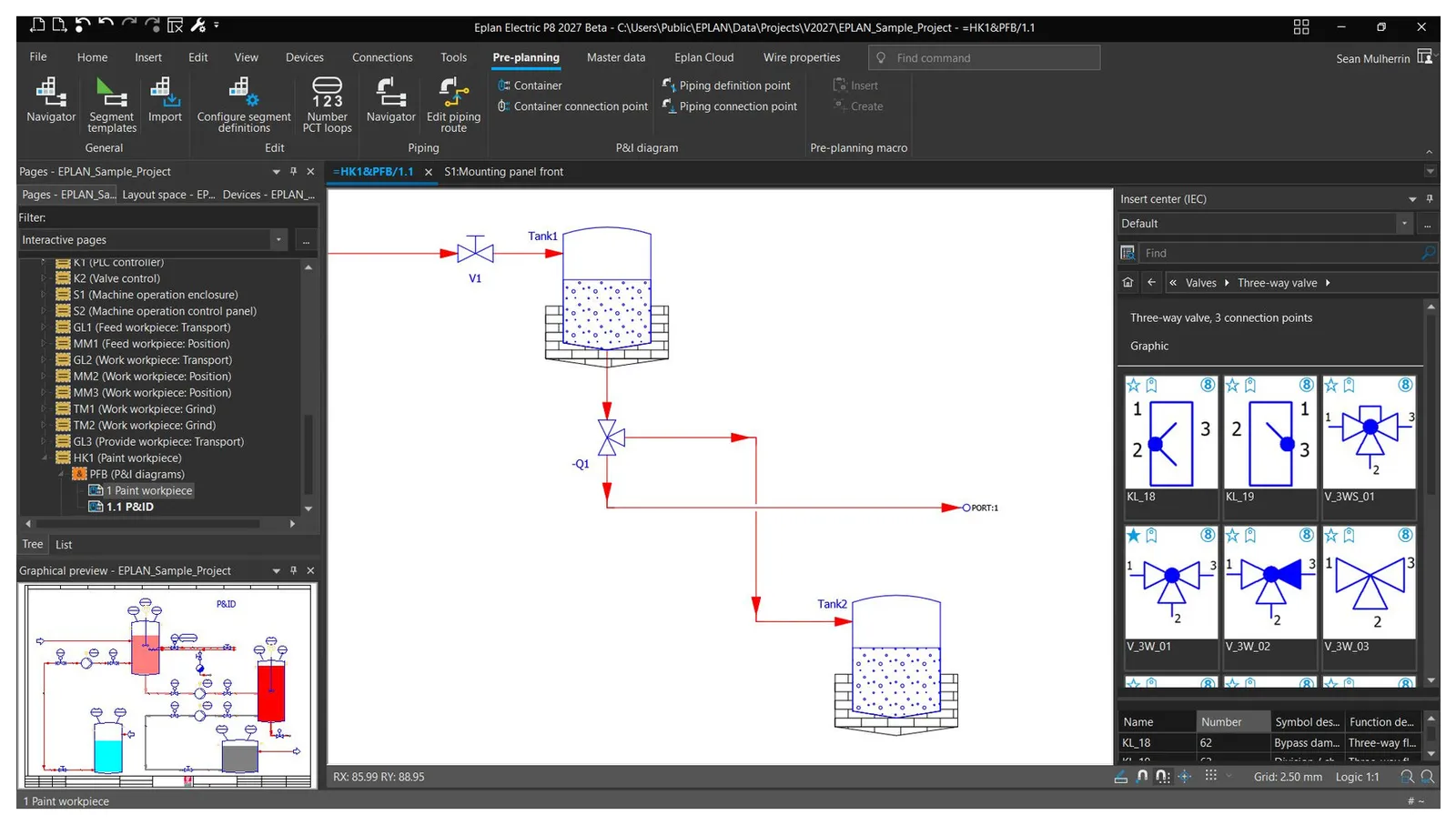
The Eplan Platform 2027, first unveiled in May at Eplan Next26, is now available. Users of the engineering software benefit from faster results in the process steps of preplanning, electrical engineering and control cabinet design. Another advantage is the integration of Eplan Copilot into the software. In version 2027, this new AI assistant is integrated directly into the platform and provides valuable support for day-to-day project work. In addition, the Eplan Platform is now even easier to integrate into existing IT environments.
Despite the wide range of more than five hundred improvements in the new Eplan Platform 2027, they all have one thing in common: they make project work easier and speed up engineering. A key innovation is the introduction of Eplan Copilot in the new platform. This AI-powered assistant, with its wide range of functions, has been available since early September. Initially, it serves as an internal knowledge base within the Eplan software. Users get a clear overview of Eplan’s expertise straight away and are guided towards the right solution based on verified documentation, even when dealing with complex questions.
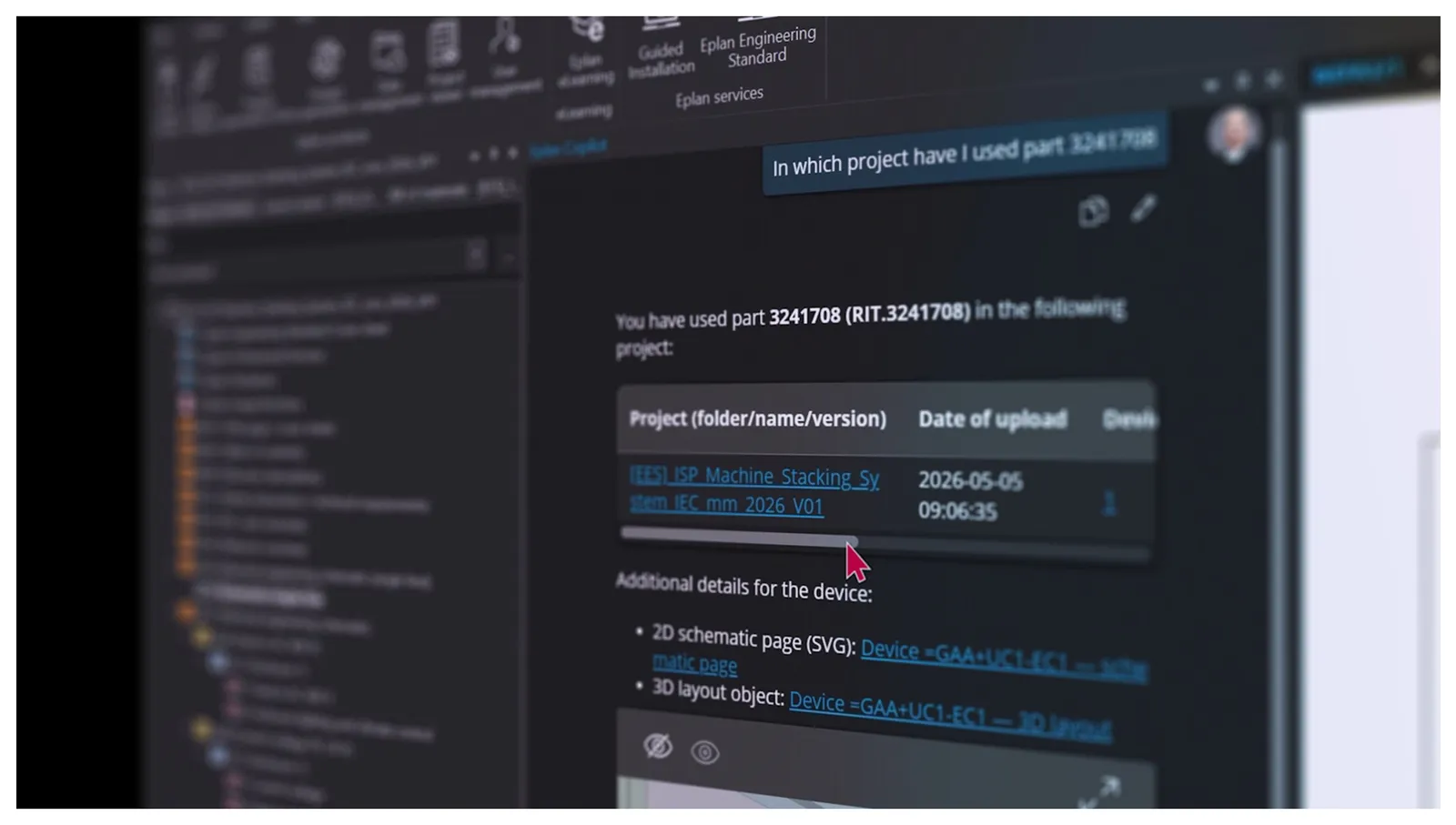
Copilot is also a powerful tool for tracking the use of articles. If engineers want to know which projects a particular product or component has been used in, they simply enter an article number. The AI searches all projects in the cloud and provides direct links to the project pages where the article has been used. Whether translating, simplifying menus, creating bills of materials or carrying out quality checks, users can interact with Eplan Copilot using voice or text prompts and make better use of Eplan’s extensive capabilities.
New: centralised data management in the Eplan Cloud
The enhancements to article management place a clear strategic focus on consistent, end-to-end data and efficient collaboration. With its new cloud-based article management and associated synchronisation capabilities, Eplan, the solution provider, is addressing a key requirement for modern, hybrid engineering environments. At the same time, this lays the foundation for consistent master data, digital twins and traceability across systems. These core functions are complemented by targeted improvements to searching, selection, transparency and data quality. This makes the day-to-day management of large article inventories significantly easier. Together, these improvements deliver a better-integrated way of working and significantly more efficient workflows throughout the entire engineering and lifecycle process.
Article and data management are now synchronised in the cloud
Looking at current article management processes, these are characterised by media discontinuities. In hybrid IT environments, companies work with cloud-based and on-premises systems at the same time. Different user interfaces, product data managed in multiple locations and limited remote access often lead to inconsistencies, additional maintenance effort and data gaps in the engineering process.
The new Eplan Platform 2027 brings greater clarity to this area and synchronises processes. By making data available from the Eplan Cloud, users benefit from a unified front-end workflow. The advantages are clear: product data only needs to be managed once and is automatically synchronised in both directions between the cloud and local systems (keyword: data management). This applies both to article data and to master data such as formulas, plot frames and symbol libraries, all of which can now be synchronised. At the same time, this workflow provides location-independent access to up-to-date article information. Users therefore achieve maximum data consistency, greater reusability and less effort in article management.
End-to-end processes take centre stage
The Eplan ecosystem is being further expanded with targeted additions for partner integrations. This expansion is driven by the growing need to connect engineering systems seamlessly with automation solutions and ERP/PDM solutions to prevent information silos. Improved integrations create end-to-end data flows between Eplan and leading partner solutions, such as Rockwell Emulate 3D, to give just one example. By importing Eplan data into Rockwell’s virtual testing and simulation environment, users can simulate and validate machine and plant configurations, including the actual control logic (PLC), long before the hardware even exists. Additional integrations with ERP/PDM systems enable transparent and auditable synchronisation of articles, significantly improving long-term data reliability.
In conclusion
The Eplan Platform 2027 stands for connected, AI-supported engineering. Further developments in preplanning, improvements to article data management and the handling of components, enhanced collaboration and integration, and not least the integration of Eplan Copilot, make it clear that users of the Eplan Platform 2027 can access relevant information more quickly, make more consistent use of existing data and focus more on their core engineering tasks.
Een zakelijke vraag aan EPLAN nv? Get in touch
Companies in this story

Keep following this
Get an email when a new story is published. No account needed.
- ThemeFrom design to flexible machine
- SubjectSoftware, IT, OT & cybersecurity
- CompanyEPLAN nv







