“From automated checks to data-driven production optimisation”
RFID helps make production and logistics smarter
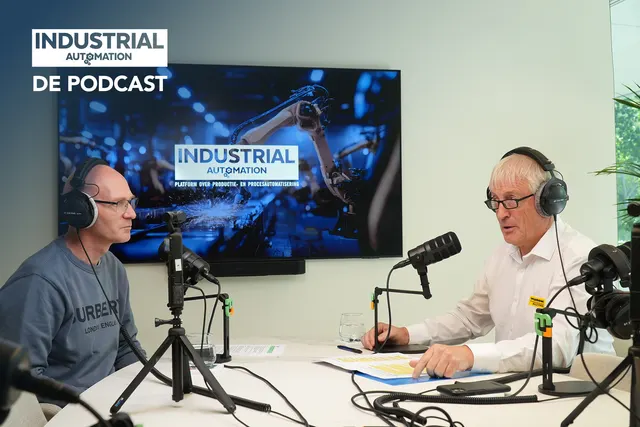
Speed and efficiency are more crucial than ever for manufacturers and logistics companies. Track-and-trace solutions such as RFID offer plenty of opportunities. But when is RFID a better choice than a conventional barcode? And how can you ensure that an investment in such a system actually pays off? In a new Industrial Automation podcast, Egon Guilliams of Turck Multiprox explains how companies can use the right technology to make their processes more transparent, efficient and reliable.
In a world where supply chains are under pressure, traceability is becoming a requirement and customer expectations are creating time pressures, manufacturing and logistics companies are looking for smart solutions for recording and tracking goods. They want to know which goods are entering or leaving their warehouse, where parts are during the production process and whether the right products are being shipped at the right time.
Automatic identification technologies, also known as AutoID, make it possible to collect this information quickly and accurately. “RFID is one option, but it needs to be suited to the customer’s specific requirements and processes. Sometimes a barcode system is a logical first step. It is simpler and less expensive to implement,” says Egon Guilliams.
More control, fewer human errors
The added value of RFID lies in its ability to identify products automatically, without needing to see every label or scan it manually. “Suppose you want to check the contents of a box before it is shipped. With barcodes, you have to open the box and scan every product individually. An RFID solution lets you check the entire contents automatically, in one go and in a matter of seconds.” The same principle applies to entire pallets and to checks on incoming goods.
There are several RFID systems, including High Frequency (HF) and Ultra High Frequency (UHF). “If you want to identify one specific product very accurately on a conveyor belt, High Frequency may be the right choice. Ultra High Frequency is particularly suitable for logistics applications where you need to read many tags at once from a greater distance,” explains Guilliams.
Test first, invest later
One of the biggest pitfalls in RFID projects is that companies base their choice too heavily on the price of a tag. “Choosing the wrong tag, one that is not suited to the conditions in which it will be used, can have major financial consequences. Suppose you fit 100,000 reusable transport items with a tag, only to find afterwards that it does not work properly. Then you have to start all over again.”
That is why Turck Multiprox takes a systematic approach to RFID projects, using feasibility studies and practical tests. “We never start a project without a Proof of Concept. We want to establish what works well, and where problems might arise,” says the track-and-trace expert. “Only once the technology has proved itself in a realistic environment do we develop and scale up the solution. This limits the risks for customers and allows them to roll out the technology in stages.”
From automated data capture to Industry 4.0
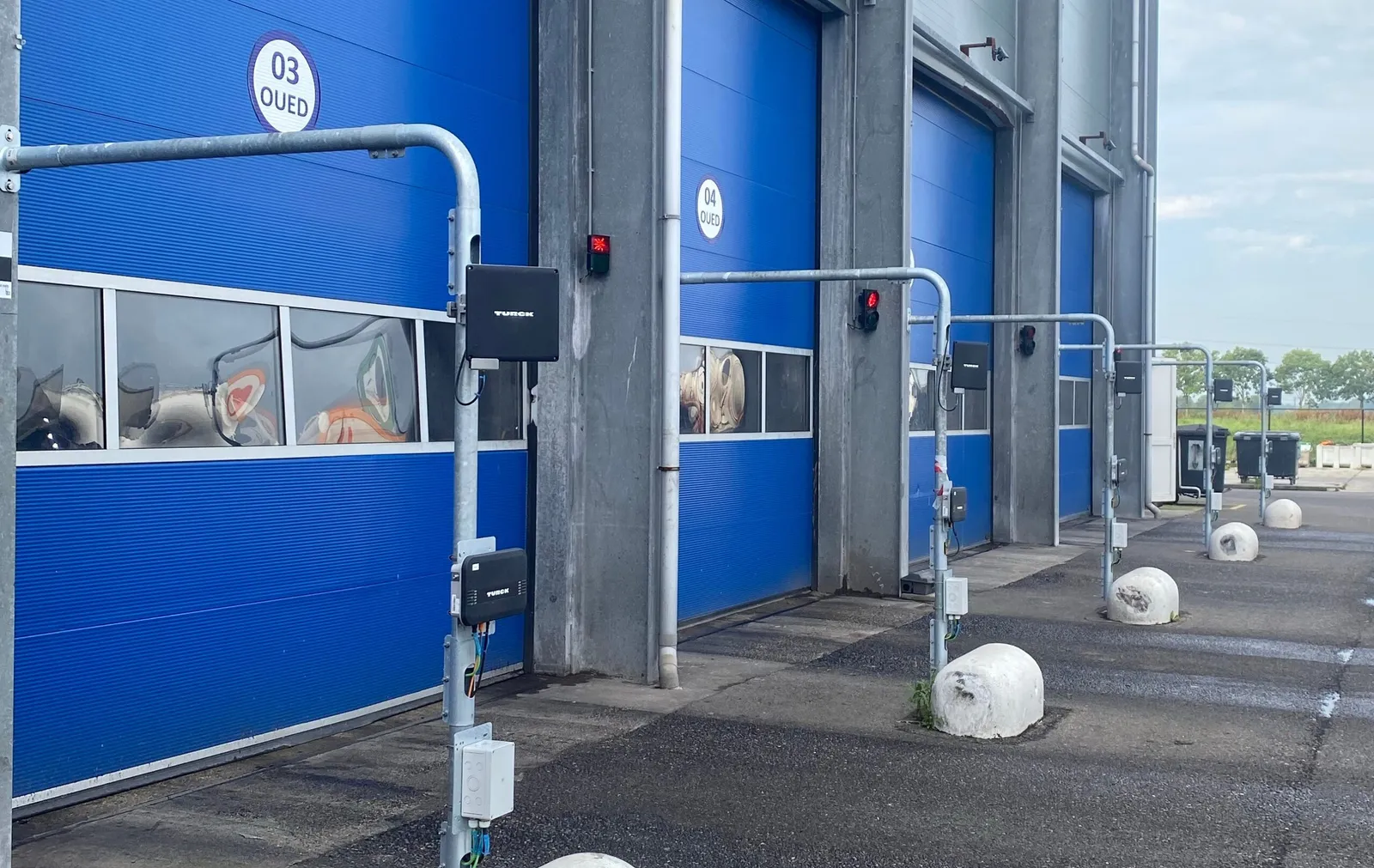
RFID can do much more than scan products. RFID gates, RFID validation stations and RFID-equipped forklifts allow companies to record and monitor goods movements automatically. Real-time Location Systems (RTLS) can provide a much more accurate picture of stock levels, albeit at a higher investment cost.
“But when you know at any given time which goods you have in stock and where they are, you can often operate with smaller inventories. This ties up less capital in the warehouse and may free up space for other activities,” says Egon Guilliams.
AutoID is also an important step in the further digitalisation of manufacturing and a stepping stone to Industry 4.0. By connecting RFID systems to ERP or MES software, a company gains a continuous flow of information about exactly what is happening on the shop floor. “This makes it possible to analyse processes, build a digital twin of the production environment or support artificial intelligence applications, helping companies make smarter decisions. By analysing all the data, companies can identify patterns and uncover opportunities for optimisation that might otherwise never come to light.”

Een zakelijke vraag aan TURCK MULTIPROX nv? Get in touch
Companies in this story
Keep following this
Get an email when a new story is published. No account needed.
- ThemeData from shop floor to decision
- SubjectSensors & vision
- CompanyTURCK MULTIPROX nv