Software, IT, OT & cybersecurity
Old factory, state-of-the-art operations, outstanding results
Text Valérie CouplezImage Schneider Electric & Valérie Couplez
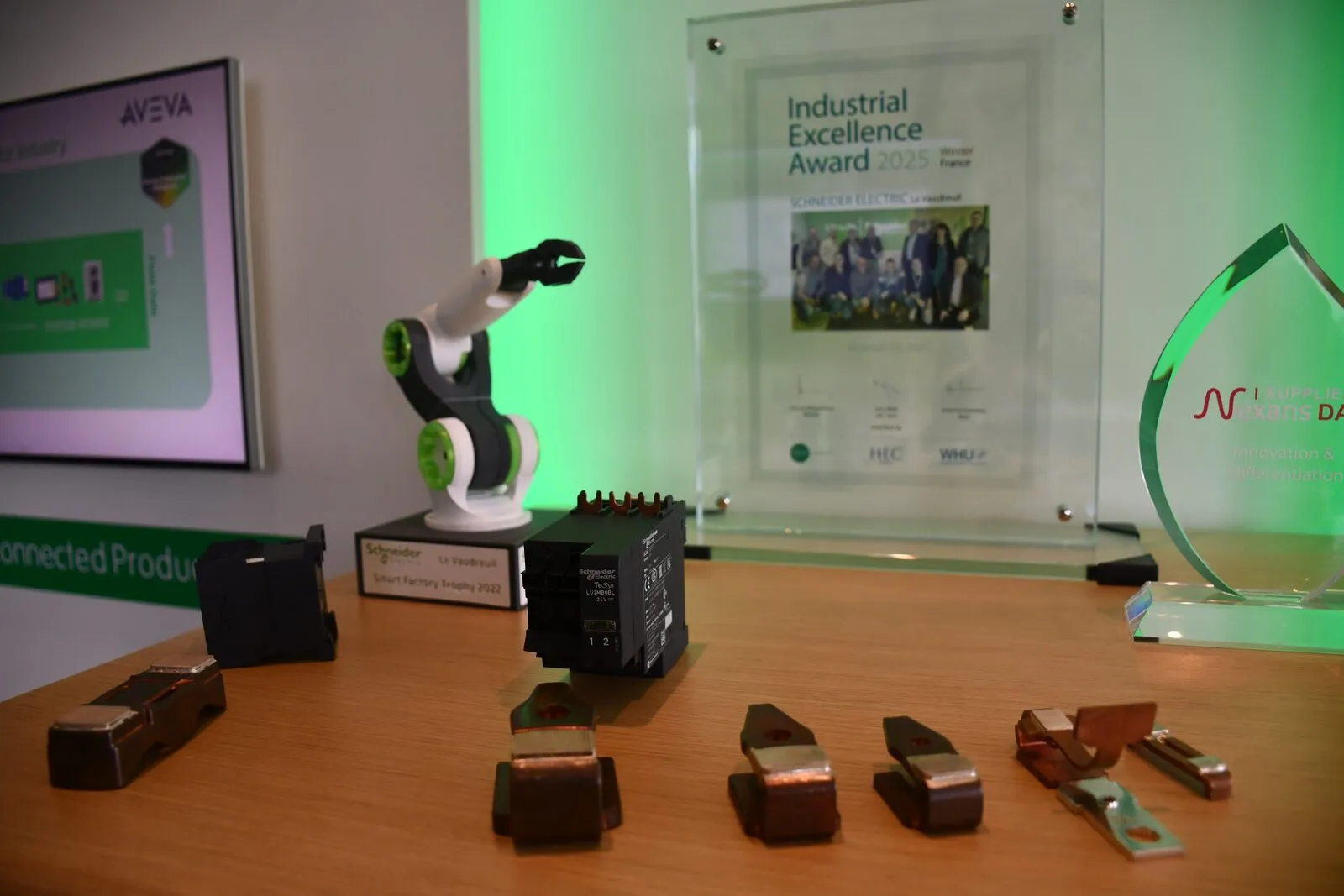
In 2026, Schneider Electric’s production site in Le Vaudreuil, near Rouen, turned exactly fifty. That is quite a few years on the clock for a factory that can still be described as state of the art. Schneider Electric shows that it is possible to embark on a digital transformation even with ageing equipment. Le Vaudreuil has become an iconic example of how brownfield sites can also set the standard for sustainability and industrial intelligence.
The only sign that the doors had opened to the international press in May was a small meeting room at the front of the building, where some snacks and drinks had been laid out. Elsewhere, it was business as usual. That largely means producing around 40,000 to 50,000 TeSys connectors a day. These electrical switches help start, protect and manage motors, processes and assets intelligently and innovatively.
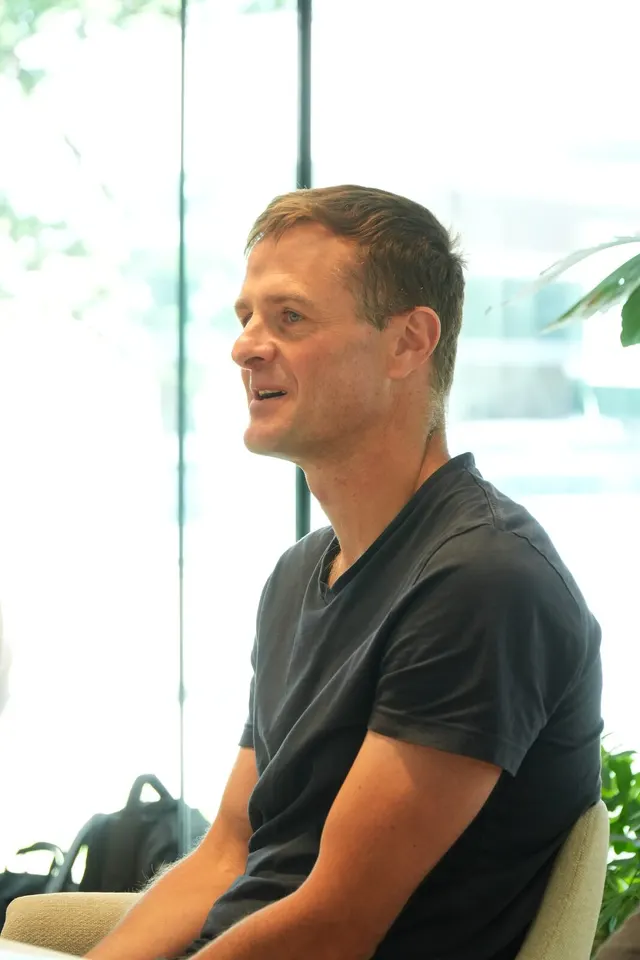
Le Vaudreuil also supplies 74 million contact tips each year, which are further processed into products at other Schneider Electric factories. The 300 employees are clearly used to visitors walking through the production area. Plant manager Sandra Ferraguti says: “We are proud of the transformation and digital journey we have undertaken here since 2018. Many companies think digitalisation is reserved for brand-new sites. We are proving that it can also be done with fifty-year-old equipment. That is why we are happy to show people how we do it. Last year, we welcomed the European Commission.”
Lighthouse Factory
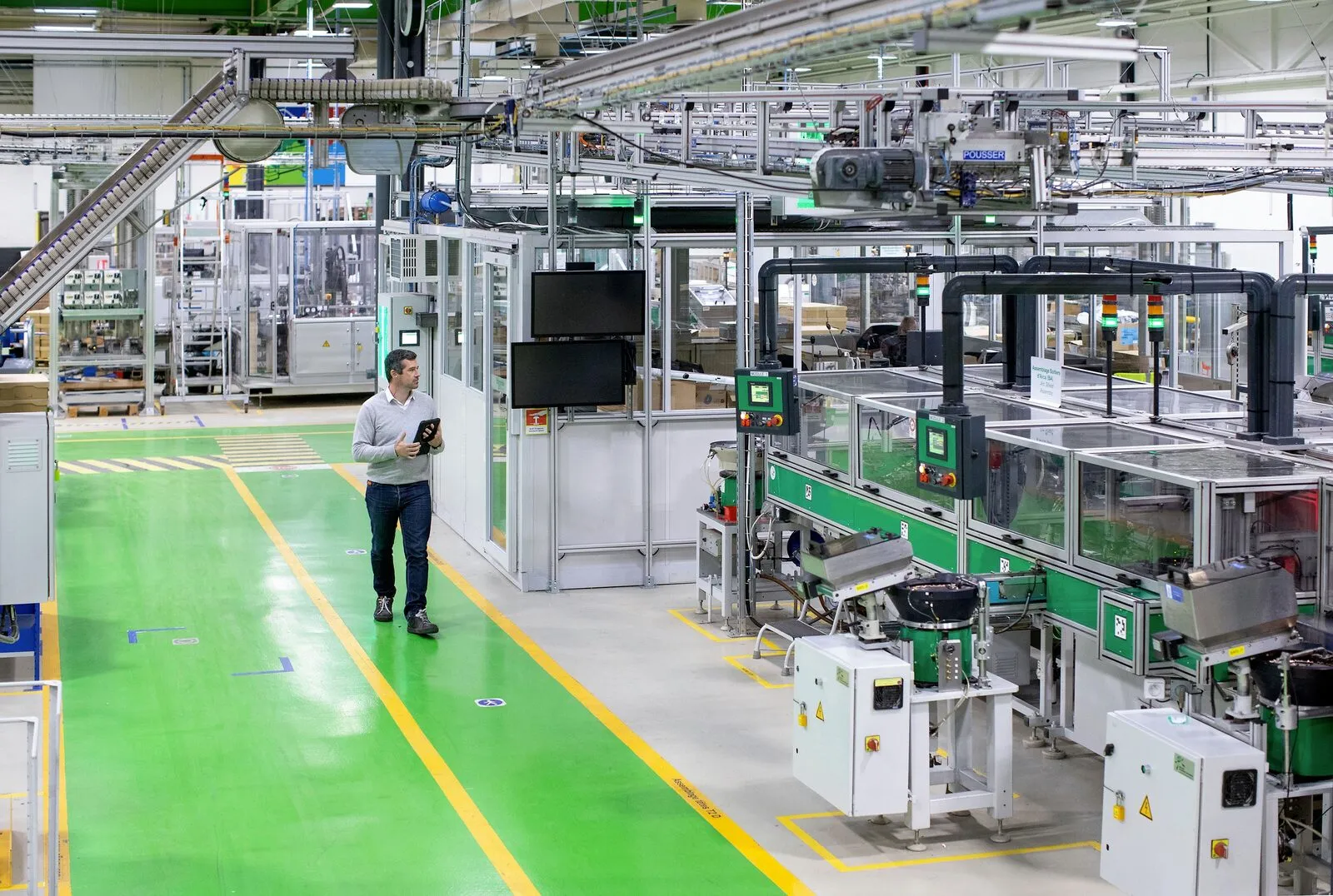
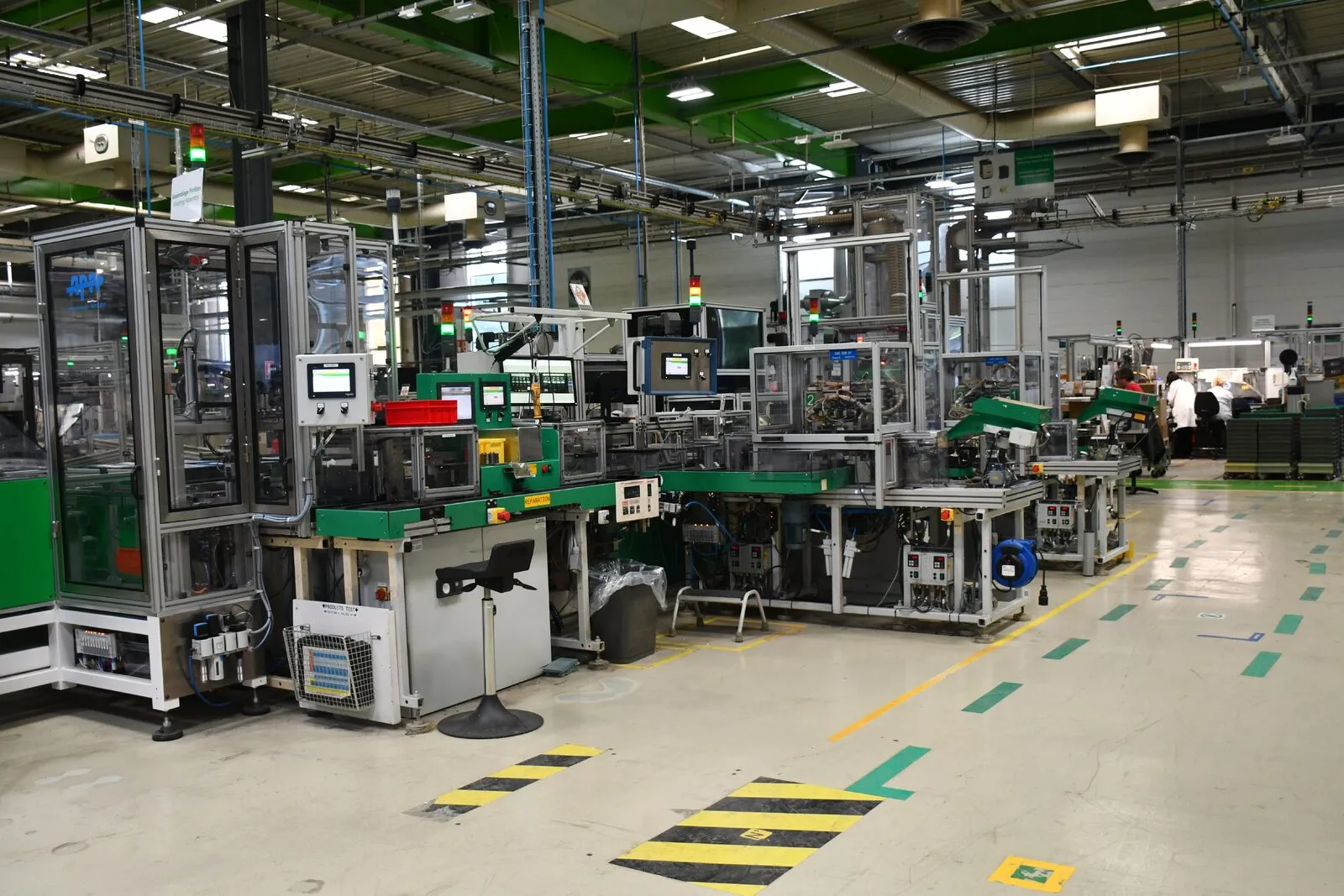
What visitors see is not all that different from most production facilities of this age. Across an area of 14,200 m², old machines stand side by side and back to back. Here and there, a robot appears behind some safety fencing. The screens are also striking. Today, they show us how certain workstations have been adapted; on other days, they tell operators what is happening. So why does the European Commission come here to see how Europe can boost its competitiveness?
“We see digitalisation as the lever for achieving our ambitions. A better CO2 footprint is the starting point for operational efficiency,” Ferraguti sums up. The figures confirm how successful Le Vaudreuil has been: lead times cut by 70%, production costs down by 10%, energy consumption reduced by 36% and an average ROI of two years for investments in digital technology. This led to its recognition as a Lighthouse Factory, a label for manufacturing companies at the forefront of the fourth industrial revolution through the use of advanced technology. Worldwide, thirty factories have been recognised for their contribution to sustainability. Le Vaudreuil is one of them.
A single shared view
The mission at the outset of the digitalisation programme was clearly defined: modernise the factory without disrupting production, relying as much as possible on software upgrades and minimising the impact on hardware. The key to the plan was introducing IIoT sensors throughout production. They are connected to Schneider Electric’s EcoStruXure platform, a modular architecture that provides connected devices, edge control and advanced analytics. AVEVA software runs on top, bringing together all the pieces of the production puzzle.
Lisa Wee, chief sustainability officer at AVEVA, explains how they do it. “In existing production facilities, you see different data systems side by side. Rather than keeping everything in separate silos, we bring together data on the process, energy and so on in one shared view. This gives you the insights to optimise, with AI acting as the conductor. For example, you can run certain non-critical production processes only when energy is available.”
Blueprint
The lessons learned here also benefit sites beyond Le Vaudreuil. Take water consumption: water is used mainly to produce the silver powder for the contact tips. Over eight years, Le Vaudreuil has cut its water use by 64%. The smart factory has been equipped with a water recycling station linked to cloud analytics, and is monitored by an AI model that predicts process deviations. This has also led to a reduction in water use worldwide.
“We share what we have learned with others, as a blueprint for getting the next transformation under way,” adds Gwenaelle Huet, executive vice-president of Industrial Automation at Schneider Electric. We visit the workstation where the silver powder is made. “Our chemical plant,” says Ferraguti. She asks an employee to explain how his job has changed. He describes how the various production steps used to be carried out entirely by hand. To achieve the required sodium content and get the process started, six washing cycles were needed. Then they had to wait for the laboratory results. Now the analysis is done in real time, and the data determines the number of washing cycles. On average, there are now four, delivering huge savings in time, improving efficiency and reducing water and energy consumption. The ROI was less than a year. But most of all, he says, it makes his life easier.
Real-time visibility of quality
“It is important that we can intervene immediately if quality is not up to standard, without our customers suffering as a result,” says Ferraguti. Le Vaudreuil applies lean principles to each of these improvement projects. Excel and paper are replaced with digital tools and visualisation, hence the screens on the production floor. Often, the employees themselves come up with ideas for improvements.
“It all starts with the pain points. We then explore in a pilot how to address them, while also looking at how to standardise and scale up the solution. People are really the key to this. They know the processes best. Without them, we would get nowhere with our digital transformation,” Ferraguti says. In the first year, Le Vaudreuil set aside Friday afternoons to explain exactly what they were doing and why it was necessary. “Your employees need to know that all these digital tools are not going to replace them, but that people and technology are highly complementary.”
AGVs
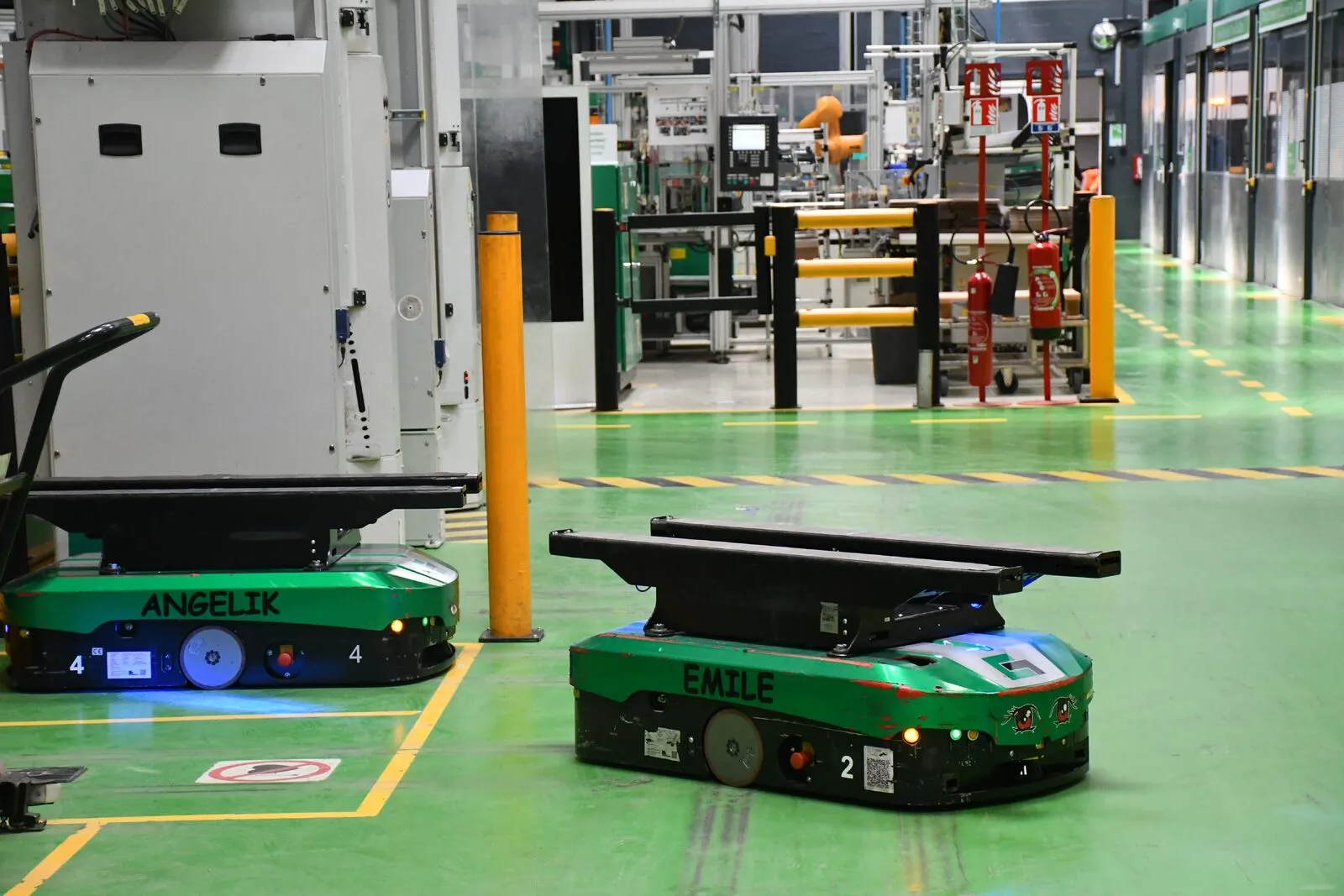
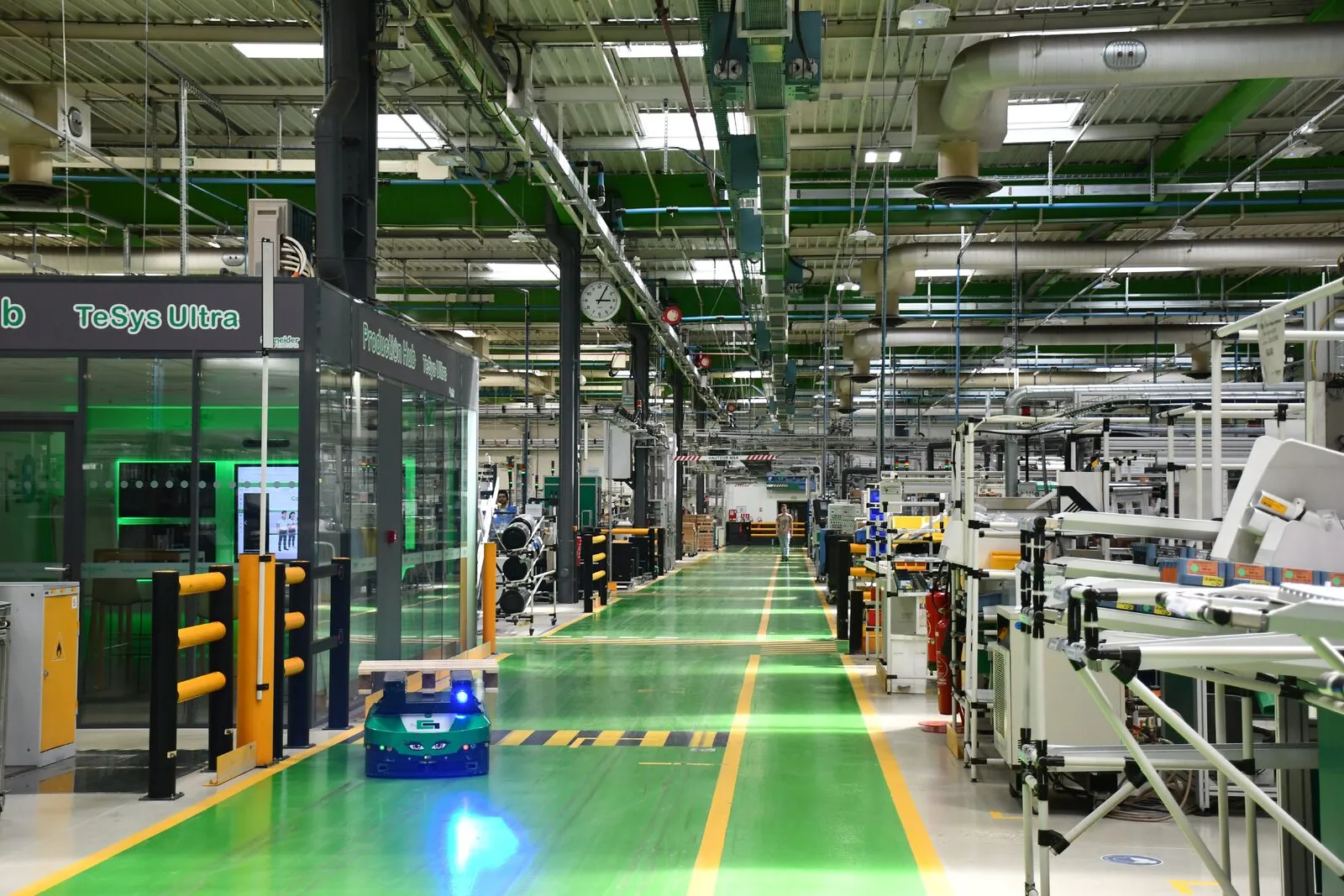
The employees in the warehouse are just as unfazed by our presence. This is the domain of Paul, Emile, Angelik and their colleagues. Since 2018, they have managed internal transport for various components. “What used to take an hour to deliver the right products to a production machine now takes just fifteen minutes. Preparation has become much easier for the operators. They simply request the components on screen.”
The time savings are, of course, not down to the AGVs alone, but to the complete digitalisation of the warehouse. E-train software manages the process. It has since been adopted at other Schneider Electric production sites, too. “The operator just clicks on an image of the component they need. But it is also a useful tool for us, providing information on why, for example, we are not meeting a set performance target. Every bit of data helps us keep improving,” Ferraguti concludes.
Een zakelijke vraag aan Schneider Electric? Get in touch
Companies in this story

Keep following this
Get an email when a new story is published. No account needed.
- SubjectSoftware, IT, OT & cybersecurity
- CompanySchneider Electric