












Lifelong learning at Siemens: technical jobs, AI and the skills industry needs for tomorrow
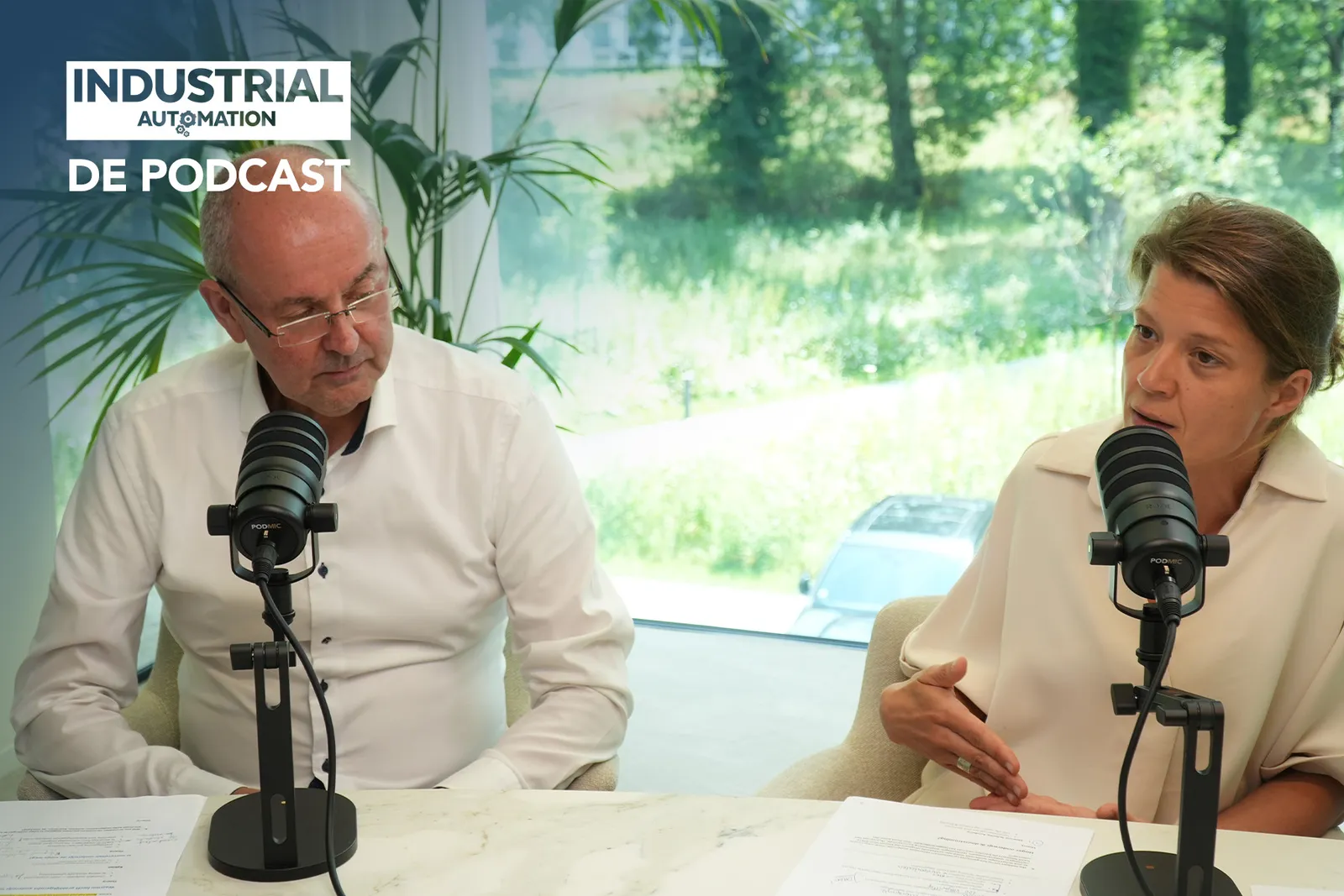
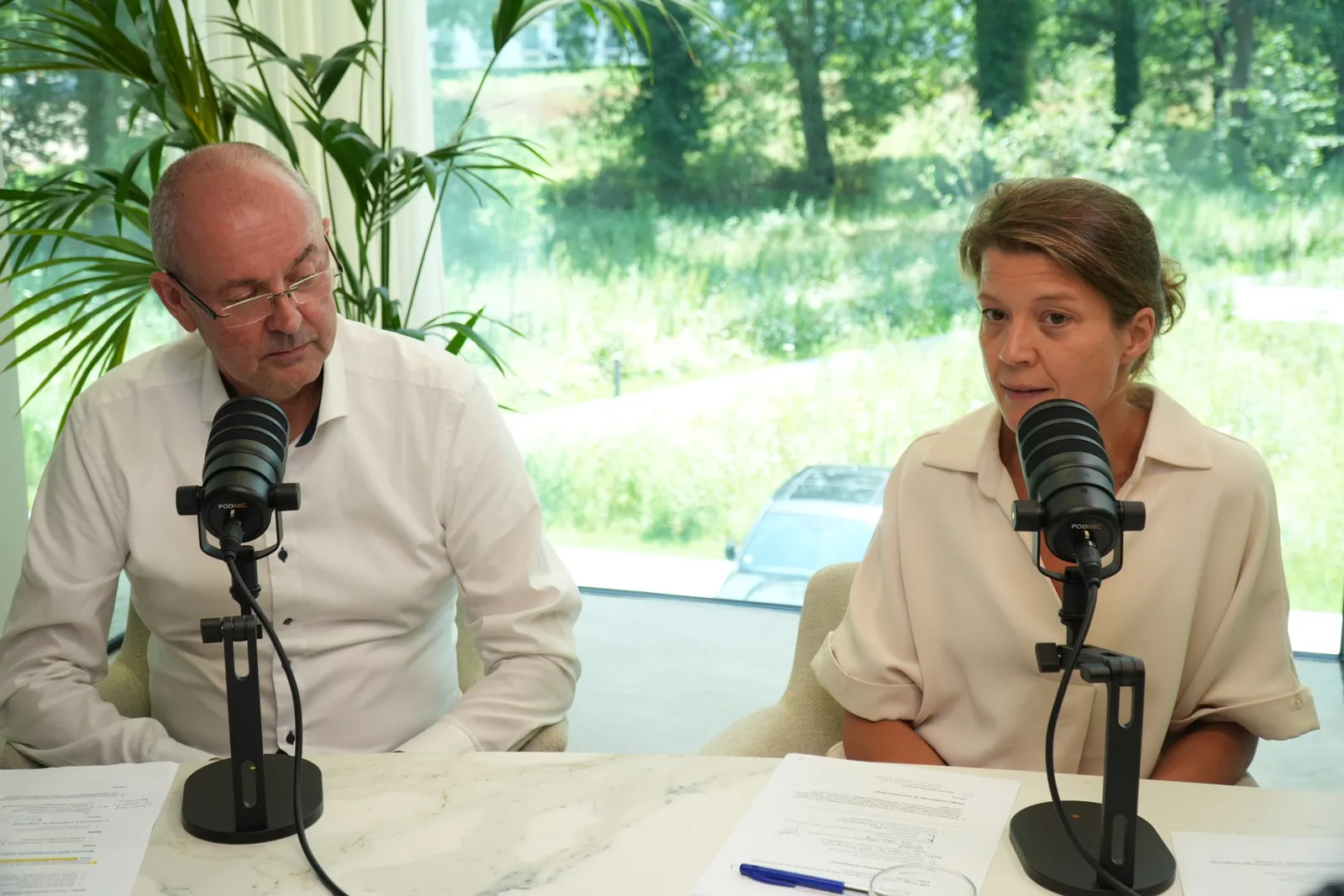
How do you prepare employees for technical jobs that are constantly changing? In this episode of the Industrial Automation Podcast, Björn Crul, Geert De Coninck and Katrien Valkiers from Siemens België discuss lifelong learning, workplace training and the impact of AI, digitalisation and cybersecurity on industrial roles. They also discuss the Young Graduates Programme, hybrid roles and training for customers and partners through SITRAIN.
A business enquiry for Siemens NV/SA? Get in touch
Full transcript
All chapters (16)
- Introduction and technical roles in demand
- Selection criteria in job interviews
- The Young Graduates Programme
- From lifelong learning to day-to-day learning
- Training hours and My Learning World
- Mandatory training and flexible learning paths
- Making time to learn
- Skills in a changing technological landscape
- Training for customers and partners through SITRAIN
- Popular courses and tailored training
- The future of technical jobs
- How the engineering profession is evolving
- New roles emerging from technological innovation
- The role of AI in industry
- Continuing to invest in people and skills
- Closing
Introduction and technical roles in demand
Björn Crul Hello, listeners, and welcome back to the Industrial Automation Podcast. Last time, we discussed the tight labour market, the need for technical professionals and how to get more young people interested in practical and STEM education. Today, we’re looking at what happens after graduation. How do industrial companies support their new recruits, and how is lifelong learning put into practice? My name is Björn Crul, and I’m once again joined by Geert De Coninck and Katrien Valkiers from Siemens Belgium. It’s good to have you back. Geert, which roles are you looking to fill today, and what criteria do candidates need to meet?
Geert De Coninck Björn, I’d say engineers in the broadest sense. So automation, electromechanics, energy, people working in the field, field service, technicians, industrial IT, OT professionals, HVAC specialists, technical project managers and engineers in implementation roles. Wherever there’s currently a skills shortage in the market, that’s where we’re looking.
Selection criteria in job interviews
Björn Crul Yes, lots of vacancies, so I assume you conduct a lot of job interviews. Katrien, what do you look for in an interview?
Katrien Valkiers We look at various things, of course. But the main thing to start with is the qualification. My previous boss used to say: your qualification is your ticket in. You decide where you go from there by developing other skills. So what do we look for? A strong technical foundation, of course. But also skills such as problem-solving, a desire to keep learning, good teamwork and openness to change, that sort of thing.
Read the full transcriptCollapse transcript14 chapters remaining
The Young Graduates Programme
Björn Crul You have a specific programme for recent technical master’s graduates, the Young Graduates Programme. Geert, could you tell us a bit about it?
Geert De Coninck Yes, the Young Graduates Programme is aimed at recent technical master’s graduates. We offer them a permanent contract, but not a permanent role yet. Over 18 months, they take on three different roles, selected in advance, so they can build a broad understanding of the opportunities available at Siemens. In these three roles, they work with different teams and in different contexts, enabling them to make a more informed choice of role within Siemens at the end of the programme.
Björn Crul It sounds like a great programme, but three roles in a year and a half. That sounds pretty intense to me. Isn’t that a bit too much for people who’ve just started? Just as they’re getting to grips with a role, they have to move on, don’t they, Katrien?
Katrien Valkiers We won’t deny that it’s intense, but participants are well supported. It’s a form of accelerated learning. You gain an insight into your own strengths and weaknesses very quickly. And we feel that’s better than being stuck in a role that isn’t right for you. The Young Graduates Programme lets you quickly discover where you can make the greatest impact.
Björn Crul They’re supported by a mentor. Who is that mentor?
Katrien Valkiers In our case, it happens to be someone who has completed the programme themselves. So it’s an experienced colleague. They’re not just someone to turn to for professional advice, but also someone you can talk to on a personal level, a mentor in the broadest sense of the word. They support the young graduates and guide them where necessary, but they don’t have a management role.
From lifelong learning to day-to-day learning
Björn Crul Finding the role that suits them best is one thing, of course. We also know that technology is evolving so quickly that lifelong learning is now essential. Geert, how do you make that happen in the workplace?
Geert De Coninck We’ve replaced lifelong learning with day-to-day learning. We see it as an essential part of a sustainable HR policy. People need to realise that if they don’t keep learning, they stand still. And standing still for three years means falling hopelessly behind. Learning has become part of our job. We all need to recognise that. And continuous training is essential in the roles we have today.
Training hours and My Learning World
Björn Crul I read that employees at your company take an average of 35 hours of training a year. That also aligns with the requirement introduced in 2024: five training days per employee per year. But Katrien, how do you put that into practice?
Katrien Valkiers Well, the 35 hours is the global average we track. On our intranet homepage, when we switch on our computers, there’s a counter for each employee showing how many learning hours they’ve completed that year.
Björn Crul So you’re reminded of it every day.
Katrien Valkiers It can sometimes be a bit confronting. Those learning hours include a combination of traditional training courses, digital courses and some self-study. For the digital element, we have a platform called My Learning World. It’s really cool, with 90,000 learning resources. These range from e-learning courses and videos to e-books, podcasts and more.
Mandatory training and flexible learning paths
Björn Crul Yes, Geert, it sounds like an inexhaustible source of new knowledge and skills. But are there also courses that are mandatory for certain roles at your company?
Geert De Coninck Yes, and I think that’s necessary at a company like Siemens. There are certain things we need to remind people about, such as their safety when travelling. Compliance is extremely important to us. We only do compliant business. So we need to provide regular information on topics that could lead to fraud. We need to focus strongly on that. And then there’s everything related to critical technologies and new technologies coming onto the market, where we need at least a basic understanding. AI, for example. We’ll definitely make training in those areas mandatory. But beyond that, there’s a lot of freedom of choice. Based on your role, what would an ideal profile look like? What level of training should you have in certain technologies? Once you’ve completed this, the platform itself will suggest courses that would be a good fit. So you can map out your own learning path entirely for yourself.
Making time to learn
Björn Crul Katrien, you’ve just explained how confronting it can be to see that training counter every day. Learning takes time, of course, and I can imagine that at certain times time is in short supply and employees may need to prioritise other things. How do you still motivate them to set aside time and take a course?
Katrien Valkiers I’ve noticed that if I don’t block out time in my diary to learn, it doesn’t happen. So I try to encourage my team to block out time in their diaries for learning too. For example, our whole team completed a programme to get to grips with AI. That’s an important aspect of communications.
Björn Crul And it sends the message that learning is allowed, but also necessary.
Katrien Valkiers Absolutely.
Skills in a changing technological landscape
Björn Crul Geert, given the changing technological landscape, which is obviously particularly relevant to an organisation like Siemens, what skills and competencies do people need today to keep up?
Geert De Coninck Focusing on the technical side, automation technology remains crucial for us. But we’ve also seen the emergence of areas such as data, digitalisation and AI. These have become increasingly important topics in recent years. And unfortunately, we’re increasingly having to deal with everything related to cybersecurity.
Katrien Valkiers That’s the technical aspect. I think there are other competencies too, such as being able to adapt to the situation, so having strong adaptability. Being able to work with others is important. And people also need to know how to use technology ethically. By that I mean handling the sharing of data responsibly within your company, and with partners or customers.
Training for customers and partners through SITRAIN
Björn Crul That also ties in with the perspective of your customers. They’re often installers or companies with Siemens equipment on site. You also help them access training. How does that work, Geert?
Geert De Coninck We have our own training centre, called SITRAIN, where we focus on everything related to industry. We offer a combination of classroom courses. We also have a SITRAIN access platform, where those same customers can take fully digital courses to keep up with the latest technology. And we even run special, separate sessions for our partners to gain certification, so they can be listed on our website as official partners.
Popular courses and tailored training
Björn Crul I saw the figures: the Belgian SITRAIN centre welcomes 1,200 customers a year, or around six customers per working day. That’s a fully fledged training institution. Which subjects or courses are most popular?
Geert De Coninck Industrial automation is still the most popular. The underlying technology is constantly evolving. But there are also courses in OT, IT, integration, simulation and digital twins. We also often develop courses tailored to customers’ needs. For example, we worked with Volvo to build a complete digital twin of its production process. We then provided a full training course using that digital twin, preparing participants to work as operators in production afterwards. So we try to create training that customers can apply directly.
The future of technical jobs
Björn Crul Let’s turn our attention back to Siemens. Looking at the future for people working in the technology industry, what will technical jobs at your company look like?
Geert De Coninck We will see more and more hybrid roles and applications. Forget the repetitive nature of work in the past, when you could say: I’m in a particular job and I do the same thing for 20 years. Every job that comes along now brings something new. We’re moving towards digitalisation and virtualisation, and we’re developing AI applications. We’re also increasingly analysing and optimising existing installations. Because let’s be honest: Belgium has more brownfield sites than greenfield sites. So we need to look at how we can optimise existing installations.
Katrien Valkiers And as I see it, or to build on that, it’s increasingly about how we can use technology to make everyday life better, more efficient and more sustainable for you and me. So technology as a kind of lever for sustainability.
How the engineering profession is evolving
Björn Crul Geert, I heard you say earlier that career paths will become less and less linear. I know you’ve been working at Siemens for a long time. Looking at the job you do today, can you compare it with your role back then?
Geert De Coninck Let’s just say I was lucky enough to start out in manufacturing, where I had a factory under my responsibility. So I was in sales, but I still had the factory. Some of the basic technologies, the automation side of things, are still there. But the way a factory operates today, with AI applications, digitalisation and virtualisation, includes new aspects that mean you can probably double, triple or quadruple output with existing equipment. And that’s exactly why we need engineers and why we need to train them.
New roles emerging from technological innovation
Björn Crul What new roles are emerging as a result of technological innovation?
Geert De Coninck Well, people who can interpret data, such as data engineers in an industrial context. People who can create a digital twin of a production process, one that runs alongside production or optimises it. IoT specialists and, of course, people who can apply everything related to artificial intelligence, or AI. These are the roles we’ll need in the future.
The role of AI in industry
Björn Crul Katrien, if I understand you correctly, AI is becoming indispensable in industry.
Katrien Valkiers Yes, I think so. Today, AI is mainly a tool that enables us to work faster and more efficiently. So it supports us in our day-to-day work. At the same time, human supervision remains crucial. We can’t do without people. People and machines need to work together. We’re also seeing new roles emerge thanks to AI. Where colleagues used to carry out more operational tasks, AI is taking those tasks over. They are now moving into roles where technology, data and AI are used intelligently.
Continuing to invest in people and skills
Björn Crul Taking all this together, what does it mean for Siemens in the future?
Katrien Valkiers I think we need to keep investing in people and make sure lifelong learning, or learning every day, remains a key strategic pillar.
Geert De Coninck Yes, we need to keep developing people’s skills and providing training. And perhaps we can’t do that alone. As I mentioned in the previous podcast, I think collaboration with education and involving our customers are the only way to prepare for the future.
Closing
Björn Crul And that brings a very engaging discussion to a close. Geert De Coninck and Katrien Valkiers, thank you for telling us about lifelong learning at Siemens. If you’d like to find out more about the jobs of the future and the role education can play, be sure to listen to the other episode in this two-part series, where we discuss the war for talent and the need for technical professionals. It’s time to say goodbye, dear listener. Thank you for joining us. Be sure to visit industrialautomation.be for the latest news on industry and automation. Until next time.
Companies in this story
Keep following this
Get an email when a new story is published. No account needed.
- ThemePeople make automation possible
- SubjectNews
- CompanySiemens NV/SA







