












Flemish manufacturing under pressure: why process innovation and automation are now crucial
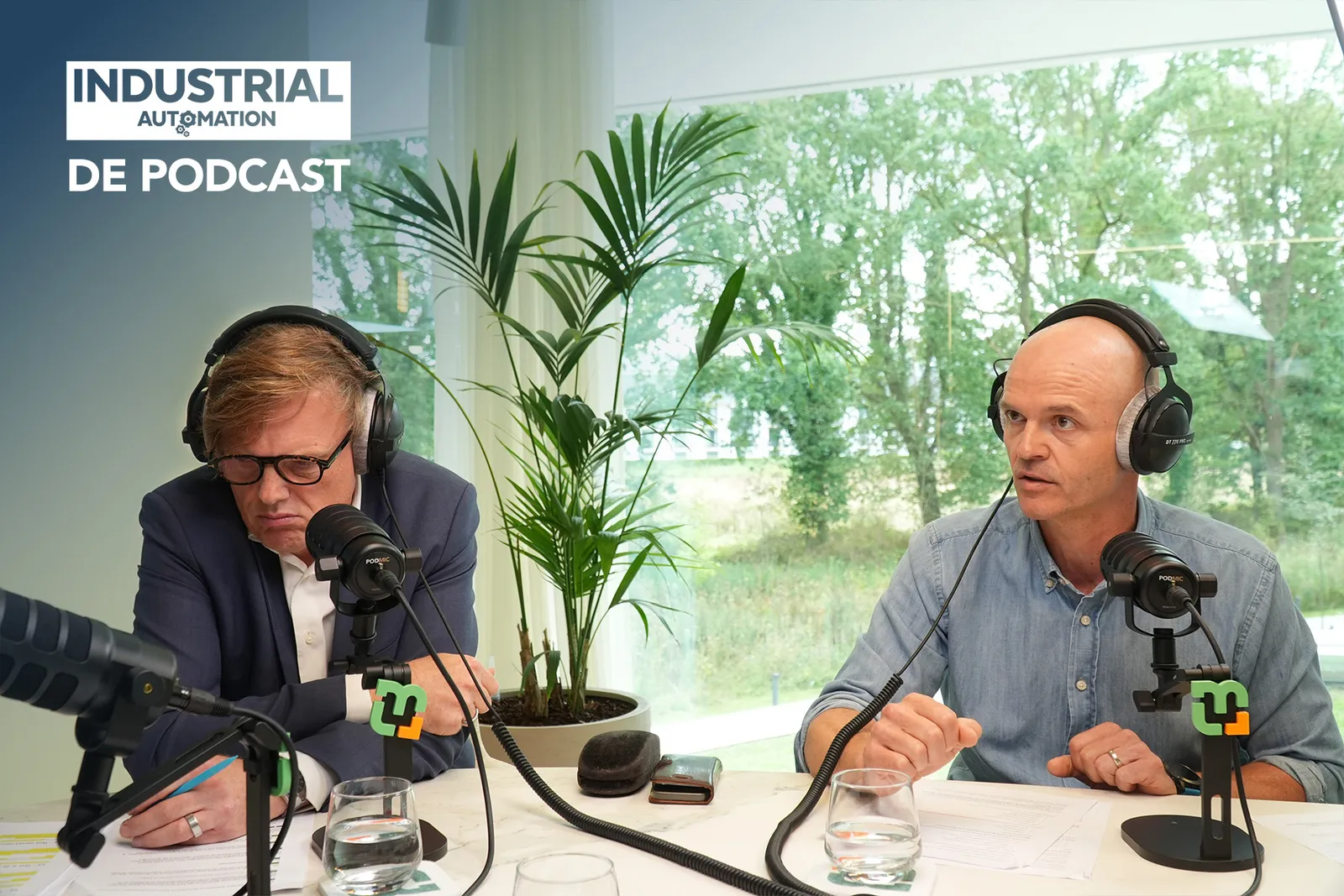
Flemish manufacturing faces major challenges. Rising costs, geopolitical uncertainty, a tight labour market and rapid technological advances are putting manufacturers under pressure. At the same time, process innovation, automation and smart manufacturing technologies offer opportunities to boost productivity, flexibility and competitiveness.
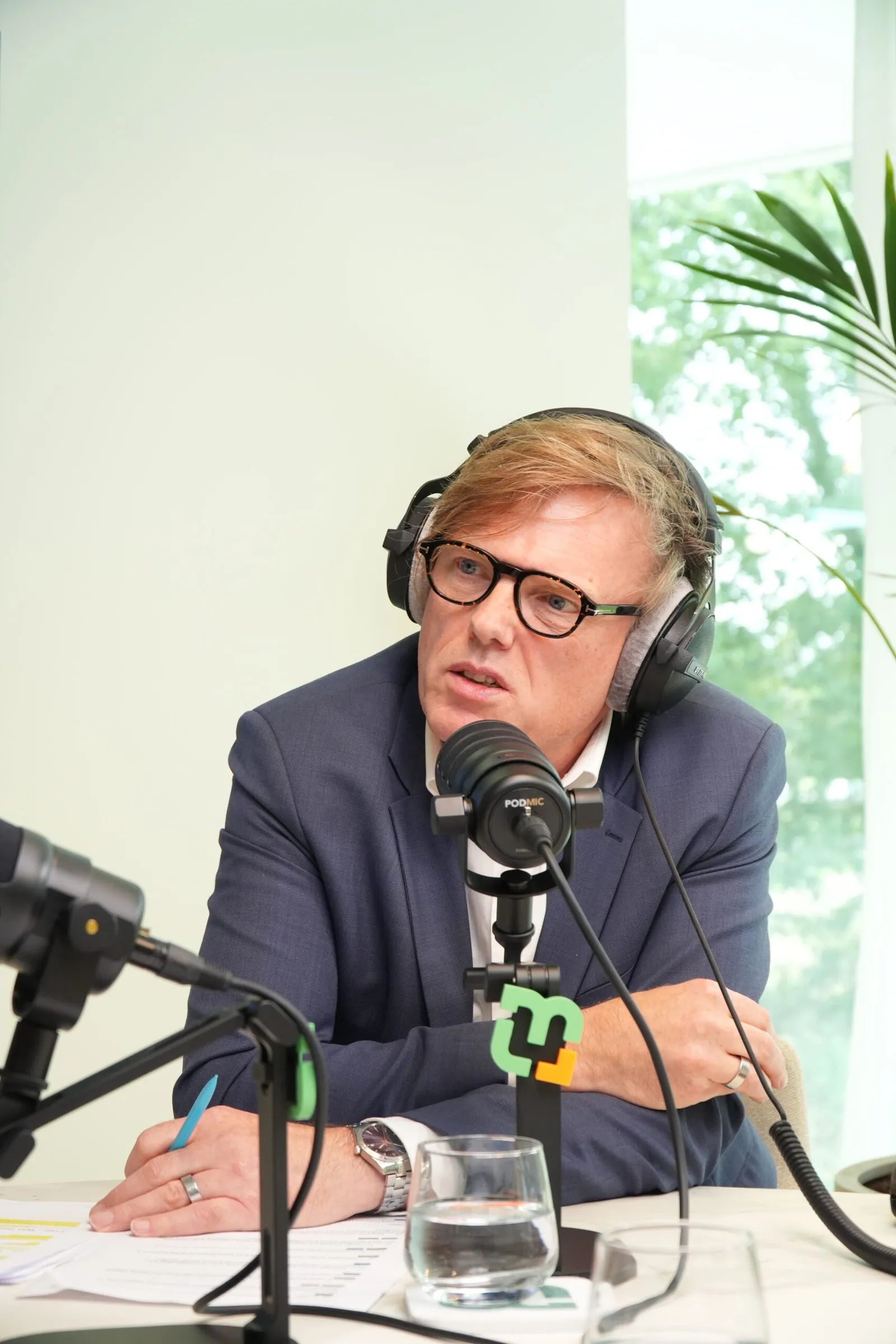
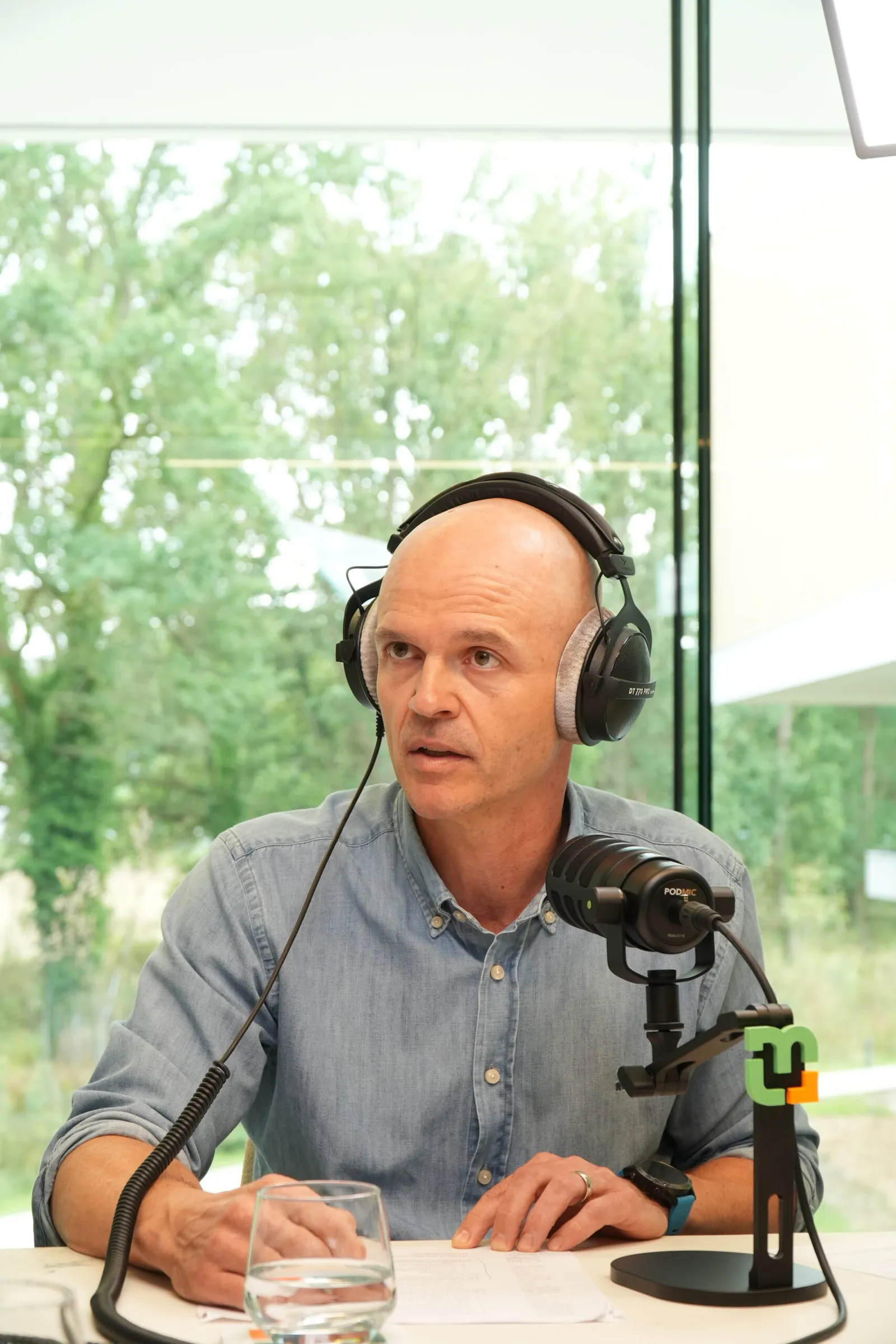
In this episode, Björn Crul speaks to Grisja Lobbestael, CEO of Flanders Make, and Joris Ceyssens, director of VINTIV. They discuss why companies need to invest not only in product innovation but also in their production processes. The conversation also covers the role of bespoke machinery, AI, technology integrators, co-creation and collaboration within innovation ecosystems. They also explain why investing in technology is particularly important when the economy is doing well, how companies can translate innovation into a tangible ROI, and why delaying digitalisation and automation is becoming increasingly risky.
Guests: Grisja Lobbestael, CEO of Flanders Make & Joris Ceyssens, director of VINTIV
Host: Björn Crul
Een zakelijke vraag aan VINTIV? Get in touch
Full transcript
All chapters (28)
- Flemish manufacturing at a crossroads
- The state of Flemish manufacturing
- Willingness to innovate
- Uncertainty on the shop floor
- Three forces reinforcing one another
- Becoming less dependent on external factors
- Making the move while business is good
- Fixing the roof while the sun is shining
- Product innovation and production processes
- Combining product and process innovation
- Production innovation as a lever
- Innovation as a cost or an investment
- Future competitiveness
- Co-creation and ecosystems
- Multidisciplinary collaboration
- The role of Flanders Make
- Large companies and SMEs
- The value of bespoke solutions
- Collaboration between VINTIV and Flanders Make
- Support for cutting-edge research
- From research to industrial implementation
- Learning from research that does not work
- Different time horizons
- Upskilling and reskilling workers
- Operator-independent machines
- Advice for business leaders
- Waiting is the biggest risk
- Closing remarks
Flemish manufacturing at a crossroads
Björn Crul Hello, listeners. Flemish manufacturing is at a crossroads. Productivity growth is stagnating. The geopolitical landscape is becoming more volatile, and technology is evolving at breakneck speed, often faster than many companies can keep up. Yet the companies that can accelerate now, investing in smarter machines, better processes and deeper collaboration, can gain a competitive edge and strengthen their position. Long-term investment, integrating technology into new processes, and translating innovative research into practical applications on the shop floor. In this first part, we take a broader look. Where does Flemish manufacturing stand today? What are the blind spots, and why is innovation in production processes at least as important as investment in new products? My name is Björn Crul. My guests today are Grisja Lobbestael, CEO of Flanders Make, and Joris Ceyssens, director of VINTIV, a machine builder with almost 40 years’ experience in high-tech bespoke solutions.
The state of Flemish manufacturing
Björn Crul Gentlemen, you know the industry inside out, of course. You have a clear picture of how manufacturers are doing today. Grisja Lobbestael, let me start with you. Which companies does Flanders Make mainly work with, and what are you hearing from them? How is our manufacturing industry doing today?
Grisja Lobbestael We have two main groups. On the one hand, there are what we might call the leading innovators, large enterprises with a long-term vision that are mainly looking for disruptive technological innovations and applications. On the other hand, there is a much larger group of what we call early innovators. These are often SMEs looking for innovation that can be deployed quickly and offers a clear return. Another particularly important strategic group is technology integrators, who bridge the gap between Flanders Make and implementation at SMEs. We are at a turning point. We can still be proud of our companies, which have world-class expertise and a strong, outstanding export position, but they are all under immense pressure from rising costs, international competition, geopolitical uncertainty and a structural shortage of technical talent.
Read the full transcriptCollapse transcript26 more chapters
Willingness to innovate
Björn Crul And are you still optimistic?
Grisja Lobbestael I am still optimistic. The willingness to innovate is growing, as more and more companies realise that future competitiveness will come not only from better products, but above all from smarter production, more automation, data-driven decisions and greater flexibility. And these are precisely the areas Flanders Make focuses on.
Uncertainty on the shop floor
Björn Crul Joris, with VINTIV you are on the shop floor at manufacturers almost every day. Do you recognise the picture Grisja has just painted?
Joris Ceyssens There is growing uncertainty and concern among our companies. This is driven, on the one hand, by the geopolitical changes we are seeing, and on the other by the tight labour market. So I can only confirm that. And it is fair to say that the sense of urgency is growing. Many companies are also waking up to the current state of affairs.
Three forces reinforcing one another
Björn Crul I hear both of you pointing to three factors. Which of them is having the greatest impact today, Grisja?
Grisja Lobbestael For me, they are three forces that all reinforce one another. The geopolitical tensions are making it increasingly difficult to predict companies’ value chains and business models. Technological developments, and AI in particular, are advancing faster than many organisations can keep up. On top of that, companies are finding it increasingly difficult to recruit qualified staff. So it is hard for me to say which is the biggest. All three reinforce one another. But perhaps the challenge companies feel most keenly is the shortage of workers, because it is limiting their growth today. Yet technology can be part of the solution, enabling them to produce more with the same people.
Becoming less dependent on external factors
Björn Crul Joris, that must be music to your ears.
Joris Ceyssens I can only confirm that what Grisja says is absolutely right. I would also add that the current tensions, among other things, have raised awareness that dependence is never a good thing. More and more companies are realising that they depend on factors they cannot control. That has prompted them to ask how they can become increasingly independent of factors beyond their control and keep a better grip on things. I think technology is seen here as a disruptor. That sounds dramatic, but in my view it is a tool that can help bring the other two forces increasingly under control and make our companies less dependent on the forces at play.
Making the move while business is good
Björn Crul I think it is clear that many companies are now aware of this. On the other hand, I still hear of companies that are doing well and see relatively few problems. They even think: things are going well for us. We do not see a problem. Is that an illusion, Grisja?
Grisja Lobbestael Yes, that is a danger. Things are going well for us. We do not see the problem. I often see this as a matter of confidence in the old business model. That model is often still profitable. Companies can still post good figures using the old model. But the question is not how things are going today. The question is where you will be in five or ten years. History has taught us that markets can sometimes change very quickly. Technology, regulation and new competitors can put your existing model under pressure very quickly. Companies that wait until the need is urgent often start too late. So they need to make the move while business is good. They need to invest in technology while business is good. Stable periods are the time to increase productivity, test new technologies and bring employees along with the change. After all, you build resilience before you need it.
Fixing the roof while the sun is shining
Björn Crul We need to fix the roof while the sun is shining. That is what it comes down to.
Joris Ceyssens I think that is very wise advice, Björn. I would certainly agree. Of course, there are companies doing well in the current economic climate. Some are niche players benefiting from favourable market conditions. But there are also companies that have simply been investing for years. If we say we need to look ahead to make sure we are still profitable in five years, we should ask what a profitable company today did five years ago. It invested in an ERP system, in automation and so on. Take the Factories of the Future, for example. These are companies that invested ten, five or more years ago and are now reaping the rewards. They also continue to work actively on these issues to drive future growth.
Product innovation and production processes
Björn Crul Yes, that should be the ambition: for us all to create Factories of the Future that innovate across many different levels and domains. Joris, you have found that many companies invest in product development but forget to update their production methods. Why is that so dangerous?
Joris Ceyssens There is a risk in that, because at some point you end up manufacturing your innovative product using standard machines, for example. Those machines are supplied by standard suppliers on the market. There is nothing wrong with that in itself, but it makes you, as a manufacturer, dependent on those companies. If you produce in the same way as your biggest competitor, you will not be able to compete on production methods. You will then have to look at costs. And that is where the problem lies locally, given hourly wages and the tight labour market. That dependence is now coming back to the fore. To become independent, you need to take control of your own production process and embed the knowledge you have in your company in a technological solution, such as a bespoke machine.
Combining product and process innovation
Björn Crul So anyone who wants to be future-proof needs to pursue both tracks: product and process innovation. Grisja, do you still see companies getting this wrong?
Grisja Lobbestael Yes. Product innovation can be tempting for companies to focus on because it is directly visible, with a new product ultimately reaching the customer.
Björn Crul And it has an immediate impact on revenue, too.
Grisja Lobbestael Yes, it has an immediate impact on revenue, but producing an innovative product using outdated processes will not work either. Process innovation therefore has a direct impact on productivity, quality, lead times and flexibility. That is why the real winners combine the two. They develop better products and continuously improve how they design, produce and maintain them. Product innovation and process innovation are not alternatives to one another.
Björn Crul Can we go so far as to say that there is a real difference in agility and resilience between companies that innovate along both these lines and those that do not?
Grisja Lobbestael Yes, we certainly see that. Companies that are active on both fronts can respond much more quickly to change. They can launch new products faster, produce more efficiently and adapt more easily to fluctuations in demand or staff availability. Take the COVID crisis, when companies suddenly had to redefine their products and market position very quickly, ramp up production or pivot. You can see that companies which have invested in process innovation and flexible processes can respond much faster and, as a result, compete more effectively in the market.
Production innovation as a lever
Björn Crul Joris, does that reflect VINTIV’s experience?
Joris Ceyssens Yes, absolutely. I can only echo the point that innovative products create value in the very short term. But the question is how much of that value you will still retain in five years’ time. That is ultimately where production innovation comes in. It gives you leverage, so that five years from now you will still be getting value from your product innovation. And I think that is very important. It is also important to safeguard that through a bespoke solution, so that you retain that knowledge in-house. That also gives you the ability to respond when something happens in society. And that is the speed Grisja is talking about.
Innovation as a cost or an investment
Björn Crul If innovation is seen as a cost rather than an investment, it comes under pressure when cuts have to be made. How can we change that perception? Joris, how do you demonstrate the ROI of an investment in production equipment?
Joris Ceyssens There are, of course, many ways of calculating this. But I think you should try to express the ROI of that investment not in terms of revenue, but in terms of productivity. Above all, you should ask: what will it cost us in five years if we do not make this investment now? I think that should be factored into the calculation, so to speak. You should not look at revenue alone. I think that is very important. I can only encourage companies to innovate. You can make huge strides very quickly. But often, small incremental improvements can also deliver a return. They may not be the biggest step, but it is important to keep moving forward, because there is a learning curve as well. Suppose you say: right, we make 60 or 70 per cent small, incremental changes to our production. We have x per cent new applications and 10 per cent disruptive ideas. Then you will see that you have a good mix. It is a bit like an investment portfolio, where you include both high-risk and lower-risk shares. You could look at innovation in the same way.
Future competitiveness
Björn Crul Grisja, I saw you nodding. You agree.
Grisja Lobbestael The fact that this is a recurring contradiction: when the economy slows, the focus shifts strongly to cost control and cash flow, and innovation is pushed into the background. Again, as he rightly says, because it is ultimately viewed as a cost. We need to shift from seeing it as a cost to seeing it as an investment in future competitiveness. I can only reiterate everything Joris has just said. It is not always a one-to-one relationship with revenue, because that is the short term. But the gains should be measured in higher productivity, less waste, shorter lead times, better energy use and greater flexibility. That is how innovation should be given a different place. At Flanders Make, how do we demonstrate the ROI of innovation? That is a challenge in itself. We try to do this as effectively as possible by making academic models tangible. We do this through proofs of concept and what we call co-creation hubs, where we work closely with companies, technology integrators and even, why not, start-ups that see a business opportunity, to deliver tangible results quickly. We then demonstrate those results in real-life conditions at the companies themselves.
Co-creation and ecosystems
Björn Crul The word co-creation has come up. When it comes to innovation, companies do not always have to reinvent the wheel. Consortia, sometimes even involving competitors or industry peers, can lead to major advances. Grisja, what is the biggest advantage of thinking in terms of ecosystems rather than going it alone?
Grisja Lobbestael Yes, as you said, companies do not have to go it alone. The underlying belief is that no company can develop and implement all the necessary knowledge by itself. In practice, that means working together: bringing academic models and people working on new disruptive technologies directly together with companies, their entire supplier network and the technology integrators who often take those ideas to the shop floor. Start-ups can identify new markets and opportunities, and then connect with OEMs. This is precisely one of Flanders Make’s important roles, alongside generating disruptive technologies: bringing all these players together, including companies, technology suppliers, machine builders, universities and research institutions, to tackle shared challenges.
Multidisciplinary collaboration
Björn Crul Joris, you also have a strong belief in these ecosystems.
Joris Ceyssens Yes, absolutely. We have been part of such ecosystems for several years. Their value lies, I think, in the speed they enable and in multidisciplinary teams working towards a specific goal to prove a business case. By that I mean proving both that it is technologically viable and that it makes business sense. We must not lose sight of commercial realities. I think ecosystems are a very effective way of achieving that.
The role of Flanders Make
Björn Crul Looking at that logic and what you have just said about manufacturing, Grisja, what sets you apart from another research centre or consultancy?
Grisja Lobbestael There are several advantages specific to a strategic research centre such as Flanders Make. One particularly important one is the concentration of expertise. We have unique multidisciplinary expertise and infrastructure.
Björn Crul I read that you have more than a thousand people.
Grisja Lobbestael More than a thousand people across the five Flemish universities. We bring them together to address industrial challenges. This concentration of expertise is a key differentiator and a source of uniqueness. Co-creation enables companies to work together and share knowledge in a confidential environment, helping to accelerate innovation across sectors. Compared with a standard consultancy, our ability to scale up is another differentiator. A critic might say: right, stop there, so to speak. That is what direct innovation within a company looks like. The fundamental difference is that scaling up is no longer part of the picture. We turn research results into reusable solutions that can be widely deployed across industry and across multiple sectors. Working with integrators, we can scale these developments much further and more broadly across a wide range of industries, far more than a standard consultancy can.
Large companies and SMEs
Björn Crul Let me return to what you said at the start. You have two main target groups. On the one hand, large companies come to you specifically to find disruptive technologies. On the other, Flanders Make is very much focused on SMEs too.
Grisja Lobbestael Yes, and that is a bit of the [unclear] within Flanders Make. On the one hand, as I said, large enterprises and innovators with bigger budgets and long-term visions, specifically looking for what does not yet exist, both in terms of disruptive technology and its applications. But SMEs make up the largest part of our industrial landscape. Within that group, you have the early innovators, those already embracing innovation, who are a very important target audience for us. They do not have a team of engineers with academic backgrounds. That is why their expectations are different: long-term investment on the one hand, versus a quick ROI and short lead times on the other. We definitely want to reach them. That is why we make technology accessible. And this is where, to repeat myself for perhaps the umpteenth time in this conversation, technology integrators and providers are so important to us. They bridge the gap between the models we develop and direct implementation at SMEs, which, unlike large enterprises, do not have the same capacity to absorb academic knowledge.
The value of bespoke solutions
Björn Crul Joris, I hear that companies such as VINTIV play a very important role. Looking specifically at what you do, how does a new machine or retrofit from VINTIV differ from a standard solution for innovating production processes?
Joris Ceyssens The most obvious thing, of course, is that a bespoke solution fits the company like a glove. But the main incentive for customers to choose a bespoke solution, in VINTIV’s case, is that they also own the intellectual property developed. That is an asset of immeasurable value. Think of what we said earlier about the search for independence from the market. I think that is the greatest added value we can offer as a company.
Collaboration between VINTIV and Flanders Make
Björn Crul You have been working with Flanders Make for quite some time. How does that work in practice? What added value does VINTIV get from it?
Joris Ceyssens We have indeed been working with Flanders Make since it was founded. As a company, we will celebrate our 40th anniversary next year. We have been part of the manufacturing industry for quite some time. Anchoring that industry in Flanders and, by extension, Belgium is one of our missions. It was inevitable that our paths would cross. That happened very early on in the history of Flanders Make. What does that collaboration look like? It takes various forms. For example, when you talk about innovation, if you know in advance that something is highly innovative but will work, you might ask whether that really fits the definition of innovation. After all, it is already going to work. But when the true innovativeness of an idea is in question and research is needed, at an early stage when the idea is first emerging, Flanders Make can add value by first assessing whether it seems viable. There also has to be a business case, of course. The collaboration between our two companies means that both the technical and business case are assessed before taking the next step towards implementation.
Support for cutting-edge research
Björn Crul I hear that VINTIV is looking for support with cutting-edge research. Grisja, I heard you say that you need companies like VINTIV to help you reach SMEs more effectively. Can we make that concrete? For a particular sector, Joris?
Joris Ceyssens Confidentiality means I cannot go into detail about specific projects. But, to give a very concrete example, we have a highly productive collaboration with the Robotics Lab at KU Leuven and ACRO, with Flanders Make also closely involved, specifically to provide further support to one target group in Flanders: the pharmaceutical industry. We are taking concrete steps in this area and making progress.
From research to industrial implementation
Björn Crul Grisja, where do you see the success of that collaboration?
Grisja Lobbestael Putting aside the application just mentioned, it comes down once again to the complementarity of the two profiles. Flanders Make focuses on new production concepts, digitalisation technologies and automation solutions. VINTIV then takes up the baton, bringing those innovations into industrial implementation, specifically in machine building. It is vital that these innovations do not get stuck in the lab. This is not research for its own sake on the academic side. They need to find their way into the production environment. That is Flanders Make’s mission: to generate disruptive technology that ultimately makes industry stronger, more competitive and more resilient, and ensures that this remains a prosperous region. This complementarity is essential if we are to make the model work.
Learning from research that does not work
Björn Crul Joris, I imagine that not every research project you start together actually produces a good result. What happens then?
Joris Ceyssens That is a fair point. Of course, you can ask what success means. I think that if, during the research phase, you discover that a particular innovation does not work, you might be inclined to call it a failure. But it has actually been a successful attempt to establish that this is not the right course of action. You can then learn from it, take those lessons to heart and look for another solution. So I do not think a proof of concept that does not work, or an innovation that is not yet ready, is a problem in itself. To add to what was just said, I do not think innovation makes sense from a purely technical perspective. You always have to start with an operational problem. One option is [unclear]. And I agree with Grisja when he says: the lab is one thing, but try to build a proof of concept under real-world conditions wherever possible. That could be on a real production line with real operators. Keep it small-scale, but do not do it in the lab. Make it as tangible and realistic as possible. Then measure the results objectively, learn from them, assess the business case in a second phase and move on to implementation.
Different time horizons
Björn Crul I hear Joris saying that the focus should be on practical outcomes. Does that sometimes create tension with your researchers, who may be more used to thinking in the longer term?
Grisja Lobbestael That was a somewhat critical observation, and ultimately a moment of self-reflection too. But the biggest challenge often lies in those different time horizons. Researchers who want to develop robust, scientifically grounded technology are often working to a timeframe of several years. Industrial SMEs want to see results quickly. The challenge, and the task, is to bring those two worlds together.
Upskilling and reskilling workers
Björn Crul One of the biggest challenges when it comes to new machines and new processes is that around half of the workers in Flanders’ manufacturing industry will need to be reskilled or upskilled in the coming years. This is precisely because of the integration and implementation of new technologies. So, how do we tackle that, Grisja? It is a major challenge.
Grisja Lobbestael There are really two groups to consider. We often start with blue-collar workers, the shop-floor workforce. Reskilling will be necessary, but that does not have to be a negative thing. Technology will not replace these people, but it will change their roles. They will need to work more closely with digital systems, robots and AI, which will significantly reduce repetitive work. But there is another group too, one that is often overlooked: white-collar workers. As mentioned, companies are already under considerable pressure from several factors, including the pace of technological change. Flanders Make may be very good at developing new technologies, but companies are made up of people. Alongside the blue-collar workforce, there are also white-collar employees. The reality is that many engineers, so to speak, from an earlier generation are no longer familiar with the latest technology. We have developed an answer to that. It will soon be launched: the Flanders Make Academy. We aim to address this need in a way that is directly accessible, catering for everyone from novice to expert and making it easy to get involved. What are these new technologies? What do people need to know about them, and how can they then take them on board in their company?
Operator-independent machines
Björn Crul New technologies and machines depend on the people who have to work with them. How do you handle that when VINTIV installs a new machine at a company?
Joris Ceyssens There is a clear trend, driven of course by the labour market and the shortage of skilled operators. One thing we are seeing is that companies that still have access to experienced workers are using their operators’ knowledge as an input to the development process. The aim is to develop machines that are as operator-independent as possible, drawing on the knowledge of experienced operators. Think of the fine mechanical adjustment of a system, which used to be done by a highly experienced person who had been doing nothing else for 25 or 30 years. If technology can use that operator’s knowledge to make the machine operator-independent, taking over the fine-tuning, then I think you are on to a winner. That is how technology can help close that gap.
Advice for business leaders
Björn Crul We should start wrapping up. I have one last question for you both. If you could each give one piece of advice to a business leader who is still hesitating about investing in product innovation today, what would it be, Joris?
Joris Ceyssens Act now. Do not wait. It does not have to be a huge step straight away. You can start with very small steps. Begin with small proofs of concept. Set up a small, focused core team within the organisation, dedicated to making progress on these kinds of initiatives. And make use of the ecosystem that is already there.
Waiting is the biggest risk
Björn Crul Grisja, what is your message?
Grisja Lobbestael It is my credo: waiting is the biggest risk today. Once again, no one expects companies to transform completely overnight. But every step towards greater productivity, digitalisation and automation makes them more resilient for the future. And to finish: we in Flanders’ manufacturing industry have every advantage we need to remain competitive worldwide, and we should be proud of that. We can do so if we invest, collaborate and have the courage to change. Companies that start today will set the standard for their sector tomorrow.
Closing remarks
Björn Crul A fitting conclusion. Grisja and Joris, thank you for this conversation.
Joris Ceyssens Yes, thank you.
Grisja Lobbestael Thank you.
Björn Crul And to our listeners, there is one message I will take away: innovation in manufacturing is one of the most important factors in anchoring industry and building resilience. Thank you for listening. This was a collaboration with VINTIV. Until next time.
Companies in this story
Keep following this
Get an email when a new story is published. No account needed.
- ThemeSmart manufacturing and logistics
- SubjectServices & solutions
- CompanyVINTIV







