












Humanoid robots and grippers
Text Valérie CouplezImage iStock
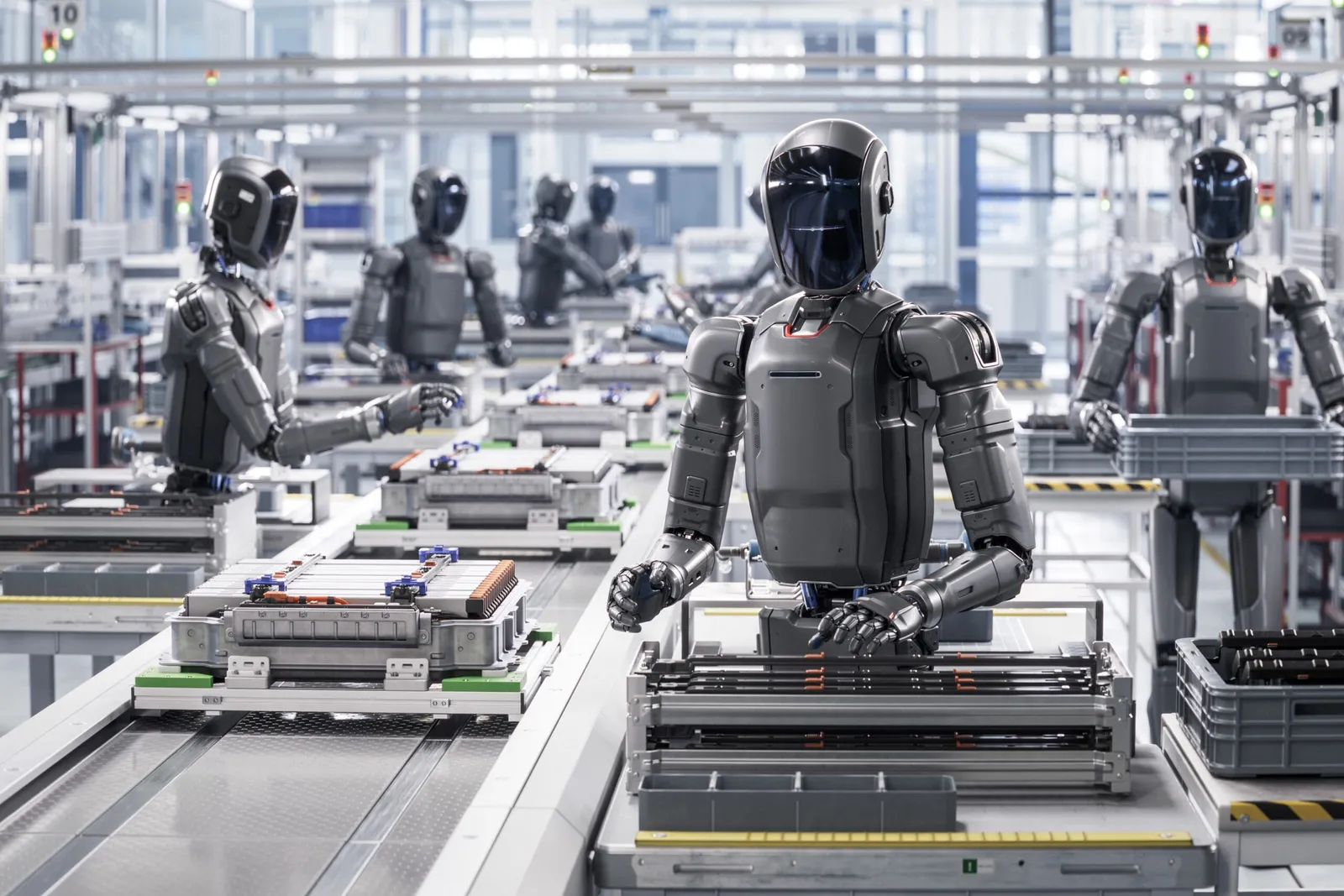
In the near future, humanoid robots could become a reality: machines powered by artificial intelligence and equipped with interfaces that can imitate human conversation. Companies able to develop such humanoid robots could gain an edge over their competitors. But what is also essential is a framework around them: formulating a vision and continuing to invest in R&D to support the robotics ecosystem.
The global humanoid robotics market is estimated to be worth around three billion dollars and, according to Technavio, is set to grow by double digits annually. Although no manufacturer has yet produced a truly general-purpose platform, the industry is building advanced hardware platforms and developing sophisticated prototypes that use artificial general intelligence, which solves problems rather than simply carrying out specific tasks, as AI does. These machines can already perform tasks across a range of sectors. One estimate predicts that robots of this kind could eventually replace around 35% of existing jobs. Applied to the US labour market, for example, that would mean 55 million jobs.
What distinguishes a humanoid robot from a robot?
Humanoid robots have four capabilities: perception, locomotion, manipulation and autonomy. Perception uses sensors and cameras to facilitate spatial awareness. Locomotion, whether on wheels or using bipedal movement, enables navigation. Manipulation through dexterous ‘hands’ enables interaction. Autonomy is the ability to operate independently, using machine learning for continuous improvement.
A revolution in industries with humanoid robots
The combination of these capabilities means that humanoid robots could revolutionise industries. Repetitive tasks, particularly in customer-facing roles, are the most likely candidates in the short term. In healthcare, for example, robots could carry out routine tasks and provide basic patient care, such as measuring vital signs. They could eventually transform hazardous industries by working in mines, on oil rigs and in nuclear power plants. As space exploration advances, humanoid robots could maintain equipment and operate in inhospitable environments.
Boosting productivity and reducing costs
Humanoid robots are resilient. The average person works 240 eight-hour days a year. Humanoid robots can work for up to twenty hours a day for more than 350 days a year, stopping only for maintenance and recharging. This means around four times the labour productivity of humans. Robots are also more precise and are not affected by fatigue or distraction. They also reduce labour costs. Goldman Sachs reports that prices have already fallen as production has increased, from 250,000 dollars per unit in 2022 to around 150,000 dollars per unit in 2023. Tesla is even aiming for a price of 20,000 dollars per robot. Assuming a conservative service life of three years, the cost of ownership would be 5 dollars per hour, significantly lower than the average wage for low-skilled workers in the US, excluding the cost of benefits and extensive HR and training processes.
Managing risks and ethical concerns
However, humanoid robots bring potential risks and ethical concerns. These systems collect and store vast datasets, including personal information and behavioural patterns, without necessarily having obtained consent from the people they interact with. Bias in programming, already evident in generative AI models as a result of their training data, could lead to biased behaviour. Similarly, robots could be programmed to manipulate users’ decisions, undermining trust. Faulty machines could pose a physical threat to people’s safety, given their size, strength and speed.
Question about this story? Ask your question
Keep following this
Get an email when a new story is published. No account needed.
- ThemeRobots on the shop floor
- SubjectMotion, gears & drives







