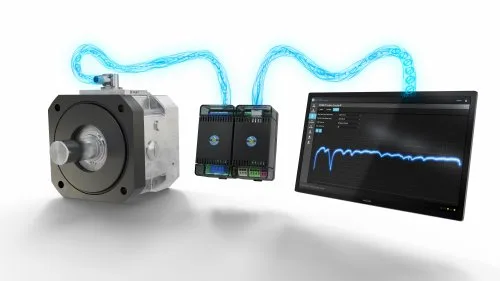
Smart extraction pays off: lab automation in mining
Text and images Festo
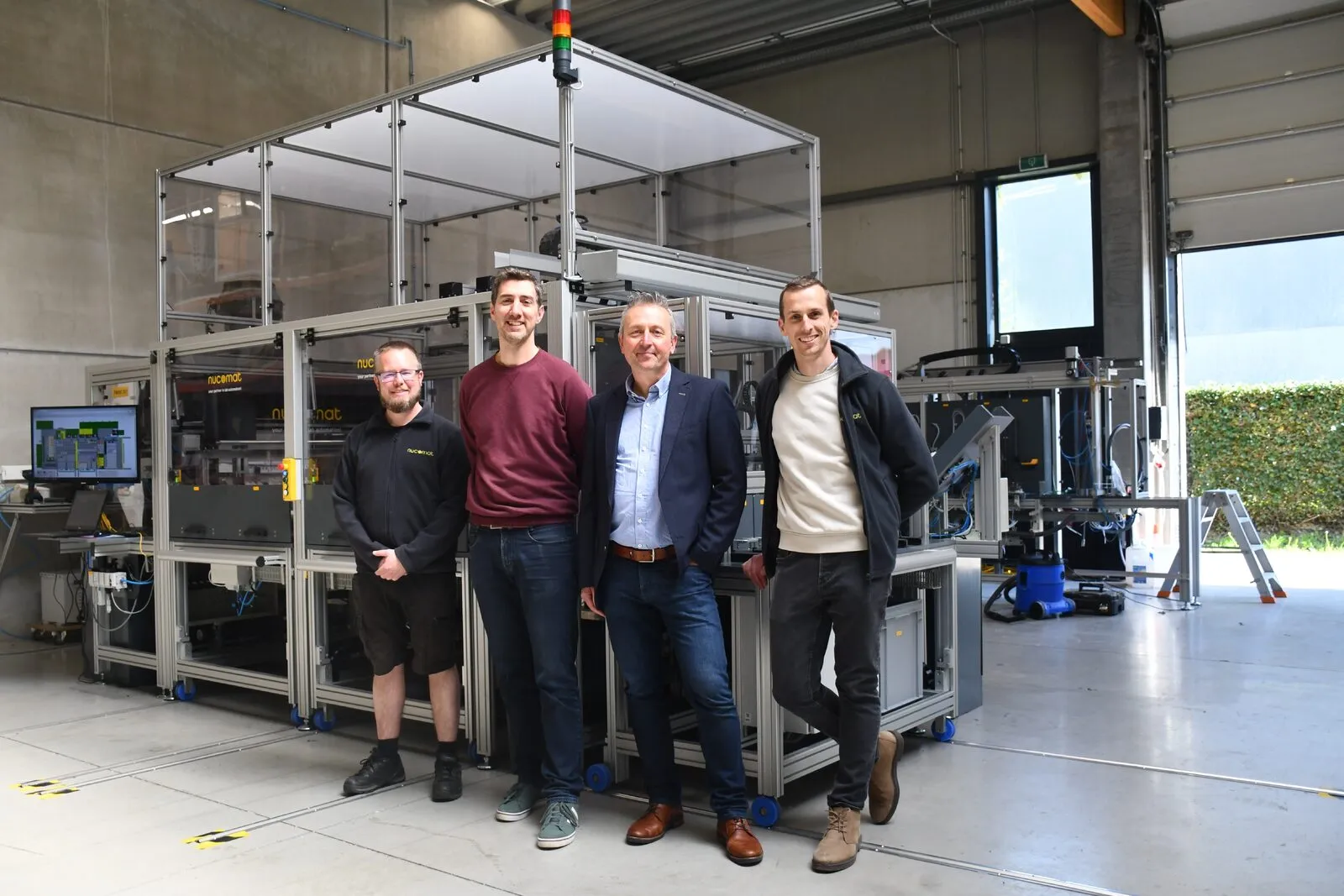
Not all copper ore contains the same concentration of copper. Modern mining therefore relies heavily on what laboratory analyses reveal before extraction begins. Thanks to the machines built by Belgian company Nucomat, the entire process runs unattended, safely and efficiently. And following a recent upgrade to Festo electric automation components, the machines run more smoothly and quickly than ever before.
Automation is increasingly becoming a must in laboratory environments too. This is partly to address the shortage of qualified staff, and partly to improve the quality and safety of measurements. It is a niche in which machine builder Nucomat has made its mark. The family-run company from Lokeren found its way into the field organically. “My father worked in engineering for the nuclear sector. When the American company he worked for divested that division, he took it over with two other employees. Gradually, our focus expanded to the pharmaceutical industry, where we became familiar with laboratory environments. That is how things got started,” explains Laurens Van de Steene, business developer at Nucomat, outlining the company’s history.
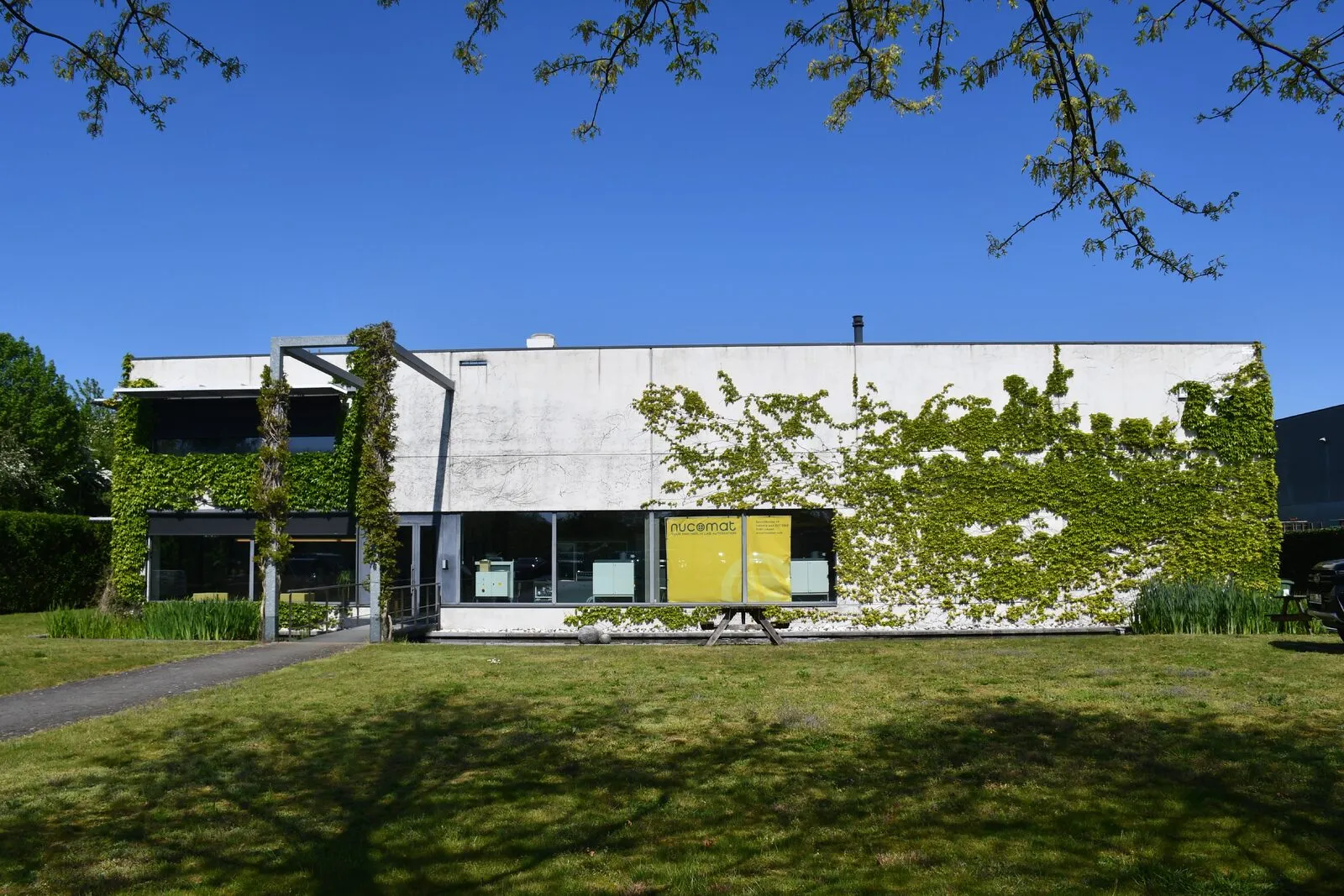
Deeply rooted in the niche
Nucomat has built a strong reputation in laboratory automation over the past thirty years. “We don’t offer off-the-shelf solutions, as we can’t compete on price here. Instead, we provide custom solutions for even the most challenging environments.” The Flemish SME has grown into an international benchmark for mining applications. “Especially when it comes to applications in corrosive, wet-chemical environments. Nobody goes as far as we do in this field. When hydrofluoric acid is involved, we’re the only ones left standing,” says Van de Steene.
Copper concentrate analysis
Nucomat recently proved its worth in the sector once again. An international customer active in copper mining came back to Nucomat after 18 years. “Our machines had been running without a hitch in a 24/7 regime throughout that time. We build them too well,” laughs Van de Steene. They do, however, have to withstand harsh conditions: acids are used to dissolve the samples for analysis. Once dissolved, the samples can be analysed to determine how much copper they contain. “This tells the customer about the composition: the copper concentration, and the impurities and other valuable metals they can expect to find. It also tells them the most suitable method for extracting the copper,” Van de Steene explains.
The importance of a brand name
However, 18 years is an eternity in technological terms. Nucomat therefore decided to bring its machine back up to state-of-the-art standards. The biggest change was replacing the microcontroller with a PLC and drives, a more industrial solution. “Customers are more familiar with it, both the technology and the manufacturers behind it. That builds trust,” he explains. After a thorough analysis of the market, Nucomat chose Festo as its electric automation partner. “We’ve been working with them for a long time. Festo is the name in pneumatics. But their electric solutions are just as good. Add their global presence, the benefits of a one-stop shop for machine building and the excellent support, and it’s clear why we didn’t have to think twice.”
Sufficient processing power with the CPX-E PLC
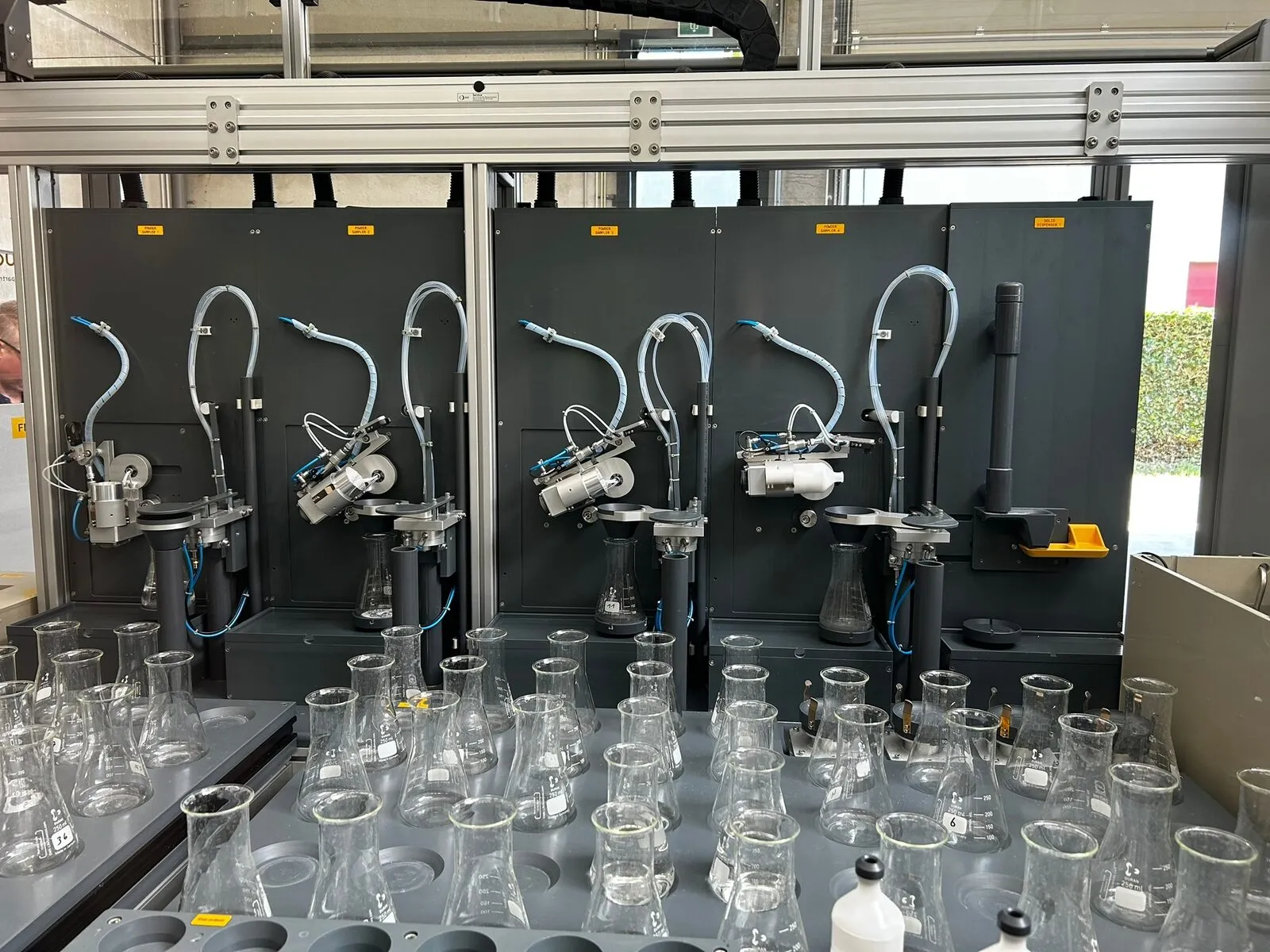
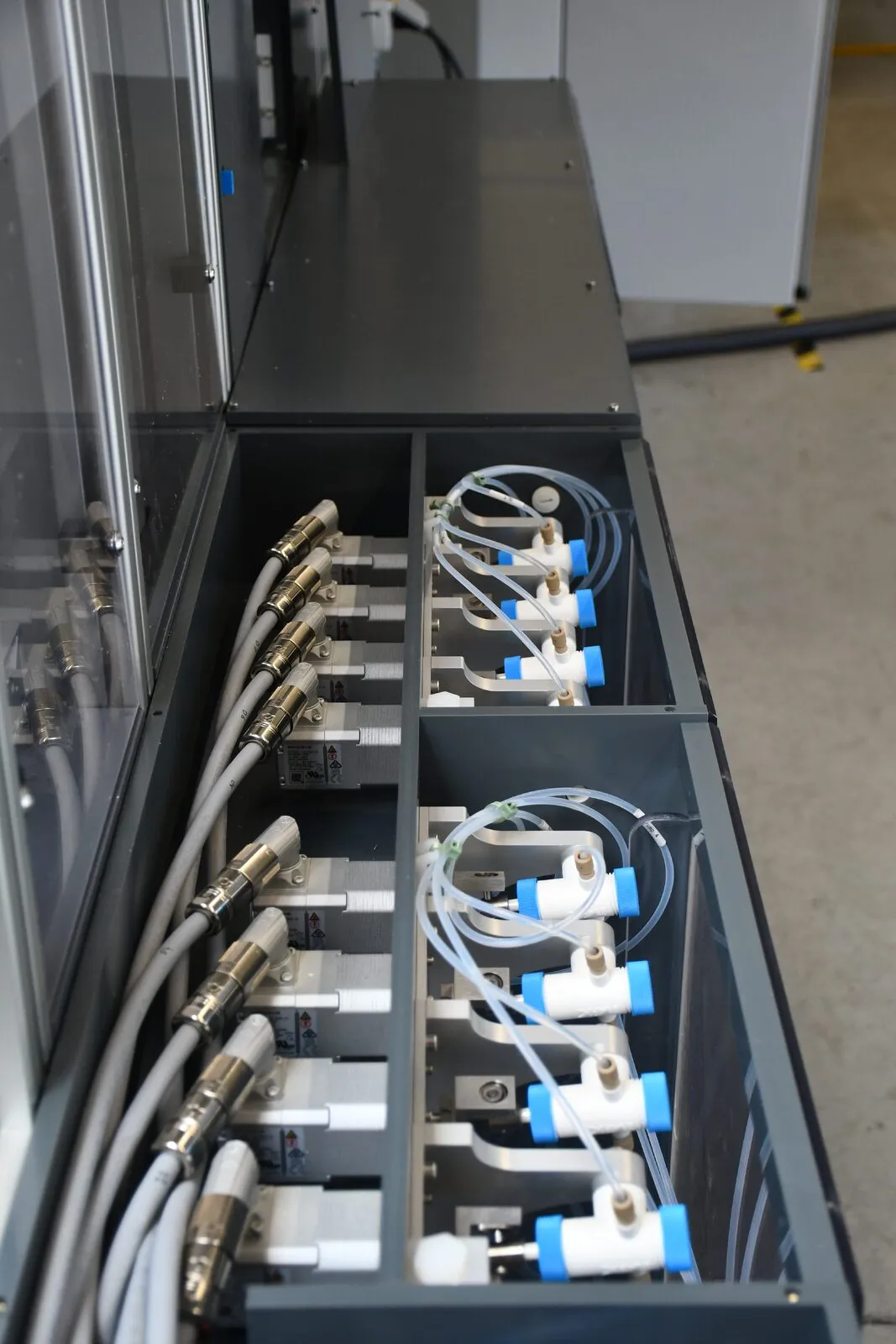
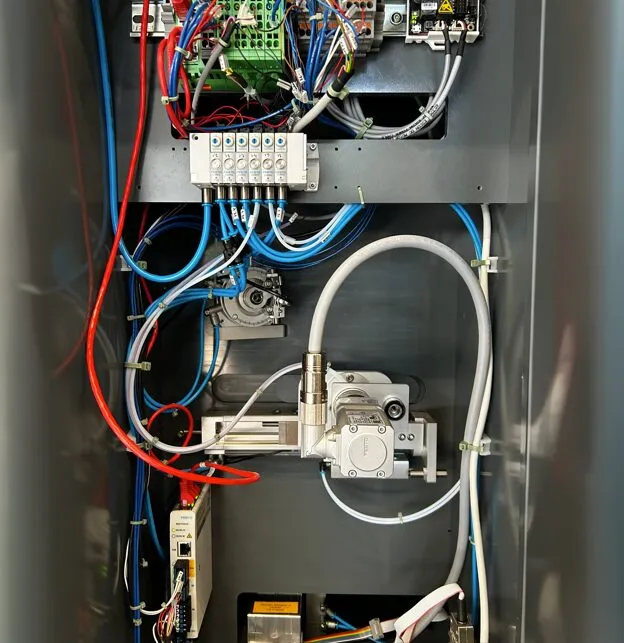
As soon as the control cabinets are opened, it is clear what Van de Steene means by a one-stop shop. Festo components feature prominently. “Timing and positioning are crucial in this machine. Previously, each station had its own microcontroller. Now, one Festo PLC gives us enough processing power to ensure that, and the movements are actually smoother.” He starts up the machine to demonstrate. The robot picks up and puts down a cup in one fluid motion. Around 30 Festo stepper motors handle the job behind the scenes. Each has an encoder integrated for closed-loop operation. “The motors are mainly used for pumps and gantry robots. The stepper motors and encoders allow us to pump liquids accurately and position the robots.”
Every detail considered
Samples can be sent to different destinations, depending on the test required: gravimetric sampling, acid addition, heating or mixing. The materials added to the sample are metered with great precision using ceramic pumps, each driven by a Festo motor and drive. There are ten in total in the cabinets. “We choose a modular design based on the materials the customer wants to test and the throughput they want to achieve. This also has maintenance benefits for the machine.”
One area of the machine has been given even better shielding: the so-called hot cell, where highly concentrated acids are added and the samples are digested. “Temperatures on the heating plate can reach 300 °C here. Heating the acids creates corrosive vapours.” Every detail has been considered to ensure safe and robust operation, right down to the positioning of the extraction system. “Festo valve terminals maintain constant overpressure, preventing any vapours from spreading throughout the machine and causing corrosion.”
Global presence, local strength
The new automation architecture makes the new machine faster than its predecessor. Most of the internal communication takes place over EtherCAT. Commands come from Nucomat’s software: a dynamic scheduler that tells the PLC what its next task is. “Programming is now done in CODESYS. That was perhaps the biggest adjustment for us, especially given the time pressure to get the machine ready. But after some basic training and with Festo’s support throughout the process, the team got to grips with it very quickly. That’s what’s great about Festo: a global presence backed by strong local experts.”
A business enquiry for Festo? Get in touch
Companies in this story

Keep following this
Get an email when a new story is published. No account needed.
- SubjectMotion, gears & drives
- CompanyFesto