Automation technology is crucial to managing a green oasis
Text Valérie CouplezImage Beckhoff Automation
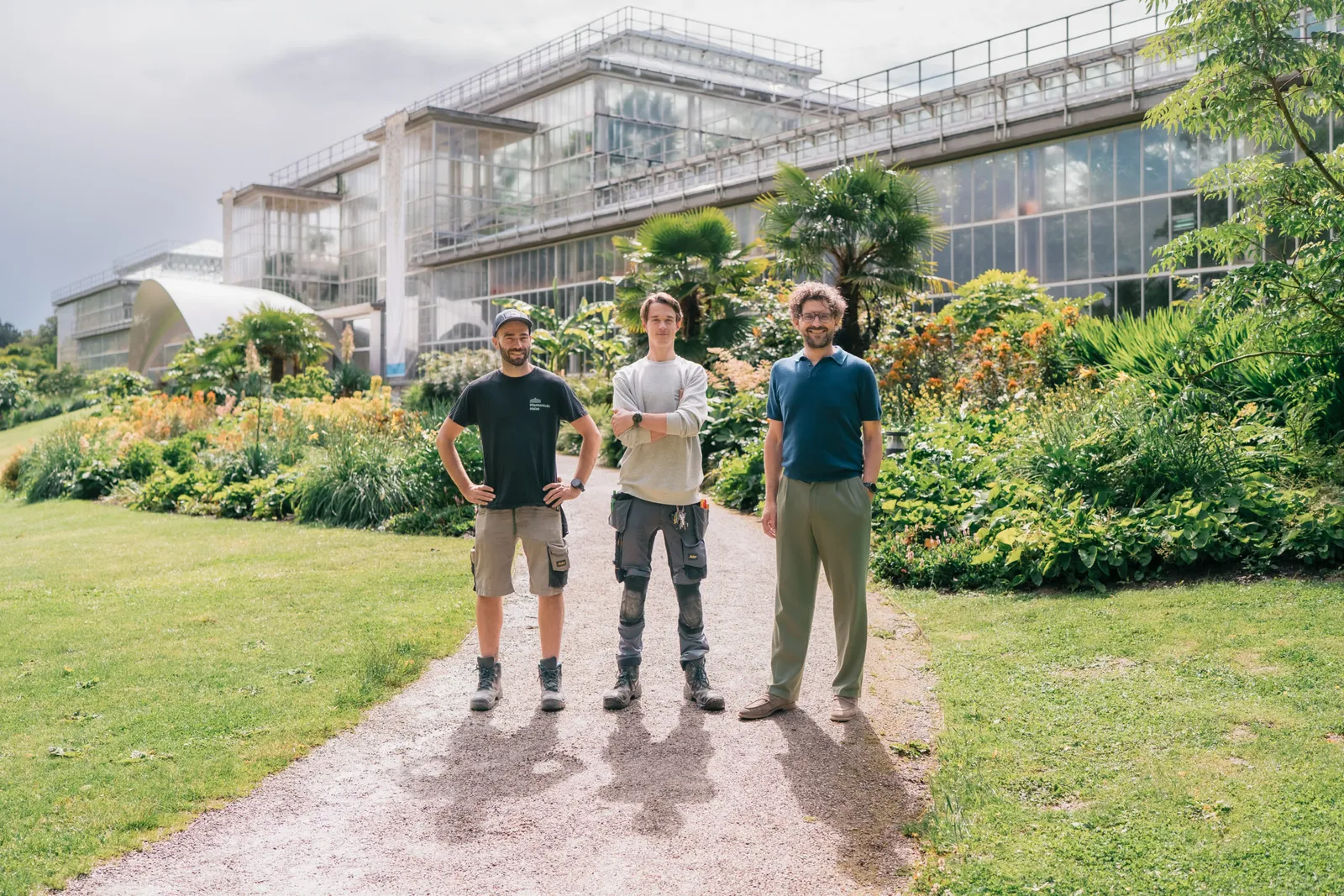
Plantentuin Meise is a 92-hectare green oasis on the outskirts of Brussels. It may not be the first place you would associate with industrial automation, but it is essential to providing each of its 20,000 plant species with the best possible growing conditions. Choosing Beckhoff technology has set Plantentuin Meise on the path to substantial energy savings.
The history of Plantentuin Meise dates back to 1797, when it was established at the Nassau Palace in Brussels. Plants brought back by explorers were avidly collected at the botanical garden. It is a story of collecting, studying and caring for plants, and passing that knowledge on from one generation to the next. In 1938, the botanical garden moved to its current site in Meise, marking the start of a major investment programme that included the construction of the Plant Palace, a series of thirteen impressive greenhouses. Today, they are a popular tourist attraction, drawing more than 250,000 visitors a year. But the Garden’s mission to protect plants and share knowledge has never been more important for preserving biodiversity on our planet, with climate change posing an ever greater threat.
Sustainability as a guiding principle
Biodiversity and sustainability are inextricably linked. In the ‘Plantentuin Meise 2.0’ Master Plan, sustainability is therefore the guiding principle behind all investment, with the aim of achieving net zero by 2045. Every renovation uses state-of-the-art technology, with particular attention paid to energy efficiency and renewable materials. Technician Mathias Hertogs was the one who brought Beckhoff into the picture. “I’ve been working here as a student jobber since I was sixteen. I got to know Beckhoff while studying electromechanical engineering. I knew it would be an excellent fit here, thanks to the system’s robustness and openness. They also don’t charge a licence fee for the engineering software, which made it the best solution for us from a budgetary perspective too,” says Hertogs, who joined Plantentuin Meise full-time after completing his studies.
User-friendly and modular
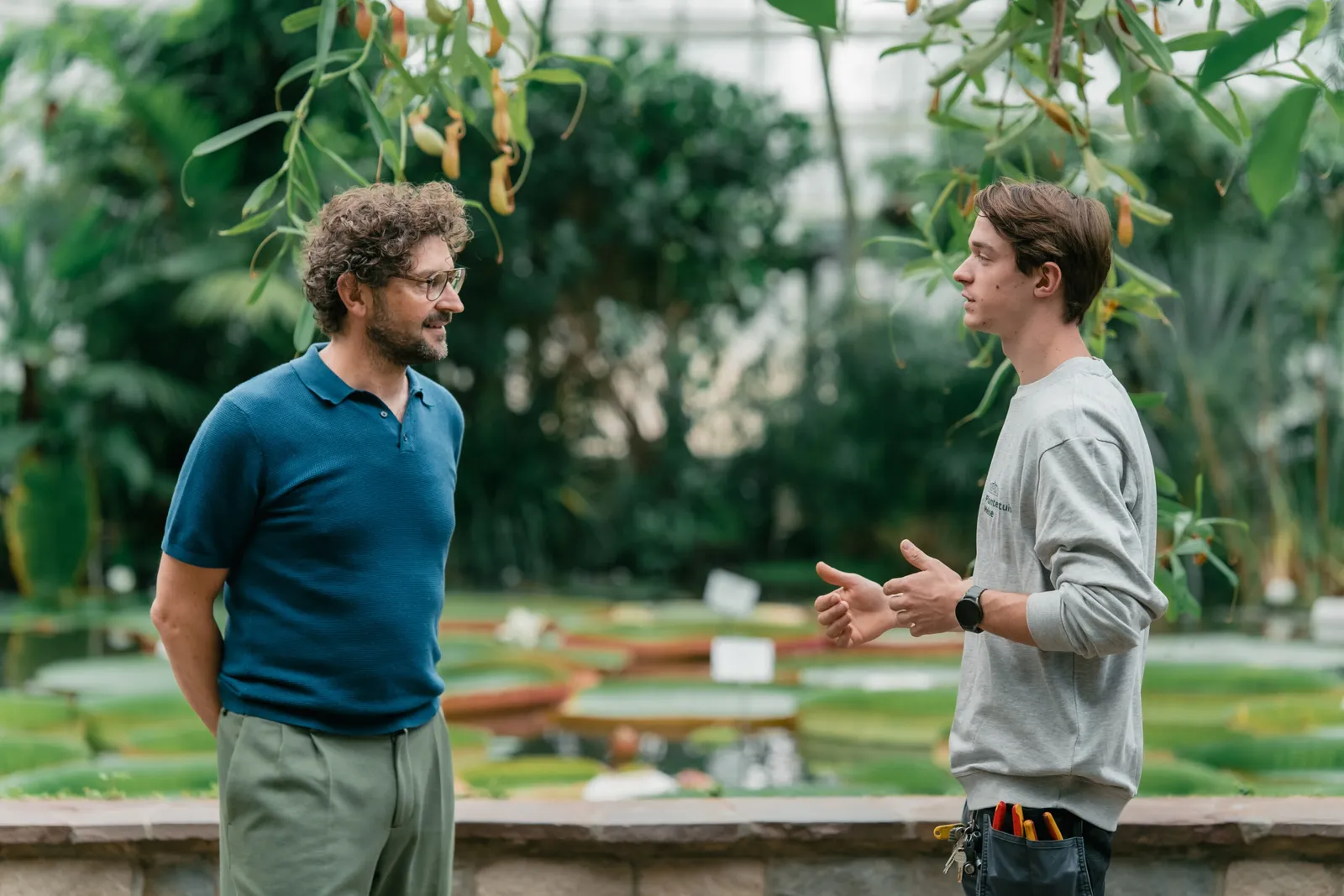
He takes us to the Plant Palace, where we experience first-hand how different the climate is from one greenhouse to another. We walk from desert landscapes to tropical forests and then on to native plants. “The main things to keep an eye on are temperature, humidity and ventilation, to make sure the plants can grow and flower,” says technician Kenny Smeesters. The heating and energy supply here is powered by a CHP unit.
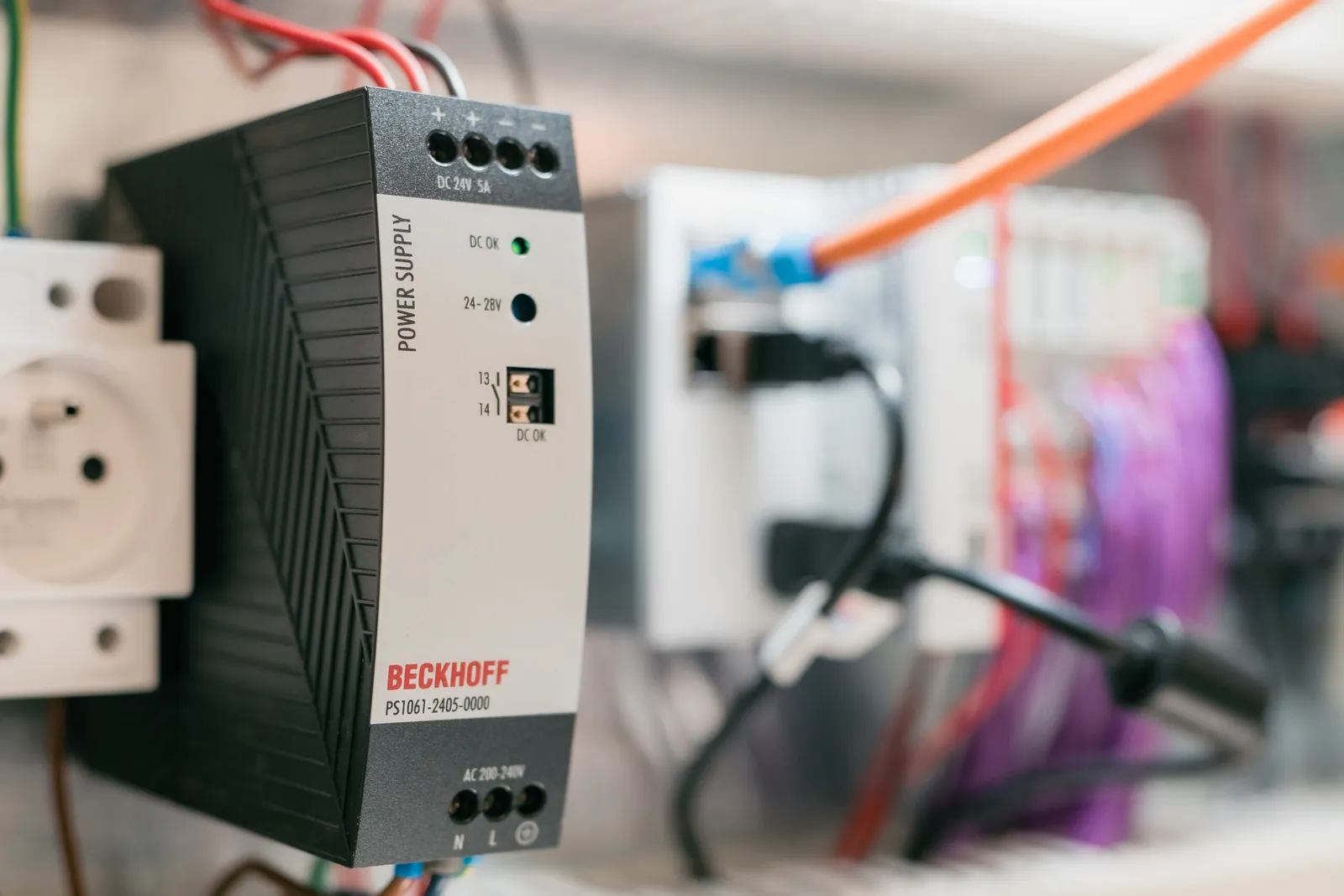
When the previous control system failed in ’24, Hertogs suggested trying Beckhoff, as they had the required PLC, a CX7000, in stock. He got the go-ahead and converted the system in three days. “It’s so user-friendly that you can get the basics up and running quickly. You can also work modularly, which means we can introduce new things here step by step. Thanks to the savings we made, we recouped the investment within one month,” says Hertogs.
Gas consumption down by a quarter
Energy monitoring, boiler controls, pump control, fogging systems, lighting, buffer tanks … Beckhoff is now the standard for every modernisation project. For smaller projects, the technical team opts for the CX7080, and for larger ones, the CX9240. “That’s what’s so good about Beckhoff: how easy it is to bring all the signals together and exchange programmes. As a result, we can now control our systems much more intelligently. In recent years, for example, we’ve already cut gas consumption by a quarter. That’s a huge saving, and it has only increased senior management’s confidence in Beckhoff technology,” Smeesters tells us. Hertogs is also keen to highlight the excellent support. “I’m still young, and I still have a lot to learn myself. But within an hour, you can get someone on the phone who knows the solution.”
Getting smarter
The equipment’s robustness has also been proven. Smeesters says: “Three years may not be a long time, but the technology is put to the test here by the high humidity. We haven’t had a single problem, which was not the case in the past.” And what does the future hold? “We’re now receiving a great deal of data from various measuring points, enabling us to go further in optimising energy consumption and respond quickly. That’s a big change from the past, when the control system was more of a black box. We’re now getting to grips with it. The next step could be to introduce an AI model, for example, to anticipate the weather. The smarter we get with Beckhoff, the closer we come to our goal of carbon neutrality,” Hertogs concludes.
Een zakelijke vraag aan Beckhoff Automation? Get in touch
Companies in this story
Keep following this
Get an email when a new story is published. No account needed.
- SubjectControl & network
- CompanyBeckhoff Automation