












The shortage of technical talent: how Siemens is investing in STEM, education and the industry of tomorrow
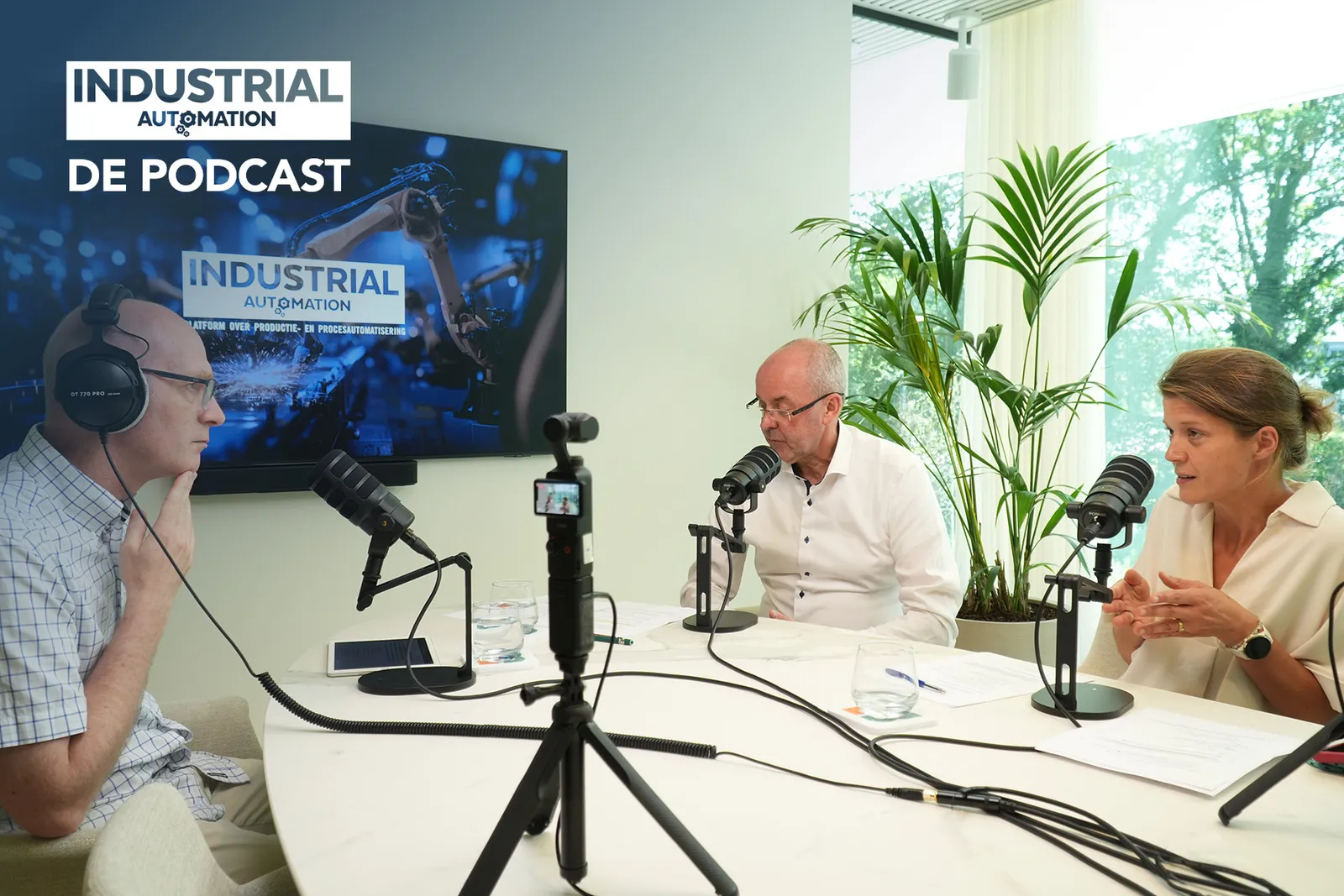
Finding technical talent remains one of the biggest challenges facing industry in Flanders. In this episode of the Industrial Automation Podcast, Björn Crul talks to Geert De Coninck and Katrien Valkiers of Siemens Belgium about the tight labour market, the need for STEM talent, collaboration between education and business, and the technical skills industry will need in the future.

A business enquiry for Siemens NV/SA? Get in touch
Full transcript
All chapters (21)
- Introduction
- The tight labour market
- The impact on innovation and production
- Hard-to-fill roles
- Too few people entering technical fields
- New skills
- The role of education
- Career prospects in industry
- Industry as an innovative sector
- Working at Siemens
- The image of technical education
- More than university education
- Who needs to take action?
- Collaboration with education
- Siemens Industry Academy
- Practical example with Helicus
- Dual learning
- Gender diversity in technical education
- Skills for the years ahead
- A message for young people who are unsure
- Closing
Introduction
Björn Crul Hello listeners, and welcome once again to the Industrial Automation Podcast. One of the biggest challenges facing many companies in Flanders is still finding suitable staff. In this podcast, we take a closer look at the tight labour market, initiatives to promote STEM pathways, and the debate over what qualifications are actually needed to build an engaging career in engineering and technology. I’m Björn Crul, and my guests today are Geert De Coninck and Katrien Valkiers from Siemens Belgium. Welcome to you both.
The tight labour market
Björn Crul Even though the manufacturing industry is not always having an easy time, I still hear from many companies that the tight labour market and the search for new employees remain among their biggest challenges. Do you see that at Siemens too, Geert?
Geert De Coninck Absolutely, Björn. And it has become a structural problem. If you look at the VDAB’s list of shortage occupations, for example, five of the ten most in-demand occupations require technical skills. It really is a bottleneck to growth, and competition between companies to recruit these people is extremely fierce. This is holding back our economy’s progress with digitalisation and the energy transition, both of which are essential to it.
The impact on innovation and production
Björn Crul So it has a major impact, Katrien.
Katrien Valkiers It certainly does. Without people with technical skills, innovation slows down and production, as well as maintenance, comes under pressure. So we don’t see it as an either-or situation, but rather as both-and. There are too few people entering technical fields, while at the same time the scope of these roles is expanding considerably.
Read the full transcriptCollapse transcript18 more chapters
Hard-to-fill roles
Björn Crul Geert, looking specifically at your company, which roles are hardest to fill at the moment?
Geert De Coninck They’re very diverse. We’re looking for service engineers and service technicians, both in automation and in IT-related roles. HVAC specialists, electromechanical engineers, OT-IT bridge roles, you name it. We’re short of all of them, and they simply aren’t available on the labour market. Even sales roles require a technical background, because customers still want someone with technical expertise who can discuss the various applications with them.
Too few people entering technical fields
Björn Crul Does that mean too few people are graduating with technical skills?
Geert De Coninck Absolutely. Too few young people choose technical subjects. I think part of the problem is the image. We still have this perception that engineers typically do heavy, dirty work with little future. And that is becoming a major problem. We not only have too few new people coming into the field, we also face a demographic challenge. The PLC was introduced in the late 1970s, but the major innovations came in the 1980s, driven by a large number of engineers. Those engineers are now retiring and need to be replaced, on top of meeting our new needs. So we are facing a genuine societal challenge.
New skills
Björn Crul Technology keeps evolving, of course. Are companies looking for different skills today than they were in the past, Katrien?
Katrien Valkiers In some respects, yes. The purely technical specialist we used to have is no longer enough. We still need a strong technical foundation, of course, combined with digital skills. On top of that, we need abilities such as problem-solving. Being able to work well with others is crucial, as is remaining eager to learn. We see technology evolving faster than training programmes can keep up. That is not a criticism, but it is what we are seeing.
The role of education
Björn Crul Geert, what does that mean for education?
Geert De Coninck Katrien has already touched on this. It’s not that education is falling short. It simply can’t solve this on its own. Education lays the foundations, but we need to support it and build closer collaboration. We can offer work-based learning and placements. We need to work together to improve the image of technical careers and make sure they can evolve alongside us.
Career prospects in industry
Björn Crul I think another factor affecting the appeal of the industry is the pressure it is under, something we hear about in the news every day. Companies are restructuring, and investments are being cancelled. So the question is: what kind of future can you offer new employees?
Geert De Coninck The traditional image of an engineer no longer holds true. Engineers and technicians are now at the heart of our economy and help drive its progress. They work at the intersection of the technologies being deployed, the digitalisation challenges ahead and the societal challenges we all face. For example, just this Saturday VRT NWS published an article about the need for technicians to support hospitals and laboratories. These are additional fields where people with these skills are needed. The engineer’s focus is also shifting. We used to work on individual components. Now we’re more concerned with the whole system, which makes the engineering role much more interesting.
Katrien Valkiers We may also be seeing young people asking not only what their future prospects are, but why the work matters. People with technical skills help shape the energy transition and build a sustainable industry. And again, that takes adaptability and collaboration. Technology has always had an impact on people.
Industry as an innovative sector
Björn Crul People sometimes think industry here is doomed. Not so.
Geert De Coninck I’d say quite the opposite. Industry is certainly not a dying sector. It is one of the most innovative environments we have today. People in technical roles are given more and more responsibility and, as I mentioned earlier, greater variety in their work. There are also extensive opportunities to learn and apply different technologies. In the past, you were assigned a particular job and stayed in it for a long time. Jobs are no longer linear. You encounter different technologies and challenges, so projects are entirely new and focus heavily on innovation. An engineering career, with its constant stream of new challenges, is a very attractive prospect.
Working at Siemens
Björn Crul And that’s what Siemens has to offer too, Katrien.
Katrien Valkiers Certainly. I think Siemens works on solutions that make a real difference both today and in the future. These are projects that matter, bringing technology together with societal relevance, to use a rather grand term.
The image of technical education
Björn Crul Looking at the shortage of young workers, a lot of it has to do with how people view technical secondary education and practical training courses, which are often seen as a second choice. But the market needs people with those skills.
Geert De Coninck Yes, and I think there is a mismatch between what education provides and what is expected in today’s fast-moving labour market. There is currently too little structured collaboration between businesses and education.
Katrien Valkiers Certainly. I also think there are persistent stereotypes that portray technical education as a second choice. A lot could be done to address this by showing what these jobs actually involve and the real impact they have.
More than university education
Björn Crul So a university education is not the only route to a good, high-quality technical job?
Geert De Coninck No, definitely not. University education is important, of course, but we also need professional bachelor’s graduates, associate degree graduates and people with a technical education to fill the different roles. Designing a machine and actually making it work and keeping it running require entirely different skill sets and levels of education. To give another example of a shortage occupation, panel builders are actively looking for people with technical skills who can interpret an engineering drawing and, for example, turn it into a control panel. So we are certainly not looking only to university education.
Who needs to take action?
Björn Crul The question, of course, is how we can get more young people into these fields and who needs to take action.
Geert De Coninck Who, is a very good question. There is certainly no single solution. Education and businesses both have a part to play, and I think the government has an important role too. We need to build a structured partnership in which we see one another as equal partners. The government needs to give us the opportunity to make this happen. We then need to pool our strengths and perhaps do more to publicise what we have achieved.
Collaboration with education
Björn Crul Let’s make this concrete, then. What is Siemens doing to narrow the gap between education and the workplace?
Geert De Coninck We have an established relationship with education. We even have one person working full-time on everything related to education and training. Through her, we are in dialogue with schools about their needs.
Katrien Valkiers To make it very concrete, for example, we believe it is important to introduce young people to technology at an early age. We have been organising Little Innovators for 14 years now. I always say it is the best day of the year. It is a way of introducing our own children, our own Siemens children, to what STEM means in practice. They recreate alarm systems and make little wind turbines, for example. They get to know all about it during a fun-filled afternoon. Over the past three years, we have also opened it up to children from the schools in our neighbourhood. We want to expand the pool of STEM talent quickly. That is one thing we do. We also want to support teachers. We organise workshops for teachers every year. Around 130 teachers take part each year and receive training in the latest technologies. We also work with the Regional Technological Centres. We have partnerships with several schools and universities. Our aim is always to guide young talent towards the workplace quickly and effectively.
Siemens Industry Academy
Björn Crul These are a number of initiatives focused on technical secondary education. Of course, there is also a need in higher education for enough young people to choose STEM subjects: science, technology, engineering and mathematics. You are also strengthening your ties with higher education in this area, Geert?
Geert De Coninck That’s right. Perhaps I’ll start with higher education, with the universities. About six years ago, we launched the Siemens Industry Academy. What is the Siemens Industry Academy? It is a collaboration in which we aim to create a win-win-win situation. First, there is the university itself. Then there is the student at the university, which is a second win. What we have done is involve our partner network as well. We ask our customers to put forward projects if they want to deploy certain new technologies based on Siemens technology. They are effectively the third win. And of course, we at Siemens also try to play our part. So we bring together the student, the university, Siemens and partners with real-world projects in one and the same project. We launched it six years ago. Since then, Ghent University, KU Leuven, Hasselt University, the University of Antwerp and two university colleges in Wallonia have joined the project.
Practical example with Helicus
Björn Crul Can you give one concrete example of what this has led to?
Geert De Coninck It is a really great project that we can rightly be proud of. You may have heard of Helicus. Helicus is a company that provides drone services. What did we develop together with them? A platform where the drones can land. The first installation was completed last year. There is currently a landing site at Ieper hospital for drones arriving from Diksmuide hospital. This allows blood samples and other urgent items for testing to be transported, saving taxi journeys and reducing the transport time between the two hospitals by two-thirds. That is one of the great achievements.
Dual learning
Björn Crul Katrien, you also focus on dual education, don’t you?
Katrien Valkiers Yes, that’s right. Work-based learning is another term for it. Perhaps an important disclaimer: we offer it at bachelor’s level, not at secondary level. We have been doing it for about ten years. Students who take part receive on-the-job training while gaining work experience at the same time. The great thing about our programme is that a former dual-learning student is now mentoring the new students. She knows what she is talking about. For us, of course, it also means a talent pipeline. Those students often start out in our ecosystem, either with us or with our partners.
Gender diversity in technical education
Björn Crul When we talk about labour-market shortages and the search for technical talent, gender diversity is certainly another issue to consider. We still see proportionally fewer girls choosing STEM subjects. How can we get more women into technical and engineering roles? What needs to happen?
Katrien Valkiers I recently read that girls decide which subject to study before they turn ten. The earlier we encourage girls to choose STEM subjects, the better. Little Innovators is one part of that. Another, in my view, could be to have more role models and make them more visible. We need stories about women in technology and, as Geert has already said, we need to promote them more.
Geert De Coninck I think we should simply say this: when women apply, we don’t look at gender. It is potential and knowledge that determine our decision. But yes, we should use role models to promote the sector, to show that an engineering degree is just as suitable for women as it is for men. That is definitely something we fully support.
Skills for the years ahead
Björn Crul We’re gradually coming to the end. Looking to the future from Siemens’ perspective, which technical skills are going to be crucial over, say, the next five to ten years?
Geert De Coninck Automation has been around for 25 years already, and it will remain important over the next five to ten years. What additional technologies are now complementing it? Everything to do with data, and the IT-OT convergence. Cybersecurity has become a very important factor. You can see how many companies are being hacked or having their systems shut down. And we certainly mustn’t underestimate the role of AI.
Katrien Valkiers Yes, and perhaps to add to that: technical skills are not the only important ones. Other skills, such as working towards sustainability, systems thinking and collaboration between humans and machines, will also be crucial.
A message for young people who are unsure
Björn Crul Just one final question. If you could give one message to a young person who is unsure whether a technical course is right for them, what would your advice be?
Geert De Coninck I would say: let your passion guide you, and you’ll find that a lot of what you are passionate about translates into technology.
Katrien Valkiers Lovely. I would say that technology is also about people. So the sector needs many different profiles and talents, whatever you study.
Closing
Björn Crul And that brings us to the end of our time today. What I take away is that practical, technical and STEM courses are definitely a good choice, because there will still be demand tomorrow for people with this kind of knowledge and skills. Geert De Coninck and Katrien Valkiers, thank you for this conversation.
Geert De Coninck Thank you.
Katrien Valkiers Thank you.
Björn Crul This was our first podcast in collaboration with Siemens. Dear listener, in a future episode I’ll talk to Geert and Katrien about what happens when someone starts working at Siemens: onboarding, internal career development and lifelong learning. That will no doubt offer plenty of new insights too. Until next time. And if you’re looking for more inspiration in the meantime, visit our website at www.industrialautomation.be.
Companies in this story
Keep following this
Get an email when a new story is published. No account needed.
- ThemePeople make automation possible
- SubjectNews
- CompanySiemens NV/SA







