












Software, IT, OT & cybersecurity
Why a data-centric approach makes sense
Text Valérie CouplezImage Lenze
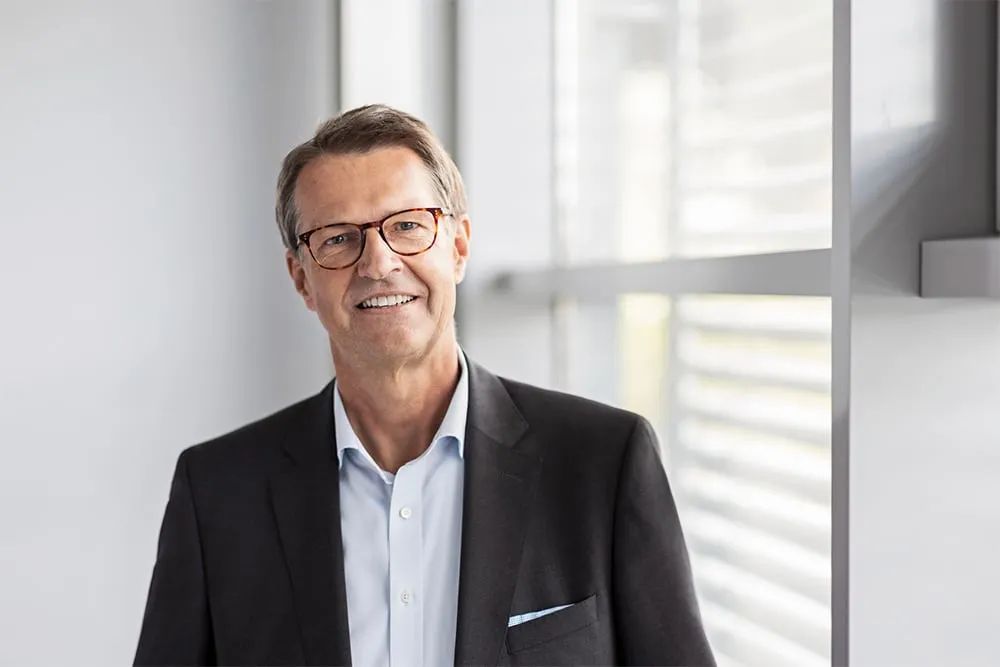
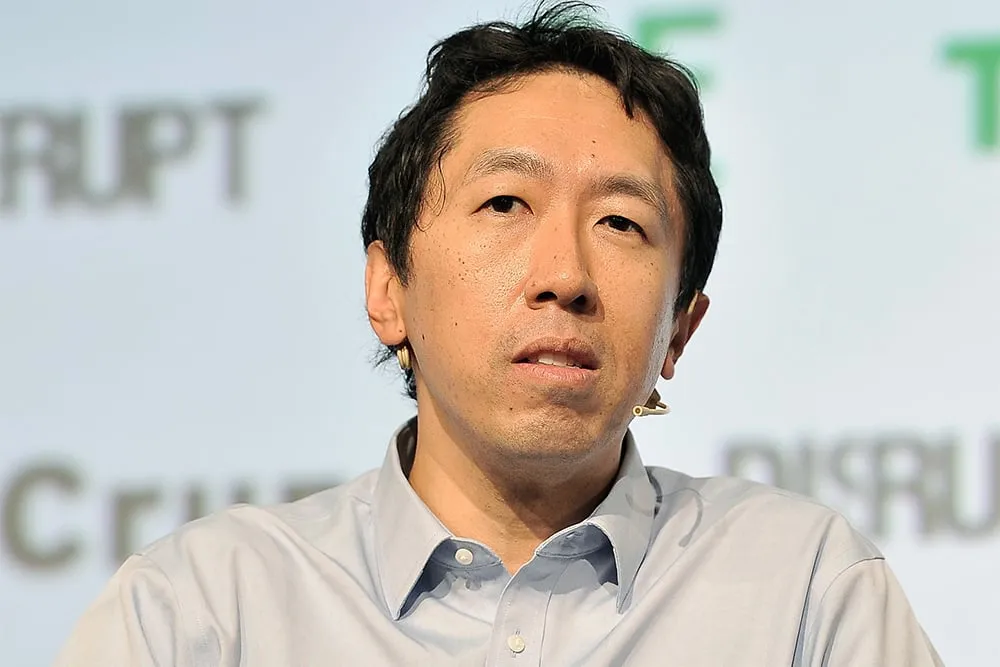
“Do you know Andrew Ng?” Lenze CEO Christian Wendler asks his guests as they arrive. “You really should, absolutely.” Wendler clearly has a soft spot for this man. And this man from Silicon Valley, the birthplace of big datasets, has been talking publicly about smaller datasets for some time. That caught Wendler’s attention, because it is also his story. The focus should be on data quality to unlock the full potential of artificial intelligence, and Ng calls this approach data-centric AI.
Wendler interrupts the Google search: “Ng is one of the leading AI pioneers of our time, and millions of people around the world have taken his courses, including many Lenze employees. The American founded Google Brain, taught at Stanford and co-founded the world’s most popular machine learning course on Coursera.” In the past, the focus in artificial intelligence was mainly on developing, improving and refining algorithms. Can Silicon Valley ultimately learn something from discrete manufacturing, from an industry that has had to work with small datasets for years? Perhaps, but what is even more surprising is that Silicon Valley companies are discovering the industry itself, and the many use cases on the factory floor. European companies welcome this, but new competitors are also entering the market, bringing industry-specific application expertise.
Just the right data
“Ng has set up his own company specifically for this purpose,” explains the CEO of German automation specialist Lenze. That made him sit up and take notice. The entrepreneur knows that less data is generated in industry, and that it is usually unbalanced. In addition, industrial data requires domain knowledge of the production process. This means companies need expertise in labelling data. At the same time, engineers want their models to be explainable.
Wendler is aware of the ambitions of the Americans. Like Ng and his colleagues, he favours a data-centric approach, using small datasets that are then turned into smart data. “With a big data approach, users look for correlations and patterns. Traffic planning is one example. A machine or factory is a very different application. Thanks to our process expertise, I can specify search patterns to detect anomalies. I specifically extract only the ‘right’ data and evaluate it using my expertise,” Wendler explains.
Digital twin as a data pool
He is proud of his team. His engineers rely on the digital twin. “My machine’s data flows into the digital twin, which is essentially the data pool. I extract only the data I really need for my application. That is my small data. And with my domain knowledge, I turn my small data into smart data,” Wendler adds. This matters to him: “We don’t always need deep neural networks; we can also quickly identify how things work and where there is potential for optimisation in the digital twin.”
Huge energy savings
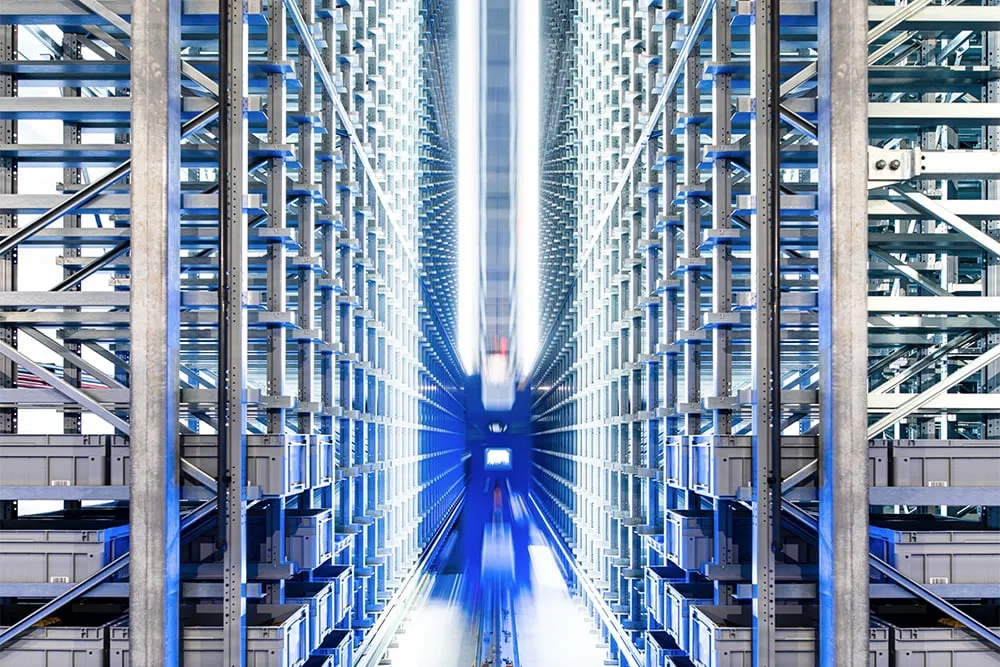
Together with their customers, the automation experts have identified four smart data approaches. “When engineers in Germany plan a new machine, they play it safe. After all, German engineering has always been a byword for top quality and reliability. Even today, many engineers specify systems that are too large because they want to be sure the system performs well,” says Wendler. Experts call this the cascade buffer syndrome. It leads to unnecessary waste. “We can test the precise, performance-based design in the machines’ digital twin,” Wendler says enthusiastically. This saves energy, materials, weight and transport costs. The CEO does the maths: “If we use the data in the twin and our smart data approach for just 25% of the 50 million electric motors worldwide, or 12.5 million motors, we would save around 500 million euros in electricity costs a year and more than 2 billion euros in production costs.” Wendler is now in his element. He picks up a brown parcel. “We can save huge amounts of energy in the e-commerce warehouse,” he promises. Many conveyors run at full capacity for 20 hours a day. “But we need to look closely at the usage data, and then it becomes clear: the customer needs the maximum load for only one hour a day.”
CO2 emissions equivalent to 4 million cars
The electrical engineer does the sums. “With the digital twin, and therefore intelligent, load-optimised motion control and efficient, latest-generation motors, I can achieve an impressive result. The energy consumption of a typical e-commerce facility with 800 motors, extrapolated to 13,000 parcel centres worldwide, would yield savings of 31 TWh. That is equivalent to the CO2 emissions of around four million mid-range cars. We believe this approach can deliver energy savings of up to 50% across all production machines and conveyor systems.” He emphasises the 50%. “These are real figures. We use data to create genuine added value,” Wendler says proudly. “OEE is stuck at 60% worldwide. We have calculated improvement potential of 45 billion euros. Deloitte says the same.”
Machine learning models
The assumption is that within 36 months, 82% of factory operators worldwide will experience at least one unplanned machine stoppage, with most experiencing two or more. Many systems are still maintained on a ‘run-to-fail’ basis, meaning machine components are replaced only when something breaks. On average, production systems at each manufacturer are down for 800 hours a year. Car manufacturers estimate lost revenue at around 20,000 euros per minute of downtime. “And this is where we come in, with our machine learning models. Thanks to predictive maintenance, trained on a small dataset, I know when my timing belt is going to break, so the customer can order and replace the part in good time.”
In-house skills
But does he have all the skills in-house? Ng and his colleagues do nothing but train AI models. “Yes, we have those skills too, and our people also know the customer’s factory and work with its digital twin. We exchange models, can quickly adapt them to other customer systems, and save money, time, energy and resources.” And Ng? Wendler would love to meet him and show him Lenze’s Mechatronics Competence Campus. He jokes that his team could gain domain knowledge there. “The invitation has already been sent.”
Een zakelijke vraag aan Lenze BV? Get in touch
Companies in this story

Keep following this
Get an email when a new story is published. No account needed.
- SubjectSoftware, IT, OT & cybersecurity
- CompanyLenze BV







