












Software, IT, OT & cybersecurity
What will the robots of the near future look like?
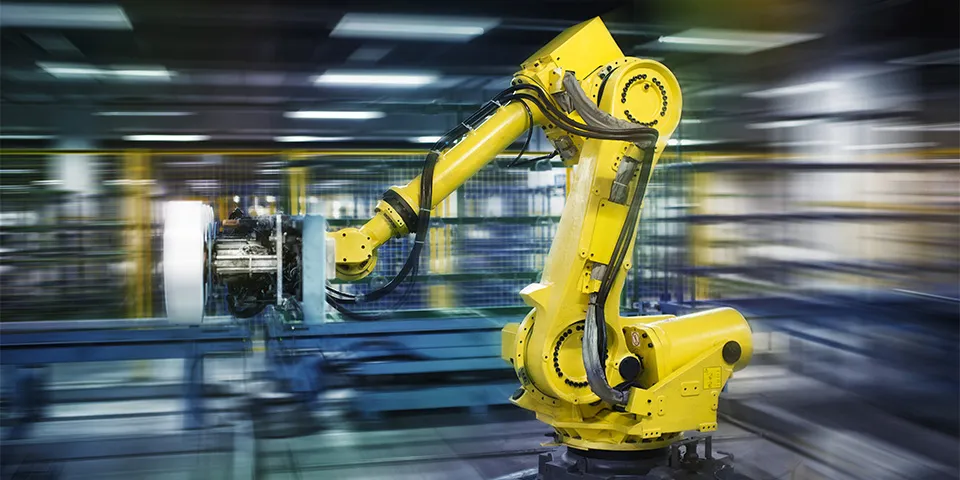
A production floor without robots? That will become a rare sight in the future. The accelerating pace of automation has already brought about a sea change over the past decades, and there is no sign of it slowing down or stopping. Several new trends will continue to set the pace and have a lasting impact on what a production floor looks like. A look ahead at six topics.
Manufacturers turn to robots to perform tasks that require precision and endurance, or involve risks. Robots are particularly welcome workers where repetitive tasks need to be carried out or working conditions are too extreme. In the years ahead, they will appear throughout production, and their numbers will grow exponentially. The more they are used on the shop floor, the more opportunities people will see to devise new robotic concepts and find new ways of completing production tasks. Specialists point to six key trends.
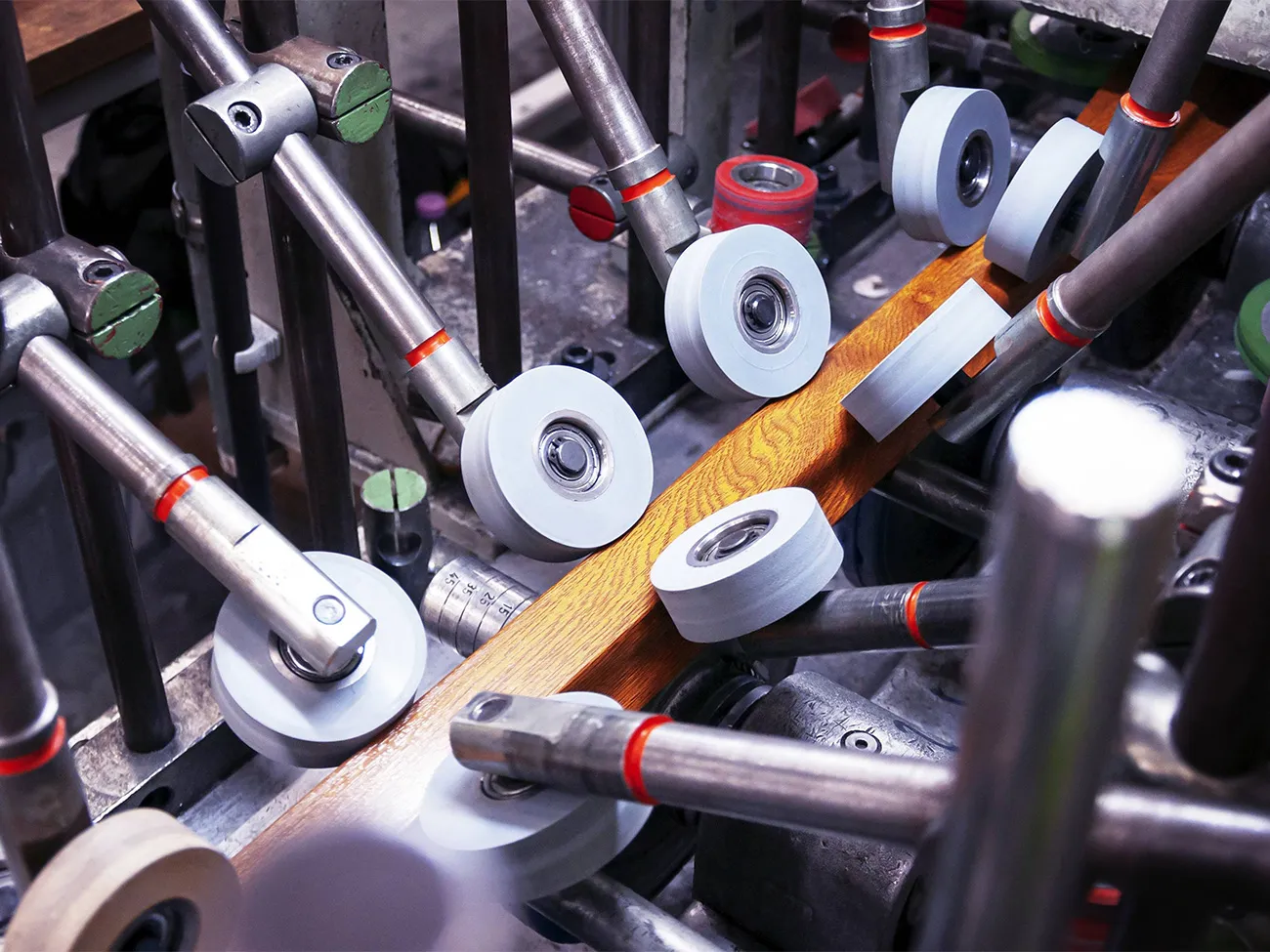
Heavy-duty robot arms in particular are set for impressive growth in the years ahead. These are robot arms that can carry loads of a tonne or more, much more. (Image: Chesky W)
1. Arms that can take a knock
Robots are designed to make work easier. Compared with a human arm, a robot arm can keep productivity going indefinitely, with no risk of injury due to fatigue or overexertion. Heavy-duty robot arms in particular are set for impressive growth in the years ahead. These are robot arms that can carry loads of a tonne or more, much more. According to market analysis, demand is expected to reach 14.7 billion dollars by 2026, representing a compound annual growth rate of 4.73%. Companies working with robots will see more and more opportunities to deploy these heavy-duty arms. Technological advances have greatly increased the strength, reach and functionality of robot arms.
2. Collaborative robots on the move
Collaborative robots are gradually making their way into industry. Whether they are working on assembly or loading and unloading machine tools, they are used to having people nearby. In the years ahead, they will move from fixed workstations to mobile applications. Cobots are compact and lightweight, so they can move easily between work areas or zones in a factory. Their major advantage is that, following a thorough risk assessment, they can also be deployed with intrinsic safety. With forklifts, lift trucks, stackers and other vehicles operated by people, the risk of a collision can never be ruled out. The consequences could include employees being unable to work, or damage to products, machines or infrastructure. Cobots can significantly reduce these problems.
An exoskeleton is a perfect example of robotics. Although considerable pioneering work has already been done, industrial applications have yet to take off because exoskeletons need to be connected to a power source. That is set to change.
3. Safety first
Cobots are not the only robots that can work safely alongside people. Safety awareness is also growing significantly when it comes to conventional robots. Large, powerful robots are traditionally tucked away in enclosed work cells, far from any possible interaction with people. But with sensors being introduced into these enormous production machines, robots may need far less space in the years ahead. 3D sensors can, for example, create a 3D image of the robot’s surroundings. The associated software identifies objects and estimates the paths along which they are moving. The same applies to people. Robots can then adjust their own movements accordingly. For now, cobots are limited in the weight they can carry. Such solutions could therefore provide an alternative for heavy-duty applications, allowing robots to work closer to people.
4. Into harm’s way
Robots are appearing in every branch of industry. They may be most useful where people have to work in the most dangerous conditions. There is still plenty of progress to be made in this area in the years ahead. First, the technology will need to advance so robots can handle toxic gases and heavily polluted smoke plumes, or even work in areas with flammable vapours. Manufacturers are expected to bring out models in the next five years that can take over people’s tasks in such environments. This will allow people to work more safely elsewhere in the company.
There is also a great deal of work under way on robots made from softer components. (Image: Ruediger J. Vogel)
5. Soft on the outside, tough within
There is also a great deal of work under way on robots made from softer components. If covered with a material such as plastic or rubber that can withstand the strain of continuous movement, robots would immediately become much safer to work alongside. The impact of accidental contact would be lower in any case. Many experiments are already under way, with engineers often looking to nature for inspiration. One example is a robot shaped like an elephant’s trunk. Lifting capacities are still limited for now, but progress is beginning to pick up as developers seek to strike a balance between brute force and a soft exterior.
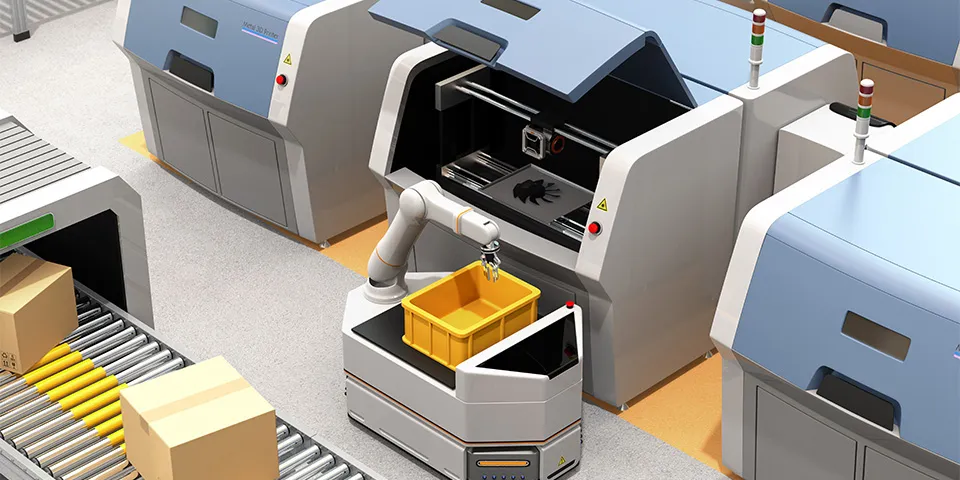
In the years ahead, cobots will move from fixed workstations to mobile applications. Cobots are compact and lightweight, so they can move easily between work areas or zones in a factory. (Image: Chesky W)
6. Improved exoskeletons
An exoskeleton is a perfect example of robotics. Although considerable pioneering work has already been done, industrial applications have yet to take off because exoskeletons need to be connected to a power source. The first industrial exoskeletons powered entirely by batteries are expected from next year. Such a robotic solution should give users a 20:1 amplification of force. In other words, someone lifting 100 kg would feel a load of just 5 kg. The market for robotic exoskeletons is expected to reach around 5.2 billion dollars by 2025. They have enormous potential, particularly in industries such as shipbuilding and aviation, where very heavy components have to be handled.
Question about this story? Ask your question
Keep following this
Get an email when a new story is published. No account needed.
- ThemeRobots on the shop floor
- SubjectSoftware, IT, OT & cybersecurity







