












Software, IT, OT & cybersecurity
What does the future hold for industry?
Text and images Siemens
Electrification, mass production and automation have raised our standard of living to new heights, but at the cost of depleting the Earth’s resources and harming the climate. Industry 4.0 offers a chance to turn the tide. Innovation and digitalisation are paving the way for a ‘greener’ industry that is smarter, more efficient and faster, and contributes to a circular economy. It will continue to drive our prosperity while acting as a catalyst for a sustainable society. Which groundbreaking technologies will play a part in this? And are we already beginning to talk about Industry 5.0? One thing is certain: data are the most important fuel for the industry of the future. And Siemens will be by your side throughout this transition, as it has been for the past 125 years. Thierry Eeckhout, head of digital industries for Belgium, outlines the key developments.
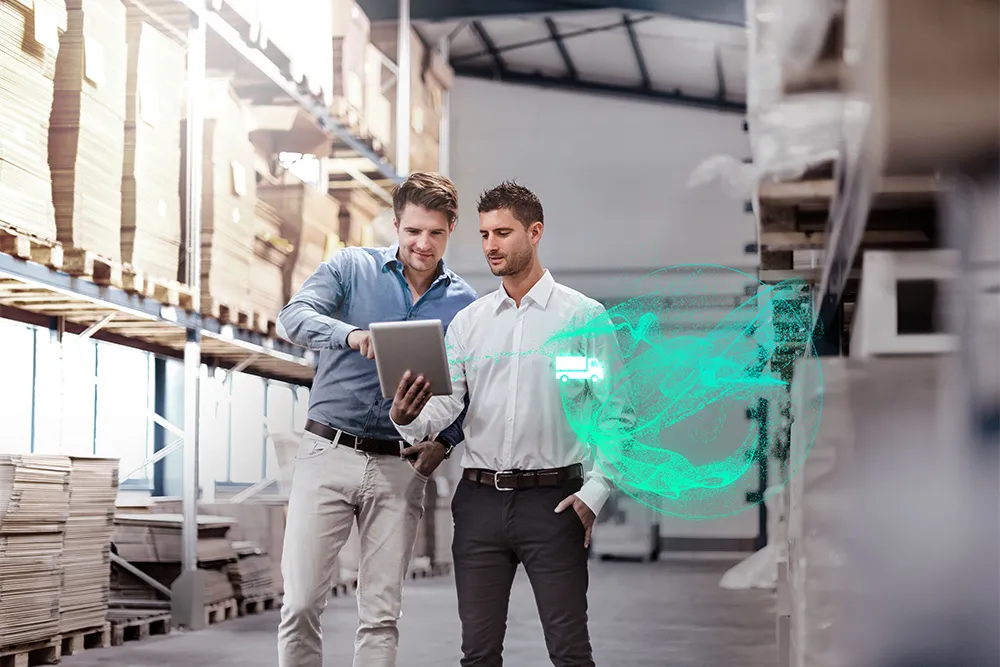
“More than ten years ago, the fourth industrial revolution ushered in a new era, following the first three industrial revolutions: steam, electrification and automation. Industry leaders and pioneers, including Siemens, asked themselves: how can we modernise and make mass production more sustainable while meeting the growing demand for individual customisation? How can IT and OT (operational technology) be integrated seamlessly? Industry 4.0 is the answer, built on an intelligent supply chain, digitalisation and remotely controlled production.”
Greater flexibility
“The importance of and need for Industry 4.0 lay in enabling greater flexibility and digitalisation, allowing industry to respond to uncertainty as our society moves from one crisis to another. Innovation cycles are also getting shorter, skilled workers are in short supply and critical raw materials are running out. But the greatest challenge remains climate change, which affects billions of people and comes at a cost of trillions. Industry therefore needs win-win solutions to adapt to this challenge. How can it achieve net zero without sacrificing quality or competitiveness, and do so affordably? Digitalisation is the key.”

“Has Industry 4.0 delivered what we hoped for, ten years on? In any case, we have made more progress than expected. Thanks to digitalisation and automation, industry can now respond to change much faster. Less raw material is needed to achieve more, while the pandemic has taught companies to invest in technology to keep production running at all times. But now that the true potential of a digitalised industry is becoming clear, it is also clear that there is still much to be done.”
Data as fuel
“There is still room for improvement in how we approach production optimisation. We can no longer afford to make imperfect products and test them over and over until they are right. Digital transformation means making decisions and optimising systems end to end on the basis of data. By analysing and simulating products across their entire lifecycle, from development and use through to recycling, we can better determine what the finished product should look like in reality. Processes, too, can be simulated from start to finish.”
“This requires huge amounts of data. The data exist, but many companies have yet to unlock their full value and potential. Data transparency is the first step. Siemens research shows that only 31% of stakeholders use the data available to them. Data are becoming the fuel of our industry more than ever, making digitalisation essential to collecting, understanding and using this vast amount of information.”
Artificial intelligence, augmented reality and 5G
“It is difficult to predict which technologies will feed this data. The factory of, say, 2035 will look very different from today’s factory. Since the first industrial revolution, mechanisation and water and steam power have enabled machines to take on an ever greater share of the work. Every technological advance, from computers and robotics to the internet, has brought further automation. This technological progress will continue apace, but even in the factory of the future, the ‘human touch’, or human involvement, will remain important.”
“Artificial intelligence will become ubiquitous in industry, with machines and tools increasingly making decisions autonomously. Blockchain will also become indispensable, while augmented reality will be fully established on the factory floor and help validate digital simulations against reality even more effectively. 5G (and its successors, 6G…) will become more powerful in industrial settings, combining speed with greater bandwidth. The industrial metaverse will arrive sooner than expected. Whatever technologies gain ground, they will undoubtedly transform factories drastically.”
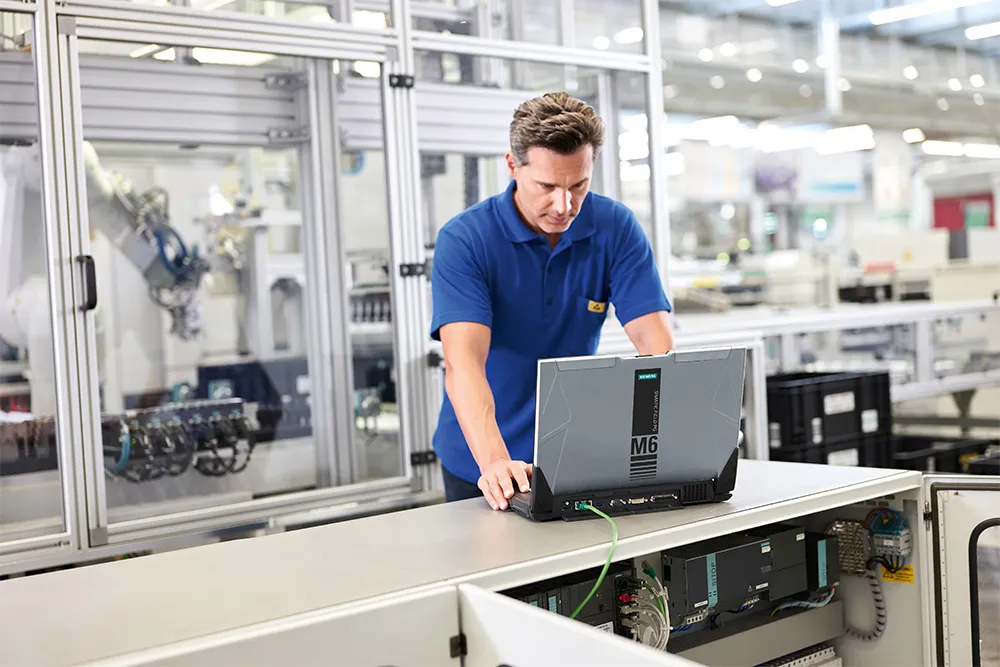
Faster, smarter and, above all, more sustainable
“What we already know for certain is that the industry of the future will be faster, more efficient and more sustainable. Factories worldwide are responsible for one fifth of CO2 emissions and more than a third of global energy consumption, while only 13% of waste is recycled.
The task, therefore, is to create an industry that drives prosperity while contributing to a sustainable, circular economy. Decarbonisation, recycling and reuse will define the industry of the future.”
“Our hardware and software enable us to support a product throughout its entire lifecycle, from development to recycling, capture the data it generates and use that data to inform future developments. Decarbonisation will not happen in a vacuum. Every process, in every company and every industry, will have to be analysed and optimised to achieve a sustainable future. Connecting industrial ecosystems gives companies the transparency and intelligence they need for collective action. Understanding the current carbon footprint and use of all resources across the value chain, from suppliers and distributors to energy producers and recyclers, makes it possible to exchange information easily and feed it into the Digital Twin. Decarbonisation is no easy task, but deploying digital solutions is a first step towards a sustainable business.”
“As well as enabling faster innovation in complex products, interconnected digital tools provide companies with the transparency they need to optimise costs, quality, time and sustainability. Modern tools make it possible to design, produce, use and decommission products together with partners and suppliers around the world. Data-driven decision-making will be crucial to building the successful companies of tomorrow.”
A business enquiry for Siemens NV/SA? Get in touch
Companies in this story
Keep following this
Get an email when a new story is published. No account needed.
- ThemeData from shop floor to decision
- SubjectSoftware, IT, OT & cybersecurity
- CompanySiemens NV/SA







