












Software, IT, OT & cybersecurity
Use AI models in an OT environment, but do so safely
Text Johan DebaereImage ML6
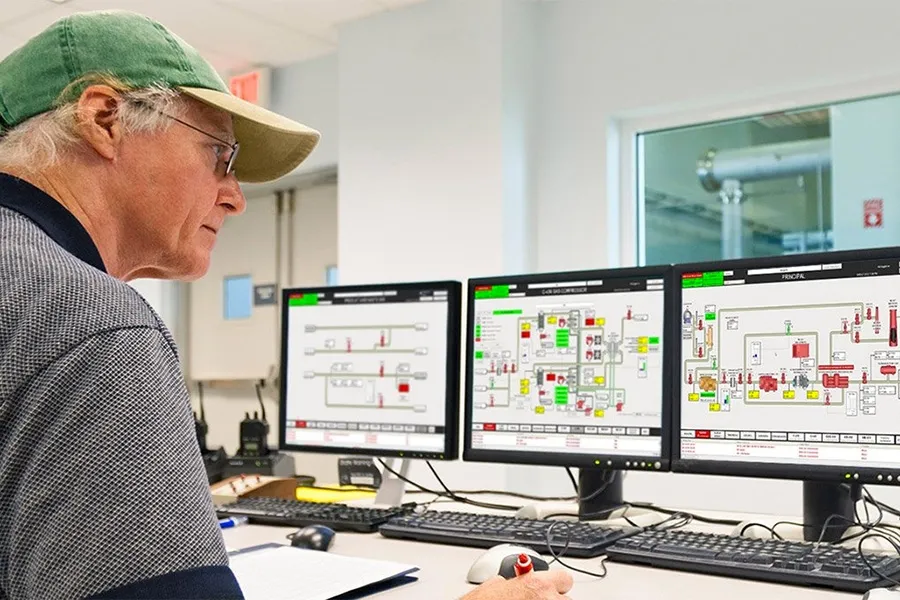
More and more manufacturers are embracing digitalisation, and the benefits are significant. However, they should be aware that this can also bring new security risks for critical equipment. ML6 often uses AI models in OT environments, for example in its In-line quality inspection and process control solution. AI enables customers to produce efficiently, minimise waste and deliver quality. Find out here how operations can be protected against cyberattacks.
Separating or converging IT and OT
IT systems are more exposed to external cyber threats, such as data breaches and ransomware attacks, while OT systems can suffer serious consequences from, for example, physical damage to industrial processes or infrastructure. Securing each domain separately reduces the risk of threats spreading between them and improves overall security. However, there are just as many reasons to bring IT and OT together. The ever-expanding capabilities of AI models and IoT systems in particular offer limitless opportunities to automate processes, make production lines more efficient and improve the quality of processes and products. These solutions are usually reserved for the IT domain, but can also add significant value in OT. Here, we look at how these new technologies can be used in an OT environment, and how to do so safely.
Purdue model with 3 zones
This reference model comprises an IT zone with systems such as ERP, CRM, mail servers and other traditional IT systems, and an OT zone with systems such as SCADA and PLCs. The third zone, the demilitarised zone (DMZ), sits right between them. It enables straightforward communication between IT and OT systems while providing an additional layer of separation and control. If a threat is detected in the DMZ, it is immediately deactivated. Compromised systems are thereby isolated, allowing production to continue uninterrupted.
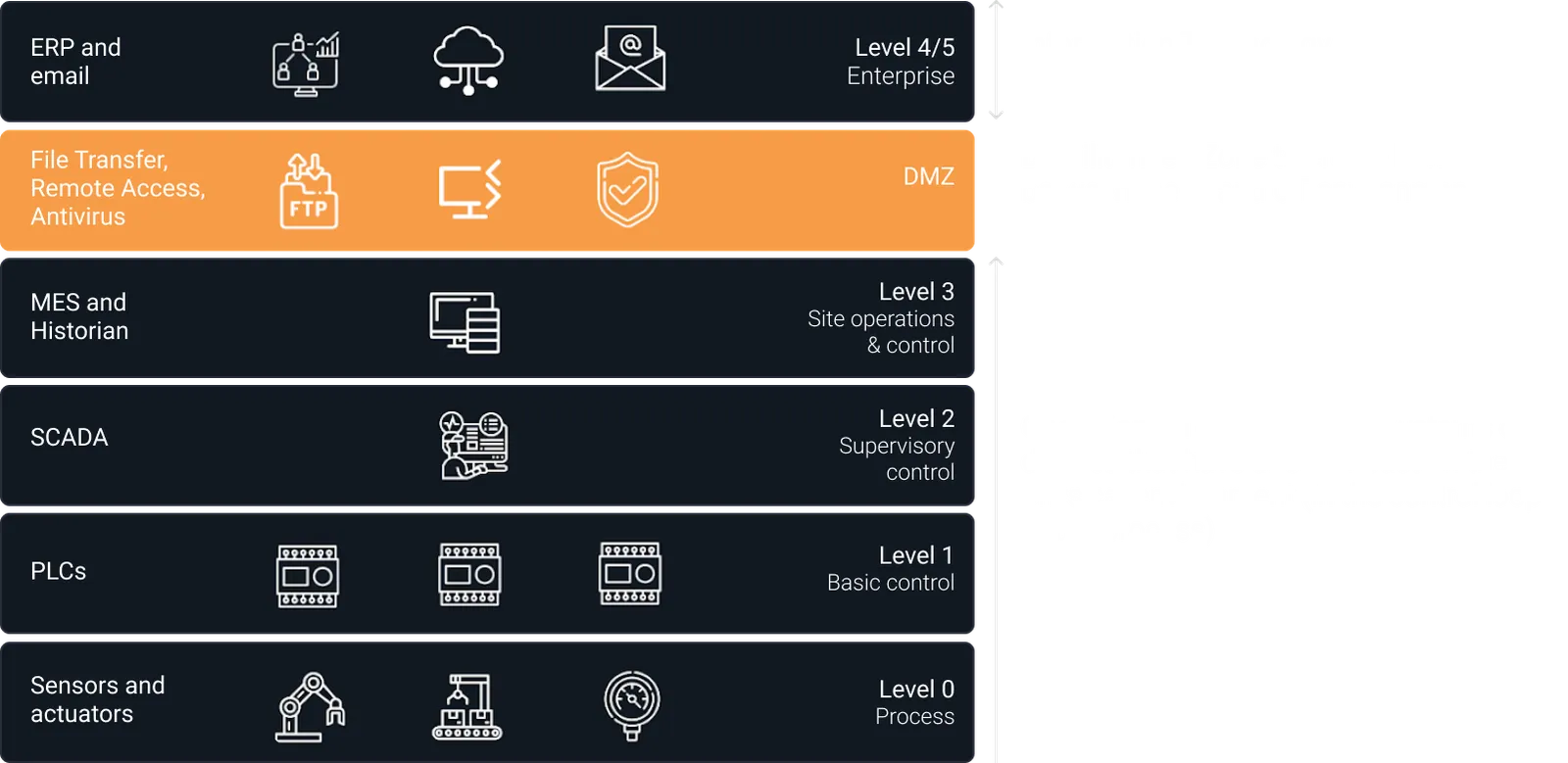
This model dates back to the 1990s and may seem outdated, as IoT sensors can now collect machine data and stream it to the cloud in real time for proactive maintenance.
Keep the DMZ in the loop
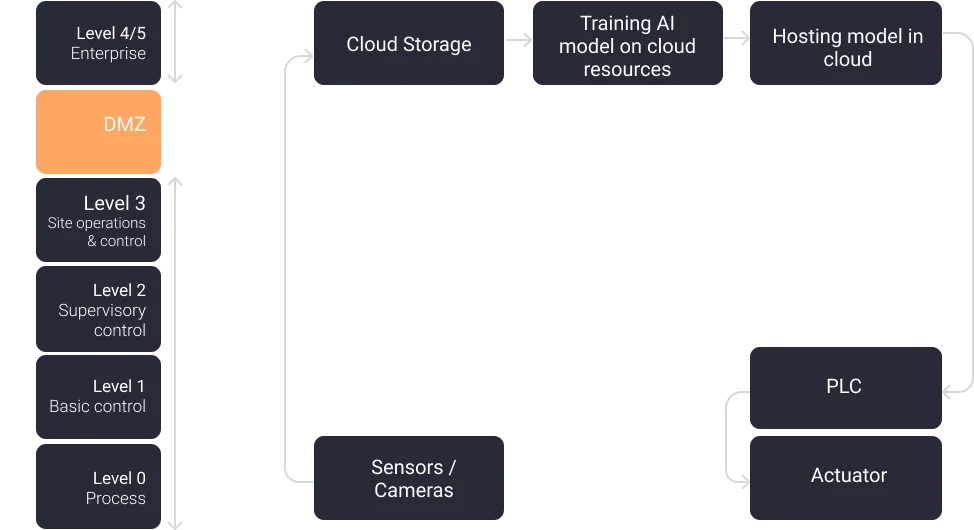
First, let’s look at a naïve approach to implementing a machine-learning model, developed and deployed in the cloud, to control a machine via a PLC. This is the simplest method and can also deliver significant value to a business. Automating the quality inspection process with AI can reduce waste, boost efficiency, improve the customer experience and cut costs. But it also carries significant risks because OT is directly affected by IT, with the DMZ left out of the picture.
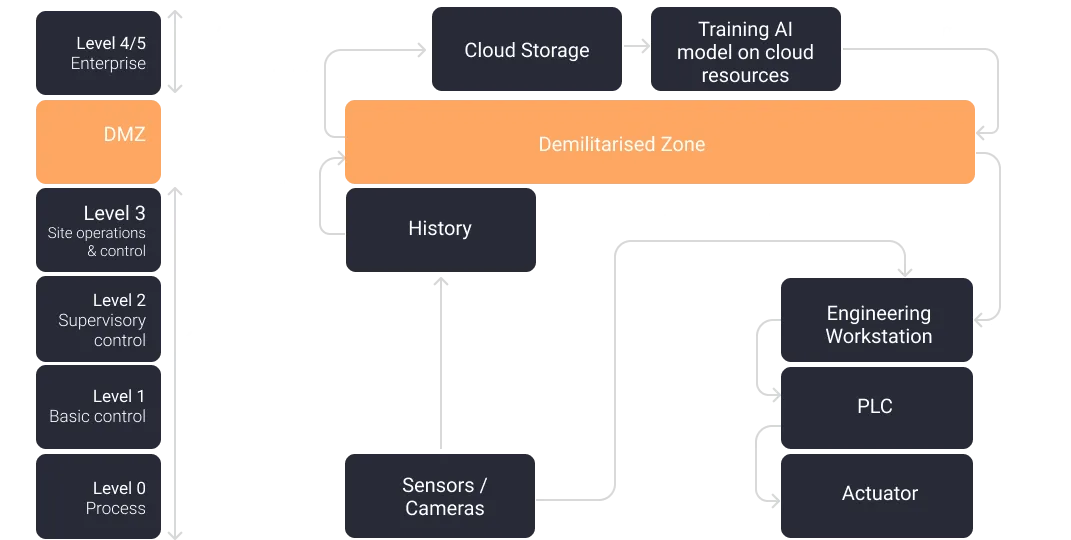
The diagram below shows a secure way to deploy AI models in an OT environment. Connections originate either from IT or OT, never from within the DMZ itself. The DMZ acts as a boundary or buffer zone between IT and OT systems, preventing communication between the two. An FTP server is usually located in the DMZ to facilitate data transfer between IT and OT. Additional malware scanning and antivirus capabilities are deployed alongside the FTP server to prevent malicious traffic from getting through. This approach combines the best of both worlds. Cloud technology provides access to scalable computing resources, allowing AI models to be trained on powerful hardware and distributed systems. This scalability makes training faster and more efficient. The Purdue model is also respected by bringing the DMZ into the picture, unlike the naïve approach described above. This creates the crucial separation between IT and OT and protects physical environments from cyberattacks.
Een zakelijke vraag aan ML6? Get in touch
Companies in this story
Keep following this
Get an email when a new story is published. No account needed.
- ThemeData from shop floor to decision
- SubjectSoftware, IT, OT & cybersecurity
- CompanyML6







