












Software, IT, OT & cybersecurity
Trends in gripping systems
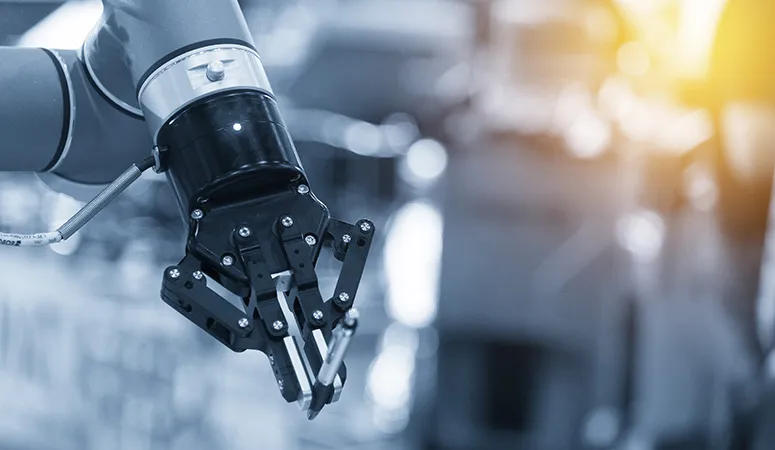
The factory of the future will house an autonomous, highly connected and digitalised production system. People and machines will work together in new, closer ways. The key words defining exactly how production will take place are flexibility and intelligence. This is the only way to deliver profitable customisation with personalised products, but at the cost of mass production. Succeeding in this mission requires not only new machines, but also new components. This article therefore identifies eight trends in gripping systems that will shape the production of tomorrow.
The first trend in gripping systems is towards greater modularity and flexibility. Grippers must not be one-trick ponies. They need to adapt easily to multiple products and machines to enable more flexible automation. Production modules must be interchangeable, combinable and expandable with other modules. Achieving this requires standardised interfaces and control infrastructures that can work with any module. In addition, the components and tools used must be clearly identifiable and connectable.
Collaborative robots, for example, offer an alternative: robots can take on ergonomically demanding tasks, leaving operators to handle those that require more creativity.
Everything connected
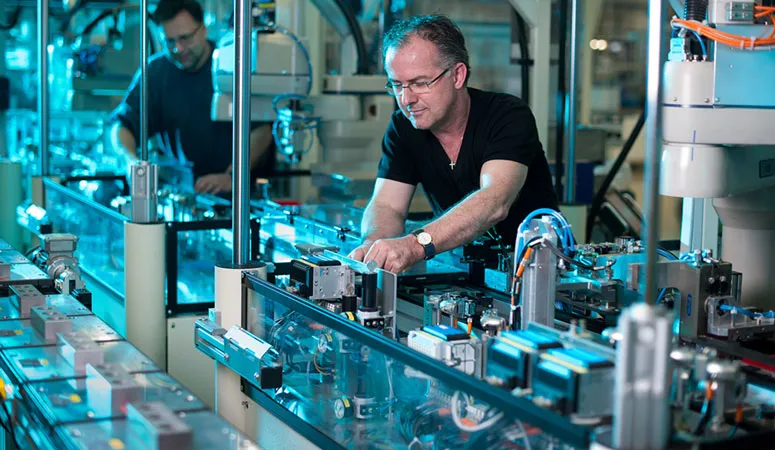
Grippers must become an integral part of the machine, the production environment and all the data linked to them, for example in cloud ecosystems. Digitalisation will make its mark here too. The better a gripper is integrated into its wider environment, the more information it can draw on to perform its tasks to the highest standard. Integration with in-line measurement systems will make it possible to implement closed-loop quality control and therefore monitor the production process directly within the production cycle.
More sensors
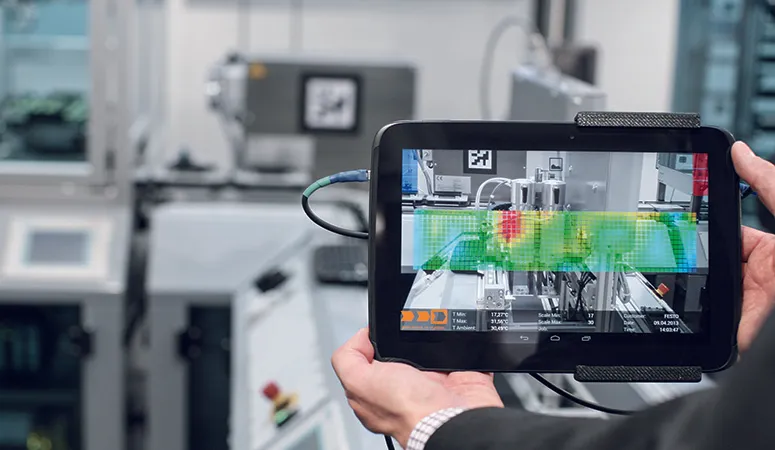
Sensors are the technical senses of a machine or process, and in future they will also help intelligent grippers to ‘feel’ better. They make it possible to collect data. A great deal of data. After extensive analysis, that data can be fed back to the gripper and its process for further optimisation. Sensors can, for example, record machine events and measurement data, which can then be used for system and process control, and even to diagnose the gripping system. Sensors are valuable not only for analysing trends and adjusting processes accordingly. They can also add value in real time. By using multiple sensors and their measurements in parallel, you will be able to monitor gripping processes and assess their current status and accessibility.
Edge computing
The interconnectivity and digitalisation discussed above are driving a huge increase in data volumes. If the PLC has to devote all its processing power to handling this data, machine processes will suffer. A new technology is therefore taking hold: edge computing. Edge computing is an alternative strategy in which field devices are equipped with greater intelligence to process data themselves. Data is processed as close to the source as possible, freeing up the server and connections for other signals. This is intended to prevent disruptions and high latency. The most time-critical data will then be processed by the gripping system itself. Shifting more and more intelligence to the gripper level allows for additional functional integration.
DGUV-certified grippers enable people and assist robots to work together safely without safety fencing.
Digital twins
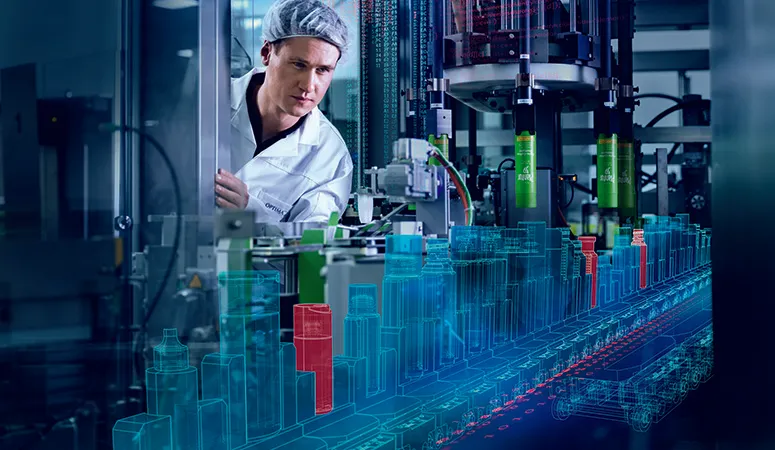
The world is going digital. Grippers and gripping systems will therefore also have exact digital replicas. These virtual gripper-system assemblies and components correspond precisely to their real-world counterparts in terms of interfaces, physical behaviour and parameterisation in the control environment. Having these models makes it possible to assess and check during the design phase whether all the components are in place and whether any problems are likely to arise. In other words, there is no need to spend a euro testing the manufacturability of products. At a later stage, these digital twins can also be used alongside the collected process data to identify further opportunities to optimise the production process.
Human-machine interaction
Not every process benefits from fully automated production or assembly lines equipped with all the bells and whistles.
Profitability sometimes calls for other solutions. Collaborative robots, for example, offer an alternative: robots can take on ergonomically demanding tasks, leaving operators to handle those that require more creativity. This does not have to apply to an entire process; it can also make sense to separate out individual processes and divide them between people and robots. Naturally, this requires extra attention to safety. Robots and components that come into contact with an operator in a shared workspace must meet very high safety and security requirements. DGUV-certified grippers enable people and assist robots to work together safely without safety fencing.
These virtual gripping-system assemblies and components correspond precisely to their real-world counterparts in terms of interfaces, physical behaviour and parameterisation in the control environment.
Scaling up through the cloud
The smart factory requires secure, scalable cloud solutions for intelligent gripping and clamping. As noted above, the volume of data collected by sensors in the factory will be enormous. The cloud is the ideal place to store and analyse existing data in order to make processes more efficient. The factory will therefore extend into the virtual world. Scaling between on-premises and public clouds must be possible at any time.
Artificial intelligence
In future, artificial intelligence will be used to automate tasks across the entire kinematic chain. Robots and grippers will be no exception. For them, this will primarily mean being able to operate without having to be programmed for every step. In production that demands flexibility, this will be a decisive factor in enabling quick changeovers between products and processes. Modern gripping-system components must therefore already be prepared for the use of AI technologies.
Text Valérie Couplez | Image Festo and Schunk
Question about this story? Ask your question
Companies in this story

Keep following this
Get an email when a new story is published. No account needed.
- ThemeRobots on the shop floor
- SubjectSoftware, IT, OT & cybersecurity
- CompanyFesto







