












Software, IT, OT & cybersecurity
The future of automation
The start of the year is always a good time to look ahead. This time, we are looking beyond the next twelve months. Together with Daniel Lindeman, vice-president product management automation systems at Lenze, we look at what the future of automation will look like. Will ChatGPT also be relevant to engineers? How do we automate automation? And can it still be cybersecure? Find out in this conversation.
“We are at a turning point today. New developments are coming our way that will shake up our business models. Every company, from the smallest SME to the largest multinational, is now convinced of the added value digitalisation can bring. Software is the way forward for improving performance and gaining a competitive edge. The main question for machine builders is who they can work with to achieve this. After all, finding the right technical experts is no easy task. That is why we want to position ourselves as a development partner, with both the right portfolio and the expertise to help them add that software layer to their machines. We want to help bridge the gap between OT and IT.”
One development that is constantly in the media is ChatGPT. Do you see potential for engineers?
“Not yet. These are disruptive times: ‘Software is eating the world’, Marc Andreessen said back in 2011. ChatGPT has only just appeared on the scene, but it certainly has the potential to be as groundbreaking as the first iPhone all those years ago. For the first time, it puts the power of artificial intelligence at the fingertips of the general public. We, along with other automation specialists, have also been applying it behind the scenes to develop smarter products. We can already automate the programming of simple, standard tasks using our FAST templates: 80% of the work done, without ChatGPT. The next steps involve more complex work. In time, I estimate in five to ten years, the technology could open the door to creating automation solutions, leading to new business models.”
Nupano is the next big thing for Lenze. It was launched to mark the company’s 75th anniversary. How does this product fit in with these trends?
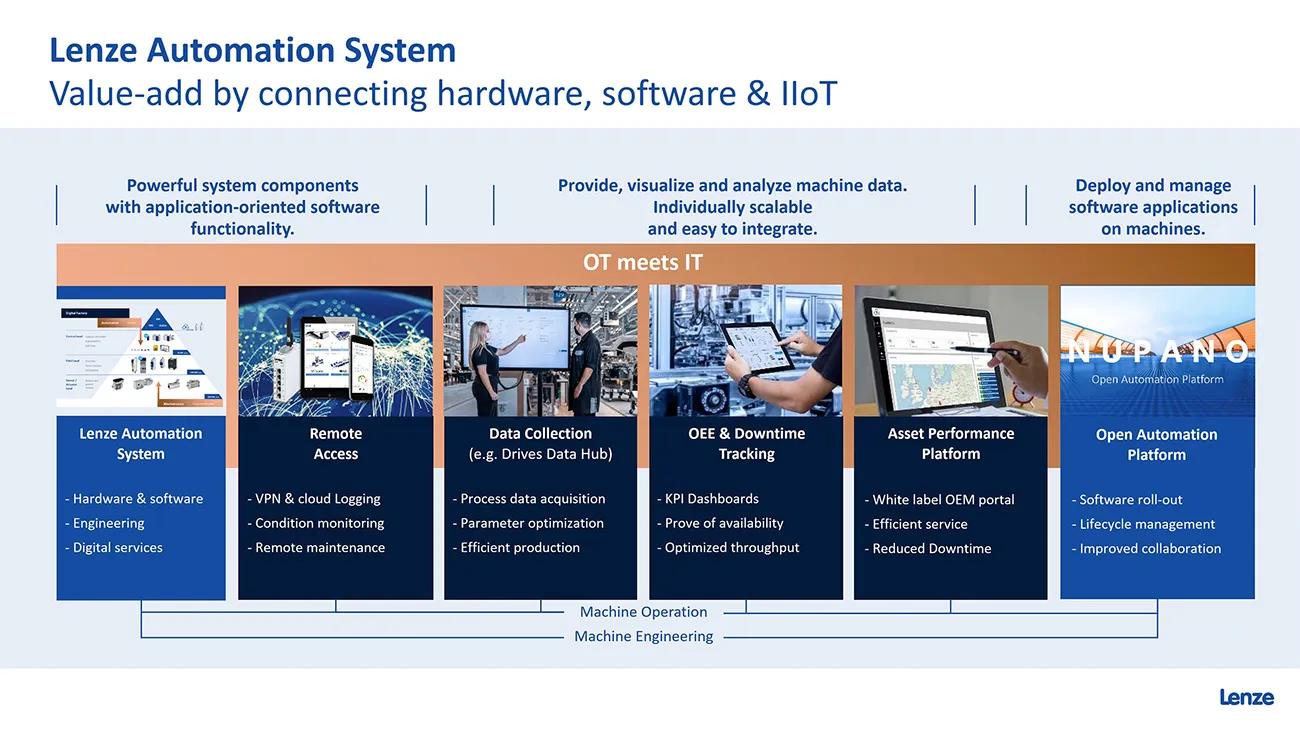
“Every machine is a combination of hardware and software. This allows us to capture, visualise and analyse data from the machine... with one clear goal in mind: to find out how things can be improved. We already have apps that let us work with this data and help machine builders with applications such as condition monitoring and predictive maintenance. With Nupano, the latest step we have taken is to make it easy to integrate this software into the hardware. In a sense, we have put together a toolbox for engineers, enabling them to monitor their machines throughout their entire lifecycle. Hardware can easily last ten to fifteen years. Software has a shorter shelf life, because developments happen so much faster. This means we can keep pace without difficulty and continuously improve machines, for example to make them more energy-efficient.”
You have touched on the most important topic for many companies. How can we become more sustainable faster? Do the answers start at the heart of the machine, in the drive train?
“Lenze takes a broader view of sustainability than energy efficiency alone. It also encompasses training, social engagement, ecodesign, circular thinking, democracy... Today, we need to find ways of doing business that will ensure future generations can thrive too. When it comes to machines, we start from a systems approach. The most energy-efficient IE4 motor will make no difference if we build up energy losses elsewhere in the drive train. That is why we take a broader approach, sitting down with a customer as early as the concept phase of a new machine to work out which hardware and software components are best. If you can put the perfect puzzle together, major advances are possible. By avoiding oversizing and working smarter... Digitalisation is essential to this. It is a tool for creating sustainability. That also explains why we are all making the shift to digitalisation so quickly.”
But surely that is not without its risks? Cyber incidents are, unfortunately, a recurring phenomenon.
“This is the third pillar of the future of automation. Everything must be smart and sustainable, but also cybersecure. It is absolutely essential that our customers’ processes can keep running. Many companies are firmly opposed to using the cloud. Yet it offers so many advantages for making progress in those other two areas: smart and sustainable production processes. That is why we in the industry need to work together more closely to make processes secure. This starts with secure-by-design products, but also means raising users’ awareness of how to integrate the technology securely and use it easily. At Lenze, we are doing our part. We bring together our knowledge of automation and digitalisation across all sectors with our customers’ knowledge of their processes. That is in our DNA. That is where our added value lies.”
Een zakelijke vraag aan Lenze BV? Get in touch
Companies in this story

Keep following this
Get an email when a new story is published. No account needed.
- SubjectSoftware, IT, OT & cybersecurity
- CompanyLenze BV







