












Software, IT, OT & cybersecurity
Take short trips with small suitcases
Text Valérie CouplezImage Siemens
The human factor in the industrial metaverse
Creativity, curiosity, empathy…: these are precisely the human qualities needed to bridge the gap between the real and digital worlds. But how can companies empower their people to drive this digital transformation? A conversation with Thierry Van Eeckhout, head of Siemens Digital Industries Belgium-Luxembourg, and Bart Demaegdt, business development Digitalisation at Siemens.
The industrial metaverse is seen as a gamechanger, particularly in manufacturing. Can you give us some examples of how it could transform businesses?
Demaegdt: “Battery production was a key focus at Hannover Messe this year. The challenge for this industry is to increase production speed without having to invest proportionately more capital, particularly given the number of gigafactories that will be needed. Digitally optimising their processes will automatically make them more cost-efficient. We know this because we have already validated this capability in the industrial metaverse. For our electronics factory in Erlangen, this translates into 7% higher productivity, 40% shorter time to market and 56% lower energy consumption.”
What role do employees play in this industrial metaverse?
Van Eeckhout: “We live in an era in which we can marvel at both technological possibilities and human opportunities. The partnership between people and machines is fundamentally recalibrating our roles, relationships, responsibilities and realities. And this collaboration will help us accelerate along the path Bart has just described.”
How will the way people work change as a result of the industrial metaverse?
Van Eeckhout: “In the workplace, training is one of the low-hanging fruit. In the metaverse, we can easily train people to use complex machines and test their skills.
This is important for the safety of employees, but also for the products. We can simulate semiconductor machine operations in every possible scenario without risking damage. The learning experiences in the metaverse will give people greater confidence in the real world.”
“A second option is remote working. Battery producer Freyr, for example, is building a gigafactory close to the Arctic Circle. Getting there in person is not always easy. But the metaverse makes it easy for employees to connect, take part in virtual training and work together on projects.”
“And finally, there is what we call the democratisation of engineering. All employees can test their ideas digitally to improve their workplace. In the metaverse, we can make mistakes, learn from them and improve without incurring real costs or risks.”
How do we get started?
Demaegdt: “Experimentation starts small and with a very concrete focus. Start with a problem you are trying to solve, then build from there. I recommend experimenting with physics engines. Alongside our own simulation tools (NX MCD, Xclerator Simcenter …), you can also build experience using tools such as NVIDIA Omniverse, Unity, Unreal Engine, Epic Games or Blender. Or try FrameVR.io, where you can set up your own metaverse in fifteen seconds. Get to know similar environments, let everything go wrong and learn from it. Like elite athletes, go to work knowing that training will make you just 0.1% better. That is how you make progress.”
“The potential of technologies such as AI, machine intelligence, extended reality, blockchain and crypto is like an eighty-storey skyscraper. But the user experience we are building today has only reached the fifteenth floor. By fostering creativity within companies, we can build a lift that takes us all the way to the top. The more creative we become, the more we will harness the potential of these technologies.”
But how ready are people to cross the line between the real and digital worlds?
Demaegdt: “This is a journey we are all taking together. And look at the gaming industry: it can simply be fun, too. It is about creating a culture that supports growth and exploration. We do not know everything, particularly as the (industrial) metaverse is still an evolving concept. But one thing is certain: we can experiment faster and see what works and what does not. We give people the freedom to solve the problems they consider important. I see this driving success in so many companies.”
Van Eeckhout: “The idea of culture is extremely important. Big words like the metaverse are sometimes like a big suitcase, packed with all sorts of things. But it is important to pair them with the right mindset. We need to be able to experiment, explore and evolve. We are all on this journey together. Who knows exactly where to? The infinite nature of our digital economy means we will visit many interesting places. So pack your suitcases wisely.”
How can companies manage this massive transformation without knowing where they are heading?
Demaegdt: “To stick with the suitcase metaphor, you need to know how long you will be away. Then you know how much to pack. I would recommend short trips. So much is already concrete and delivers direct value. Go where it is happening. Look at the tools available and start experimenting. So take a small suitcase. Then pack it again, rather than preparing for one giant leap.”
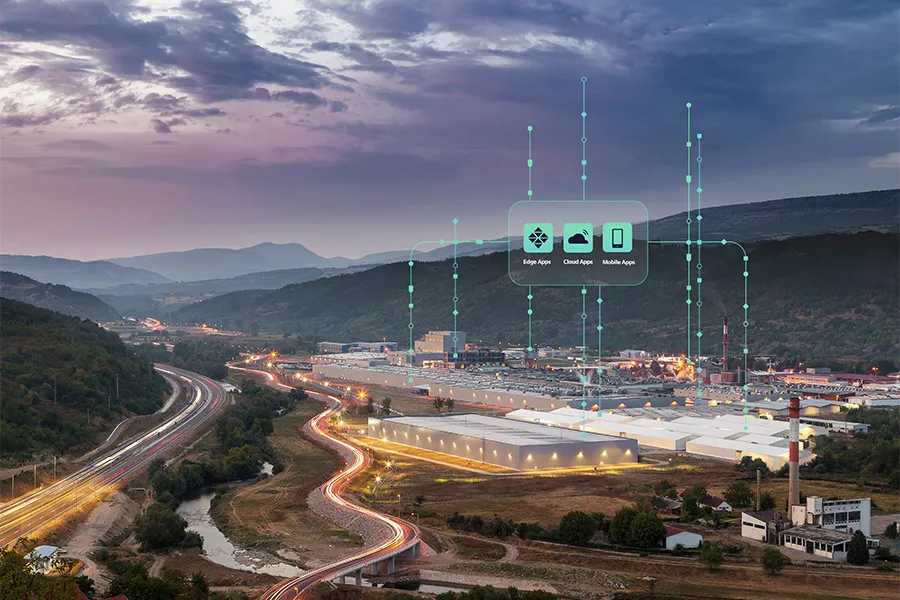
It is often the people we meet and the relationships we build that make a journey memorable. What about ecosystems?
Van Eeckhout: “Absolutely. We cannot do it alone. Collaboration and partnerships are essential to reaching our destination. That is what we do at Siemens with the Xcelerator ecosystem: we work with thought leaders, partners who handle integration, partners who provide the infrastructure and, of course, those who want to take the first steps.” ■
A business enquiry for Siemens NV/SA? Get in touch
Companies in this story
Keep following this
Get an email when a new story is published. No account needed.
- SubjectSoftware, IT, OT & cybersecurity
- CompanySiemens NV/SA
- CompanyHANNOVER MESSE







