












Software, IT, OT & cybersecurity
Standardising to automate
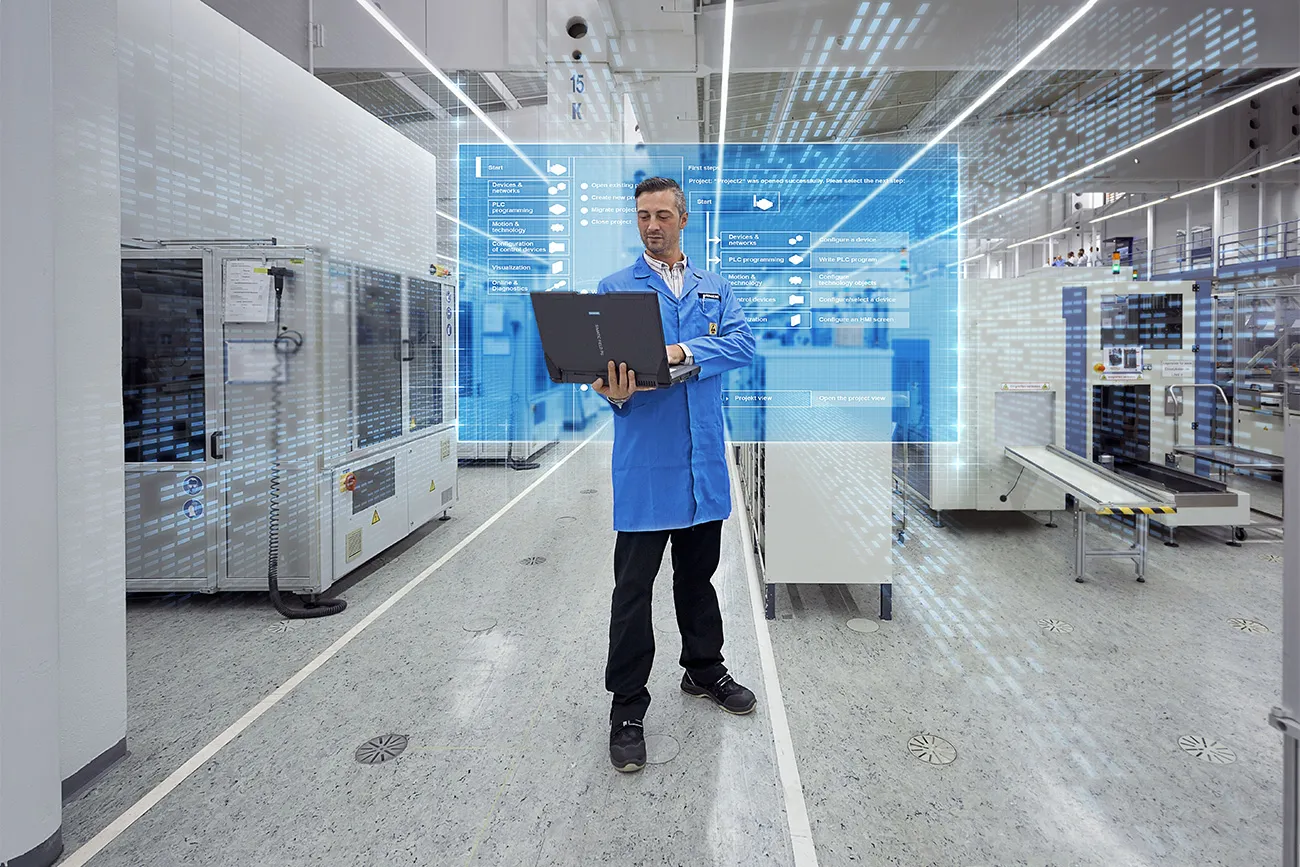
The future belongs to those who see the possibilities before they become clear. That is a quote from John Sculley, who headed Apple for ten years. It perfectly describes the stage standardisation has reached today. The more complex digitalisation and automation become, the greater the need for standardisation. Those who get started today will reap considerable benefits. Siemens is keen to support its customers on this journey.
Consumer purchasing behaviour has changed for good. We no longer want products that are all much the same. No, products need to be personalised and, preferably, delivered by tomorrow. This trend calls for industrial transformation and production equipment that can adapt flexibly. “If programming has to start from scratch every time, it will become increasingly difficult to deliver on that promise. We may have the right people for the job today, but they will become increasingly scarce tomorrow. Standardisation helps us retain knowledge and respond more quickly. We save time in engineering, commissioning and integration. This means manufacturers can bring products to market with less time and effort,” says Nawfel Bouayed, business segments manager Digital Connectivity at Siemens.
Order out of chaos
Standardisation also brings order out of chaos, especially when several engineers are working together on larger projects. “It provides a structured approach. Everyone works in parallel, following the same logic. Data are exchanged between different roles, always in the right version. That is ‘Integrated Engineering’. Engineers have never had as many tools at their disposal as they do today: edge, cloud, countless apps... These IT tools are enjoyable to work with and can certainly add value alongside conventional technology, provided the next engineer can pick them up and use them too. Standardisation lets you combine the two worlds: the freedom and creativity to explore new technology, and the continuity of your production, ensured by a logical, standardised structure for programming and communication protocols. And this applies not only to end customers. If you ask your system integrator to programme in a standardised way, you will never be left with a black box,” adds Geert De Coninck, head of Factory Automation at Siemens.

Taking it further
Standardisation is still at a low level in industry today. Nevertheless, most companies believe it will be essential in the future: to improve efficiency, build modular machines and reduce production costs, but above all to address the shortage of technical talent. “There is no shortage of standards. The guidelines and the technology are there, but the complexity of such a journey is the biggest barrier, along with the courage to take a leap into the unknown,” says Bouayed. “Integrating OT and IT standards in particular is not straightforward. It takes time to learn the right way of working. But the further you go, the easier it gets, and the less work it takes to modify programmes. The ultimate goal? Automating automation itself. Generating code directly from Excel files, using Technology Objects to measure, monitor and actuate, or integrating production machines into production lines on a plug-and-produce basis. It all becomes child's play, and then you can win the war for talent.”
Already integrated into TIA Portal
It is important to understand that standardisation is not a big bang, but rather a journey. “You do not have to standardise everything, and certainly not all at once. You can build it up step by step,” says De Coninck. TIA Portal includes the tools and libraries needed to get started with standardisation, such as PLCopen, OMAC PACK ML and everything required for secure encryption. “We try to provide standards ready to use. Everything is tested and pre-programmed in various libraries, so users can get started in the right way. PLC programmes can thus be generated directly instead of being programmed. We also support our customers wherever possible. For example, we have produced a whole series of ‘Tech Talk’ videos, short clips that teach you in detail how to programme automation solutions in a structured, standardised way and make them modular. They give you step-by-step guidance on how standardisation can save you time and money.”
A business enquiry for Siemens NV/SA? Get in touch
Companies in this story
Keep following this
Get an email when a new story is published. No account needed.
- SubjectSoftware, IT, OT & cybersecurity
- CompanySiemens NV/SA







