












Software, IT, OT & cybersecurity
Smart Factory simulation: a smart idea
Text Marjolein de Wit-BlokImage ViManPro
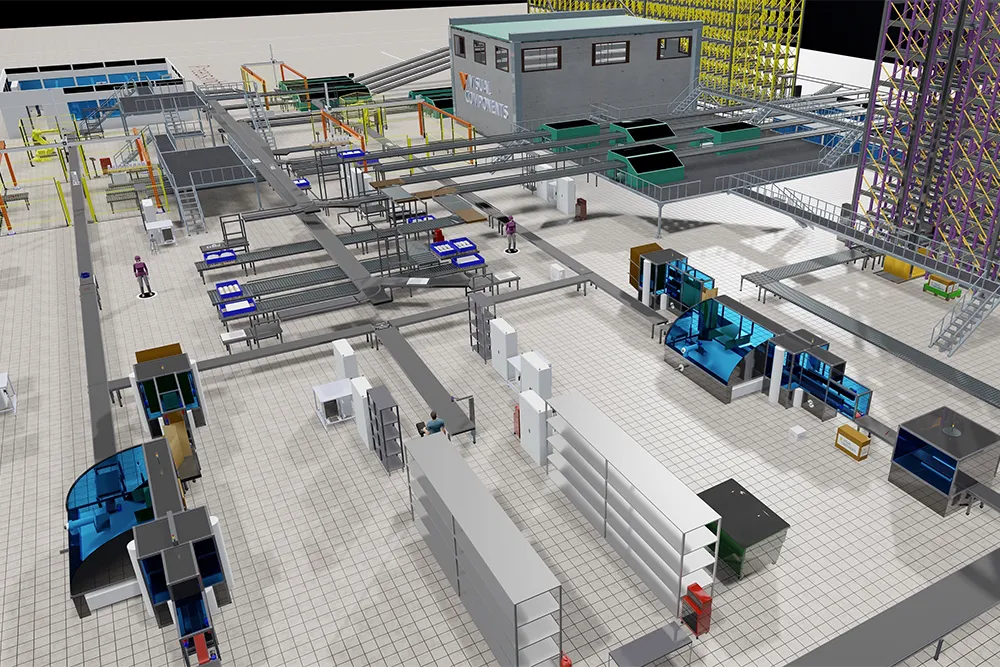
A Smart Factory is a complex combination of production machinery, logistics and handling. To see how designs work in practice, ViManPro offers advanced 3D simulation software that can accurately replicate processes. ViManPro can create simulations for companies as required, supporting not only the designer but also the sales department.
ViManPro’s management has thirty years’ experience in special-purpose machinery and is familiar with production processes, robotics and automated systems. Several years ago, the company began searching for suitable 3D simulation software to simulate these machines in a specific environment in advance. Jan Peelaerts, managing director at ViManPro: “By simulating processes, hardware and software, you can examine proposed solutions in a virtual world. How do processes run? Where are the bottlenecks? What is the impact of particular changes?”
Making a choice
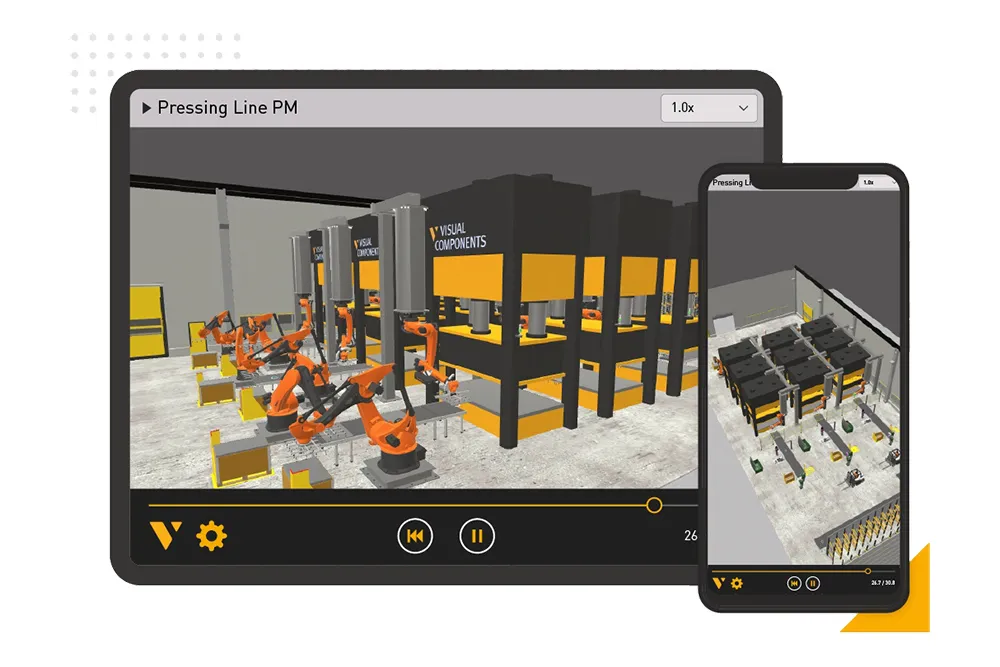
After inviting several suppliers to take part in the search, the choice fell on Finnish manufacturer Visual Components. To cut a long story short, support in Belgium was minimal, making it difficult to get questions answered. Peelaerts: “In Germany, the software was represented by Dualis, a company that uses it itself, making it the ideal partner for German users. It also develops practical add-ons and component libraries for the software, and is uniquely placed to translate customer-specific requirements into the programme. The result was a partnership between Visual Components, Dualis and our new company, ViManPro, which stands for Visualizing Your Manufacturing Processes.”
The software
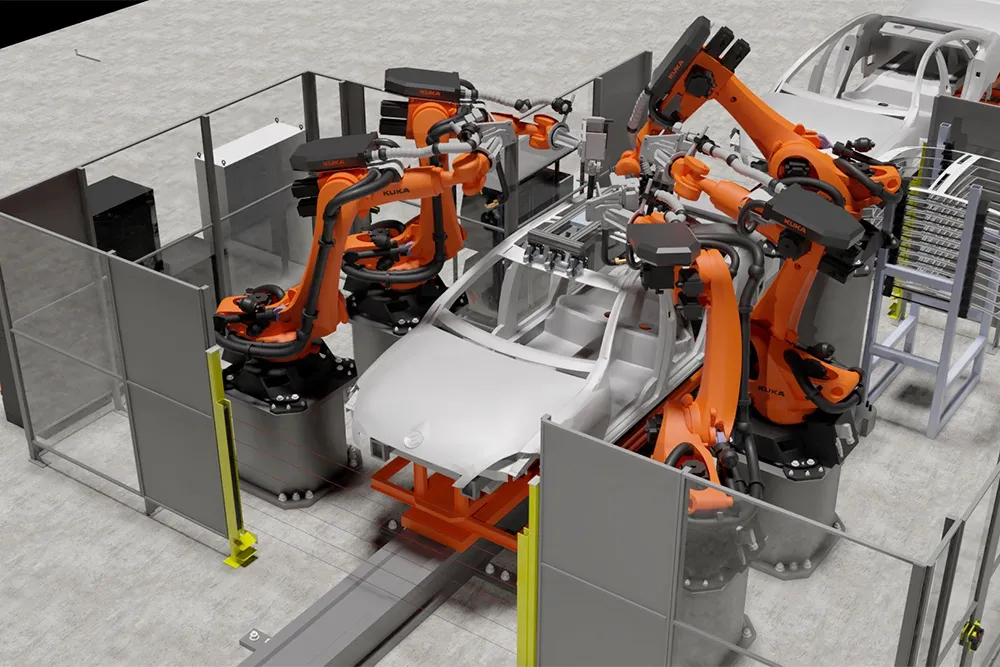
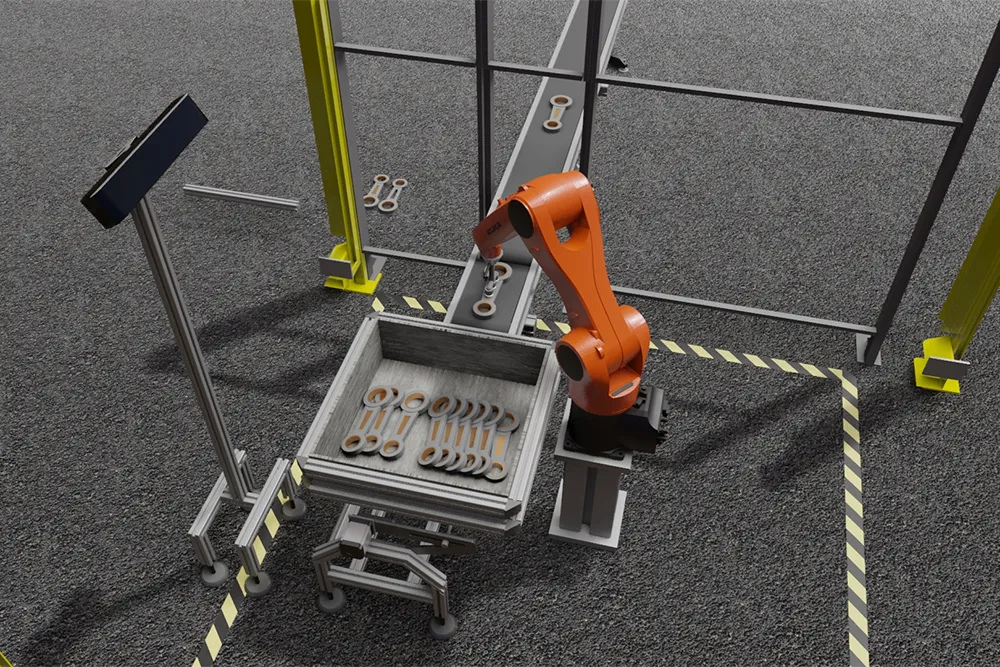
Visual Components can be used at various levels. The process starts simply, with the virtual creation of a layout using components from a library containing around 3,000 components. Roughly half of these are robots from various manufacturers. The processes are then simulated, with users able to go into as much detail as they wish. They can set robots to work, AGVs to move and people to walk, and so on. Once the model has been built, the actual simulation phase begins. The design can be modified as often as required to see whether processes can be made better, more efficient and, for example, safer. Peelaerts: “Simulation lets you detect and resolve potential bottlenecks before you start building. You can also experiment endlessly with different systems from different suppliers, because you can choose any brand you like from the library. This means you are not tied to a particular manufacturer and can develop your own ideas at your leisure. The model can also be linked to external software, such as a Siemens PLC control system or a virtual robot controller. This connection allows the machine to be commissioned ‘virtually’. Ultimately, simulations lead to (much) lower failure costs when building new production lines in Smart Factories, and the start-up phase can be completed more quickly.”
Working with the customer
But the software offers further benefits. The model is not redundant once the line has been built: it can be used continuously to optimise the line and test new ideas. Peelaerts: “Last but not least, it is an excellent tool for showing your own customers what you offer as a machine builder. You can set everything out perfectly on paper, but when customers see the line working in their own environment, through a film, a 3D PDF or a rendered video, they can see it ‘for real’ straight away. It also gives them the opportunity to contribute to the design process, reducing the risk of details being ‘forgotten’.”
To make things as easy as possible for its customers, ViManPro builds the simulations in-house. Customers can also purchase the software and receive training so they can work with it themselves.
VIMANPRO: Stand 411
Question about this story? Ask your question
Keep following this
Get an email when a new story is published. No account needed.
- SubjectSoftware, IT, OT & cybersecurity







