












Software, IT, OT & cybersecurity
Siemens and Mercedes-Benz transform the future of sustainable factory planning with Digital Energy Twin
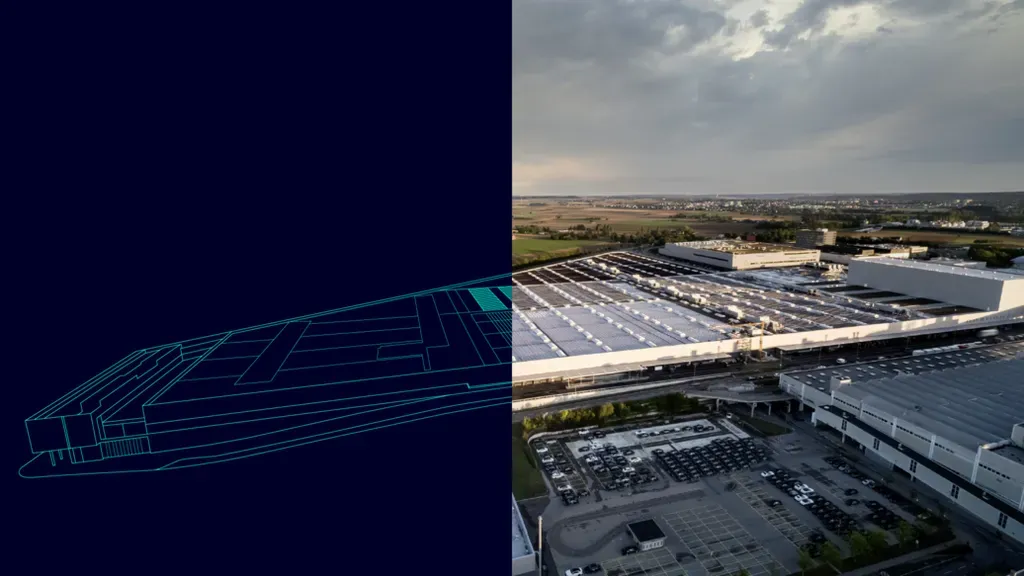
Siemens and Mercedes-Benz have jointly developed a Digital Energy Twin to advance sustainable factory planning in the automotive industry.
- As part of a strategic partnership between Siemens and Mercedes-Benz AG, the two companies have jointly developed a Digital Energy Twin to improve the integration of energy efficiency and sustainability measures into factory planning and modernisation.
- The Digital Energy Twin significantly shortens the early planning phase.
- Developed and tested at the Mercedes-Benz Factory 56 plant in Sindelfingen, Germany.
- Demonstrates the value of the open Siemens Xcelerator ecosystem for developing products and solutions tailored to specific market sectors and applications.
The innovative Digital Energy Twin is designed to help the carmaker achieve its ambition of running all production sites worldwide on 100 per cent renewable energy by 2039. The digital energy twin improves, simplifies and accelerates the energy planning process at an early stage, for both new (greenfield) and existing (brownfield) sites, significantly shortening planning time.
The collaboration combines Siemens’ expertise in decarbonisation and Energy Twins with Mercedes-Benz’s in-depth industry knowledge to develop a scalable tool for the automotive industry. Siemens provides training and support, maintenance and ongoing development of the Digital Energy Twin, ensuring it is ready for widespread deployment across Mercedes-Benz’s global production network.
Based on behavioural models of buildings, technical installations and energy generation, the Digital Energy Twin was designed and tested at Factory 56, the Mercedes-Benz plant in Sindelfingen, Germany. Data such as weather information, load profile simulations, and the selection and sizing of building systems are brought together. The physical energy system is simulated to verify energy-use planning scenarios and provide recommendations for optimising, among other things, energy efficiency, associated cost savings and emissions reductions.
“By accurately modelling operating and energy consumption scenarios, the Digital Energy Twin enables faster and more transparent decision-making in the early planning stages,” says Matthias Rebellius, member of the Managing Board of Siemens AG and CEO of Siemens Smart Infrastructure. “This demonstrates how Siemens combines the real and digital worlds to deliver scalable, sustainable progress across industrial sectors. It is an exciting first step towards an integrated process for optimised planning, building operations and production.”
The jointly developed Digital Energy Twin demonstrates the potential of Siemens Xcelerator, an open digital business platform that accelerates digital transformation and enables customers and partners to jointly develop tailored products and solutions for a range of industrial sectors. Siemens and Mercedes-Benz entered into a strategic partnership for sustainable automotive production in 2021, with the aim of promoting collaboration and the digitalisation of sustainable production methods.
“The Digital Energy Twin is our answer to successfully visualising, analysing and sustainably optimising energy-efficient building processes. This innovative approach improves our understanding of existing factory buildings so that we can transform them into living Smart Buildings. This transformative technology enables us to maximise their potential and set future-oriented standards for energy-efficient and sustainable building management across the global Mercedes-Benz production network,” says Arno van der Merwe, Vice President Production Planning at Mercedes-Benz Cars.
Digital Energy Twins are a key part of Siemens’ portfolio for helping industrial customers achieve their sustainability and decarbonisation goals. Siemens recently announced that it is working with another strong international partner on a global Net Zero Production Roadmap. A digital energy twin is being used to simulate energy consumption and identify potential energy savings at 15 breweries worldwide. Siemens estimates that each site could achieve energy savings of 15 to 20 per cent and an average CO2 emissions reduction of 50 per cent.
A business enquiry for Siemens NV/SA? Get in touch
Companies in this story
Keep following this
Get an email when a new story is published. No account needed.
- SubjectSoftware, IT, OT & cybersecurity
- CompanySiemens NV/SA







