












Software, IT, OT & cybersecurity
Quantum technology: a magnet for investors
Text Valérie CouplezImage iStock
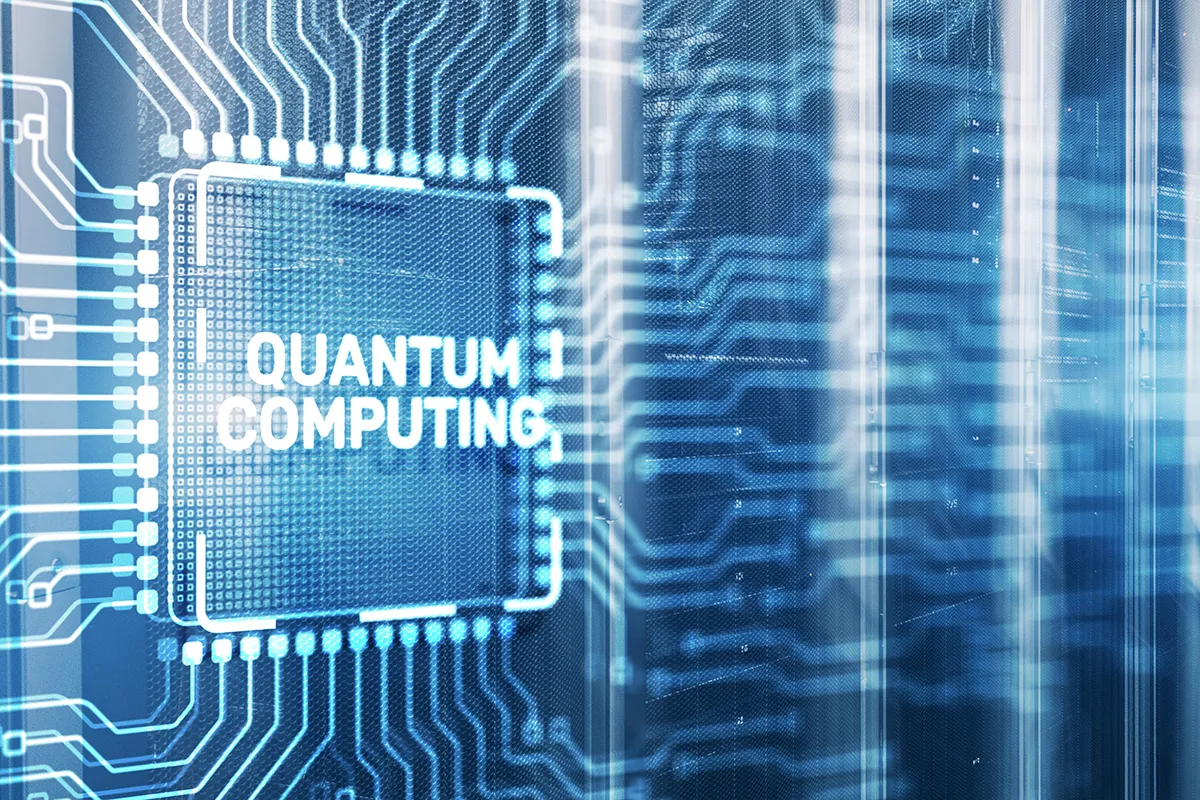
Toss a coin in the air. While it is airborne, it is neither heads nor tails, but simply has a chance of landing on either side. It is this grey area that underpins quantum computers. They have the potential to solve highly complex statistical problems that are far beyond the capabilities of today’s computers. McKinsey predicts that they could be worth almost $1.3 trillion by 2035. The same research shows that many quantum companies are growing rapidly: 39% of respondents said their company had more than 100 employees, up from 9% in 2023. In addition, government investors alone have pledged $34 billion in investment. They are certainly worth a closer look.
Classical computers, the technology behind your laptop and smartphone, are based on bits. A bit is a unit of information that can hold a zero or a one. Quantum computers, by contrast, are based on quantum bits, or qubits, which can hold both zeros and ones. Qubits can represent any combination of zero and one at the same time; this is called superposition, a fundamental feature of every quantum state. When the subatomic particles in a qubit are in superposition, they can interact with and influence one another, a phenomenon known as quantum interference. Quantum chips are the physical hardware that stores qubits, much like microchips in classical computers.
How does quantum technology work?
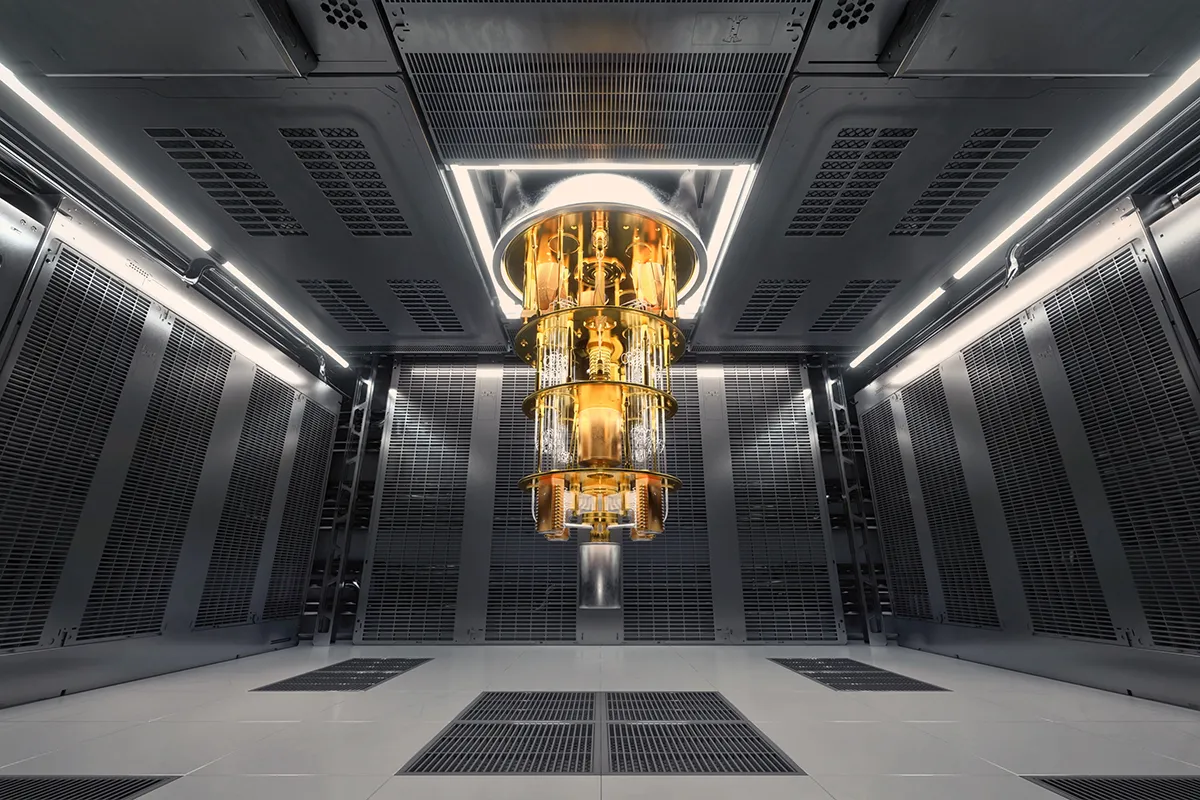
When a classical computer uses multiple variables to solve a problem, it has to perform a new calculation every time one of those variables changes. Each calculation follows a single path to a single result. Quantum computers, by contrast, can explore many paths at once through superposition. Qubits also communicate with one another through the phenomenon of ‘entanglement’. This allows qubits to scale exponentially: for example, two qubits can store and process four bits of information, while three can process eight … This exponential scalability gives quantum computers far greater processing power than classical computers. At present, organisations are mainly using five qubit technologies in their efforts to build a scalable, universal quantum computer: photonic networks, superconducting circuits, spin qubits, neutral atoms and trapped ions.
A major focus for big tech
Still seem a long way off? Perhaps not, as tech giants are already investing heavily in quantum technology. In 2024, Google unveiled an experimental quantum computer that could perform in five minutes a calculation that would take most supercomputers ten septillion years, longer than the age of the known universe. Google’s quantum chip, called Willow, is primarily suited to research and specialised applications. In 2022, the Chinese government pledged $15.3 billion in public funding for quantum computers. In February this year, Microsoft announced the discovery of a new state of matter that, according to the company, could enable a breakthrough in quantum computing. After seventeen years of physics research, the tech giant unveiled its Majorana 1 quantum chip. This microprocessor uses the properties of a material called a ‘topological qubit’, which produces particles that are neither liquid, solid nor gaseous. Microsoft says the chip could be used to accelerate drug and battery development, as well as the race for AI dominance. Many scientists agree that these topological qubits could lead to much more efficient and less complex error correction. They could also help prevent quantum decoherence, which occurs when a quantum system loses its quantum properties and starts behaving more like a classical computer system.
When will it happen?
Over the coming years, the major players in quantum computing, along with a small group of start-ups, will work to steadily increase the number of qubits their computers can process and improve their performance. But think of it as a marathon rather than a sprint. According to McKinsey’s conversations with tech executives, investors and academics in quantum technology, 72% believe we will see a fully fault-tolerant quantum computer by 2035. The remaining 28% think this milestone will not be reached until 2040 or later. Even so, some companies will be extracting value from quantum technology much sooner. Initially, they will receive these quantum services via the cloud. Several major computer companies have already announced their quantum cloud services.
Question about this story? Ask your question
Keep following this
Get an email when a new story is published. No account needed.
- SubjectSoftware, IT, OT & cybersecurity







