












Software, IT, OT & cybersecurity
Only buy software that is ‘secure by design’
Text Valérie CouplezImage Agoria
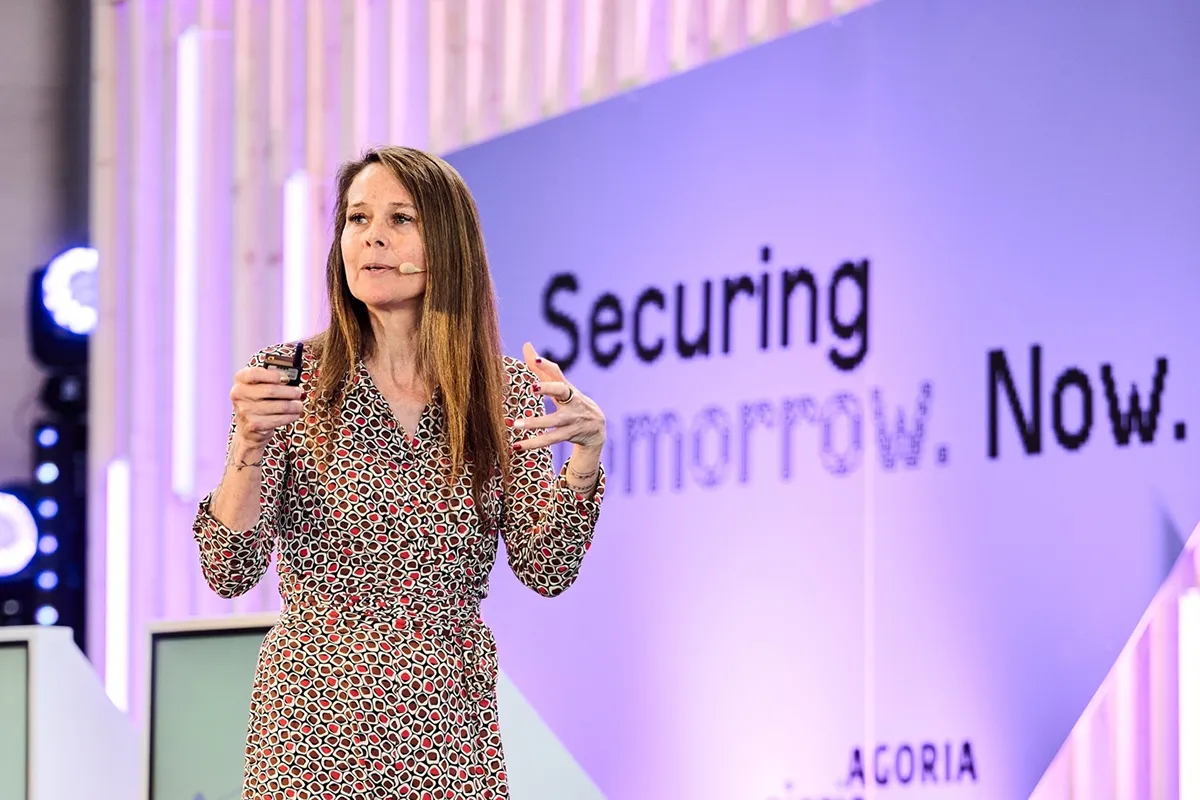
Jen Easterly is one of the leading voices on cybersecurity in the United States. In her keynote at Securing Tomorrow Now, she explained how urgent the problem is, with a cyberattack taking place every thirty seconds, and how we can protect ourselves. Industrial Automation was there and sums up her five lessons.
Easterly’s interest in technology and the power of data began with the US Army in Iraq in 2007. Her team’s mission was to set up a system that could analyse data from satellite and mobile phone networks to stop terrorists. “There were more setbacks than successes during those six weeks, but in the end, thanks to plenty of imagination, collaboration and entrepreneurship, we had a system in place that led to the arrest of thousands of terrorists.” She went on to become director of CISA (Cybersecurity and Infrastructure Security Agency), the first organisation in America dedicated to cyber defence. “CISA was set up to protect the critical infrastructure and networks that underpin everyday life.”
Cybersecurity as a competitive advantage
In 2007, when it all began for Easterly, we were only at the start of the digital revolution. It was the year the first iPhone was launched. By 2025, three billion had been sold, 22,000 videos were being uploaded to TikTok every minute, and we had made 7.2 billion searches on Google. “The world has gone digital at breakneck speed, and the volume of data has exploded. But more platforms also mean more vulnerabilities. These are being exploited to steal data, misuse it and turn it against us. It is wrong to see investment in cybersecurity as a cost. See it as a competitive advantage. Security builds trust, and trust helps businesses thrive,” she sums up.
1. Make cybersecurity a priority
“Cybersecurity is not the responsibility of the CIO (Chief Information Officer), but of the entire team. You need to build a proactive culture that anticipates threats. And that starts at the top. Leaders must allocate enough time and resources to put adequate protection in place. They must also make it easy to report cyber incidents. Those are the best signals for your defence.”
2. Build a security culture
“Your people are your first and most important line of defence. However, an annual course to refresh the basics is not enough to build a cyber-secure culture. It needs to become second nature, so provide ongoing training. But make it interactive and engaging. For example, you can use GenAI to practise simulations. The basics, installing updates, using stronger passwords, thinking before you click and enabling multi-factor authentication,
will stop 98% of attacks.”
3. Use purchasing power to improve security
“We put up with too much from our software suppliers. That is the main problem. If their products were secure by design, it wouldn’t matter if an employee clicked the wrong thing. They might trigger an incident, but they would never be the cause. That lies with manufacturers who do too little to improve cybersecurity. The same vulnerabilities are usually exploited. It is not about applying a patch, but asking why it is needed in the first place, and what a software provider is doing to build a safer ecosystem. We need to make ‘secure by design’ a purchasing criterion. JP Morgan Chase, the world’s largest bank, is doing that now. Others will follow.”

4. Imagination and resilience are key to a swift recovery
“We need to prepare for the worst. Chinese software has been found in US agencies responsible for water transport and distribution. In the event of an attack on Taiwan, a cyberattack on those agencies was intended to help sow panic and reduce the likelihood of a US response to the attack. Europe is not immune to these kinds of tactics either. The better prepared you are, the faster you can recover from an attack and the stronger you will emerge. Imagination and resilience make the difference.”
5. Work together for a stronger ecosystem
“The Joint Cyber Defense Collaborative is a good example. It brings together thousands of partners from different sectors to share information about threats. Everyone in a network like this benefits from shared knowledge and awareness. In a world of disruption, relationships are crucial to protecting businesses.”
Question about this story? Ask your question
Keep following this
Get an email when a new story is published. No account needed.
- ThemeSafe and resilient installations
- SubjectSoftware, IT, OT & cybersecurity







