












Software, IT, OT & cybersecurity
Manufacturing 4.0: closing the loop
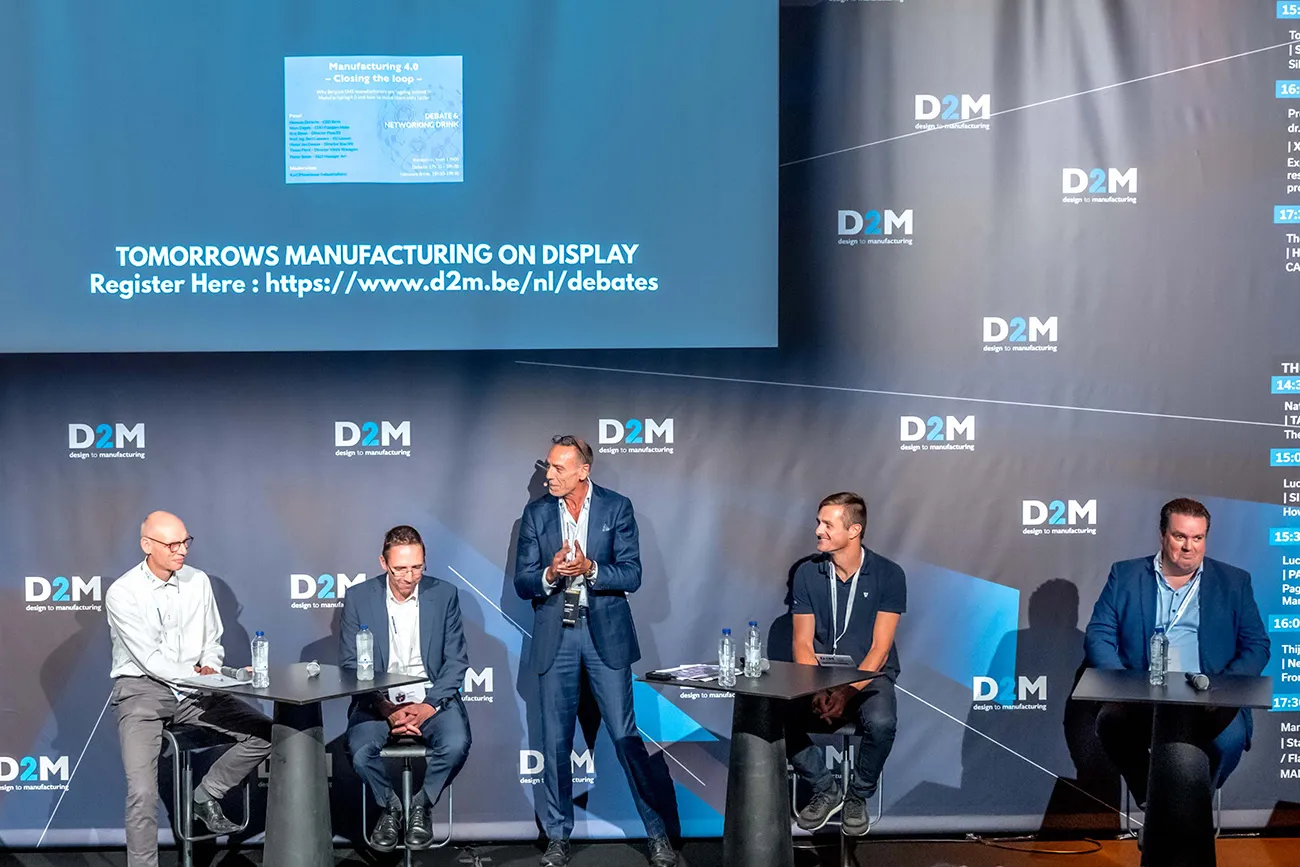
Despite all the buzzwords, digitalisation is taking hold among Belgian SMEs and machine builders more slowly than expected. What exactly is the reason? Is it a lack of people, resources, knowledge or time, or perhaps a bit of everything? And what can be done to close the gap? A panel of experts discussed these questions at D2M. The panel comprised Kris Binon, (director of Flam3D), Pieter Jan Deman (director of Stas), Herman Derachte (CEO of Sirris), Marc Engels (COO of Flanders Make), Timen Floré (director of Vintiv Waregem), Prof. Ing. Bert Lauwers (KULeuven) and Pieter Steen (R&D Manager at Jori). This article brings together their insights.
The first striking finding is that the pandemic may not have been the digital accelerator we all thought it was. At least, not in industrial practice. This is according to a survey conducted by Flanders Make on companies’ strategic digitalisation plans. Two statistics stand out. The share of companies that wanted nothing to do with digitalisation rose from 5% to 7%, while the share of companies where it had already been effectively implemented fell from 39% to 32%.
Engels: “This can be explained by the fact that many companies realised in 2021 that they were not yet where they needed to be with their digitalisation efforts. Covid provided a digital reality check on what was and was not working. For most companies, this period only raised more questions. This is true not only of SMEs, but just as much of large companies. You see the same gap between early adopters and laggards.”
Technology in the service of people
However, the types of digitalisation projects differ considerably depending on the size of the company. For large companies, digitalisation is primarily a way to cut costs, while SMEs mainly use it as a tool to serve customers better.
“That makes sense,” Derache explains. “SMEs have to watch every penny and have already made their processes efficient. But the current energy crisis and the consequences of the war in Ukraine have created hesitation about making major investments. The trends towards reshoring and digitalisation nevertheless remain a common thread in projects. After all, automation and digitalisation are also the answer to the shortage of operators. There simply aren’t enough of them. In this case, technology is not about cutting costs, but about ensuring continuity of operations.”
Additive manufacturing
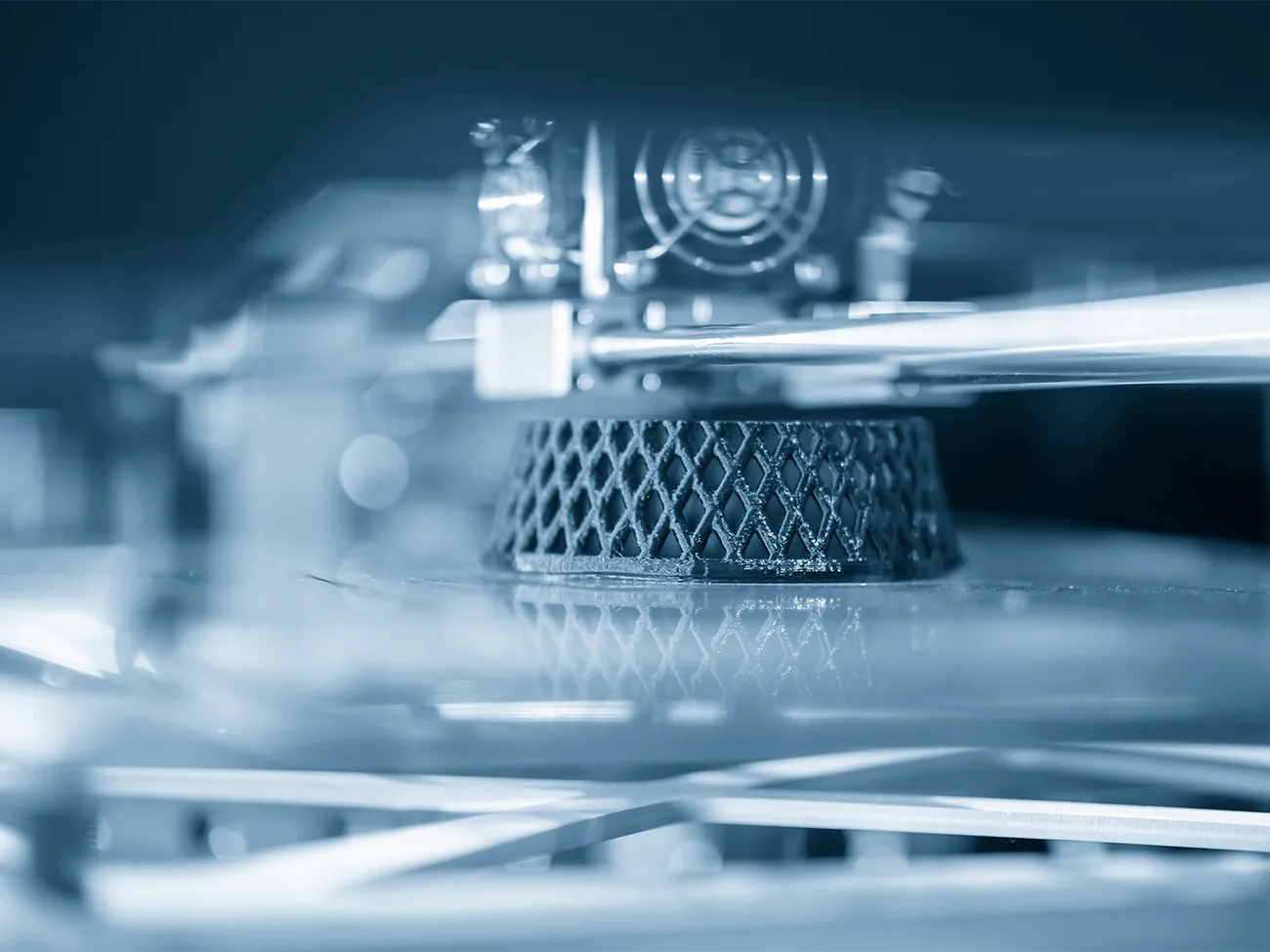
Additive manufacturing is one such digital production method. Here too, however, it has yet to make a major impact on the factory floor.
Binon: “Only twenty 3D printers are sold in the Benelux each year. It is a relatively small sector, but it is growing, with sales up 25%. You just don’t see that yet. In Flanders in particular, 3D printers are still rare in SMEs. One reason is that there are a number of specialists in the field, which makes companies more likely to outsource. We see that it is a case of not being able to see the wood for the trees. It is not easy for companies to know exactly which tree they need to pick to reap the greatest benefits from additive manufacturing. The best advice I can give? Start by setting aside time for an employee to research the subject thoroughly and make the right decisions.”
Integrating new and conventional technologies
The younger generation is certainly not the problem. Lauwers’ students are already familiar with and enthusiastic about additive manufacturing. He believes the real difficulty lies in practical implementation. “It is such a complex process. That means it takes more time to integrate it with other production processes on the factory floor. But once that has been done, additive manufacturing opens the door to mass customisation. Companies are not alone in this, either. Many experts at knowledge institutions are ready to share their expertise for industrial applications.”
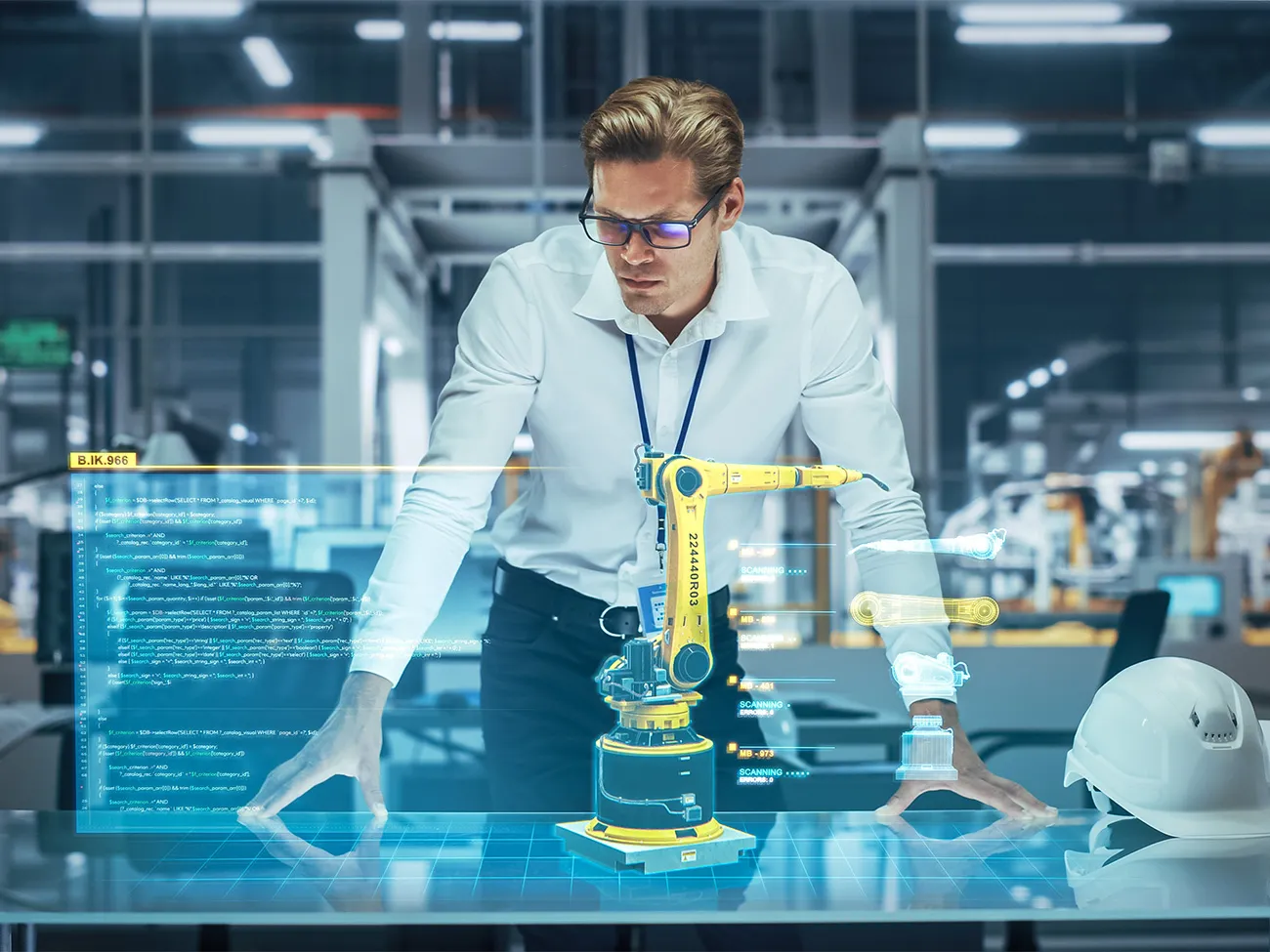
Lauwers also issued a passionate appeal to the entire value chain to get young people interested in technology. “The number of operators is declining rapidly. Manufacturers need to provide smart machines with greater autonomy, while we need to teach young people the essential skills to intervene appropriately when problems arise. The more autonomous machines become, the more prominent the digital twin will be within them, albeit in the background, since operation must remain intuitive and simple for the user.”
Standardisation for simpler automation
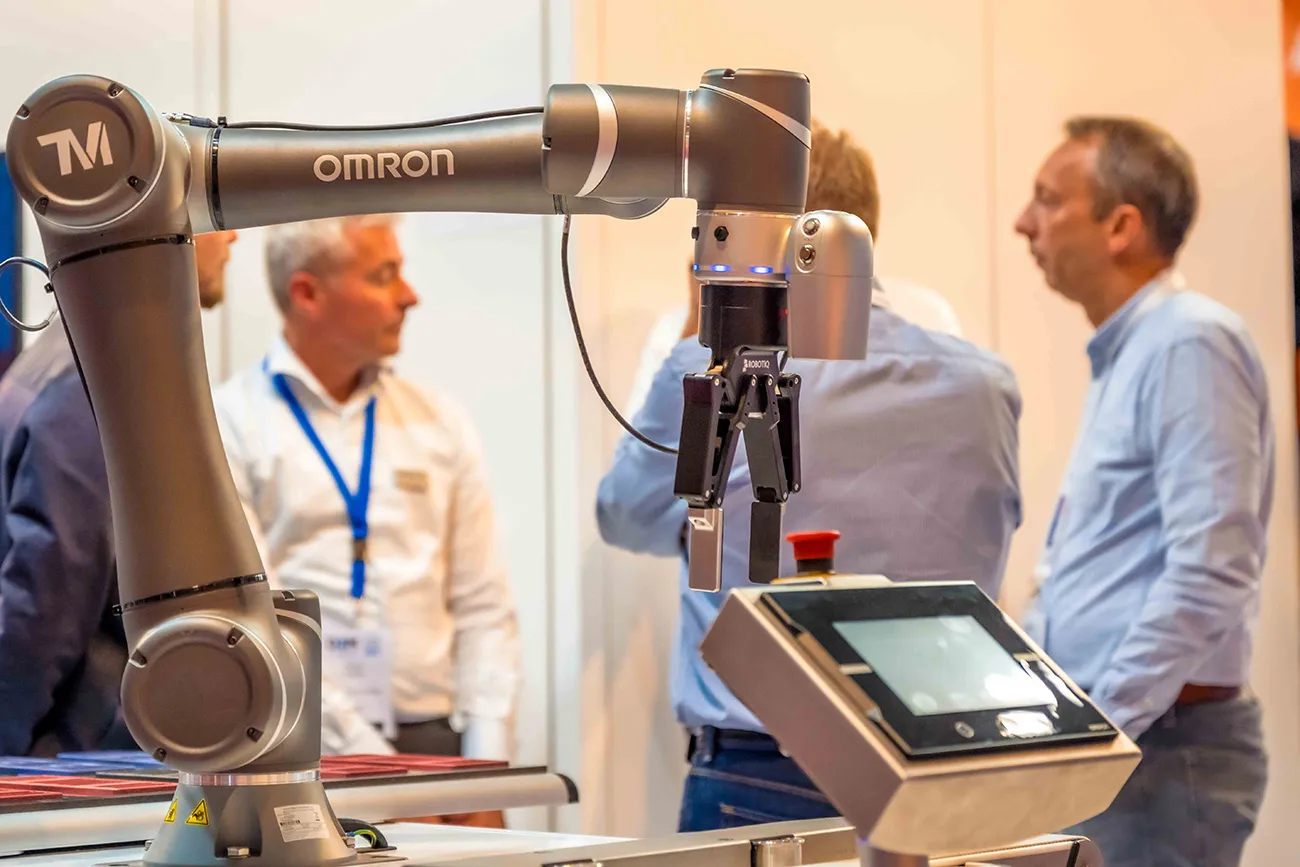
Machine builder Vintiv can only confirm this trend. More engineering time will therefore be needed to develop these smart machines. “Today, engineering accounts for around 50% of costs. So we continue to look for ways to optimise the process. Generative design and artificial intelligence have potential, but are difficult for us to apply because we build a new machine each time. We believe standardisation is a more promising way to make progress.”
“It is a different story for users of our machines. We try to support them on their digitalisation journeys by helping to break the process down into manageable steps. Digitalisation can start on a very small scale by focusing first on the biggest problems. But everything depends on the business case. Always start there.”
The importance of change management
Deman is also in favour of this approach. “Forget all those buzzwords. First, think about what you actually need and what is urgent. I am convinced that the right technology will then be easier to find. But it is about more than technology alone. Our experience with digitalisation and additive manufacturing shows just how important it is to understand people. If you want to convince employees, customers and partners of something new, you need to bring them into the story from the outset. You obviously need engineers to work everything out, but make sure you also have a few people with a background in the humanities on board to lead the change management effort within your company.”
Sustainability is the only way forward
Any change will have to be sustainable. “Given the current energy crisis, this is the only direction we can take. But it goes beyond solar panels and wind turbines. In fact, you need to examine your entire production process, from the choice of raw materials to the waste you generate, as well as the way your processes are organised on the factory floor.”
Steen also sees a major role for greater collaboration. “It pays to join forces with other companies to improve sustainability. Why shouldn’t a wind turbine be a joint initiative for an entire SME zone? It could save a lot of trouble with permits. But the government also has to take responsibility. This is already happening in the Netherlands, where so-called eco-industrial parks bring companies and government together to invest in becoming fully energy-neutral. There is still too little of that here.”
Question about this story? Ask your question
Companies in this story
Keep following this
Get an email when a new story is published. No account needed.
- ThemeFrom design to flexible machine
- SubjectSoftware, IT, OT & cybersecurity
- CompanySirris
- CompanyVINTIV







