












Software, IT, OT & cybersecurity
Industrial automation reinvented
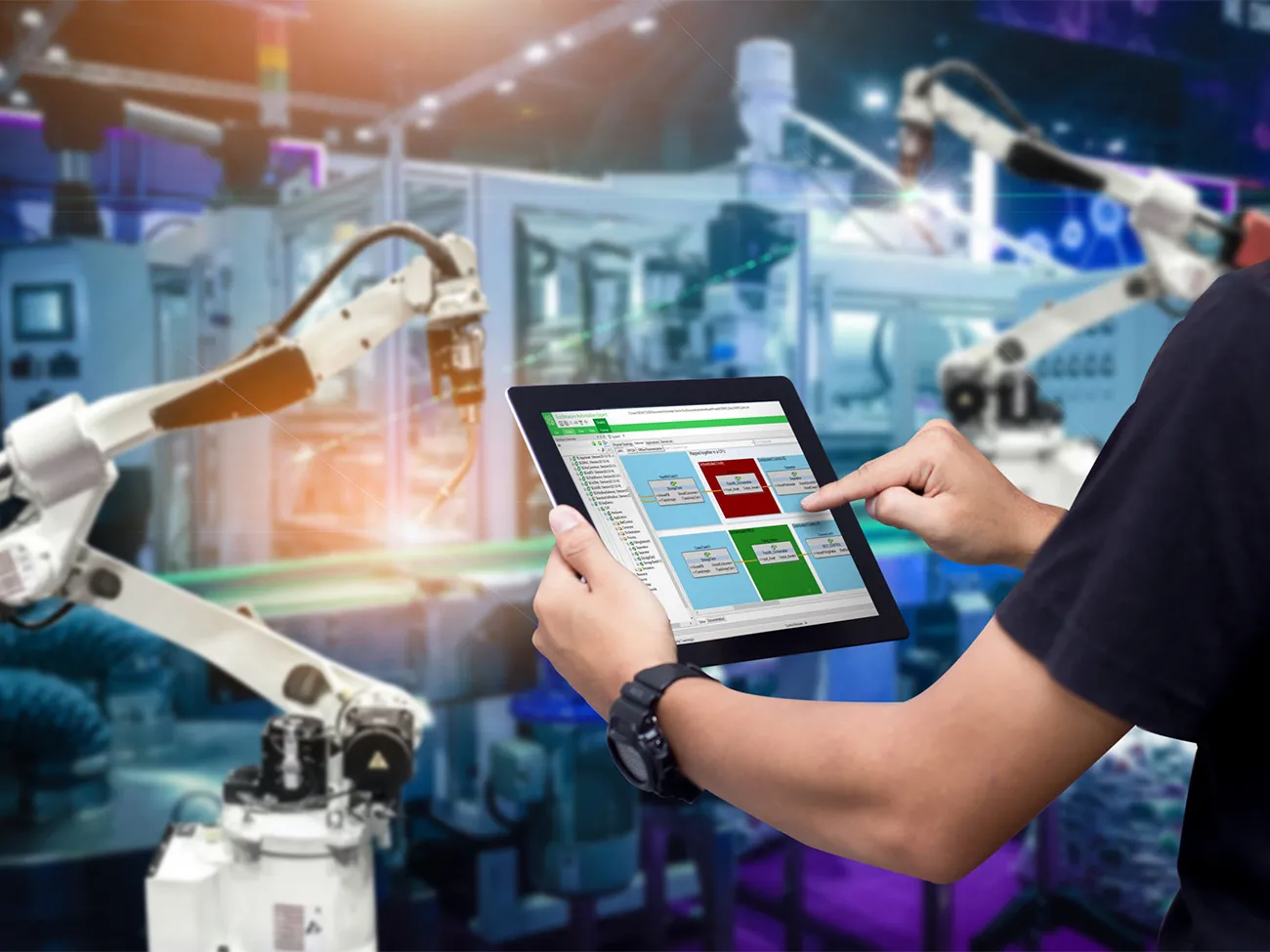
Universal automation. Does that sound like a foreign concept? If so, you’d be well advised to settle in and read on, because this concept, made possible by the IEC 61499 standard, is set to take industrial automation in a completely new direction. A direction no longer constrained by hardware limitations, where plug-and-produce software components pave the way for open automation and unlimited possibilities. At a webinar on 24 May, Schneider Electric will explain exactly how it works and how it is responding with its EcoStruxure Automation Expert.
We now live in a truly digital economy. Technological innovation and the internet have changed the way we do business and make products for good. A few years ago, the IEC 61499 standard introduced a new concept for automation that addresses the needs of manufacturers in this new world: universal automation.
Greater efficiency and flexibility
A world in which software now calls the shots, bringing with it a host of benefits.
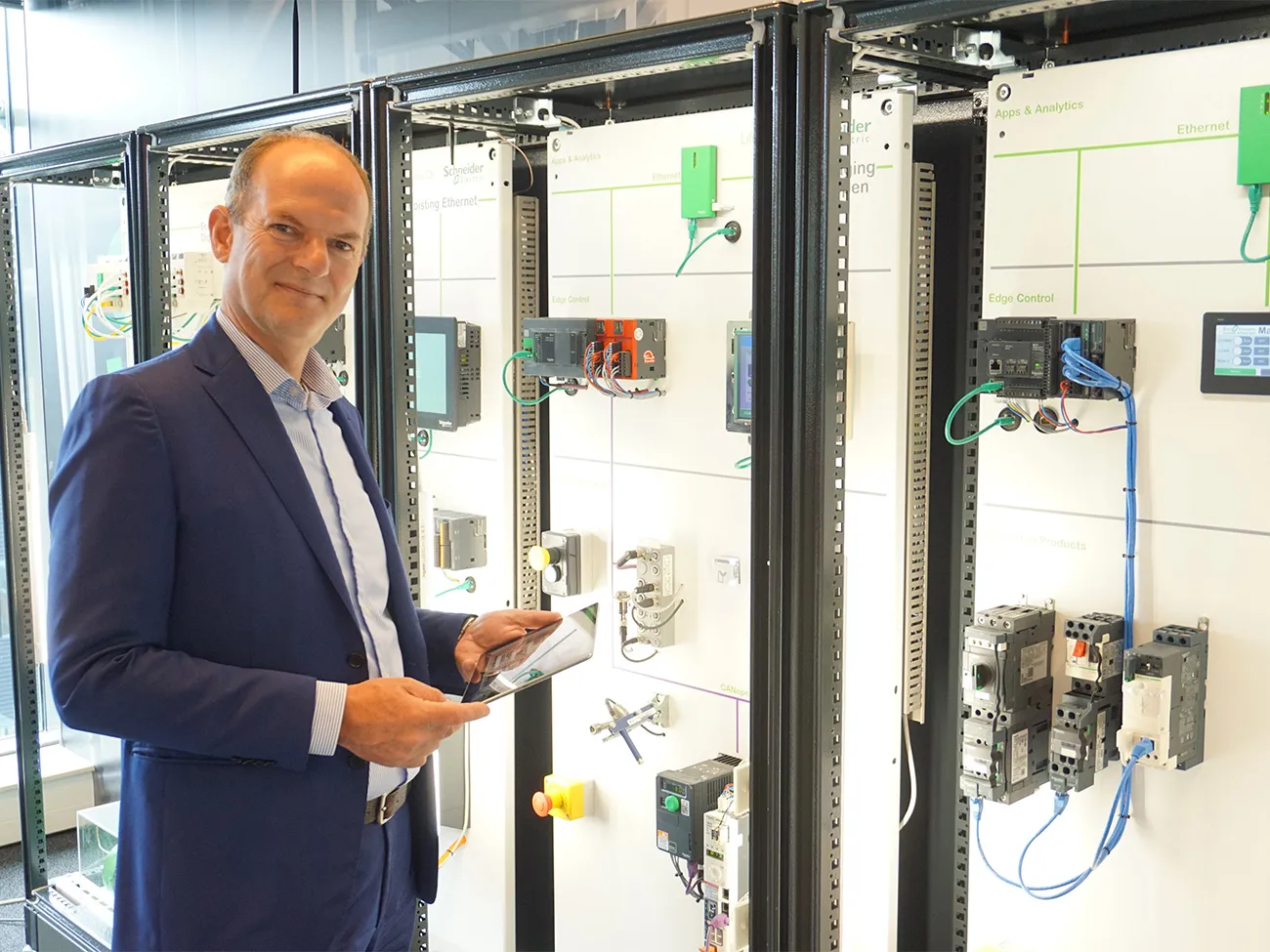
“In the past, an automation solution was often a black box: a closed combination of hardware components and a PLC that did what it was supposed to. Making changes was no easy task. In recent years, more and more standards have emerged to break away from that model and improve interoperability. Examples include Namur and OPC UA,” says John Coppens, Industry Marketing Manager at Schneider Electric. “The focus is now shifting increasingly towards software as the basis for automation processes. It no longer matters how many different brands are involved in a machine or production line. You become hardware-independent. This is already happening in practice, but with far greater complexity and workarounds. In the future, automation projects will be open ecosystems that offer much greater flexibility, for example when it comes to reconfiguring, and enable much higher efficiency because everything is aligned. This will of course also bring significant savings in engineering costs.”
Webinar explains what it is and what it can do
Until now, the PLC has acted as the orchestra conductor. In the future, that role will be taken over by software.
Coppens: “Everything can then be programmed in a familiar software environment and distributed from there to the hardware components. This requires a completely new way of thinking, for machine builders and system integrators as well as end users, because it opens up so many more possibilities. At the same time, the concept is closely related to what we all know today; it simply adds another layer. The first small-scale pilot projects are showing its potential. In the next phase, we want to roll them out at pilot scale.”
On 24 May, Schneider Electric is hosting a webinar on the subject. “The only real barrier is the change in mindset required. Wherever we go and explain the concept, you can feel people’s curiosity bubbling away. Universal automation offers an answer to many of the challenges we face in industrial automation today. During the webinar, we’ll explain exactly what universal automation entails, what it could mean in practice and how we are responding with EcoStruxure Automation Expert.”
EcoStruxure Automation Expert
EcoStruxure Automation Expert is Schneider Electric’s ready-made answer to the universal automation trend.
“It consists of software for automation, along with a number of hardware components that are already prepared to make it very easy to start building applications. This is a line we will continue to expand and develop, so that runtime can be distributed across hardware. You will then be able to programme and control each component individually with ease, using only the function blocks relevant to that piece of hardware. Programming will be child’s play,” predicts Coppens.
Question about this story? Ask your question
Companies in this story
Keep following this
Get an email when a new story is published. No account needed.
- SubjectSoftware, IT, OT & cybersecurity
- CompanySchneider Electric







