












Software, IT, OT & cybersecurity
Increasing efficiency in control panel building
Text Valérie CouplezImage Rittal
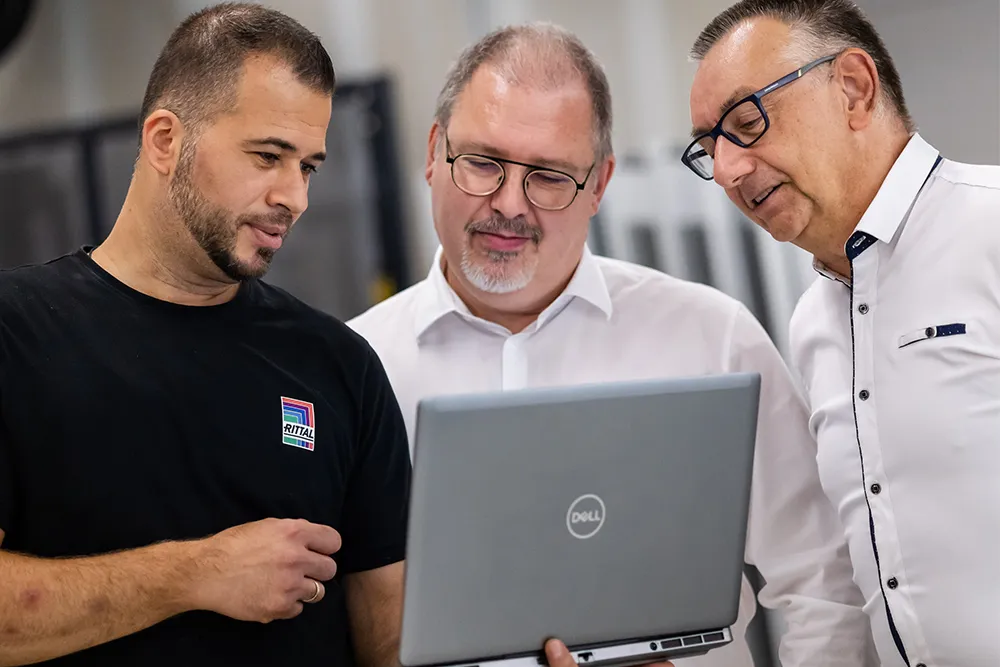
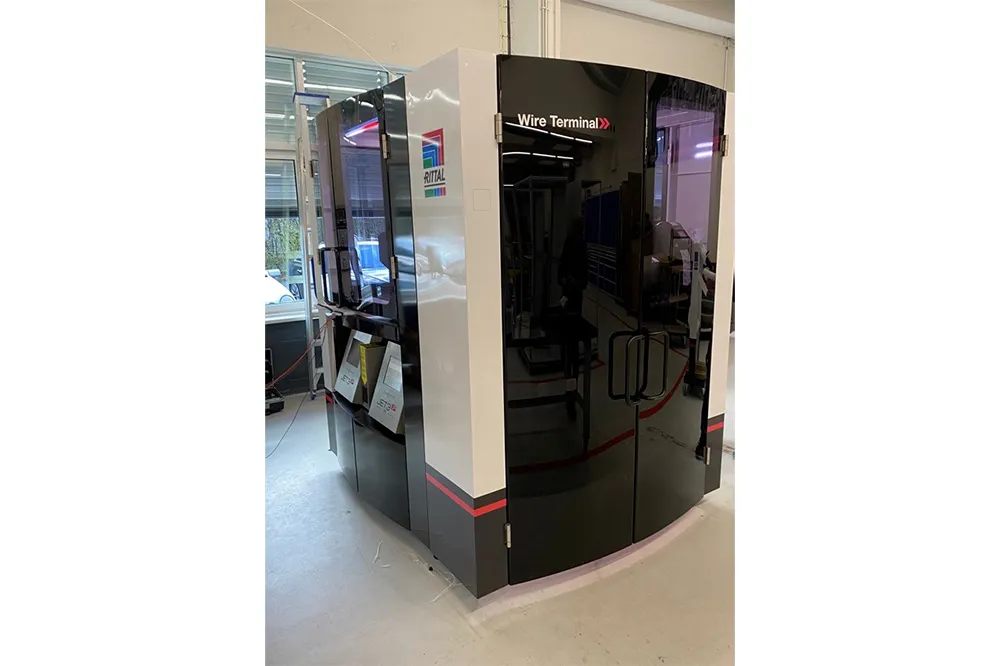
A control panel manufacturer and a software supplier sharing a trade fair stand? The story makes a little more sense when you hear the names of sister companies Rittal and Eplan. But it will only fully come together when you see at Indumation how they help machine builders work more efficiently with an integrated offering. Eplan’s smart engineering software lets you quickly, easily and accurately create the mechanical design for a custom Rittal enclosure. The (provisional) final step in this process is the Wire Terminal, which takes care of wire processing and will demonstrate at the Indumation stand how it can help you.
Wiring the enclosure takes up half of a control panel builder’s time. That alone is reason enough to consider automation, especially today, with the shortage of electrically skilled staff.
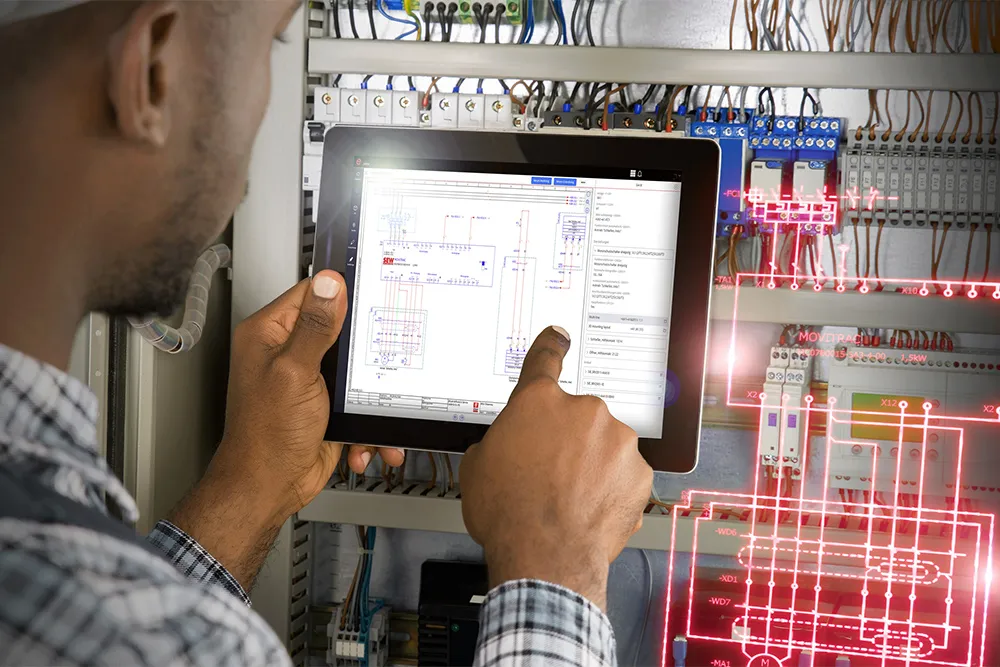
“Rittal and Eplan therefore looked at how we could create a kind of IKEA solution, accessible to everyone, where wiring essentially becomes assembly,” says Eplan senior consultant Robin Vandersyppe. The result is the Rittal Wire Terminal, which prepares wires to the exact required length, and Eplan Smart Mounting and Wiring software, which provides step-by-step instructions. But before we get there, we need to go right back to the start of the chain. “It all starts with the data. Once that is in order, customers can start taking steps towards greater automation and digitalisation, enabling them to maintain the same quality despite the staff shortage,” adds Vandersyppe.
Product leadership
Rittal and Eplan divide this journey into four stages, depending on the level of automation the customer has already achieved. “It is important to identify where you are today and clearly see where there are opportunities to improve efficiency.”
The first stage is still entirely manual. “Engineering is done on paper, and the resulting electrical schematics contain little usable data. That can work perfectly well, provided the electrician has sufficient technical knowledge to analyse the schematics correctly. And those people are becoming increasingly difficult to find.”
The second step is to take engineering to a higher level by introducing software for control panel building. “This may well be the biggest hurdle to overcome, because the knowledge has to shift to the engineer. But you then have the enclosure layout available in 2D, along with plenty of relevant data. That information can be sent directly to the Rittal Application Center to customise the enclosures mechanically. This already saves a great deal of time and spares electricians most of the tasks they would rather not do.”
Customer intimacy
In step three, perhaps the easiest one, 2D becomes 3D. “Instead of building prototypes, you can now use the software to create a digital twin of the control cabinet. This saves even more time and reduces material waste, because everything can be fully validated digitally. This is often also when customers decide to invest in Rittal Perforex and Secarex machines themselves, which cut everything to size. There are already more than 50 of them in Belgium, a lot for a small country like ours. That says something about the drive for efficiency companies are feeling,” says Mario Van Bever.
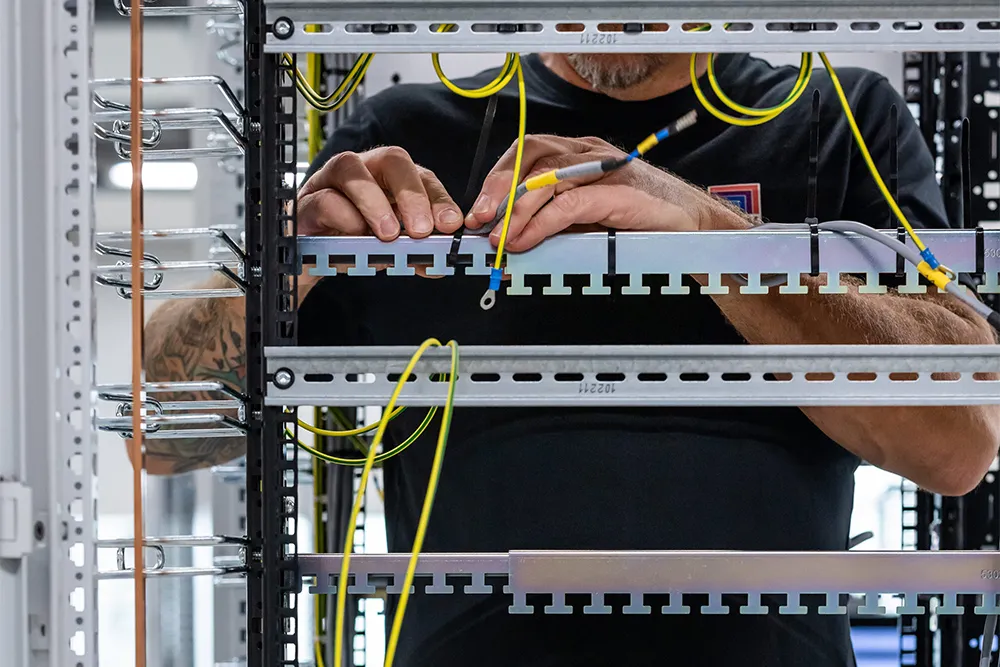
The final element in this story is wire processing. “While this can still be outsourced to the Rittal Application Center in step three, as a company automates further it may become worthwhile to bring it in-house as well by introducing a Wire Terminal.”
Evaluating and optimising together
The Wire Terminal on display at Indumation is coming over from Germany. The one in Lokeren is already indispensable for keeping production running. “Automation is no longer just for large batches. The smaller the batch, the less room there is for error and the more important it is to make it as efficiently as possible. That is what our integrated approach is all about,” says Van Bever. “That is why we visit customers together. We assess their processes and see how a combination of hardware and software can improve them. By deploying machinery and technology specifically for the tasks people enjoy less, we can help our customers grow,” concludes Vandersyppe.
Rittal & Eplan: Stand 550
Een zakelijke vraag aan Rittal nv/sa? Get in touch
Companies in this story

Keep following this
Get an email when a new story is published. No account needed.
- ThemeFrom design to flexible machine
- SubjectSoftware, IT, OT & cybersecurity
- CompanyRittal nv/sa
- CompanyEPLAN nv







