












Software, IT, OT & cybersecurity
How to build a connected factory
Text Valérie CouplezImage Agristo, Beckhoff Automation en Valérie Couplez

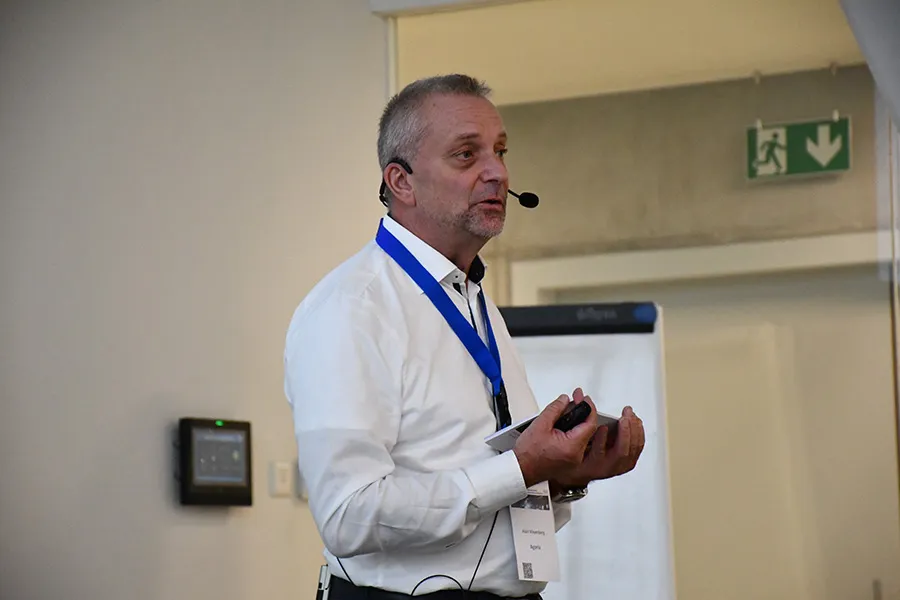
In the world of Industry 4.0 and connected production, communication has become crucial. But where do you start? By building a good communications network. In a new Awareness session, Agoria explained the choices available for industrial communications. The afternoon also linked theory to practice through a number of interesting case studies.
Industrial communications began with the telephone, followed later by relays to pass messages on. But the real breakthrough had to wait until the introduction of fieldbus systems. The ‘war’ between the various protocols has now been settled. We have moved towards a more holistic approach, where the strengths of each system can be put to use. And not just to manage communications within the factory walls, but also to connect to the layers above, including the cloud. The next step? Undoubtedly, the large-scale industrial rollout of 5G, which will make it possible to implement applications requiring more data traffic in real time.
From hierarchy to network topology
The biggest difference with the connected factories of tomorrow is that, in principle, all components will need to be able to communicate with one another. We can therefore forget the traditional automation pyramid. Hierarchy is giving way to a network structure, which also enables local processing through edge computing, as well as wireless communications. So what is the best topology? That will depend very much on the application in question. The great, and at the same time challenging, thing about Industry 4.0 is the wide range of options available to users. Each time, they will need to analyse their communications requirements and what is already in place in production in order to make the right choices.
What do Belgian companies need?
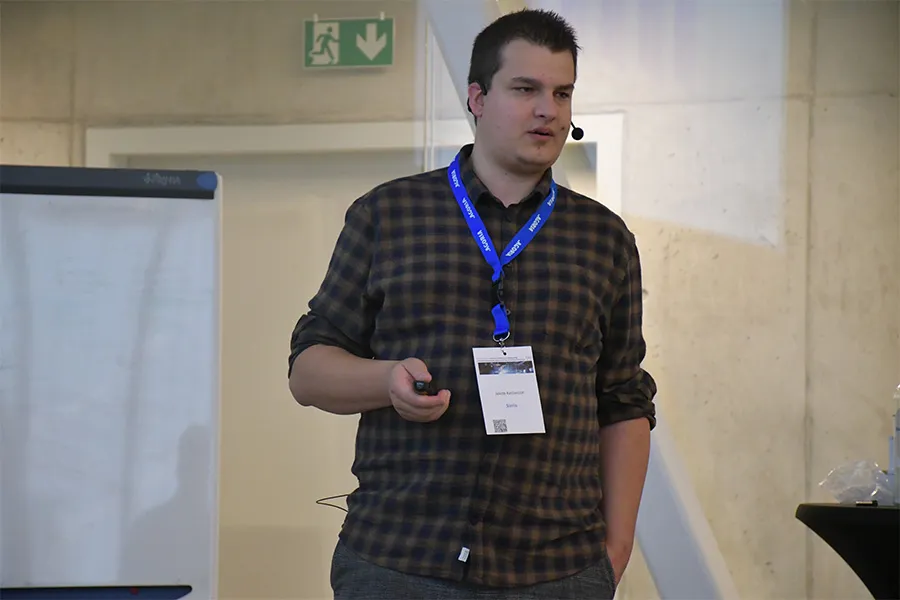
But how far along are Belgian companies today? In the average company, connectivity is still limited. The link to production is often missing or very basic. Yet end-to-end connectivity is an important enabler for new applications. This means the shop floor can communicate in both directions with data-driven applications, existing systems such as ERP and MES, and external organisations via the cloud. This would help companies improve production and maintenance efficiency, quality and logistics. A survey shows that the main areas of interest are production monitoring, process control, traceability, human-machine interaction and condition-based maintenance.
Challenges
The path to achieving this is not straightforward. Alongside cybersecurity and organisational change, there are also economic and technical challenges to consider. ROI is not always easy to calculate, and there are inevitably costs involved, including hardware and software licences. On the shop floor, the heterogeneity of the machinery is often a concern. How can connectivity be standardised in such circumstances? It is also important to work with the data: provide the right context, turn it into information, and make it easy to access and understand, including for non-IT staff.
Where to start?
Find a small-scale business case and get started with a proof of concept that can quickly deliver value. There is potential throughout the company, but start with highly focused projects. This allows you to test feasibility with very limited effort and cost. But keep the bigger picture in mind. The aim is not to leave each project isolated. Ultimately, everything needs to come together as part of a larger whole. Bringing in external expertise or technology partners is often unavoidable. But stay involved in the developments and the data being captured. Retain ownership of them. And, of course, do not forget to give due attention to (cyber)security and privacy.
Always work with standards
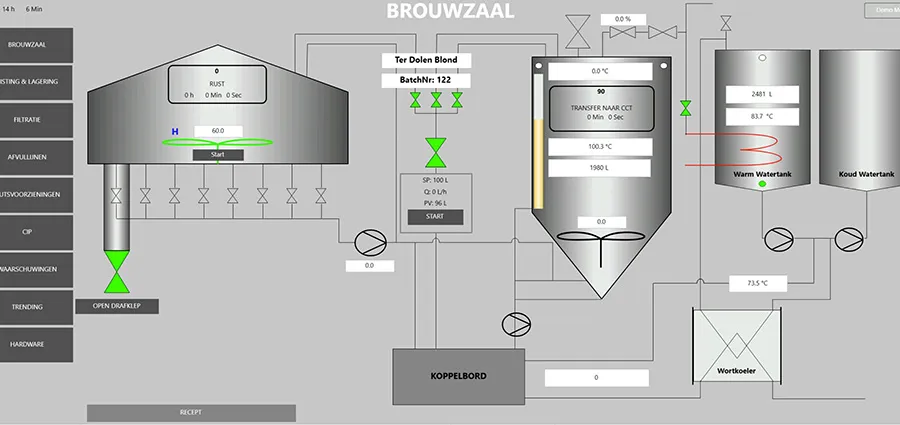
Standardisation should always be the foundation of connectivity. The two most widely used standards in industrial environments are MQTT and OPC UA. Each has its advantages and disadvantages. The choice can be made according to the application in question, as they can also be integrated into a hybrid architecture.
Let’s take a closer look at MQTT first. This communications standard comes from the IT world and is based on a publish/subscribe model.
Clients that have data publish them, while clients consume data that are available. This always takes place via a central platform, also known as a broker. It requires less administration and less bandwidth, because the broker only publishes when something new is available.
OPC UA comes from the production environment and works on the client/server principle. Here, the client requests data from the server, which then retrieves the data. This is better suited to real-time and complex applications.
These two standards alone are not enough. Further standardisation is also needed to structure the data. Sparkplug B is a popular choice for MQTT, while Umati is used for OPC UA.
Connectivity for Ter Dolen Brewery
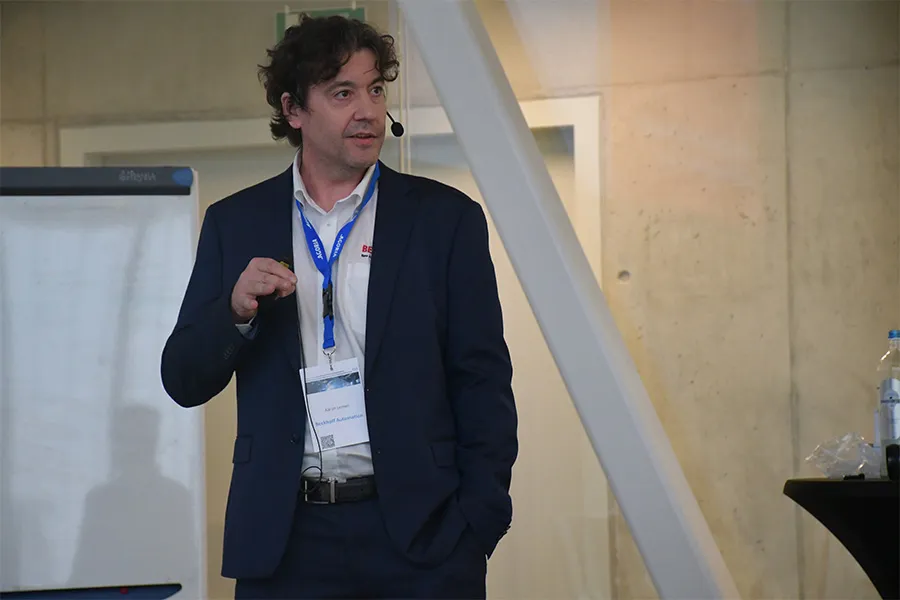
So much for the theory. Next came examples from practice. The first was Ter Dolen Brewery. The brewery opened in 1994 in the outbuildings of the castle of the same name. Since 2013, it has had its own bottling plant and a warehouse with a warm room, enabling it to brew and bottle all its beers on site. Ter Dolen approached its technology partner Beckhoff with a straightforward question: could it create more flexible data connectivity? It wanted to connect to its ERP package, retain historical data for traceability and further process analysis, and leave the door open to new applications in the future.
A simple dashboard tells the whole story
By activating TwinCAT Analytics Logger, all variables could be made public and configured according to their destination. Up to 3,500 symbols can be processed in real time, allowing monitoring down to the PLC cycle time, depending on the bandwidth. TwinCAT Cloud Engineering provides remote access to the PLC. All relevant data are stored in TwinCAT Storage Provider, and the process can be analysed and monitored in real time, 24/7, using TwinCAT Analytics Runtime. A simple dashboard gives the brewery operators all the information they need: to adjust processes in real time when necessary, monitor the temperature, and eventually evaluate the quality of the finished product. Which variables ultimately led to this result?
Connectivity for Agristo
Agristo, meanwhile, used OPC UA and MQTT to gain insight into water savings and the production process. Under its strategy for 2030, the company aims to grow, but sustainably. It wants to become the most sustainable producer of potato-inspired frozen products.
To achieve this, its footprint per tonne of finished product must be reduced by 30%. This also means using less water (-10%) and sourcing half of its water from sustainable alternatives, with at least 10% coming
from reuse.
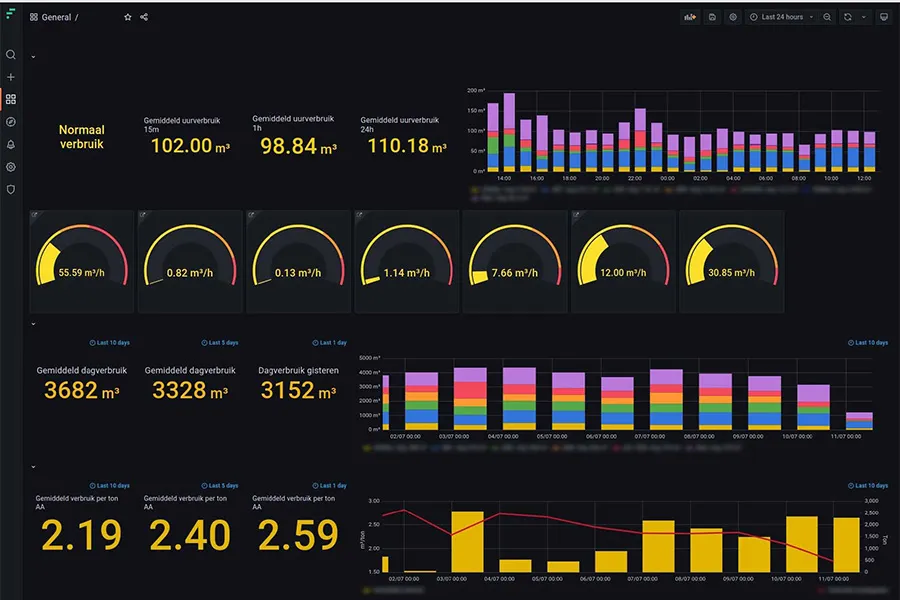
Agristo therefore decided in April 2021 to launch a proof of concept for data logging and real-time dashboarding of water use at its production site in Wielsbeke. The project had two aims: to monitor water consumption using a dashboard for the entire site, one for each production line and one for utilities. It also looked at how these dashboards could be incorporated into the existing working practices of operators and process engineers.
MQTT and OPC UA
By October of the same year, it was clear that Agristo would continue with the project. Data are sent from the SCADA software via OPC UA to data collectors on site, and then via gRPC to Factry Historian. There, Grafana turns the data into real-time monitoring tools. Each site has its own environment, and the data are also made available for other applications. MQTT was added in the second phase. The automation layer now makes the required data available. The MQTT broker is already collecting input from Wielsbeke, Harelbeke and Nazareth and sending it to Factry Historian. Tilburg is still to come. ■
Een zakelijke vraag aan Beckhoff Automation? Get in touch
Companies in this story

Keep following this
Get an email when a new story is published. No account needed.
- SubjectSoftware, IT, OT & cybersecurity
- CompanyBeckhoff Automation
- CompanyFactry BV







