












Software, IT, OT & cybersecurity
How many hours is your company losing to work that adds no value?
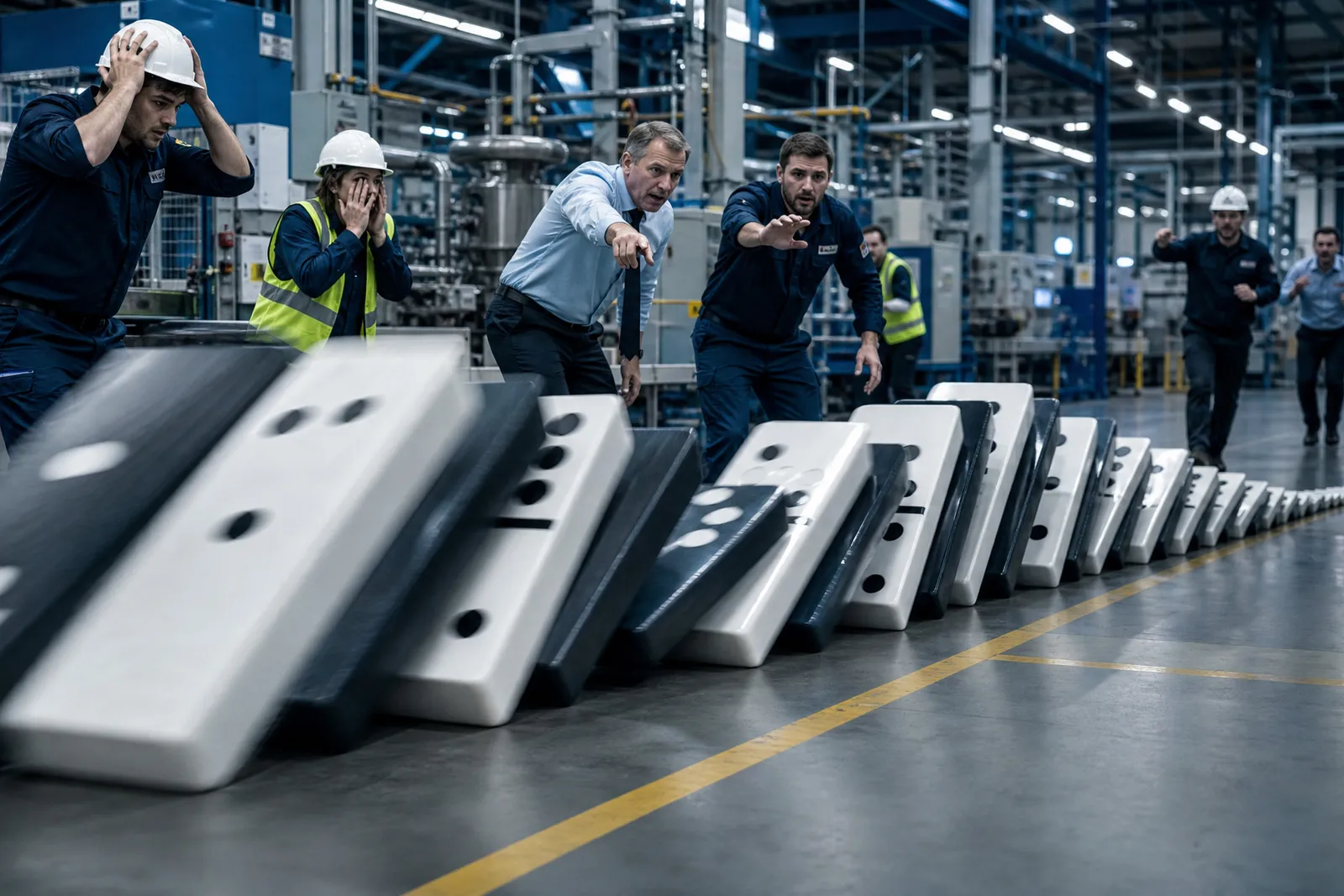
You think it’s just ‘the way things are’ in manufacturing. Data is retyped from Excel into, for example, your order management system. Quotes are drawn up based on what someone thinks something costs. Bills of materials are transferred manually from CAD programmes. And nobody knows exactly what’s still in stock. Week after week.
It’s no surprise that research by FME, Metaalunie and Fontys Hogeschool found that 80 per cent of small and medium-sized manufacturing companies are struggling with digitalisation, and 83 per cent don’t even know where to start. There’s another problem, too: 43 per cent cite staff shortages as their biggest risk for the coming year. More work, fewer hands, and time is being wasted on tasks that could have been automated long ago. What’s more, customer service comes under pressure when deliveries cannot be made on time. This comes at the expense of customer satisfaction.
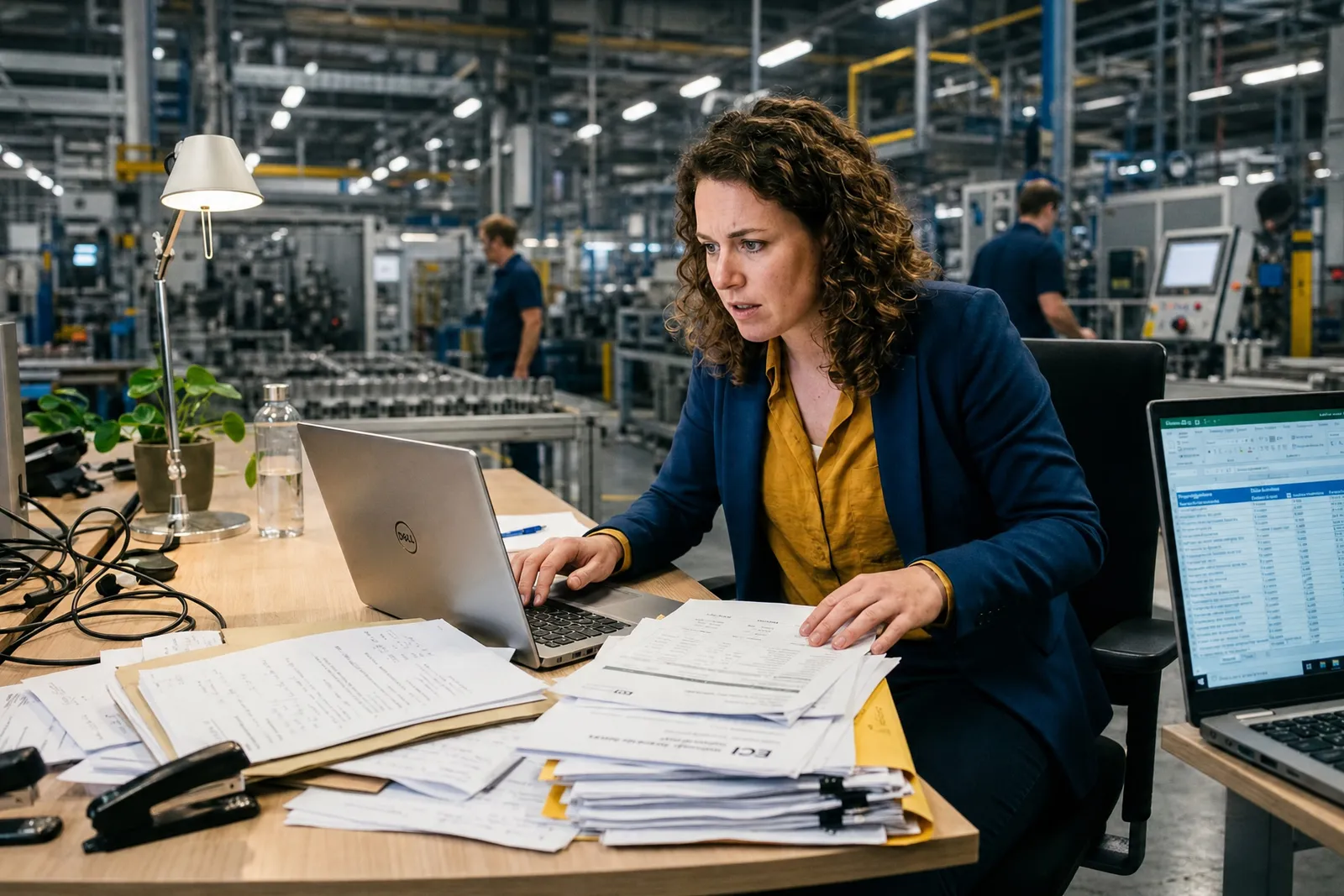
Pain points
But where does the real pain lie? Where is the biggest opportunity to improve your efficiency? Drawing on conversations with hundreds of manufacturing companies, we identified the most common pain points. You’ll probably recognise one of them. Or perhaps a few. That’s good news, because it means there are gains to be made.
1) Manual work and duplicate data entry
Data from CAD systems, email and Excel, for example, is manually transferred to other systems. That takes 5 to 10 hours per week per person and adds no value.
2) Fragmented information
Information is scattered across separate folders, email threads and Excel files. Nobody knows exactly where anything is.
3) Production planning without visibility
There is no (digital) visibility of capacity, lead times or order status. Production is based on routine rather than data.
4) Costing without data
Quotes are prepared using tools such as Excel, without standard logic or post-calculation. It is unclear whether a project is profitable, or how profitable it is.
5) Poor inventory management
It is not known which products and raw materials are in stock and which are not. This puts production continuity at risk or leads to late or unnecessary purchasing.
6) No control over projects and budgets
Status, hours and actual costs do not add up. It is impossible to take corrective action because the information needed is missing or inaccurate.
For some companies, there are further issues: a poor link between engineering and production, no machine history for service and maintenance, legacy software that has been on the verge of collapse for years, or compliance requirements tracked manually in paper files. The list is long, but every issue can be resolved.

What is there to gain?
Of the manufacturing companies surveyed, 96 per cent cite efficiency as the main reason for investing in software. 80 per cent are primarily looking to reduce costs. So there is an awareness that things need to change to improve. And that software is the way to do it. Yet the vast majority still handle a large proportion of their processes non-digitally.
The question isn’t whether you need to change something. It’s how much longer you’ll put it off. Meanwhile, the order book is growing, staffing levels aren’t keeping up, and competitors are already making progress. I’d be happy to work out with you what these pain points are costing your business. Then the decision to take the next step will be an easy one.
Question about this story? Ask your question
Keep following this
Get an email when a new story is published. No account needed.
- SubjectSoftware, IT, OT & cybersecurity







