












Software, IT, OT & cybersecurity
ETAP and Schneider Electric introduce the first Digital Twin to simulate the energy requirements of AI factories, together with NVIDIA Omniverse
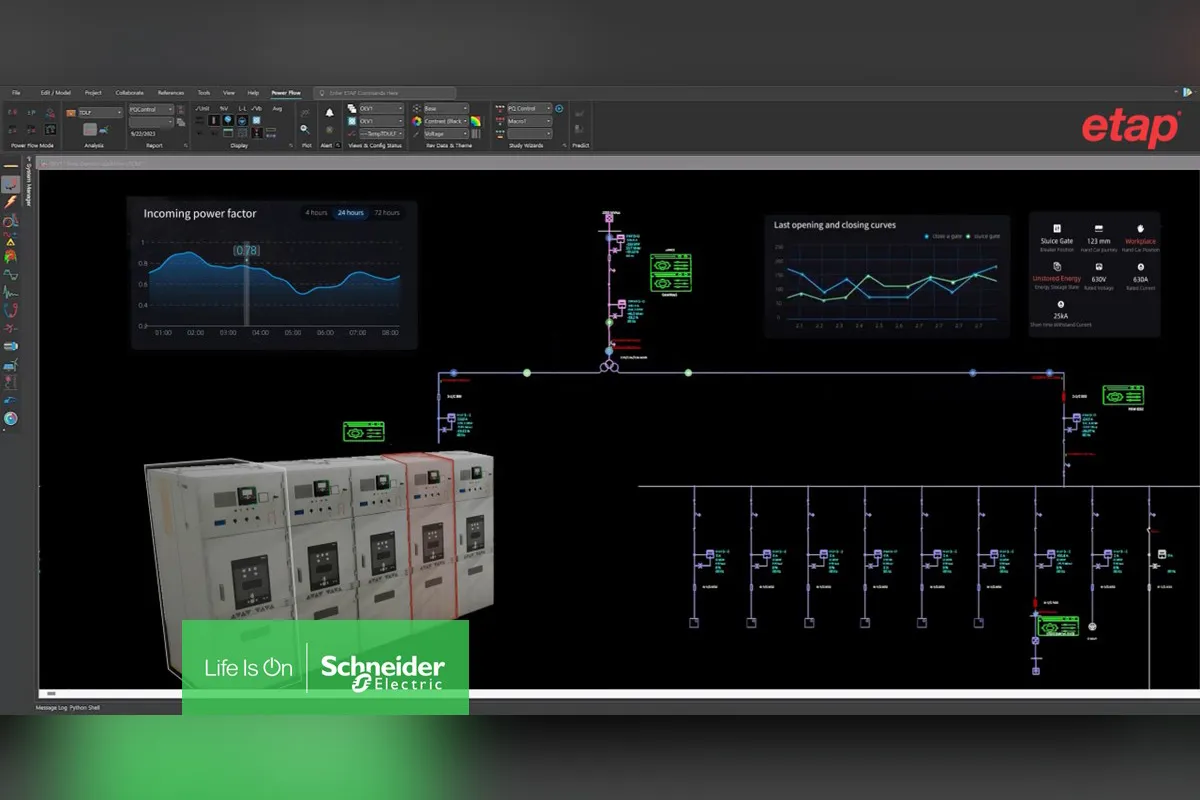
Schneider Electric, a leader in the digital transformation of energy management and automation, and ETAP, an industry and technology leader in the design and operation of power systems, introduce a Digital Twin that can accurately model and simulate the energy requirements of AI factories. Schneider Electric and ETAP are using the NVIDIA Omniverse™ Blueprint to do this. Data from mechanical, thermal, network and electrical systems are combined to simulate the operation of an AI factory. The collaboration aims to transform the design and operation of AI factories by providing greater insight and control over electrical systems and power requirements. This creates opportunities for significant improvements in efficiency, reliability and sustainability.
- The Digital Twin provides better insights and greater control over the electrical systems and power requirements of AI factories.
- The collaboration integrates ETAP’s advanced Electrical Digital Twin technology with NVIDIA Omniverse™ cloud APIs
- Operators benefit from advanced energy efficiency, predictive maintenance and lower costs.
Previously, only basic visualisations of electrical systems were possible. Integrating ETAP and NVIDIA Omniverse technologies makes it possible to create an advanced AI Factory Digital Twin in which multiple dynamic systems work together seamlessly. ETAP’s modelling technology creates a virtual replica of a data centre’s electrical infrastructure, enhanced with real-time power system data, advanced analytics and valuable insights. Intelligent algorithms analyse and predict power consumption and distribution patterns, providing unique insights into:
- Advanced electrical system design and simulation
- Dynamic “what-if” scenario analysis
- Real-time monitoring of electrical infrastructure performance
- Advanced energy efficiency optimisation
- Predictive maintenance and system reliability assessment
- Infrastructure requirements based on power consumption, which can help lower total cost of ownership
AI workloads are driving a significant increase in data centre power consumption, from large-scale training clusters to edge inference servers. Unlike traditional computing tasks, AI workloads, especially model training and complex inference processes, require enormous computing power. This results in higher power density per rack. As AI adoption continues to grow, startups, enterprises, colocation providers and internet giants must rethink data centre design and management to meet the growing need for energy efficiency.
ETAP and NVIDIA’s collaboration introduces an innovative “Grid to Chip” approach that addresses the challenges of energy management, performance optimisation and energy efficiency in the AI era. At present, data centre operators can only estimate average power consumption at rack level. ETAP’s new Digital Twin focuses on more accurately modelling dynamic loads at chip level. This improves power system design and optimises energy efficiency.
The collaboration underscores ETAP and NVIDIA’s commitment to driving innovation in the data centre industry. It enables companies to optimise their operations and effectively manage the challenges associated with AI workloads. The collaboration aims to improve data centre efficiency while also enhancing power grid reliability and performance.
“As AI workloads become more complex and grow in scale, accurate energy management is crucial to ensuring efficiency, reliability and sustainability,” says Dion Harris, Senior Director HPC and AI Factory Solutions at NVIDIA. “Our collaboration with ETAP and Schneider Electric gives data centre operators unprecedented insight into and control over energy dynamics. This enables them to optimise their infrastructure, accelerate AI deployment and strengthen operational resilience.”
“This collaboration represents more than just a technological solution,” says Tanuj Khandelwal, CEO of ETAP. “We are fundamentally rethinking how data centres are designed, managed and optimised in the AI era. By connecting electrical engineering with advanced virtualisation and AI technologies, we are creating a new paradigm for infrastructure management.”
Pankaj Sharma, Executive Vice President for Datacenters, Networks & Services at Schneider Electric adds: “Collaboration, speed and innovation are at the heart of the digital infrastructure transformation needed to support AI workloads. ETAP, Schneider Electric and NVIDIA are going beyond simply improving data centre technology: they are enabling companies to optimise their operations and navigate AI’s power requirements with ease.”
Een zakelijke vraag aan Schneider Electric? Get in touch
Companies in this story

Keep following this
Get an email when a new story is published. No account needed.
- ThemeFrom design to flexible machine
- SubjectSoftware, IT, OT & cybersecurity
- CompanySchneider Electric







