












Software, IT, OT & cybersecurity
Discover the key principles of Industry 5.0
Text Valérie CouplezImage iStock
A new era of manufacturing
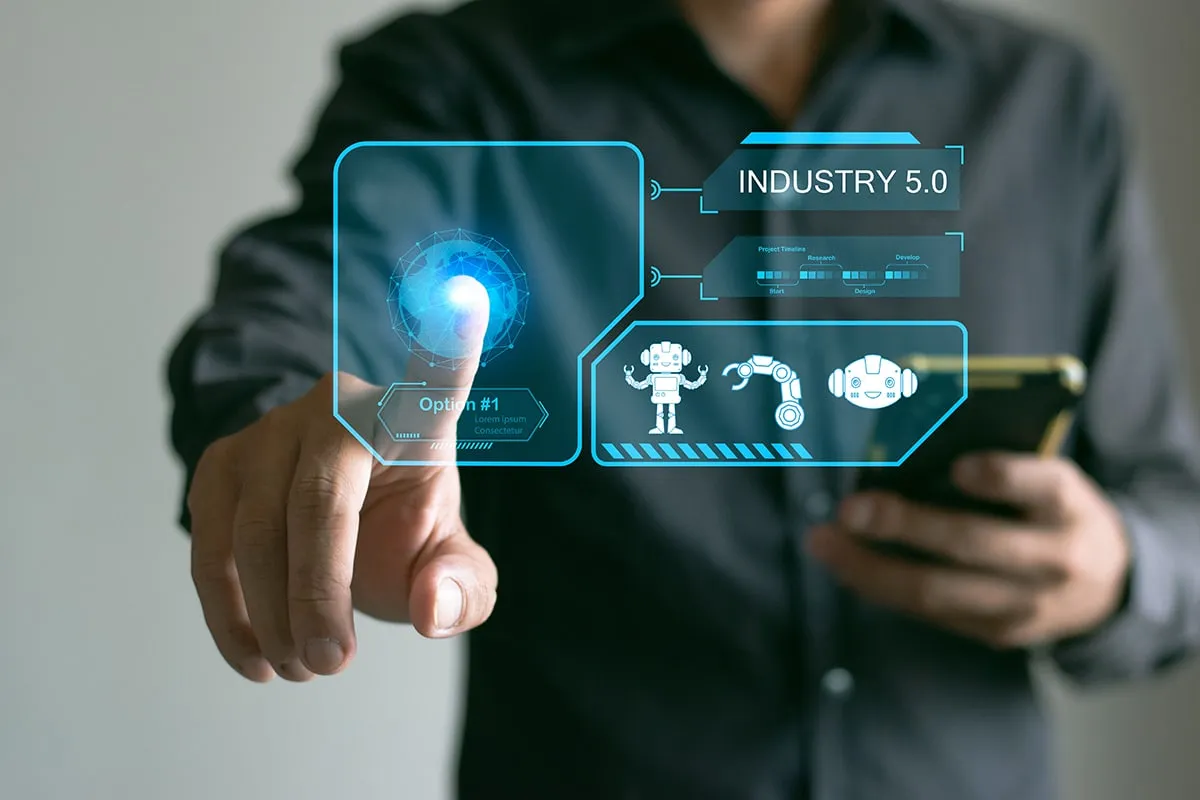
Forget Industry 4.0. A new era has begun. While Industry 4.0 was technology-driven, Industry 5.0 is value-driven. Where 4.0 focused on automation and a greater emphasis on technology, 5.0 puts people back at the centre, alongside technology primarily intended to serve society and the world around us. Although the two revolutions overlap in many ways, there are two important distinctions, as they enable industry to actively deliver solutions to today’s societal challenges: using resources sparingly, ensuring social stability and addressing climate targets.
Industry 5.0, also known as the Fifth Industrial Revolution, is a new and emerging phase of industrialisation in which people work with advanced technology and robots powered by artificial intelligence to improve work processes. It is accompanied by a stronger focus on people, greater resilience and an increased emphasis on sustainability. This new phase is enabled by developments in IT, including artificial intelligence, automation, big data analytics, the Industrial Internet of Things (IIoT), machine learning, robotics, smart systems and virtualisation.
A fundamental difference from Industry 4.0
The European Union describes this new industrial revolution, which extends the concepts of Industry 4.0, as ‘a vision of industry that goes beyond efficiency and productivity as the sole goals, and strengthens industry’s role and contribution to society’. This is an important difference from the Industry 4.0 approach, as described by the EU, because ‘it places worker wellbeing at the centre of the production process and uses new technologies to create prosperity that goes beyond jobs and growth, while respecting the planet’s production limits.’ This marks a shift from a focus on economic value to a broader concept of societal value and wellbeing. Although this concept has been discussed before, for example through Corporate Social Responsibility, the idea of putting people and the planet before profit gives industry a renewed focus.
How did we reach Industry 5.0?
The first industrial revolution began in the 18th century and went through five iterations as technologies and processes developed over the following centuries … This first revolution began around 1780 and focused on industrial production using machines powered by steam and water. Around 100 years later, in 1870, the second industrial revolution was based on electrification and enabled mass production using assembly lines. Another 100 years on, around 1970, Industry 3.0 brought automation through the use of computers and electronics. This was reinforced by globalisation (Industry 3.5), which saw production move to low-wage countries. We are currently living through the fourth industrial revolution, based on digitalisation and automation, artificial intelligence, connected devices, data analytics, cyber-physical systems and digital transformation, among much else.
Benefits of Industry 5.0
The main benefit of Industry 5.0 is the creation of higher-value jobs that allow for greater customer personalisation and give workers more design freedom. By automating production processes, human workers can spend more of their time delivering improved, tailored services and products. This began with Industry 4.0, but Industry 5.0 takes it a step further with enhanced automation and feedback, creating a service-oriented model in which people can focus on adding value for end users. Meanwhile, the increased focus on sustainability and resilience makes companies more agile and flexible, while also enabling them to have a positive impact on society, rather than simply mitigating negative effects.
Drawbacks of Industry 5.0
It is difficult to identify the drawbacks of Industry 5.0, but the challenge will lie in how organisations adapt to embrace this new concept. Companies that can become more people-centred, resilient and sustainable are likely to lead the way with future solutions, while those that cannot keep up will fall behind. To understand this better, it is worth taking a closer look at the strategies behind Industry 5.0: a people-centred approach, greater resilience and a broader focus on sustainability.
A people-centred approach
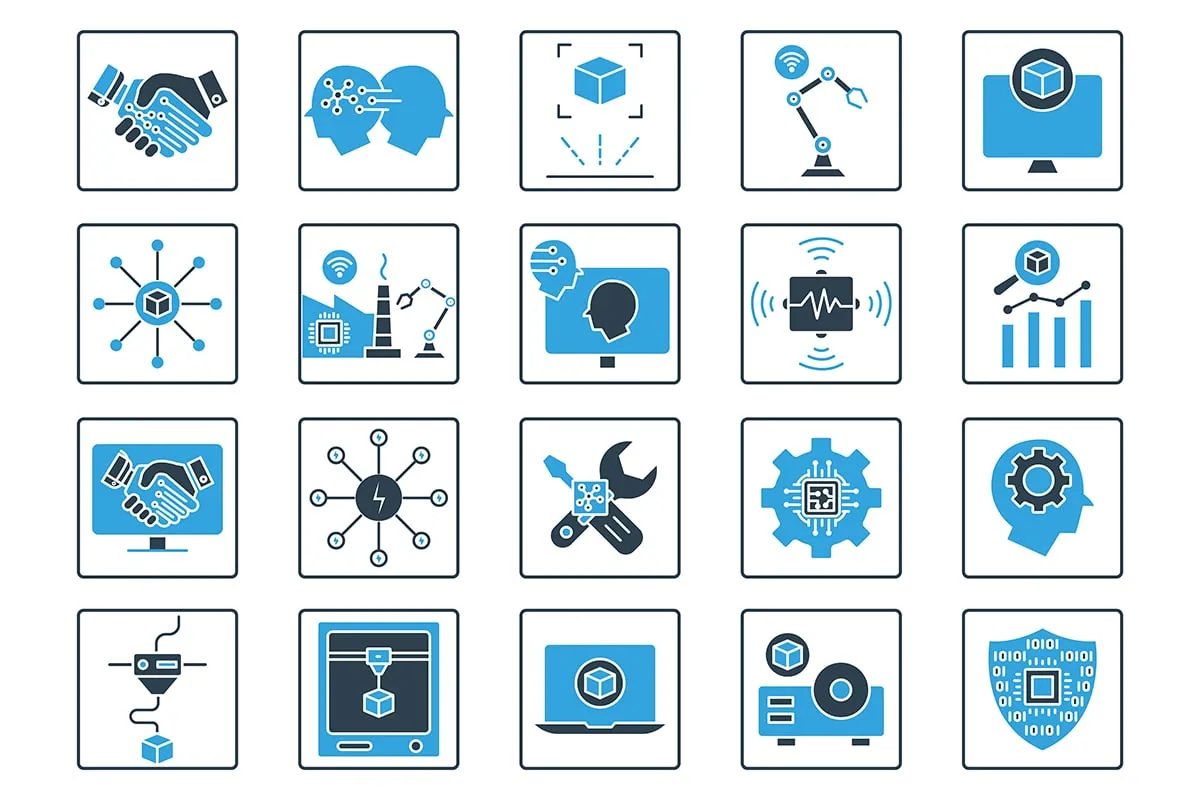
Industry 5.0 includes a strategy that turns people from resources into genuine assets. In practice, this means that instead of people serving organisations, organisations will serve people. So rather than using talent solely to create a competitive advantage and value for customers, Industry 5.0 also focuses on creating value for employees in order to attract and retain the best people.
Resilience
As the world has become more integrated over the years, we have seen the widespread impact of events such as the Covid-19 pandemic and the international supply shortages that followed. While many companies focus on improving efficiency and maximising profits, these factors do not improve resilience. In fact, there is a view that focusing on agility and flexibility can make companies less resilient, rather than more so. Instead of concentrating on growth, profit and efficiency, more resilient organisations would anticipate and respond to any crisis to ensure stability in difficult times.
Sustainability
Industry 5.0 expands sustainability beyond simply reducing, minimising or mitigating climate damage, to actively pursuing efforts that create positive change. The aim is to make the world a better place, with companies becoming part of the solution rather than part of the problem, or merely paying lip service to sustainability goals through ‘greenwashing’.
Applications and examples
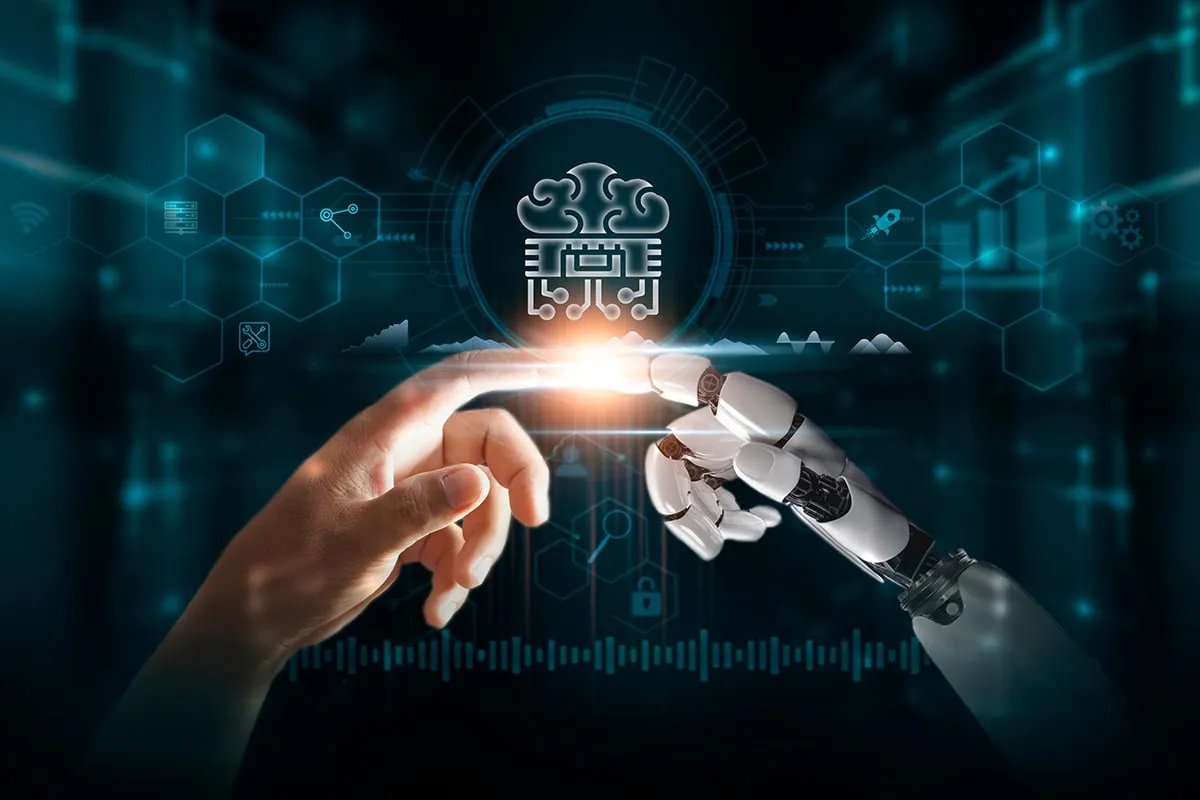
While robots have performed dangerous, monotonous or physically demanding work in factories and other workplaces, Industry 5.0 takes this further by having them work alongside human employees. For example, a new generation of cobots that work safely alongside people, rather than being fenced off for safety, creates new opportunities for companies. By having people and machines work side by side, people can focus on value-adding processes that take product personalisation to the next level. The medical sector, for example, could use this collaborative approach to produce devices tailored to individuals, such as a diabetes app that tracks your lifestyle and informs the production of a device to meet your specific needs. Tailoring products to individual needs can be extended to other industries, such as electronics and the automotive industry, adding a personal, human approach to the offering created by Industry 4.0.
Conclusion
Industry 5.0 refers to robots and smart machines working alongside people, with an emphasis on resilience and sustainability goals. While Industry 4.0 focused on technologies such as the Internet of Things and big data, Industry 5.0 aims to bring human, environmental and social aspects back into the equation. In this respect, Industry 5.0 can be seen as complementing the progress made by Industry 4.0, with the aim of supporting people rather than replacing them. This allows people to intervene when necessary and marks a shift from excessive automation towards critical thinking and adaptability, while retaining the precision and repeatability of machines.
Question about this story? Ask your question
Keep following this
Get an email when a new story is published. No account needed.
- SubjectSoftware, IT, OT & cybersecurity







