












Software, IT, OT & cybersecurity
Digital twins: who are they, what do they do and what can they mean?
Text Valérie CouplezImage Flanders Make, KU Leuven en VIVES
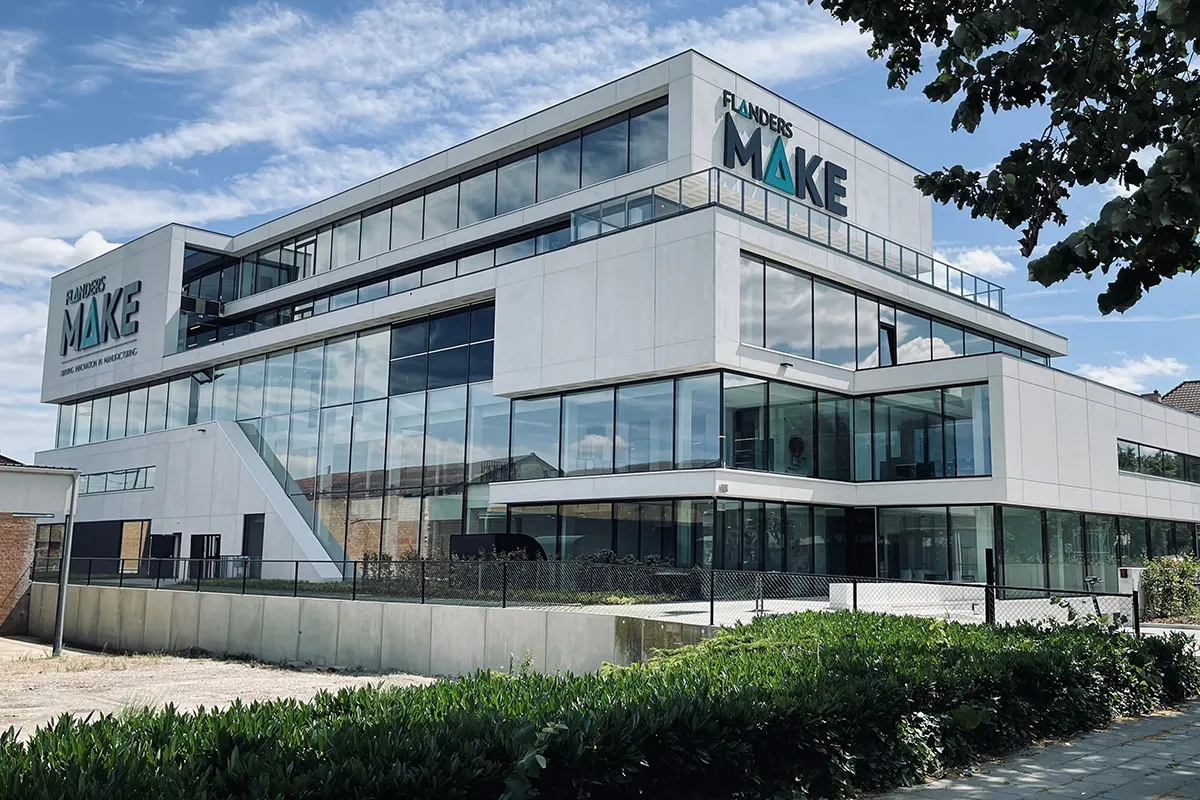
A digital twin creates added value by bringing together all the digital information about a product throughout its entire lifecycle. To accelerate the adoption of digital twins in manufacturing, KU Leuven and Hogeschool VIVES are setting up a research lab. They can now turn to the Infinity Lab, based in the Flanders Make building in Kortrijk. The Flemish Government is supporting the initiative with an investment of 1.69 million euros.
Industry 4.0 technologies offer more opportunities to collect digital information throughout the lifecycle of products in manufacturing and industry. Today, this information is still analysed in a fragmented way, one lifecycle stage at a time. Without an integrated analysis, crucial insights that could enable more sustainable and cost-efficient production are often missed.
Predicting a bicycle failure
At the launch of the Infinity Lab during Flanders Make’s Manufacturing of the Future inspiration event, Infinity coordinator Bert Pluymers used the example of a bicycle. “A failure in one of the mechanical components is the main cause of breakdown. To predict when this might happen, you need to measure the load. Sensors can map the forces involved and communicate them to our digital twin. It brings all the information together: a simulation model, the properties of the materials the bicycle is made from, the forces involved and the vibrations they cause. Taken together, this information lets you predict when a failure will occur.”
Maximum assurance
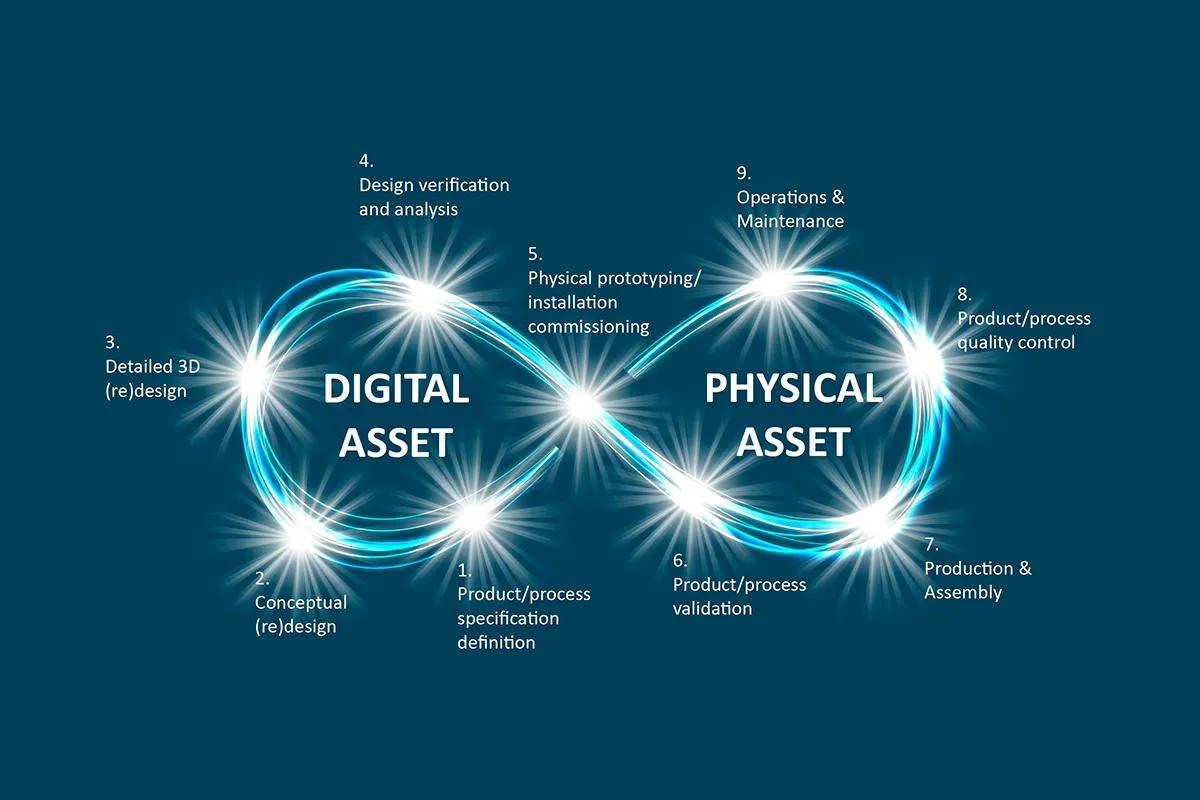
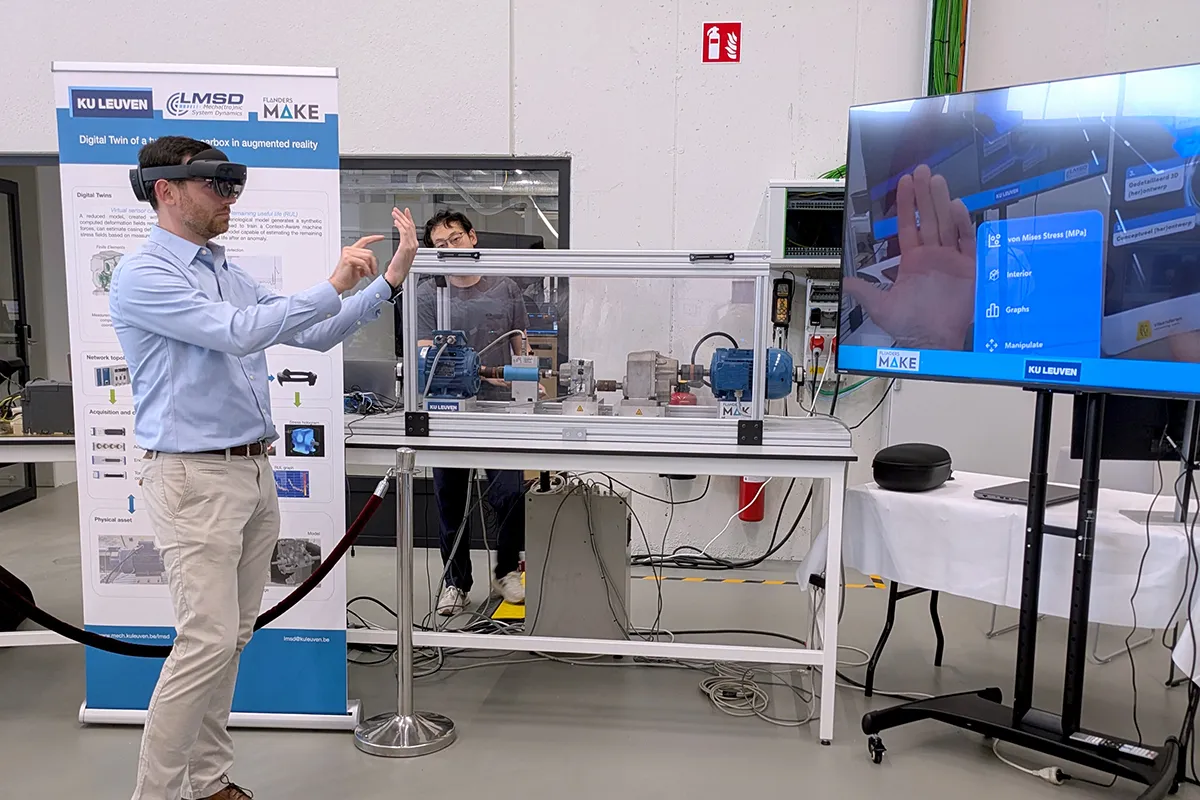
The ambition of Infinity, the digital twin research lab for mechatronics at KU Leuven/VIVES, is to bring together information from the entire lifecycle of a product, from early concept design to end-of-life. Pluymers explains: “Combining all this information, including digitised knowledge, simulation models, test data and production data, makes it possible to analyse the product’s properties and performance in depth and, using new insights, manage and optimise its lifecycle more effectively. The digital twin is central to this concept. A digital twin is a dynamically evolving and learning virtual replica of a unique, real-world system.” This is a shift that is already under way, but one that KU Leuven and Hogeschool VIVES, together with the manufacturing industry, are determined to advance through the Infinity Lab. There are still many questions about which digital platforms, standards, implementations and sensors are best suited to each specific case. Before rolling these out across an entire factory, it is crucial to test them in a digital lab, providing maximum assurance for implementation.
A deliberate choice of Kortrijk
KU Leuven and Hogeschool VIVES currently rent the fourth floor of the Flanders Make building in Kortrijk for Infinity. Piet Desmet, vice-rector of KU Leuven Kulak, explains: “This location was deliberately chosen because of its proximity to the West Flanders manufacturing industry, to existing KU Leuven and Hogeschool VIVES labs in Kortrijk and Bruges, whose work is complementary, and to Flanders Make. The lab will be embedded in KU Leuven’s broad expertise in digitalisation and mechatronics, which is spread across several campuses, particularly Leuven itself, and will use this expertise as a lever. The Infinity Loop model will serve as a source of inspiration for education, research and services on the campuses. The lab’s impact will be felt throughout Flanders.”
KU Leuven and Hogeschool VIVES
For several years, KU Leuven and its Bruges and Kulak campuses, together with Hogeschool VIVES, have been working to build close research ties. This field is no exception. Matthias Malfrere, research director at Hogeschool VIVES, explains: “This research lab is in part the culmination of our research collaboration, which is based on a joint roadmap and research areas. Together, we can engage with the entire manufacturing industry, from major players to SMEs, and respond as effectively as possible to the sector’s broad needs.”
Question about this story? Ask your question
Keep following this
Get an email when a new story is published. No account needed.
- ThemeFrom design to flexible machine
- SubjectSoftware, IT, OT & cybersecurity







