












Software, IT, OT & cybersecurity
Bridging the gap between control engineering and IT
Control engineering and IT were separate worlds for a long time. Today, the boundary between them is becoming increasingly blurred, and automation solutions must also bridge the gap between the two. That is exactly what Beckhoff’s TwinCAT 3 platform does. This real-time, PC-based control system offers the flexibility and openness needed to bring any Industry 4.0 project to a successful conclusion. Its wide range of functions gives machine builders all the tools they need to optimise their machines, develop new services and take advantage of new opportunities, such as artificial intelligence.
Analysing and understanding the data can help identify problems such as downtime and wear …
The TwinCAT software system transforms any PC-based system into a real-time control system with multiple PLC, NC, CNC and/or robotics systems. TwinCAT 3 marked the start of systematic development that redefined the world of automation technology. As Beckhoff Automation Support Engineer and TwinCAT 3 product specialist, Kim Robbens keeps abreast of all the latest developments relating to the platform. “What began as a dedicated PLC and NC solution in TwinCAT 2 has now grown into an ecosystem of components. TwinCAT 3 connects standard automation tasks with scientific automation tasks, such as condition monitoring and measurement technology, and everything related to Industry 4.0. TwinCAT 3 brings all these technologies together under one roof in the Microsoft Visual Studio environment, which is by far the most widely used development environment.”
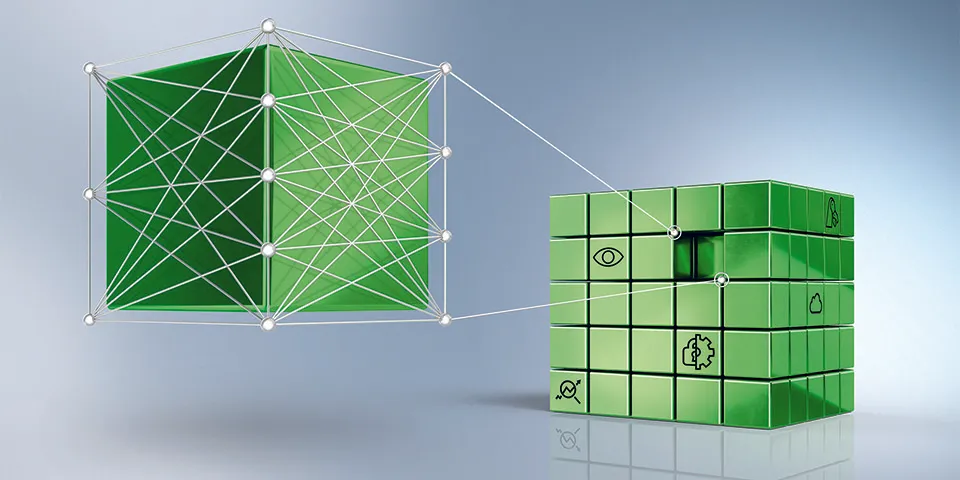
Intelligent algorithms can be incorporated as machine learning algorithms via TwinCAT ML and run in real time, enabling machines to monitor themselves.
Faster, more efficient machines through seamless integration and the latest technology
TwinCAT 3 continues to meet all basic requirements, including PLC and NC, while also offering various components that give machine builders a much broader range of options. In addition to the basic IEC 61131-3 PLC languages, including object-oriented programming, the new TwinCAT 3 architecture supports C/C++ as programming languages. C++ support opens up new opportunities to integrate designs created in Matlab/Simulink, and even simulation software that supports Functional Mockup Interfaces, into a real-time environment. Integrating all these different elements naturally places considerable demands on the hardware. TwinCAT 3 meets them in every respect. Processes can be distributed across different tasks, with cycle times down to a minimum of 50µs, and CPU cores as needed, making optimal use of the available resources. Using isolated CPU cores enables strict separation between the operating system and TwinCAT. To ensure the success of any automation project, the system integrates seamless connectivity to all standard fieldbuses, a wide range of motion control systems and associated safety applications.
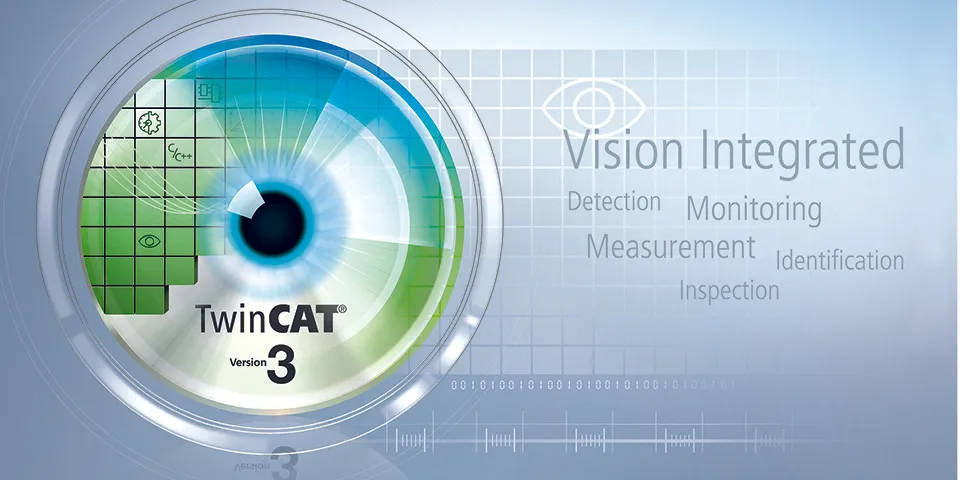
TcVision, TcSpeech and IoT communication are integrated into the same environment, enabling users to address the challenges of Industry 4.0 directly from a ‘standard’ PLC environment.
Industry 4.0 for new insights
The world keeps moving, and new opportunities are emerging. Over the past few
years, several solutions previously associated solely with IT have been added. TcVision, TcSpeech and IoT communication are integrated into the same environment, enabling users to address the challenges of Industry 4.0 directly from a ‘standard’ PLC environment. TwinCAT PLC has long been able to send data to all kinds of cloud applications. Cloud in the broadest sense of the word, ranging from on-premise (No)SQL databases to IoT brokers at various cloud service providers. For in-depth process and machine optimisation, the challenge is to capture and store all real-time data, then analyse it at a later stage. With this volume of data, it is easy to lose sight of the wood for the trees. To address this, Beckhoff recently added the TwinCAT Analytics suite to the environment. Analysing and understanding the data can help identify problems such as downtime and wear … This can lead to intelligent algorithms being incorporated as machine learning algorithms via TwinCAT ML and run in real time, enabling machines to monitor themselves.
Question about this story? Ask your question
Companies in this story

Keep following this
Get an email when a new story is published. No account needed.
- ThemeFrom design to flexible machine
- SubjectSoftware, IT, OT & cybersecurity
- CompanyBeckhoff Automation







