












Software, IT, OT & cybersecurity
Boost your revenue by using data science to predict failures in critical components
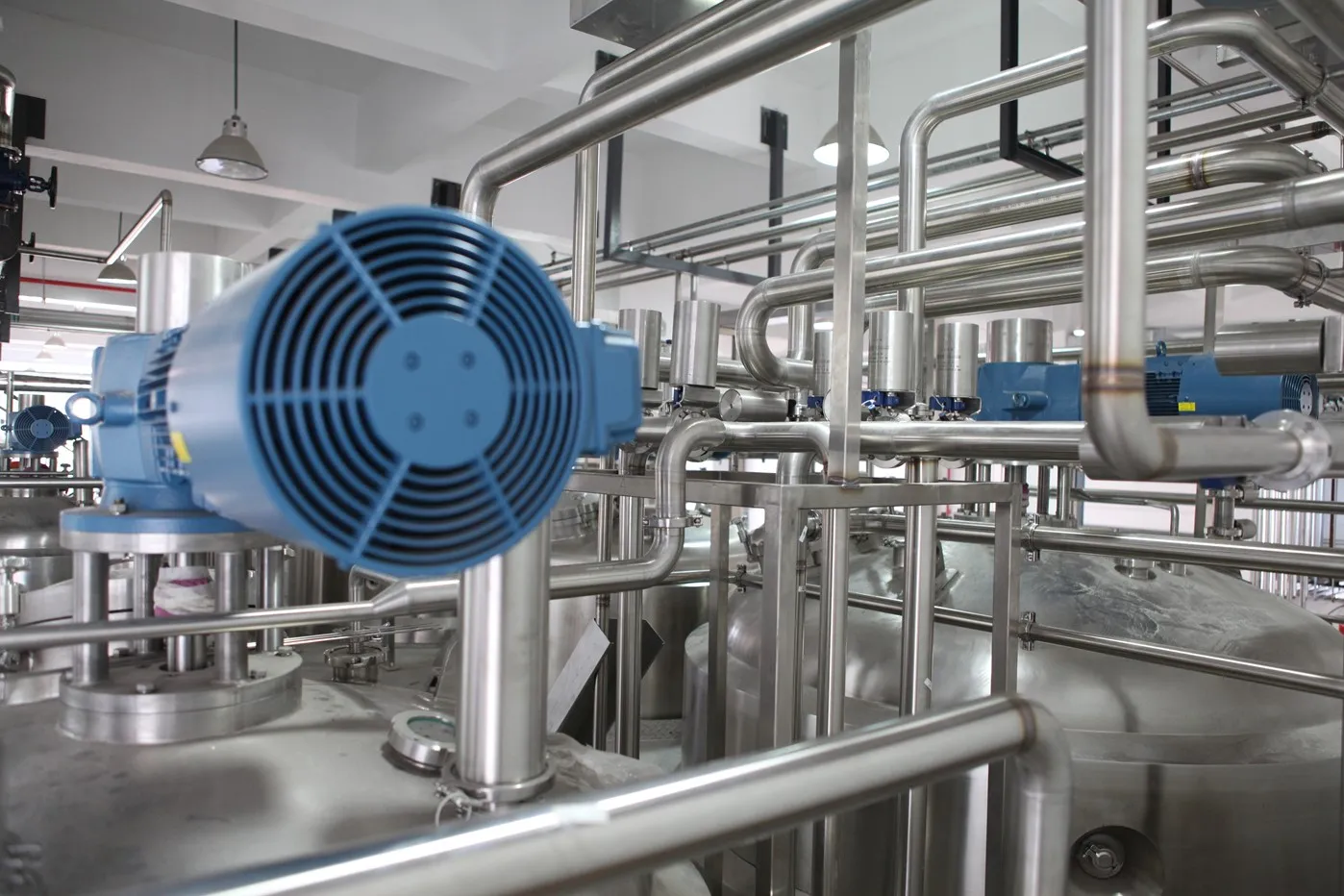
Failures in critical machine components often lead to lengthy downtime and usually require an experienced service engineer to travel to site for replacement. A maintenance service that predicts such failures increases machine availability and enhances the value of your service contracts.
Many machines and production lines contain critical components designed to last a long time, but these components often fail during the machine’s lifetime. Failure of these critical components is disastrous for the production process and costs your customers a great deal, since most companies do not keep these critical components in stock. These risks can be mitigated with a predictive maintenance service for critical equipment that continuously monitors its condition.
The consequences of critical machine component failures
Although they are not considered standard wear parts, certain machine components will wear out at some point during the machine’s lifetime. These components are often non-standard parts, made specifically for a particular machine type or series. Replacing them therefore requires specialised parts and skilled technicians.
As a result, these repairs often take a long time and can have a significant impact on production and the reputation of both the machine builder’s brand and the customer. What if you could predict such failures using data available at PLC level, or, if necessary, with additional sensors?
Data science for predicting failures in production
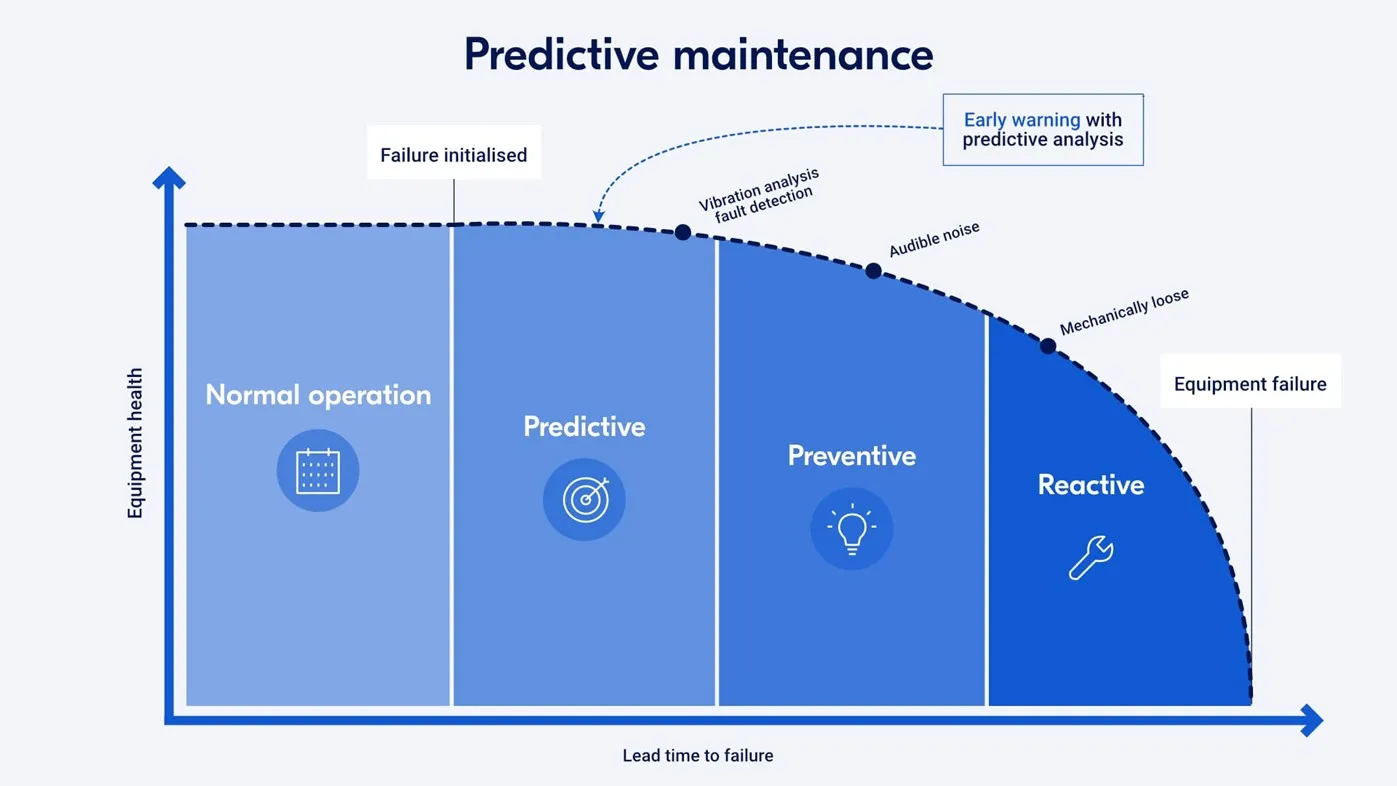
Experienced maintenance technicians can often tell whether a machine is running well by feeling its vibrations or simply listening to it, in order to identify the cause. Machine builders can draw on their expertise and combine it with machine data to determine when components are nearing the end of their service life, by measuring symptoms to uncover the causes of failures. Data analysis of failed components and those nearing the end of their service life can be combined with data science to identify recognisable patterns.
Rotation, vibration, ultrasound, temperature, and power or oil consumption are potential indicators of wear and are relatively easy to monitor using sensors or PLC data. Monitoring the right data and comparing it with known patterns is the key to making your combined service expertise available for every machine, 24/7/365.
Benefits of offering a predictive maintenance service
By replacing components and carrying out critical maintenance before a failure occurs, at a time when the impact on production is limited, your service contracts can deliver higher returns. It can also save your customers money by reducing the negative impact on their production, which can be substantial. Questions such as how much an hour of lost production costs, as well as the impact of downtime lasting many days, can make such service contracts highly attractive to your customers.
A critical monitoring system that collects real-time data and sets alarms based on recognisable data patterns for machine components with a defined service life increases machine uptime and customer loyalty. By offering an additional predictive monitoring service contract for a fee, you can shift component replacement from unplanned to planned downtime. This is guaranteed to generate new revenue.
Use case: predictive monitoring of pump vibration
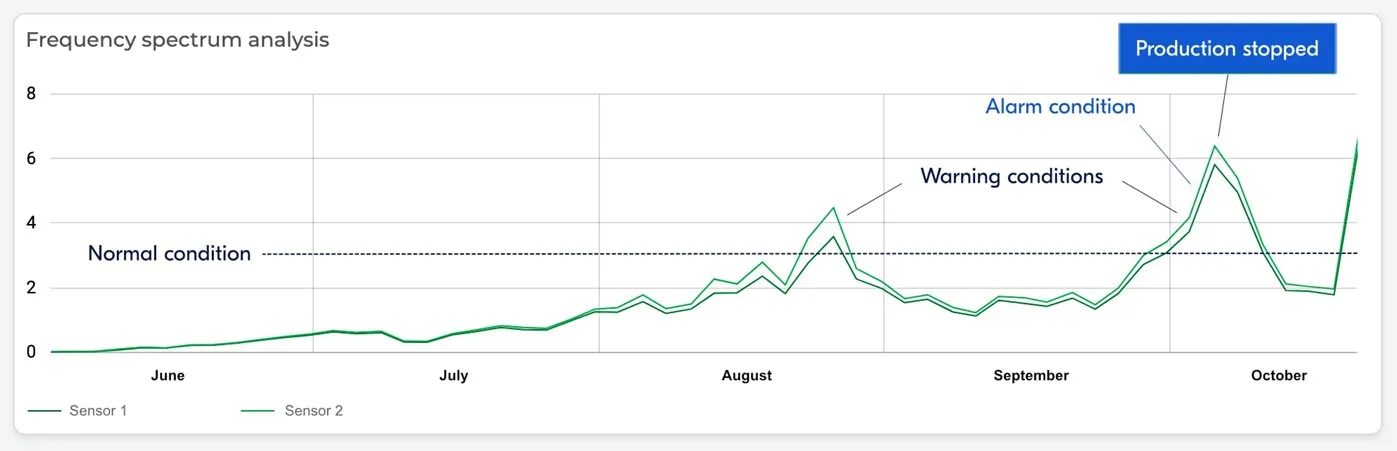
Worn bearings in a pump can cause vibration, temperature changes, displacement, downtime or oil contamination. Warn the customer that a failure is imminent and schedule a replacement together. This allows your customer to benefit from a service with minimal impact on production.
Effective monitoring reveals the root cause, helping to prevent a recurrence and potentially resolve other related failures. Working with engineers and after-sales specialists, identify the critical components and test failed parts. Data science models are also developed to discover patterns in the data that can lead to a successful monitoring strategy.
Developing a strategy for monitoring critical equipment
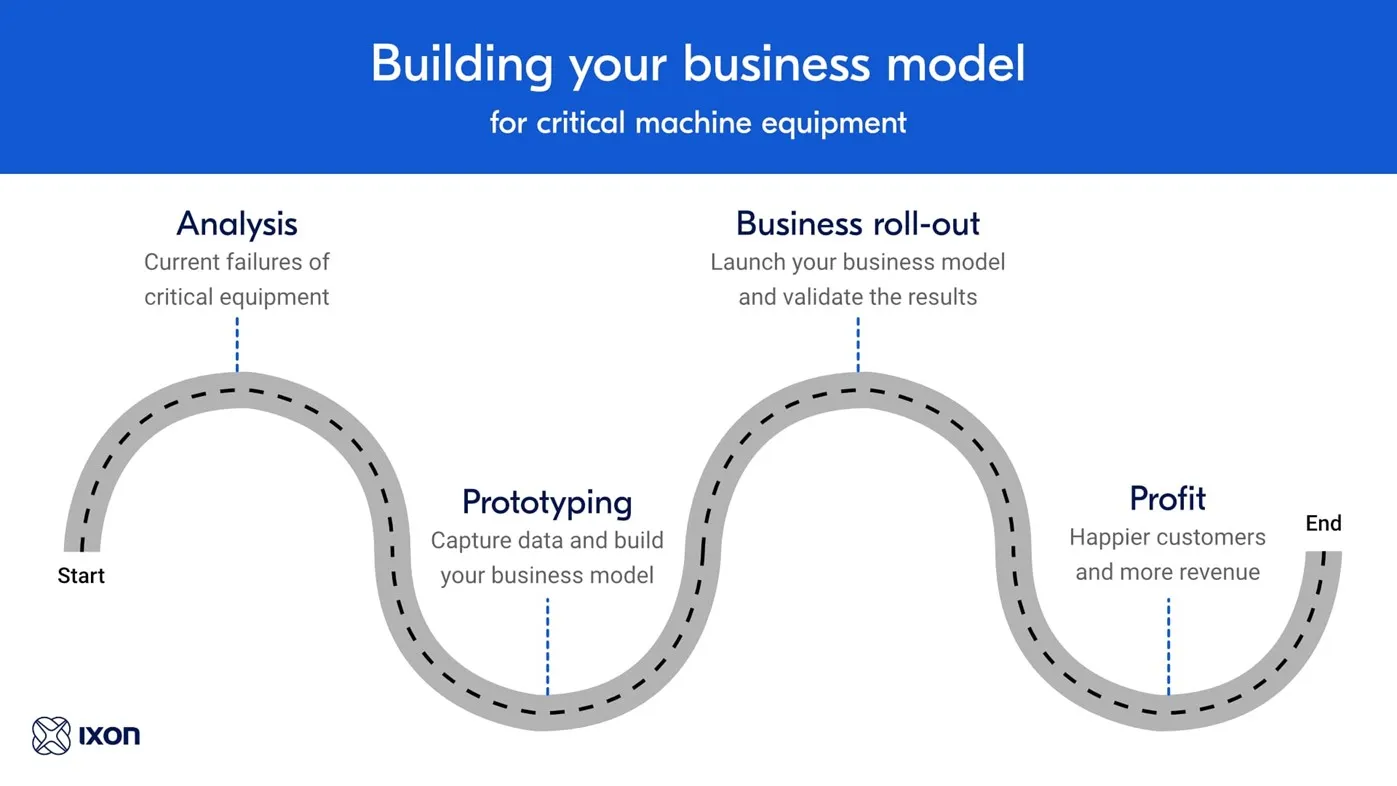
Below is an overview of how to expand your service model with preventive monitoring of critical equipment:
1) Starting point: current use of data on critical components
The first stage is to analyse current failures of critical equipment. Identify the components with a significant critical impact on the production process due to their lead time and the need for skilled maintenance technicians to replace them. Then establish whether data on these components are being collected, with a clear statistical correlation and causal relationship between the measured value and the condition of the component in question.
Consider whether such data are available at PLC level or can be captured via connected devices, or whether an additional sensor is needed. Avoiding additional sensors is always preferable, as they also have a certain failure rate. Consider the machine’s existing sensors and, where possible, use their ability to detect frequencies, temperature or acceleration, for example via IO-Link.
Close collaboration between the data scientist, after-sales service and development engineers is needed to determine whether identified patterns are relevant or merely “white noise”.
A project plan and test schedule are then developed based on the above.
2) Prototyping: testing
Carry out internal tests on machines/subassemblies containing the critical components in question to support or refute the hypothesis. Develop and refine your models.
Conduct a field trial using data science on selected machines in operation that have been fitted with the necessary modifications. Gain practical experience of its effectiveness to avoid overselling the service to your customer base and to build confidence in the business model.
3) Rolling out the business model
- Define how to deploy this added value to customers as effectively as possible, in order to increase revenue, satisfaction and brand recognition:
- Will this simply increase revenue and add to your maintenance service offering, or can it also help differentiate your machines and services from the competition?
- What does an hour of production cost your customer, and can you bring this service to market while also improving the workflow in your own production?
Boost your revenue with predictive maintenance
Do you want to prevent critical failures and have more satisfied, profitable customers? Introducing preventive maintenance for critical equipment will improve customer relationships and increase customer loyalty.
If you need help defining your digital strategy and making the most of data science, feel free to contact one of our industry experts.
Question about this story? Ask your question
Keep following this
Get an email when a new story is published. No account needed.
- ThemeLess downtime through maintenance
- SubjectSoftware, IT, OT & cybersecurity







