












Software, IT, OT & cybersecurity
Automation with a human touch
Text Valérie CouplezImage iStock
The next big thing for manufacturers? Ask a hundred business owners and chances are you’ll hear the term Industry 4.0 a hundred times. A world of data and connected machines. But the next industrial revolution is already just around the corner. Back in 2021, the European Union put forward a new way of manufacturing. The new watchwords? Resilience, sustainability and a factory floor that puts people at the centre. We probably don’t need to tell you that the inspiration for this new world has a lot to do with the after-effects of a certain pandemic. But what exactly does it involve? And how soon will you need to adapt?
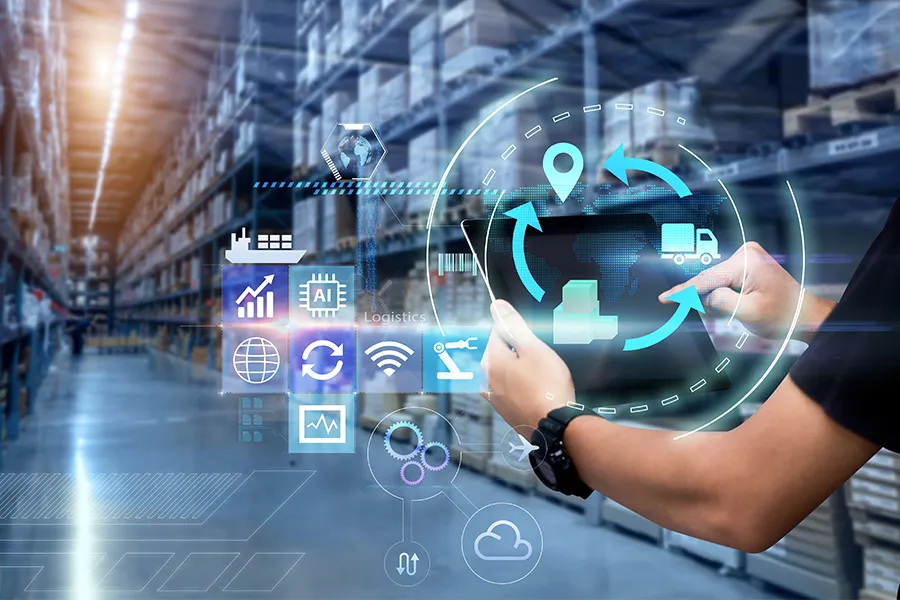
The term Industry 4.0 was coined at Hannover Messe in 2011. It was originally intended to herald a new decade for German manufacturing. At its core, the evolution is driven by cyber-physical convergence. In other words, IT and OT are becoming ever more closely aligned. Data are becoming the new foundations of industrial production. After all, they provide the basis for further optimisation. A secret weapon that ultimately took root far beyond Germany. Across Europe and well beyond, this new industrial revolution was embraced and shaped. Where are most companies today? Data capture is gradually becoming established practice. The next step is to put those mountains or lakes of data to work to drive improvements. To define the right business cases and use the gains made to embark on the next round.
Not a new revolution, but a complement
So why Industry 5.0 already? Isn’t this complex enough as it is? Isn’t there already enough transition to manage? Yes and no. The European Union does not see it as a new revolution, but rather as a complement or correction to the direction in which the pendulum may have swung too far with Industry 4.0. The technologies associated with it include autonomous and semi-autonomous processes, hyperautomation, advanced robotics, self-optimising systems and data exchange. In other words, Industry 4.0 feels rather, let’s say, ‘cold’. Tech, data, ecosystems, machines and all those intelligent environments made possible by OT and IT may appeal more to a specialist audience. The latter also includes IT technologies that have been familiar and adopted in other sectors for years, such as cloud computing, various forms of AI and automation technologies, and big data (analytics). What’s missing from this list? The human touch. And that is precisely what Industry 5.0 is intended to add, in Europe’s vision.
Resilience, sustainability, human-centricity
Let’s start with an attempt at a definition: Industry 5.0 recognises the power of industry to achieve societal goals that go beyond jobs and growth, becoming a resilient provider of prosperity by ensuring that production respects the limits of our planet and puts the wellbeing of industrial workers at the centre of the production process. The key words to remember about Industry 5.0 are therefore resilience, sustainability and human-centricity.
It is no coincidence that interest in Industry 5.0 is accelerating now. Just as the coronavirus pandemic accelerated digital transformation, it also brought greater focus to other challenges of our time and to the importance of people, the environment and societal change. But, as with another phenomenon that existed earlier but is now receiving much attention, hybrid working models, the drivers behind Industry 5.0 are not new. They have simply been adapted to the modern zeitgeist, and accelerated as a result.
Still plenty of technology in the tank
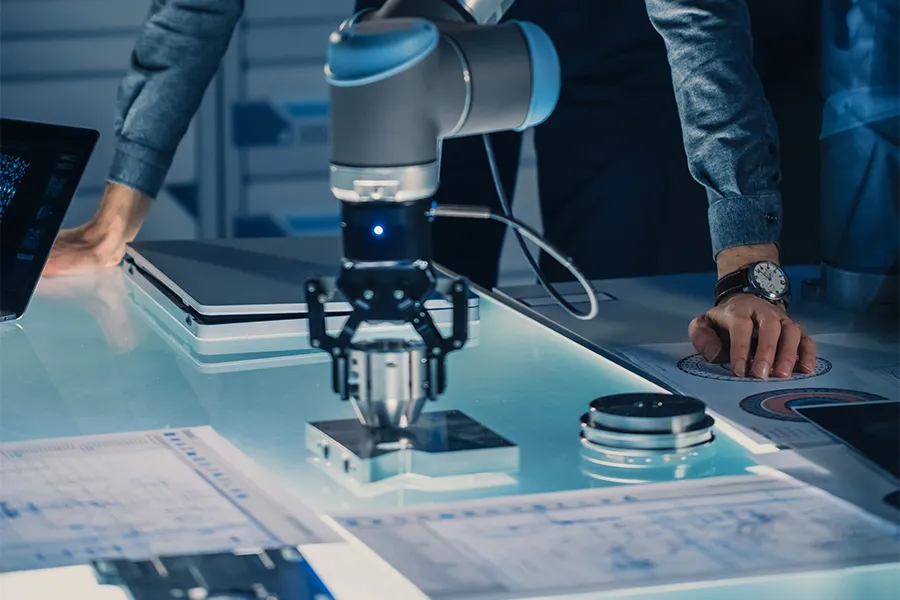
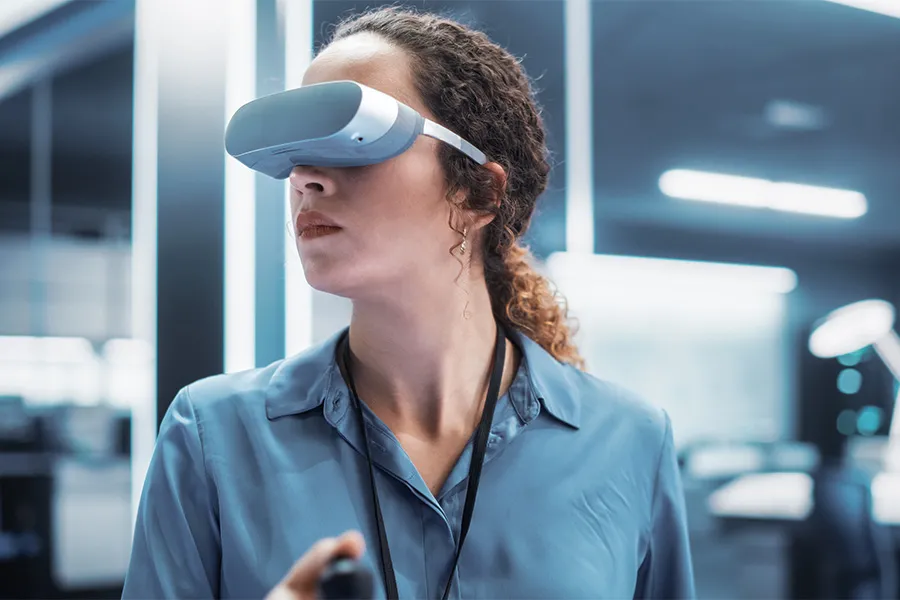
But human-centricity does not mean going back to artisanal production. Industry 5.0 still has plenty of technology in the tank to fuel it. Perhaps the most characteristic example is the cobot. In these applications, people and machines work closely together. But there is more, of course. Machine learning can help take repetitive manual tasks off employees’ hands, tasks that can lead to burnout, using bots and tools that can minimise stress for employees and maximise productivity. Machine learning is a stepping stone to introducing artificial intelligence, including at the heart of production and machinery. We are only seeing the tip of the iceberg so far. Alongside AR and VR, machine learning and AI bots are expected to play a major role in Industry 5.0. These technologies enable manufacturers to optimise results while minimising the need for human intervention in assembly and production.
Winning the war for talent
But what is all this meant to deliver for industry? Why should we move on from Industry 4.0 and focus on 5.0? Europe’s report highlights three key benefits: retaining more and better human talent, saving energy and increasing resilience. There is also an overall long-term benefit, perhaps the most important of all: competitiveness and relevance, achieved by adapting industry to new markets and an ever-changing world.
In the first area, attracting and retaining talent, we also see one of the biggest challenges facing Industry 5.0. Millennials and digital natives, who will make up 75% of the workforce in 2025, have very different preferences and motivations from previous generations. A high proportion of them, for example, consider a company’s social responsibility and commitment to the environment very important before choosing to work with it. If a company wants to adopt the values needed to attract this large, skilled workforce, it must not only adapt its production processes but also launch alternative projects alongside its core activities, such as social volunteering programmes or initiatives that support the local community.
How to get started?
All well and good, you’re convinced, but how should you get started? Not in a rush, that much is clear. The same approach as for Industry 4.0 is the best recipe for success. So start small. Rather than trying to overhaul their entire production process at once, companies often find it more effective to begin with small pilot projects and scale them up gradually. This allows new technologies and processes to be tested and evaluated before they are integrated on a large scale. The first step should always be to assess the current state of the business, including its production processes, workforce and technological capabilities. This helps identify areas that could benefit from integrating Industry 5.0 technologies and processes.
Focus on safety and training
Key areas to focus on in Industry 5.0 include cybersecurity and data protection. Integrating Industry 5.0 technologies and processes also creates a need for stronger cybersecurity measures and better protection of sensitive data. Companies must ensure they have robust cybersecurity measures in place to protect themselves against potential cyber threats and safeguard the privacy of employee and customer data. And since people are at the centre of an Industry 5.0 world, investment in training and education will be essential. Industry 5.0 requires employees to develop a new set of skills and knowledge, so it is important to prepare them for the new technologies and processes. This will help ensure a smooth transition and maximise the benefits.
Question about this story? Ask your question
Companies in this story
Keep following this
Get an email when a new story is published. No account needed.
- ThemeData from shop floor to decision
- SubjectSoftware, IT, OT & cybersecurity
- CompanyHANNOVER MESSE







