












Software, IT, OT & cybersecurity
Accelerating transformation through the use of AI and humanoid robots
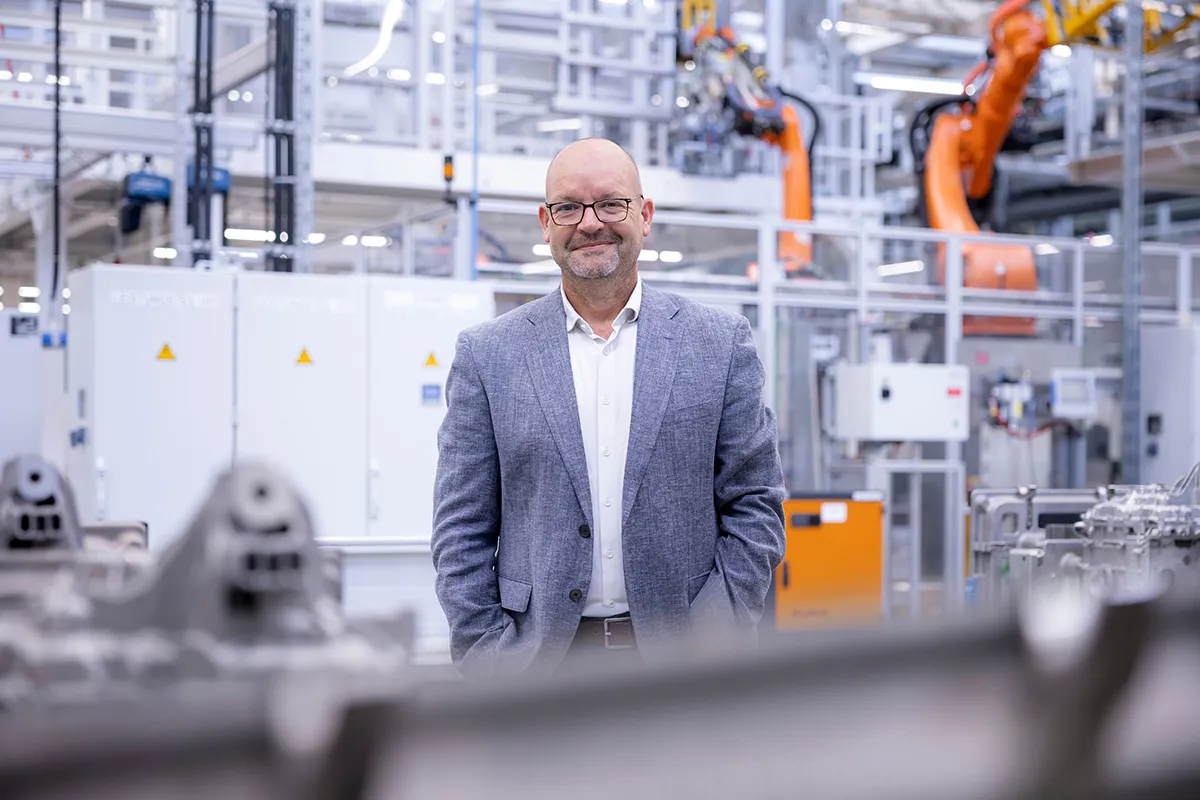
Mercedes-Benz is accelerating the transformation of its production network by strengthening Berlin-Marienfelde’s status as an innovation centre for digital production technologies, with artificial intelligence (AI) and humanoid robots.
In 2022, the Mercedes-Benz Digital Factory Campus established Berlin-Marienfelde as a global competence centre for production digitalisation. The campus promotes the development of future software applications in a real production environment. At the heart of its activities is the digital production ecosystem Mercedes-Benz Cars Operations 360, or MO360 for short, which contains all the key software applications and data from the global production network. The development and testing of new processes and technologies go hand in hand with the seamless, rapid global deployment of pioneering software applications for automotive production.
Mercedes-Benz has now enhanced its production system with AI capabilities such as the Digital Factory Chatbot Ecosystem, as well as humanoid robots. These latest technologies strengthen Berlin-Marienfelde’s status as a global innovation centre. New production processes and functions are tested at the site before being implemented on the live production lines of other assembly plants.
Mercedes-Benz Berlin-Marienfelde continues to lead the way in automotive production, putting Germany on the map as a global centre for innovation. Artificial intelligence and humanoid robots are making automotive production more sustainable, efficient and intelligent. Mercedes-Benz is committed to equipping its employees with the latest technology, and with Apollo the company is bringing one of the world’s most advanced commercial humanoid robots to its factories.
Apptronik’s Apollo can be used to transport components or modules to the production line, where Mercedes-Benz’s highly skilled production staff can assemble them. The Apollo robots can also carry out initial quality checks on components. The robots have collected data in a production environment to train for specific use cases. Employees have shared their production expertise with Apollo using teleoperation and augmented reality. Mercedes-Benz is now taking the next decisive development step at the Digital Factory Campus Berlin, enabling these robots to perform tasks autonomously. This is a technological milestone on the way to a flexible, intelligent assistance system in production.
AI is changing the world. Mercedes-Benz is proactively shaping and developing new smart technologies for use across its global production network. AI is being brought directly into production in a way that is intuitive, accessible and useful for everyone. Developed in-house, the ‘Digital Factory Chatbot Ecosystem’ gives employees access to production databases: they can simply ask questions via chat about machine maintenance or production process best practices, and the AI tool provides accurate answers immediately in several languages.
Another example of the practical application of AI is the virtual multi-agent system. AI-powered virtual assistants analyse complex data in real time and can, for example, help quickly identify the causes of sudden quality deviations in production. Instead of carrying out labour-intensive manual root cause analysis, engineers can now rely on AI agents from a virtual data science team. These AI agents quickly and reliably analyse available data, identify patterns and deviations, and provide well-founded analyses and suggested solutions at the touch of a button, delivering real efficiency gains in production.
Jörg Burzer
Member of the Board of Management of Mercedes-Benz Group AG,
responsible for production, quality and supply chain management
Question about this story? Ask your question
Keep following this
Get an email when a new story is published. No account needed.
- ThemeRobots on the shop floor
- SubjectSoftware, IT, OT & cybersecurity







