












Software, IT, OT & cybersecurity
5 CAD trends in 2023
Text Brian ThompsonImage PTC
In 2023, the CAD market continues to be driven by the needs of manufacturers responding to unique macroeconomic trends. We saw these trends accelerate during the COVID-19 pandemic, but they affect large enterprises and small businesses in different ways.
Inflation is currently soaring. Raw materials and components are more expensive than ever, and there is extensive reporting on supply chain shortages that continue to hamper manufacturers. Another important macro trend is the strength of the dollar against the euro. As the euro weakens, manufacturers buying raw materials in euros are facing significant pressure on their margins. Manufacturers selling products in Europe but doing business in US dollars are seeing their revenues shrink. All of this affects profitability and puts pressure on the investment plans of manufacturers looking to grow their businesses.

Are there regional differences, for example between the US and Europe?
Smaller businesses around the world are pursuing the new opportunities offered by emerging technologies more aggressively than their larger competitors. Larger European companies tend to remain cautious about adopting new technologies at the core of design and engineering. However, they continue to push the boundaries of advanced manufacturing methods. In North America, there is a little more balance. Some companies are trying to bring advanced manufacturing processes back to their home countries, while some markets, such as aerospace and defence, will aggressively seek out new design and engineering technologies.
Combined with other macro-political challenges, these two trends are creating uncertainty about the economic outlook for 2023. Although this wave of uncertainty will affect the entire market, large and medium-sized businesses are better equipped to deal with these risks. They know that you have to keep investing during a recession to benefit from the inevitable recovery. Large and medium-sized enterprises even largely maintained or increased their product development spending during the COVID-19 pandemic. Smaller businesses typically had lower margins, smaller financial reserves and fewer opportunities to pass on costs. During this period, they were therefore more likely to keep their hands in their pockets. If these macro trends persist, we expect smaller businesses to spend less in 2023.
We expect five megatrends in product development for 2023:
1. Simulation-driven design processes
2. Supporting innovation with emerging technologies
3. Applying the digital thread throughout the design process
4. Harnessing the benefits of cloud computing and SaaS
5. Investment in training
Trend 1: Simulation-driven design processes
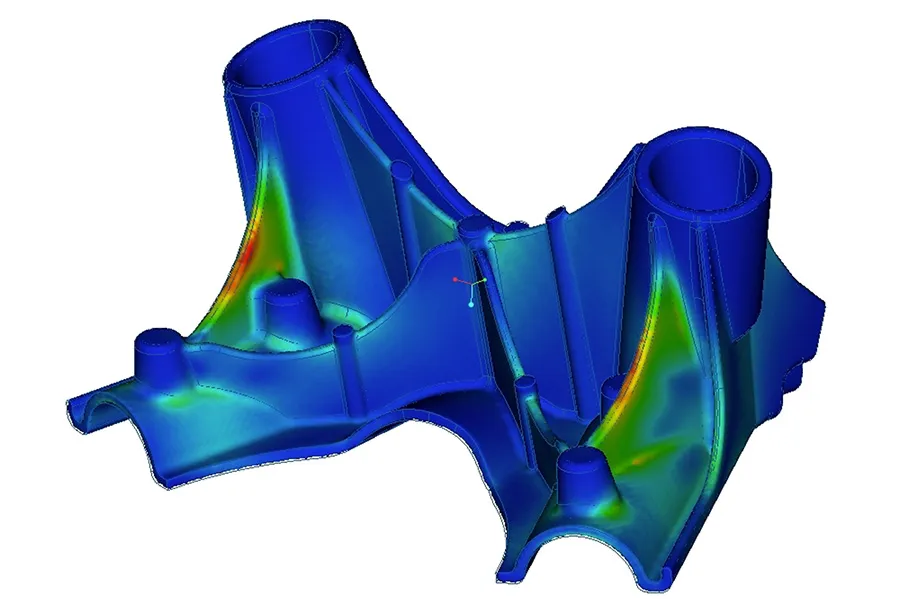
In 2023, we expect the market to continue its shift towards Simulation Driven Design (SDD). Rather than applying simulation technology mainly at the end of the design process, we expect designers and engineers to start using it throughout the process. This shift means that simulation applications are now used as early as possible in product development. Organisations can develop higher-quality designs and keep costs under better control, thanks to informed decisions made earlier in the design process. It also enables more innovation: companies can digitally test many more potential designs. This compelling combination of higher quality, more innovative and cost-effective designs, coupled with newer, user-friendly technologies such as real-time simulation, will accelerate the adoption of SDD.
Companies have championed SDD for years, but the tools were not aligned and the processes were incomplete, slowing these efforts. However, increasing the use of simulation remains a process change that requires work and commitment, as is the case with all change initiatives. Integrating simulation technology directly into the existing CAD tools used by designers and engineers addresses the biggest obstacle. Designers and engineers can now use simulation tools with both the native CAD model and their current design processes.
This deep integration enables the digital thread. Thanks to this integration, changes and updates made during SDD are immediately incorporated into the digital thread. Its importance cannot be overstated. It strengthens the value of the “single source of truth” throughout the value chain. It ensures consistency by preventing errors and improves efficiency by shortening process cycles
.
We are therefore seeing steady growth in the number of new accounts investing in these technologies. More importantly, we are seeing broader adoption and expansion within existing accounts. Companies benefit from greater agility because they can quickly validate designs and make progress, improve quality, get to market faster and design with greater confidence. Customers are also exploring a wider range of design concepts using simulation technology to replace expensive prototypes. This increases the chances of achieving optimal products.
Trend 2: Supporting innovation with emerging technologies
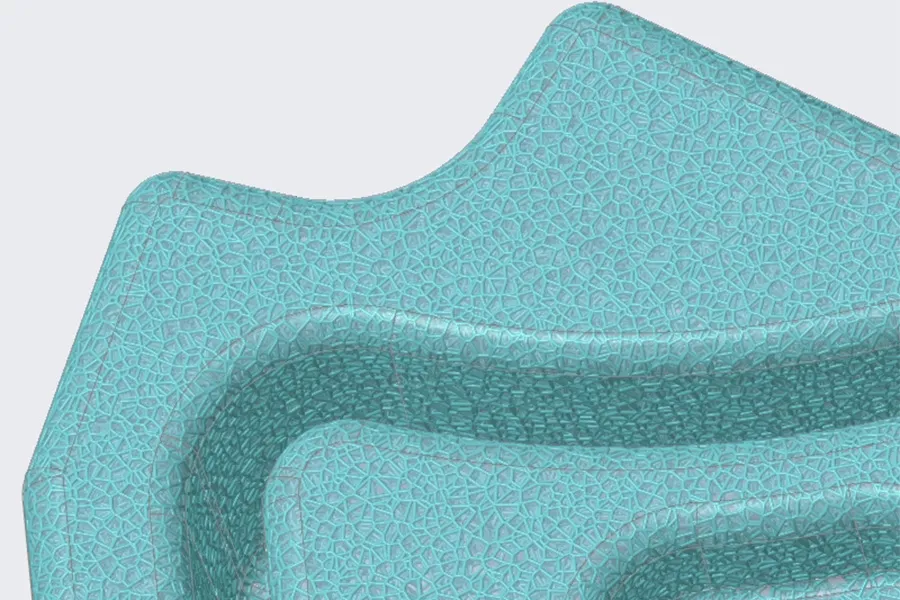
New design technologies such as generative design and additive manufacturing are driving innovation in product development. These technologies offer much greater scope for achieving specific design objectives. In short, they broaden the possibilities and take them to a new level. While many larger companies are experimenting and trying to integrate these new technologies into their workflows, smaller, more agile businesses are leading the way.
Generative design algorithms have an open mind. They are not constrained by human thought processes. Users define the design problem, and the engine generates a range of optimal solutions that are often inconceivable to a human. In a matter of hours or days, this technology can achieve what would take designers weeks or months, if they had the time and budget to explore so many possibilities. By shifting the focus from creating geometry to defining the problem more effectively, generative technology allows engineers to focus on what they do best: engineering. Embedding this technology in the CAD environment through the native CAD model allows engineers to incorporate generatively designed elements into their existing designs. This creates an agile process that makes full use of the benefits of parametric CAD. As a result, generative design becomes a driving force for real innovation, rather than a semi-useless temporary solution disconnected from the rest of the process.
Additive manufacturing enables companies to develop unique designs that are impossible to achieve with any other manufacturing technology. This capability has led many companies to experiment with additive manufacturing over the past decade, producing remarkable results.
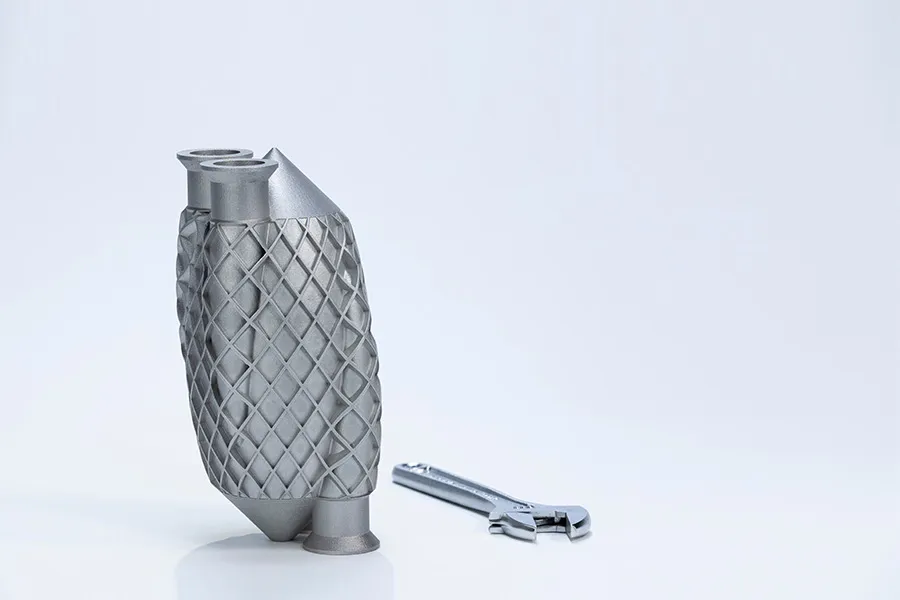
Advanced Engineering Solutions is one such example. The company fully optimised the design of a new type of helicopter
heat exchanger.
Using lattice structures that could only be produced with additive technology, the company designed and manufactured a heat exchanger that was half the size of the original yet delivered four times the cooling capacity.
This use case is the kind of innovation that is prompting more and more customers to integrate additive manufacturing tools directly into their design process. As with generative design, a standalone solution breaks the digital thread, preventing designers from benefiting from the native CAD model and creating a great deal of duplicated work.
To be truly innovative, users need to work in the native CAD model, using technologies that are fully integrated into their existing workflows. Designers want to repeatedly achieve highly accurate results and make sophisticated connections between all aspects of their design, regardless of the origin of the geometry or the intended manufacturing technique. Without integration, designers are stuck with a fragmented chain of tools and cannot fully benefit from the advantages and power of parametric CAD. Integration enables innovation. True innovation makes the best use of the right technology for every design task, across all parts of the design, without losing sight of the functional interaction between those parts.
Trend 3: Applying the digital thread throughout the design process
Companies have long recognised the value of the model-based enterprise, where the use of the CAD model is scaled up across the organisation. The aim is to increase efficiency and reduce errors by establishing a digital thread between functions and throughout the organisation.
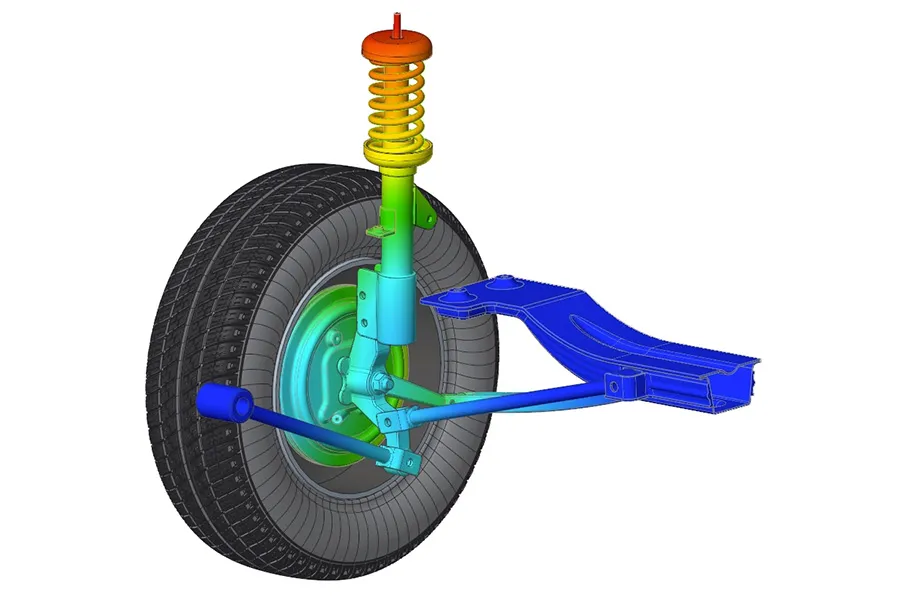
What is the digital thread? A digital thread creates a closed loop between the digital and physical worlds to optimise products, people, processes and places. It is a way of unlocking data, a single source of truth. When applied throughout the value chain, it can ensure consistency and promote collaboration by aligning different functions around a robust set of data. The dataset features real-time data synchronisation, making information available to all upstream and downstream users.
Most companies still rely on multiple, disconnected tools in the design process. This breaks the chain of digital tools, undermining flexibility and efficiency and increasing the risk of errors. As competition intensifies and supply problems persist, companies need to find ways to bring better products to market faster and at lower cost. They recognise the benefits of a digital thread running through the product development process, enabling them to realise the full value of the 3D CAD model. Using a digital thread for product development eliminates the need to exchange data between different tools. Such data transfers take time and effort, and increase the risk of errors. Users have to switch between systems constantly. This breaks the digital thread and necessitates manual, fragmented work. More than ever, we are seeing customers create fully associative deliverables that can be reused and easily updated as designs evolve.
A prime example of this growing trend is driving manufacturing outputs from the CAD system, eliminating standalone solutions for defining toolpaths. Just as using non-integrated design tools causes problems, this disconnection creates unnecessary friction, particularly as designs evolve. By creating these deliverables in the CAD tool, companies remove a source of friction, preserve associative links and avoid unnecessary data transfers. This means parts are ready for production on the factory floor sooner and the risk of errors is reduced.
Trend 4: Harnessing the benefits of cloud computing and SaaS
In 2023, an estimated 50% of all enterprise application spending will go to SaaS applications. Companies are continuing to invest in SaaS and the cloud, and expect software vendors to invest in functionality that takes advantage of what SaaS and the cloud have to offer. Design software is no exception, and the first areas where changes are expected are licensing and usage. Imagine being able to manage all user entitlements and deploy all software across the entire company, regardless of location, from your own desk using a lightweight web portal. For large enterprises, this means significant time savings and reduced complexity, while enabling greater control.
Another area where we expect significant improvements is collaboration. Combining design software with the power of the cloud allows multiple users to work on the same design simultaneously in a shared environment. It also makes it much easier to extend teams with people from outside the company, such as suppliers and partners, while protecting intellectual property rights.
Access to flexible computing power will also bring significant benefits to engineering design tools. Cloud computing makes it possible to scale up the capabilities of technologies such as generative design dramatically. We are already seeing companies use elastic computing to expand the design space with generative technology, exploring hundreds of possible solutions in the time it used to take to investigate just one.
Finally, customers who move to SaaS automatically gain regular access to new capabilities and no longer need to worry about planning an upgrade to a newer version.
Trend 5: Investing in training
The final trend we expect to see in 2023 has been around for a long time: training. We are seeing renewed emphasis on its importance. More companies are focusing on the digital thread that runs through the value chain. Companies are being forced to adopt good modelling practices, as they need to deliver high-quality 3D models that are ready for production straight away.
Setting and adopting best practices across teams through effective training also makes design reuse and collaboration more effective. Designers want to be able to reuse existing designs because this saves time and effort. But if the modelling practices used to create those designs are flawed or incomprehensible to the next designer, reusing them is considerably less valuable.
Another challenge prompting more companies to invest in training is the growing shortage of technical talent. Some forecasts even predict a shortfall of millions of technicians by 2030. Companies of all sizes are already feeling the effects of the shortage and have realised that they need to make the most effective use of their designers. This competition for technical talent also highlights the importance of retaining it. Designers looking to increase their market value will seek another job to gain access to training and qualifications. Conversely, some companies require specific qualifications to safeguard their credibility and demonstrate their reliability to customers.
How do this year's outlook and last year's differ?
This year, the transformation of the product development process is at the forefront. This is reflected in growing interest in training on new, more efficient design processes supported by new technologies. We are also seeing greater interest in engineering in accelerating the adoption of SaaS. Companies that have long been interested in SaaS are now exploring the possibility of incorporating it into their product development processes to gain greater flexibility, collaboration and access to computing power in the cloud.
Conclusion
All these factors make training twice as important in 2023. Well-trained designers using shared processes will bring clarity, speed up the design process, improve quality and foster greater collaboration and innovation. Ultimately, companies want more efficient, productive technicians who can deliver high-quality designs that are ready for production, reusable and useful throughout the value chain. They want those designs to be digitally tested throughout the product development process using integrated simulation technology. Naturally, they want to use the latest additive and generative manufacturing techniques for these designs. Even with these advanced technologies deeply integrated into the CAD environment, basic training in how to apply them is by far the most effective route to full productivity. This gives technicians and designers the knowledge and resources they need to keep the digital thread intact. ■
Question about this story? Ask your question
Keep following this
Get an email when a new story is published. No account needed.
- SubjectSoftware, IT, OT & cybersecurity







