












What is happening in robotic welding?
Text Valérie Couplez Beeld iStock
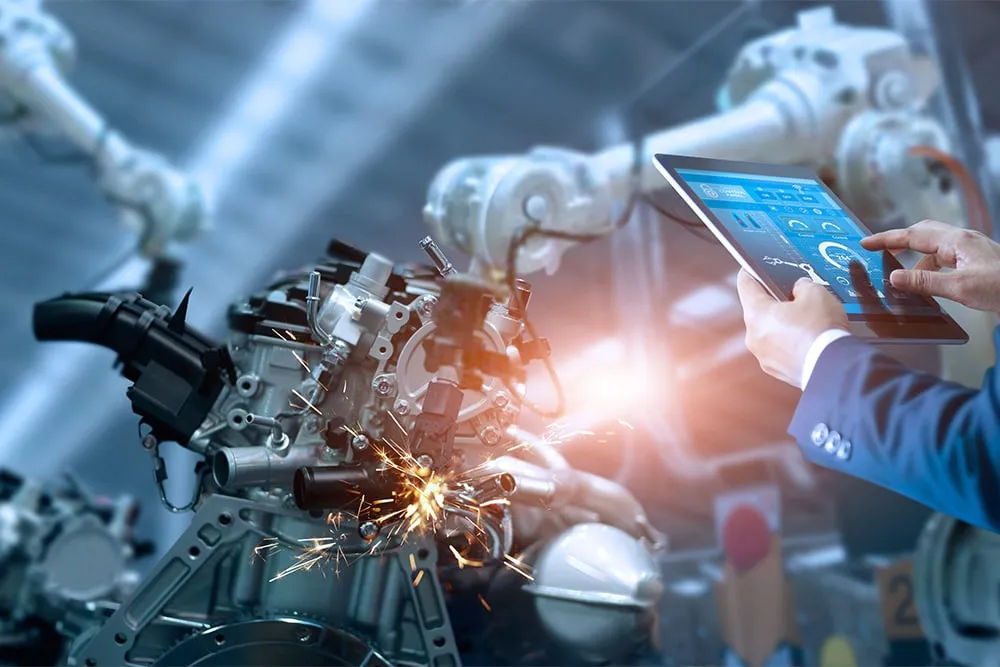
From the first welding robot in the 1960s to the advanced systems in use today, welding robots have come a long way. Their popularity is higher than ever, thanks both to the capabilities they have gained and to the challenging labour market. Manufacturers looking to grow without compromising on quality have little choice but to turn to technology: good welders are becoming harder and harder to find. Implementing welding robots helps safeguard quality, save material and improve safety. What can we expect from them in the coming years?
Efficiency is the priority on the production floor. That is why welding robots are increasingly being paired with other robots. Add a second robot to handle the material and operators no longer need to enter the cell, allowing the welding robot to work continuously. This can further shorten cycle times, reduce costs and improve safety, as operators are no longer at risk of inhaling harmful welding fumes.
Adding sensors
The welding cell itself is also gaining new capabilities. By adding detection technology, such as sensors, welding robots can adapt their settings and welding parameters to individual workpieces. The aim is to improve weld quality and increase welding speed, even when workpieces vary more widely. So forget the old saying that welding robots can only handle large production runs. If a workpiece falls outside the predefined tolerances, an operator is called in. Detection technology also helps monitor the weld, for example to certify its quality or further optimise the process.
Real-time data analysis
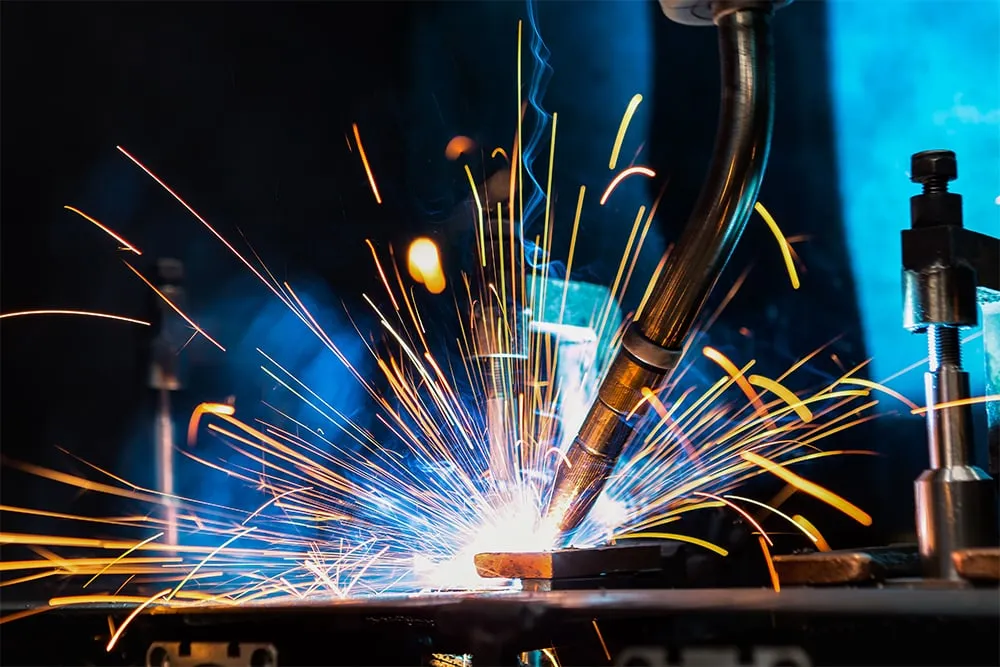
Welding robots have, of course, also entered the Industry 4.0 era. The processing and analysis of operational data are improving rapidly. Since every weld must be properly inspected to pass quality control, these tools make it possible to validate the strength of the joint, weld penetration and the sealing of every seam during welding. For example, arc-tracking systems can automatically detect errors and correct the welding operation. Other capabilities include edge detection and tracking weld penetration, checking weld burn-in against specifications, measuring joint width and profile, and managing contours using image acquisition for complex welding tasks.
Integration with upstream and downstream processes
Welding robots are often installed on a production line, with an inspection step both before and after them. Tomorrow's welding robot will no longer operate as an island. Integrating it directly with other data streams and software can increase the speed of the entire production line. A good example is feeding parts into the cell. Integrating this into the welding cell's operation means the welding robot never needs to stop, as both the parts supply and quality checks before and after welding are assured. Another welcome benefit is a lower risk of defective welds, which in turn saves time and material.
Cobots for greater ease of use
In the past, manufacturers had to employ programmers to configure industrial robots and manage any changes to production parameters or new software code. As well as needing skilled programmers to work on the robots, every change to operating parameters also led to more downtime and lower productivity. The introduction of cobots on the factory floor removes some of this complexity and lowers the barrier to entry. Programmers are no longer needed. Welders can easily set the parameters and retain control of the welding process using teach-in programming techniques. Cobots can also work side by side with people.
Question about this story? Ask your question
Keep following this
Get an email when a new story is published. No account needed.
- ThemeRobots on the shop floor
- SubjectServices & solutions







