Safety first in two projects delivered by Ceratec from A to Z
From producing bricks to designing, manufacturing and maintaining machines for every industrial sector, this is, in a nutshell, how Ceratec has developed and reinvented itself over its almost 100-year history. The company, based in Ploegsteert, currently employs 550 people and operates worldwide. What is its core business? Manufacturing custom-built machines tailored to customers’ specific needs across a range of industrial sectors, including agri-food and agriculture, material handling, power distribution, cement plants, robotic cells for the pharmaceutical industry and intralogistics solutions.
The ability to start from a blank sheet
What are Ceratec’s strengths? Matthieu Baelen, Manager of the Automation & Robotics department, explains: “What sets us apart from the competition? Our flexibility, but also our ability to manage projects from A to Z by drawing on our in-house expertise: design studies, automation, mechanical engineering, workshops, … This means we can truly start from a blank sheet when developing a machine, from the mechanical design through to commissioning and after-sales service, including building the electrical cabinets and the machine itself, programming it and installing it on site.”
A crane and a loading arm
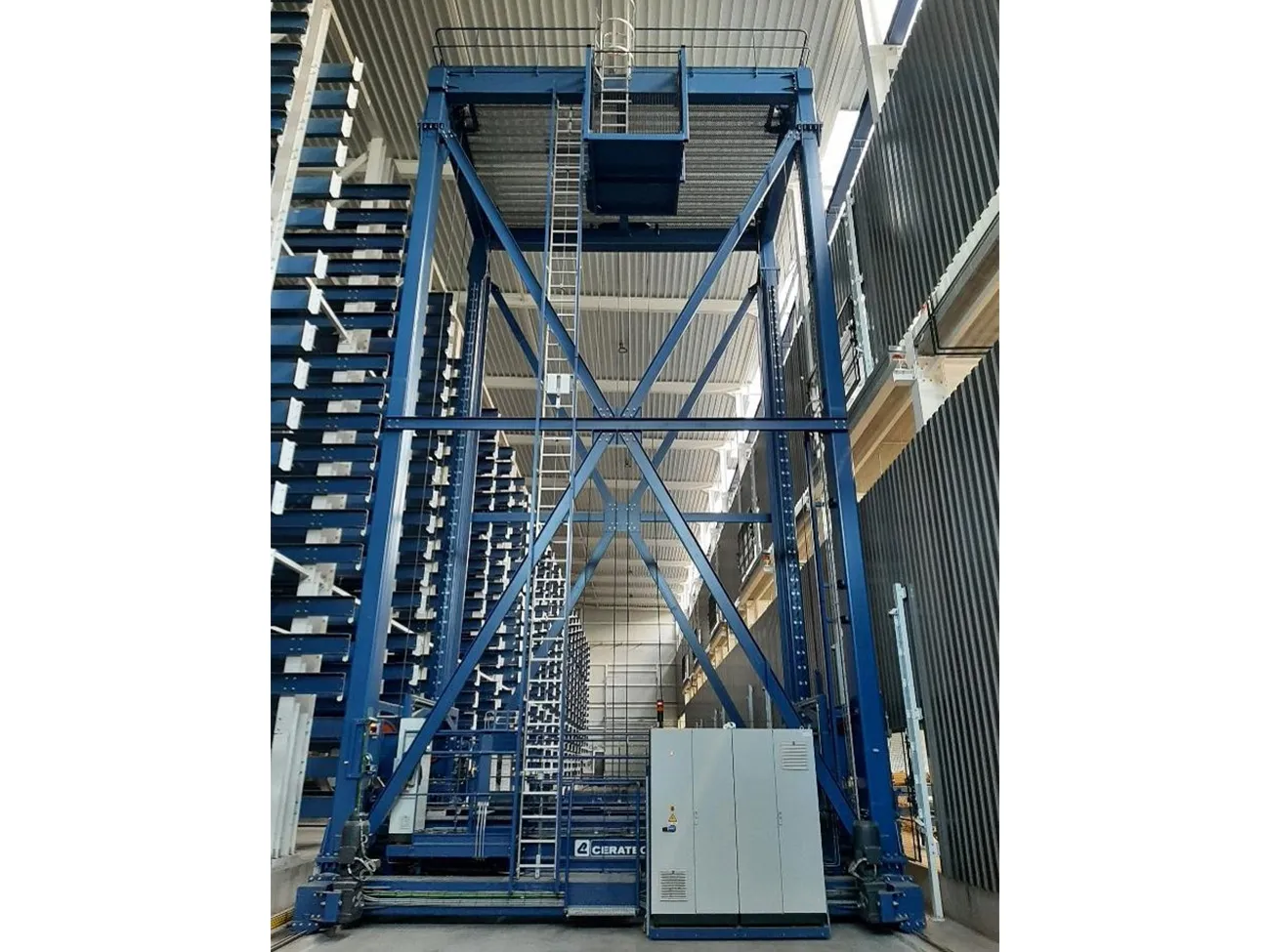
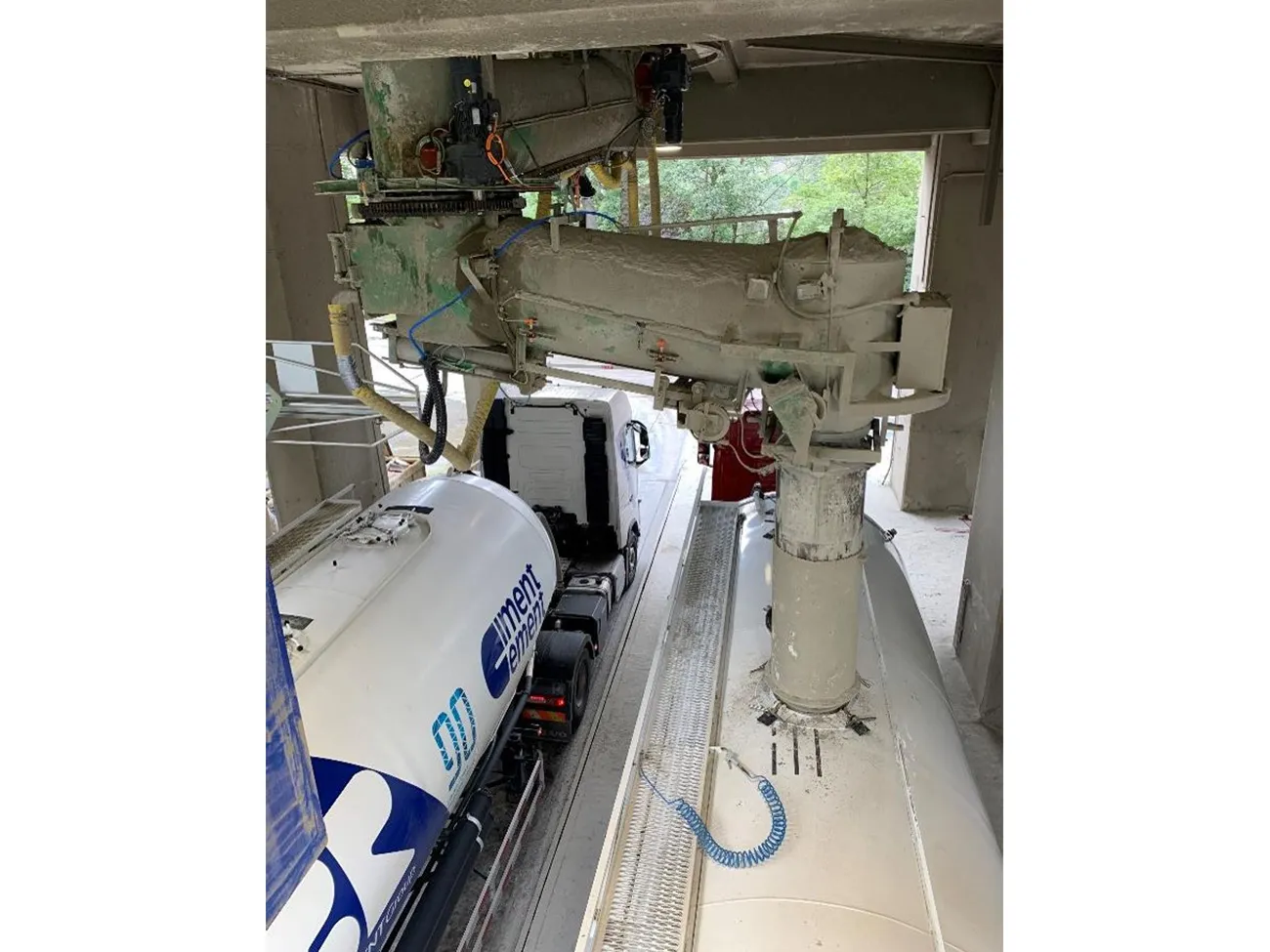
Looking back at the Ceratec team’s recent work, Matthieu Baelen tells us about two projects using Siemens equipment that have improved safety. “One is a custom-designed crane for steel company Walcarius in Mouscron, based on ASRM (Automatic Storage and Retrieval Machine) applications. The other is a loading arm for tanker trucks, based on the Kinematics application developed for a cement plant in Wallonia,” says Matthieu Baelen.
Automation to improve safety and efficiency
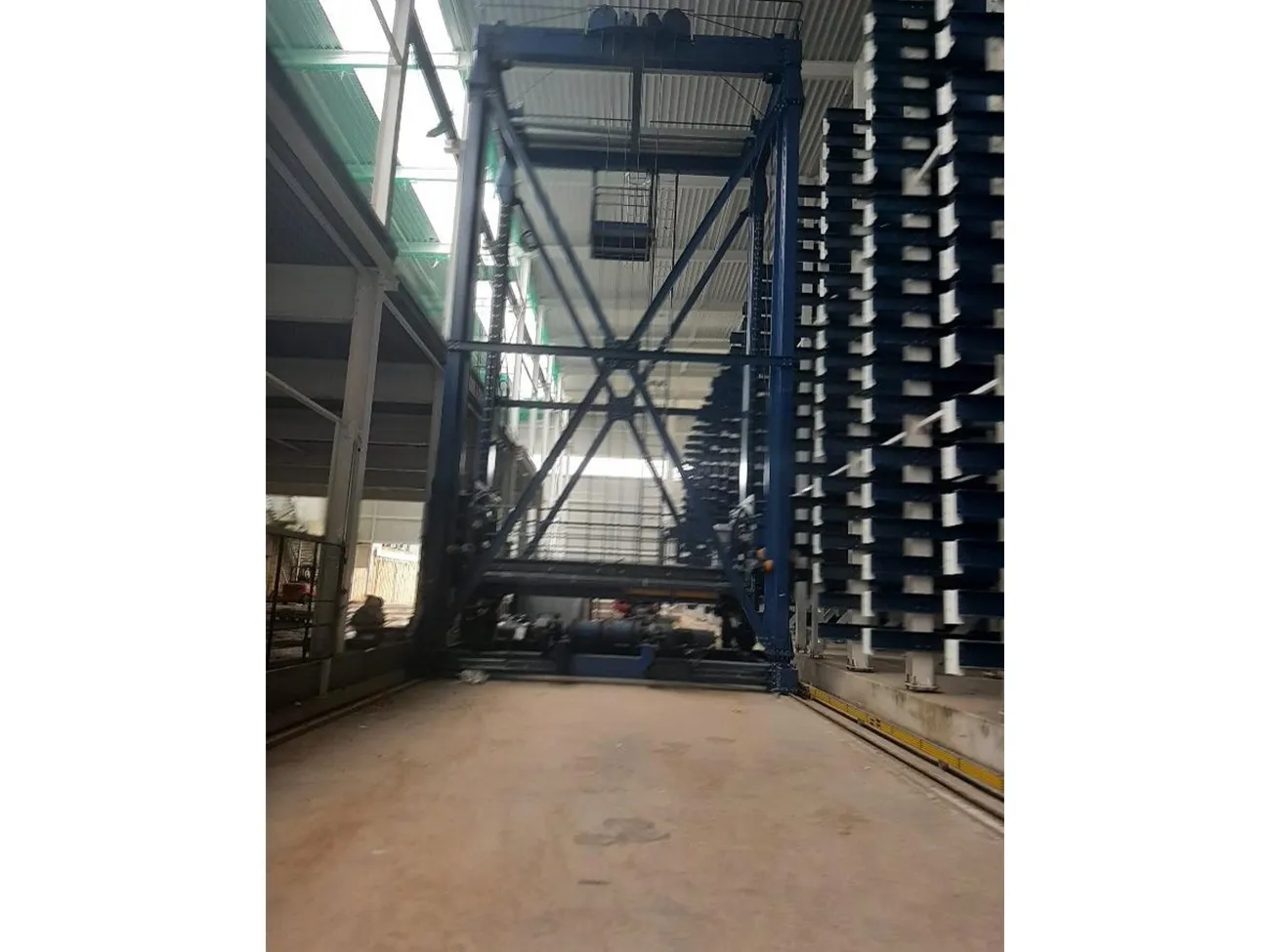
First, let’s take a closer look at the crane project for Walcarius: “This Mouscron-based company operates in the steel industry, specialising in laser cutting sheet metal and metal parts,” explains Matthieu Baelen. “The aim was to automate the tasks involved in moving steel plates from the warehouse to the production hall and dispatch area. Until now, these tasks had been carried out manually, mainly using forklifts, with the associated safety risks if steel plates were to fall.
The project also improves efficiency. The machine our customer asked us to design had to be able to handle plates up to 7 x 2 metres, with a lifting capacity of up to 6.5 tonnes for the loading trolleys. The basic idea? The crane must operate within a closed safety zone, and automation makes it possible to continually check that all safety parameters are being met, including position and speed, as well as brake wear (via tests) and load level.”
Upgrading the arm to reduce risks
For the cement plant, too, safety was at the heart of the project delivered by Ceratec. “The project involved upgrading a two-motor arm used to load tanker trucks. Until now, the driver had to climb onto the tanker, open the hatch and then operate the arm using a joystick, which was not ideal in terms of safety or physical effort. The customer therefore asked us to automate these tasks, reducing safety risks and relieving the drivers of the workload.”
Controllers, technology objects and drives
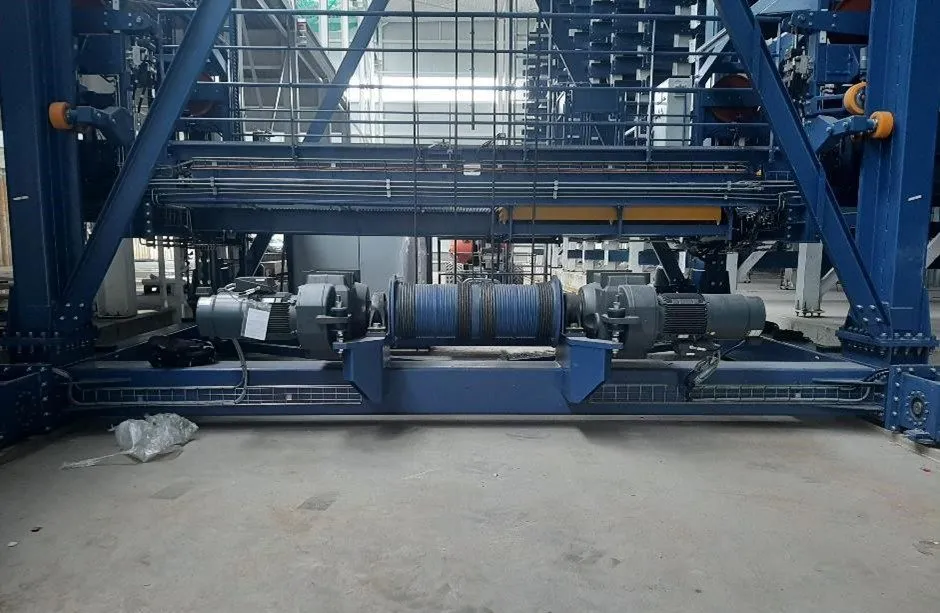
For both projects, Matthieu Baelen and his teams chose Siemens solutions to design the best possible application. “What did our mechanical experts come up with? A crane 15 metres high, 8 metres long and 6 metres wide, with drive cables. Based on this, we analysed the automation requirements and chose Siemens components.
We opted for the ASRM Simatic S7-1517 TF CPU application, combined with Sinamics S120 variable speed drives and Simogear geared motors. The application’s Motion Control functions were programmed using technology objects to ensure optimum integration and ease of use. In practical terms, this means that the theoretical operating and positioning curves are entered into the controller. The software monitors the crane’s actual position and speed. As soon as these values deviate from the theoretical curve, the crane switches to safety mode or stops as a preventive measure. Why choose controllers driven by technology objects? Because control can take place in the controller itself, rather than at the level of the individual drives, making synchronisation, communication and processing more efficient.”
There is a very simple reason for choosing Siemens. Matthieu Baelen explains: “When we designed the crane’s automation system, Siemens was the only supplier able to offer us continuous curve monitoring through the ASRM application.”
Safe Kinematics drives the application
For the loading arm project, the Safe Kinematics application plays a key role. “For this upgrade, we chose the Safe Kinematics Simatic S7-1515 SP CPU application, using Siemens’ Profinet IRT communication protocol, together with Sinamics S120 variable speed drives and Simogear geared motors. The two pillars of this safety project are, first, the addition of a platform that the truck driver uses to access the hatch on the tanker and, second, automatic verification of the positioning of the loading arm and its two motors,” says Matthieu Baelen.
“Automating the verification process prevents collisions and incorrect operation. Why did we choose the Kinematics application? Because it met our needs perfectly, particularly with its configurable safety and working zones. This gives us a powerful controller that handles full synchronisation of both arm axes. Here too, we chose Siemens because it was the only supplier that met all these requirements. As for the motors, switching to the new generation of geared motors, fitted with safety encoders, enabled us to integrate the safety parameters. Their ability to guarantee position values in this way makes them unique. For the Sinamics S120 variable speed drives, their compact size was an important factor in our choice.”
Objectives achieved
“The crane designed for Walcarius was commissioned in the summer of 2021 and meets our customer’s expectations. It is now being used to stock the warehouse. As well as improving safety, it saves around 40 % of the time spent on these transport tasks. Feedback from the cement plant has also been very positive: the upgraded loading arm was commissioned in the summer of 2021, and three further orders for similar installations have since been placed,” concludes Matthieu Baelen.
Discover Siemens’ industrial automation solutions.
Perfectly coordinated drive and motion technologies:
https://new.siemens.com/be/nl/products/aandrijftechnologieen.html
Digitalisation for (intra)logistics: https://www.siemens.be/intralogistics
Sinamics S120 variable speed drives: https://www.siemens.com/sinamics-s120
Simogear geared motors: https://www.siemens.com/simogear
Question about this story? Ask your question
Keep following this
Get an email when a new story is published. No account needed.
- SubjectServices & solutions