Robot welding cell completes the picture for Vanhoucke Machine Engineering
Vanhoucke Machine Engineering is a Belgian family business founded thirty years ago. Based in Moorslede, in West Flanders, the company has since become a global player in its niche market.
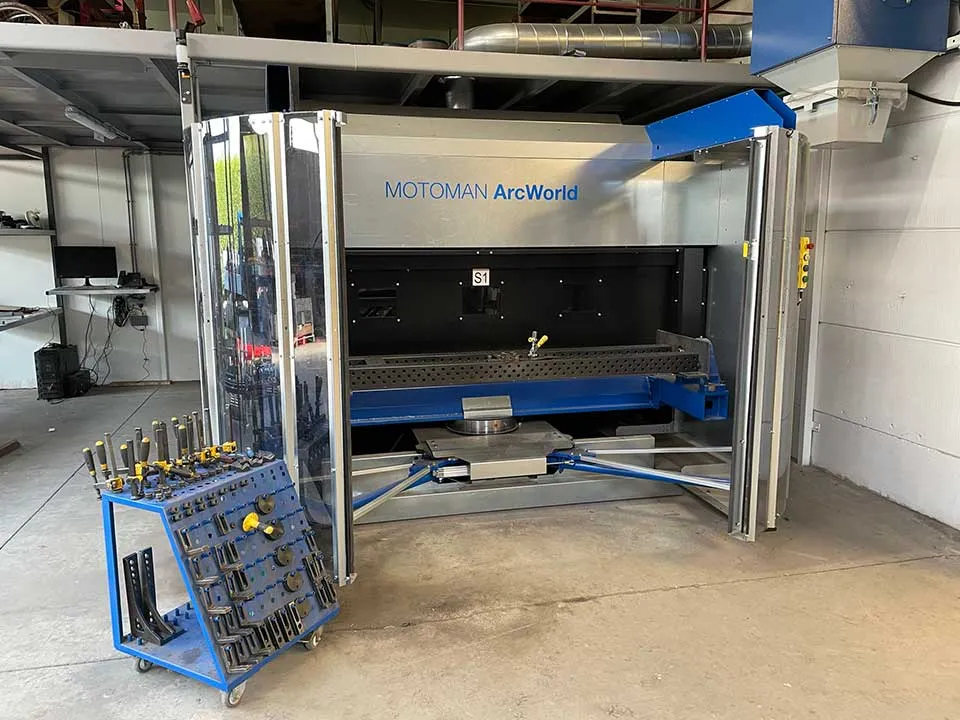
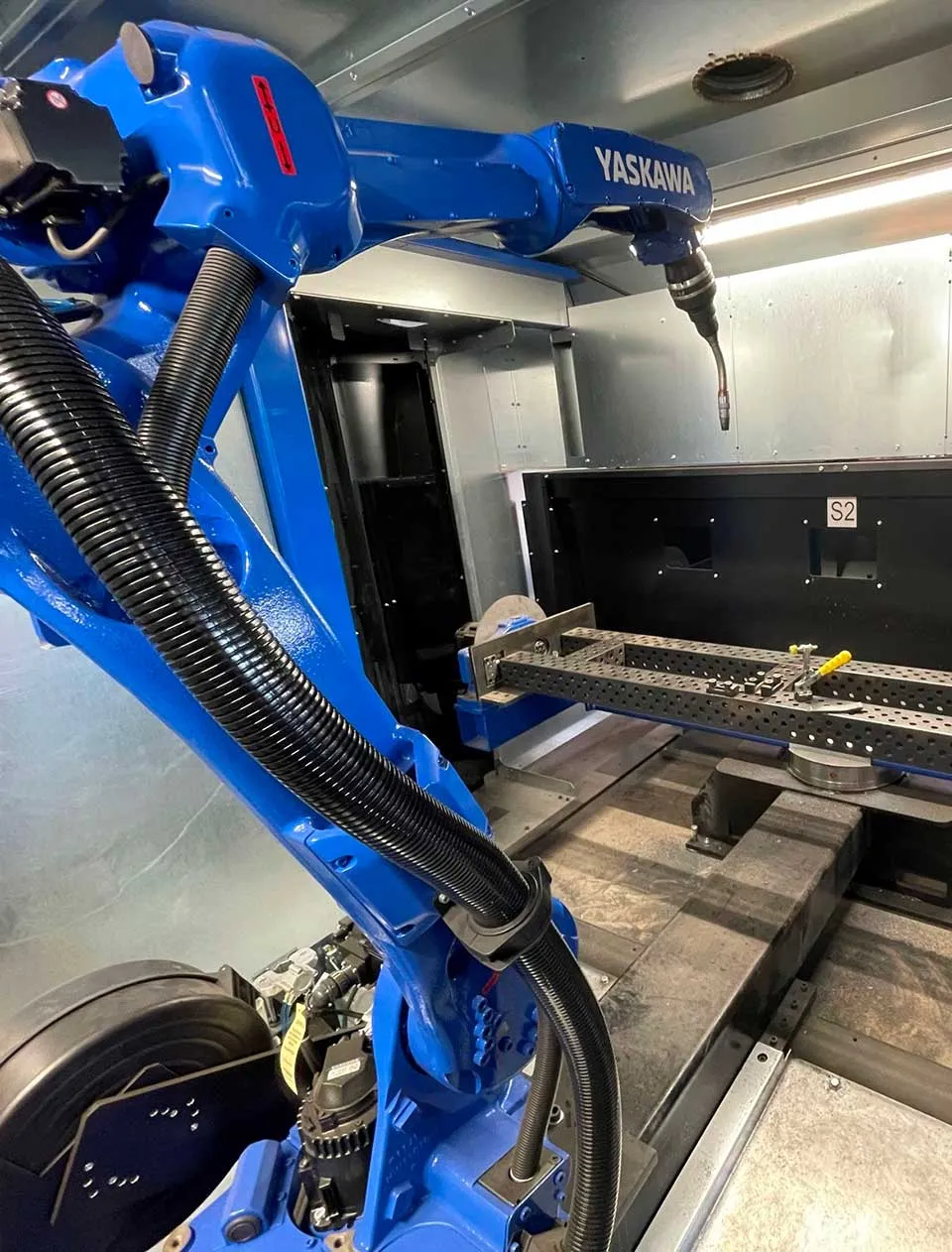
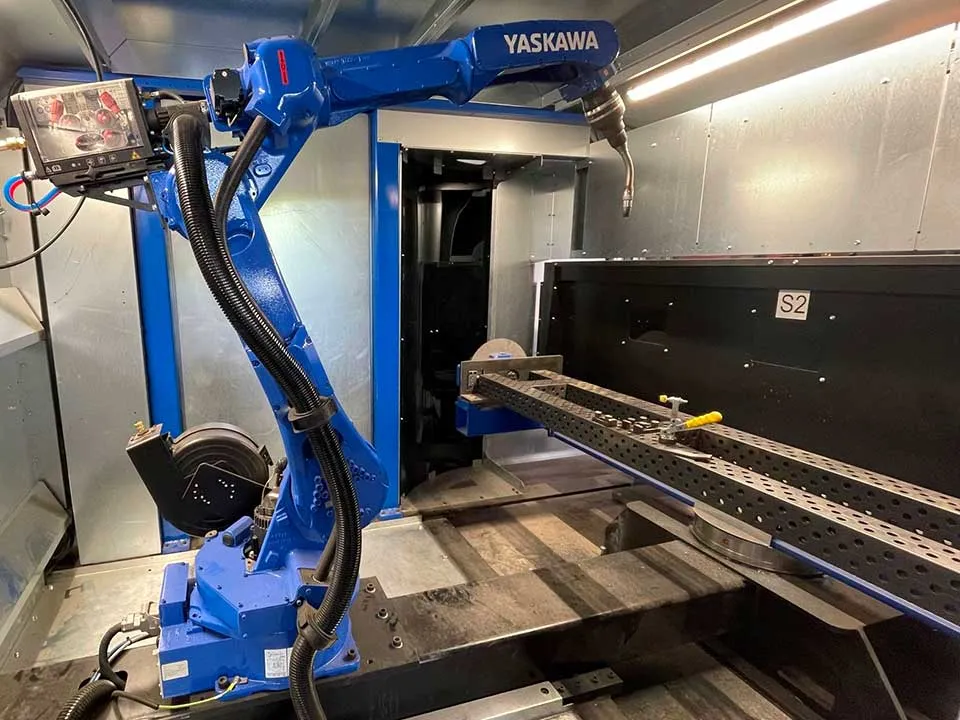
The company manufactures its own designs, from environmentally friendly thermal and mechanical weed control equipment to vegetable harvesting and processing machines. Vanhoucke has recently added a Yaskawa ArcWorld robot welding cell to its machinery, helping it meet rising production volumes.
A true family business
Vanhoucke Machine Engineering now has around 15 employees. The eldest son, Steven, joined the company a few years ago, followed by his brother Maarten. Last year, their sister joined them too, making it a true family business. The business is doing very well, which made expansion necessary. The company’s premises have recently more than doubled in size, and its machinery has also been extensively upgraded.
Engineering Manager Maarten Vanhoucke mainly focuses on software, programming the machines and configuring the various machines and the welding robot. He also troubleshoots issues with the machinery and provides IT support. It is a highly varied range of responsibilities, typical of working in a family business.
The idea of buying a robot welding cell took shape a few years ago, when Vanhoucke bought some old handling robots from the bankruptcy of another company. Two years ago, Maarten converted one of them into a welding robot purely to test the concept, as that robot model was not suitable for the task. This nevertheless showed that a welding robot could be the answer for the many small batches of 30 to 50 pieces, with their wide variation. With this in mind, Vanhoucke contacted all the robot builders, and cobots were discussed with several of them. After trialling a cobot, the company decided it was not the right product for them. Vanhoucke had also discussed cobots with Yaskawa and had meanwhile seen that they offered several other interesting products. The ArcWorld welding cell stood out.
The complete package
“Yaskawa was the company that responded fastest,” says Maarten Vanhoucke. “It’s really helpful when you send something in and get a reply with the information within a day. We all appreciated that.” Vanhoucke then visited Polet, which uses a Yaskawa welding cell, and saw that it was what they were looking for. “The complete package was right,” says Vanhoucke. The ArcWorld cell at Polet is more compact, while Vanhoucke opted for the largest model.
The ArcWorld cell was delivered in November 2020 and, after a few adjustments, is now fully integrated into production. A wide variety of products are processed in the welding cell. As demand grows, the agricultural machines are being produced in increasingly large batches, and all the components are welded in the ArcWorld cell. A welder first prepares everything on the welding table, then the assembled parts are loaded into the robot cell for full welding.
At the touch of a button
All the welding programmes are now stored in the robot cell. In theory, this means that even an inexpensive temporary worker with no welding training could set the cell to work at the touch of a button. Each component returns every year, so with all the welding programmes saved, it should be easy to weld the same parts again next year.
“It was really necessary to upgrade our machinery. We are automating to reduce the workload for the end user. It was time to look at ourselves and see how much more we could do with our current staff, and how far we could expand production without taking on more people,” Maarten Vanhoucke continues. “Good staff are very hard to find and costly. The welding department is especially challenging. The robot can take on some of the work, while also creating a more pleasant working environment for the welders. This makes us more productive overall.”
Automation drive
For now, this automation drive is enough. The company is still getting to know all its new machines and entering programmes for the various components. It started with the new building, followed by a CNC drilling line, a CNC sawing line and more, including the Yaskawa welding cell. “The ArcWorld concept gives you everything: the torch, cleaner and measuring system. The people working around it are not bothered by the robot while it is welding. The complete package was right,” says Maarten Vanhoucke. “The advantage of the larger cell is that we can see very clearly what the robot is doing. We have also installed a camera with a screen beside it, so you can follow the robot closely.” The cell has a signal tower: it is orange while the robot is welding, red when there is a fault, and green when the welded product is ready.
Vanhoucke produces dozens of products in hundreds of configurations, making for a highly varied production schedule. It serves a specific niche market with seasonal products, so at times everyone is needed, while the welding cell may also stand idle for a few weeks. However, thanks to thorough preparation and programming, all the machines are ready to use whenever they are needed.
Question about this story? Ask your question
Keep following this
Get an email when a new story is published. No account needed.
- ThemeFrom design to flexible machine
- SubjectServices & solutions