












Packaging machine puts product presentation first
Looks matter too
Automating fruit sorting and packaging means achieving high throughput while handling delicate products with care. STAS, a machine builder from Glabbeek specialising in such solutions, has developed an advanced new machine with Festo to place fruit in trays in a controlled way after sorting.
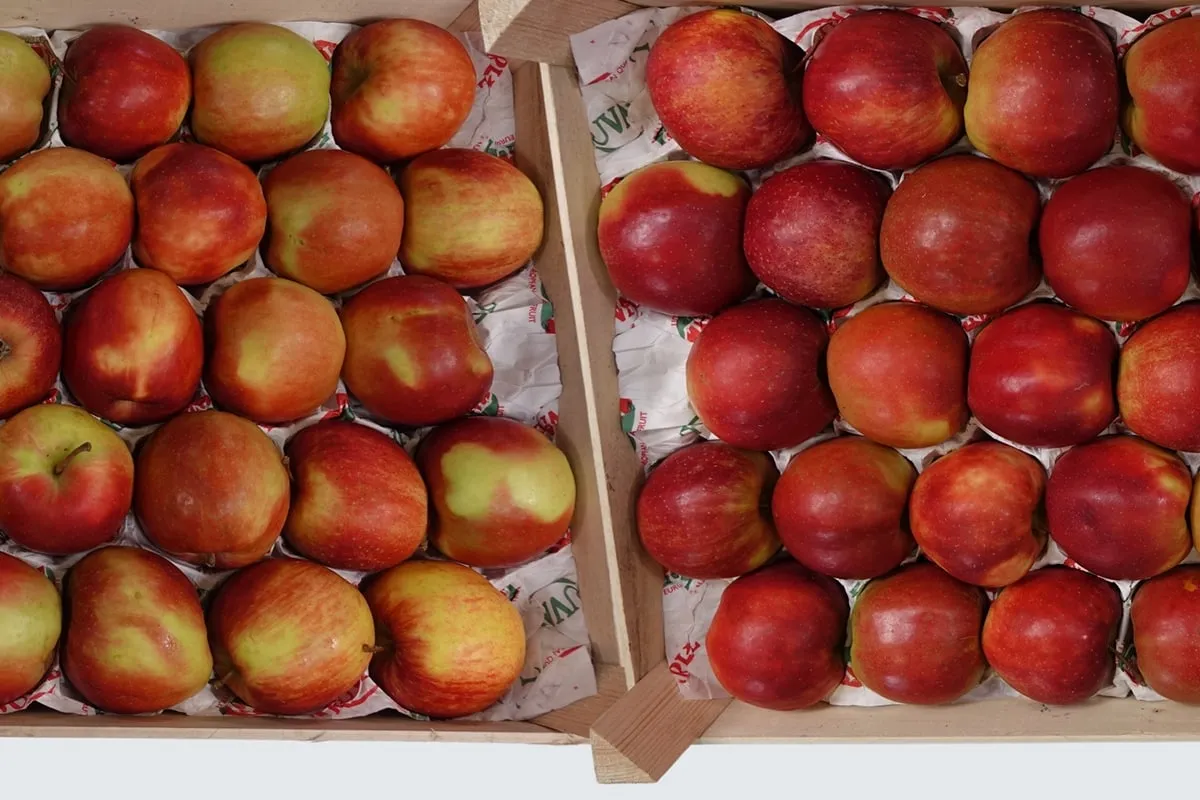
The fruit sector is paying increasing attention to product presentation. Apples and pears, for example, are packaged with all their stalks pointing in the same direction. Apples are also placed in trays with their most attractive, rosy side facing upwards. STAS’s new machine fully automates the aesthetically pleasing filling of such packaging.
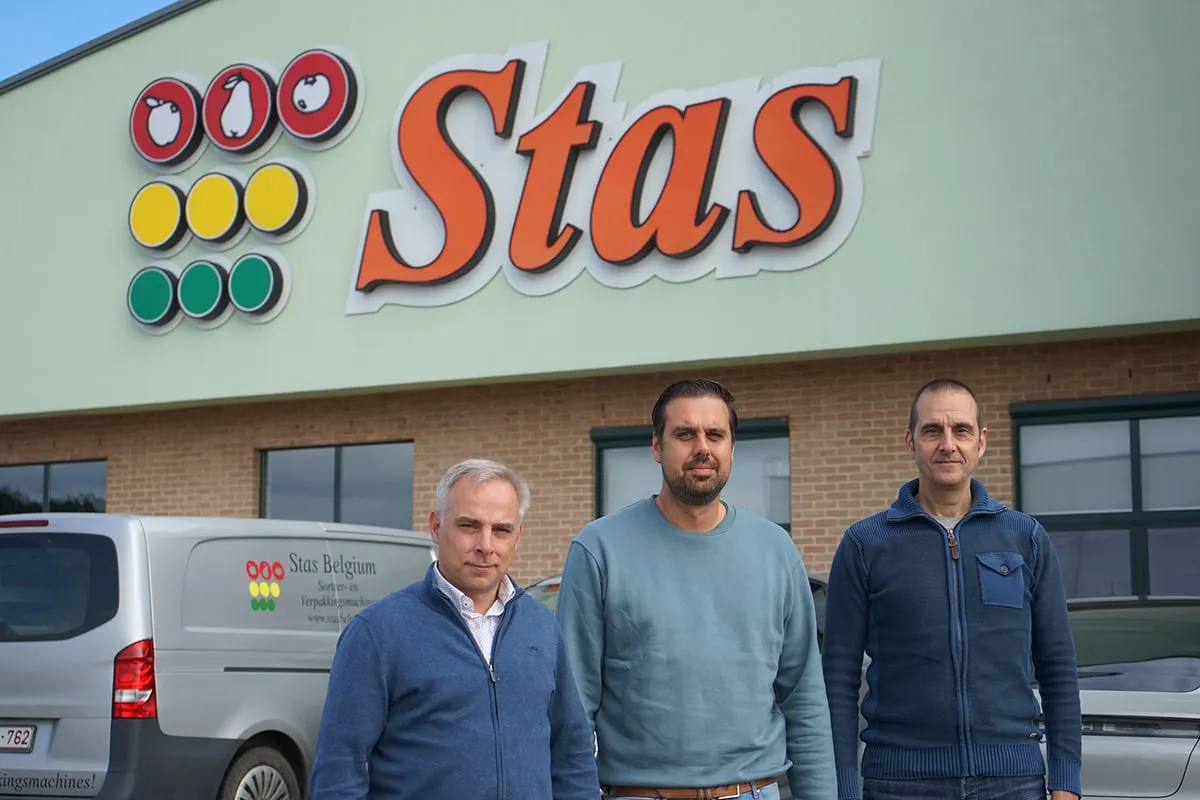
STAS is a family business from Glabbeek that has been building and selling machines for the fruit sector since 1986. “It started with the construction of rotary sorting tables,” says managing director Kristof Stas. “Then came sorting machines with diverging belts, which still sorted the fruit mechanically. In the latest generation of machines, sorting is electronic: each piece of fruit is weighed, and an outlet on a sorter is activated accordingly. In recent years, we have added various quality-control features, such as colour measurement and monitoring the fruit’s external and internal quality.”
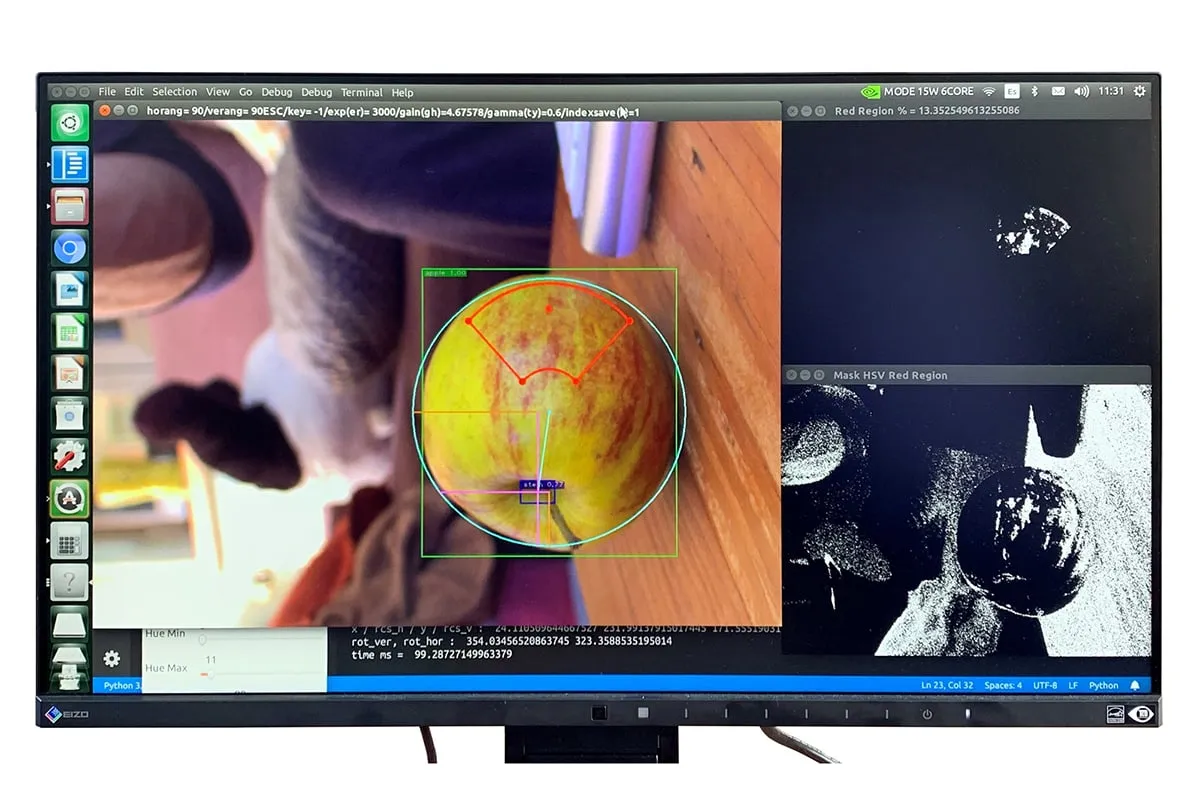
Image processing and machine control
Once the fruit has been inspected and sorted, it is packaged. This is still often done manually because the aim is to achieve the best possible presentation. STAS has now also succeeded in automating this process with its new machine. At its heart is an artificial intelligence vision system that examines each piece of fruit from all sides to determine how it should be placed in the packaging. STAS also wanted to develop a universal machine suitable for different types of fruit.
“It quickly became clear that this would be a complex and extensive project,” says Kristof Stas. “We therefore looked for a partner with the expertise to help develop every aspect of the machine, and a willingness to work with us to achieve the best possible end product. We found that partner in Festo.”
Jürgen Seymortier: “Thanks to Stas’s R&D efforts and mindset, we can make recommendations and implement optimisations to achieve a good result. Fruit is difficult to sort, and not every test run goes perfectly first time. It takes considerable resources and patience on the customer’s part to sometimes take a step back in order to make a bigger leap forwards. Stas’s long-term vision and realism have helped us achieve an excellent result.”
At Festo, sales engineer Jurgen Seymortier took the project under his wing. Raf De Vos was brought in to handle the artificial intelligence and control programming. As a programmer, he had gained extensive experience in the financial sector with high-speed big data applications, which proved useful when integrating image processing and machine control.
Tumblers find the perfect orientation
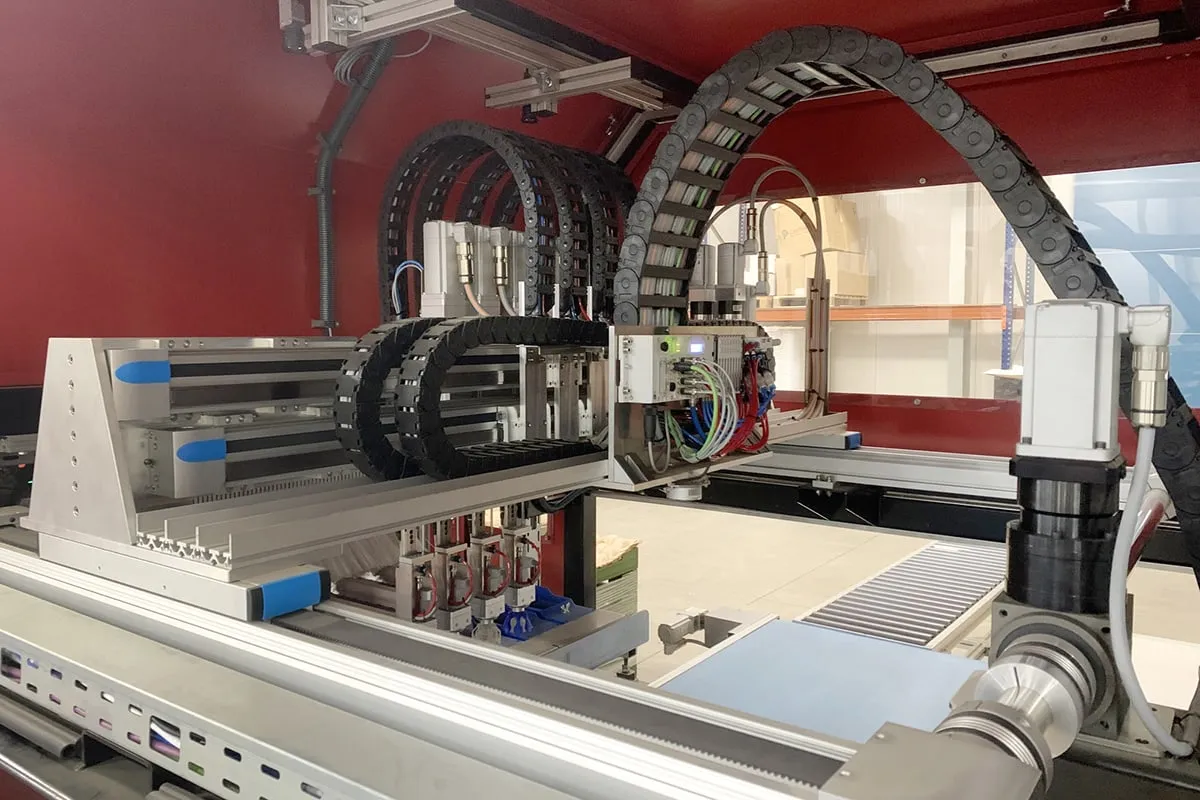
At the heart of the packaging machine is a unit developed specifically for this application, known as a tumbler. It consists of a small trough with two conveyor belts at the bottom, which can tilt and rotate a piece of fruit. The machine has eight tumblers, with cameras above them that send images to a neural network. The network analyses the images to locate the stalk. For apples, it can also determine where the red area is that should be visible on top in the packaging.
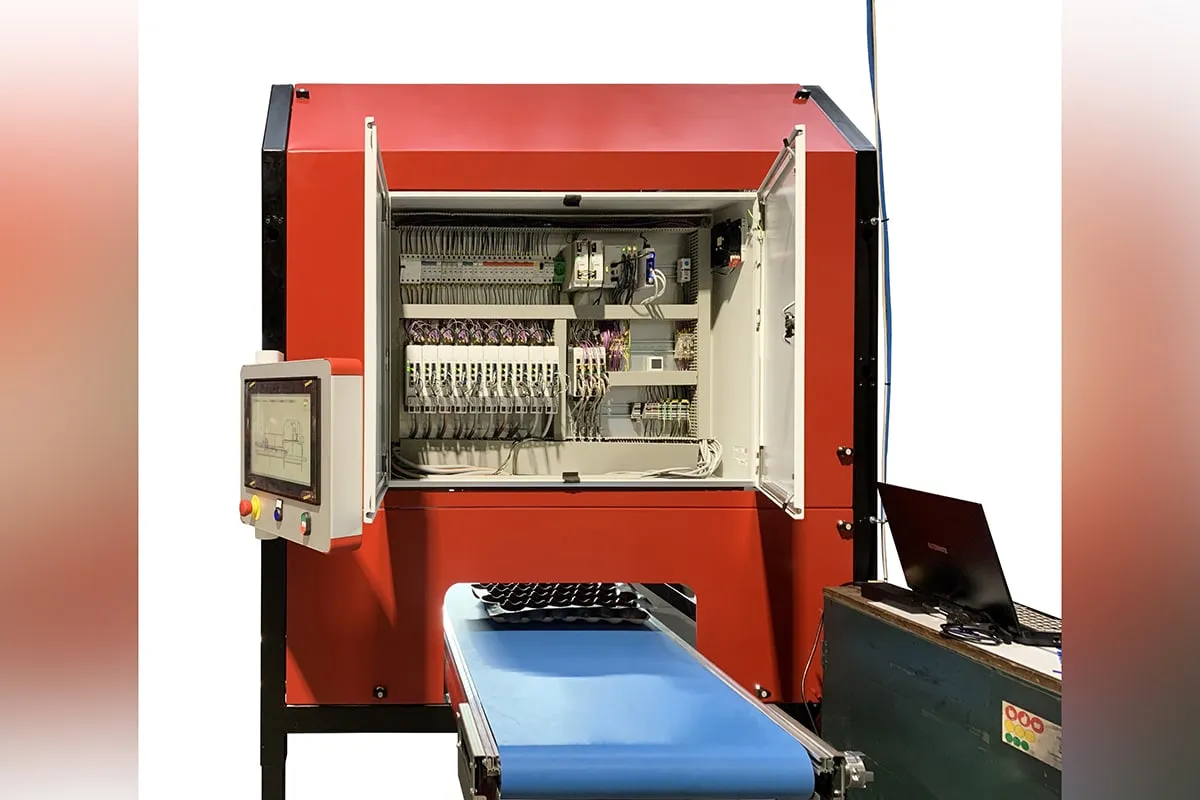
At the other end of the machine is a second vision system with a 3D camera that scans the trays. These preformed trays have cavities for the fruit. The vision system determines the position and orientation of the cavities and can also track which ones are empty.
This data is used to control the handling system via a Festo PLC. It consists of a bridge that moves between the tumblers and the packaging, carrying four heads, each able to pick up one piece of fruit. Each head is mounted on a linear axis set across the bridge and can fill four positions in a tray simultaneously, provided they are available. Each head moves vertically on a telescopic unit with both a pneumatic and an electric slide: the pneumatic slide provides speed, while the electric one ensures precision. Each head can also rotate to place the fruit in the correct orientation.
High throughput
“High throughput is essential for a machine like this,” explains Kristof Stas. “Many of the design choices were made with this in mind. The tumblers, for example, not only let us inspect the fruit from all sides, but also orient each piece correctly, reducing the number of movements required during subsequent handling and increasing speed. The telescopic axis was also chosen to achieve a higher speed.”
A number of additional features have also been added to make the machine highly reliable, another key factor in maximising throughput. For example, small lifts between the infeed belt and the tumblers ensure that only one piece of fruit is picked up at a time. A specially developed algorithm selects the optimal positions for placing the fruit with as few movements as possible. It takes into account the fact that the heads on the bridge can move relative to one another, but cannot cross paths.
“What makes the machine unique is its flexibility to package different types of fruit,” says Kristof Stas. “The operator uses a touch panel to select the type of fruit and indicate whether its orientation and colour need to be taken into account during packaging. Everything else is fully automatic, including detection of the packaging dimensions and tray shape.” This makes the machine more versatile and opens up possibilities beyond fruit, such as packaging peppers.
Automating the entire sorting line
STAS found in Festo a partner involved throughout the design process and in building the first prototype, translating the machine’s many concepts into efficient drive technologies. The software was developed alongside the hardware, enabling optimal mechatronic solutions to be selected.
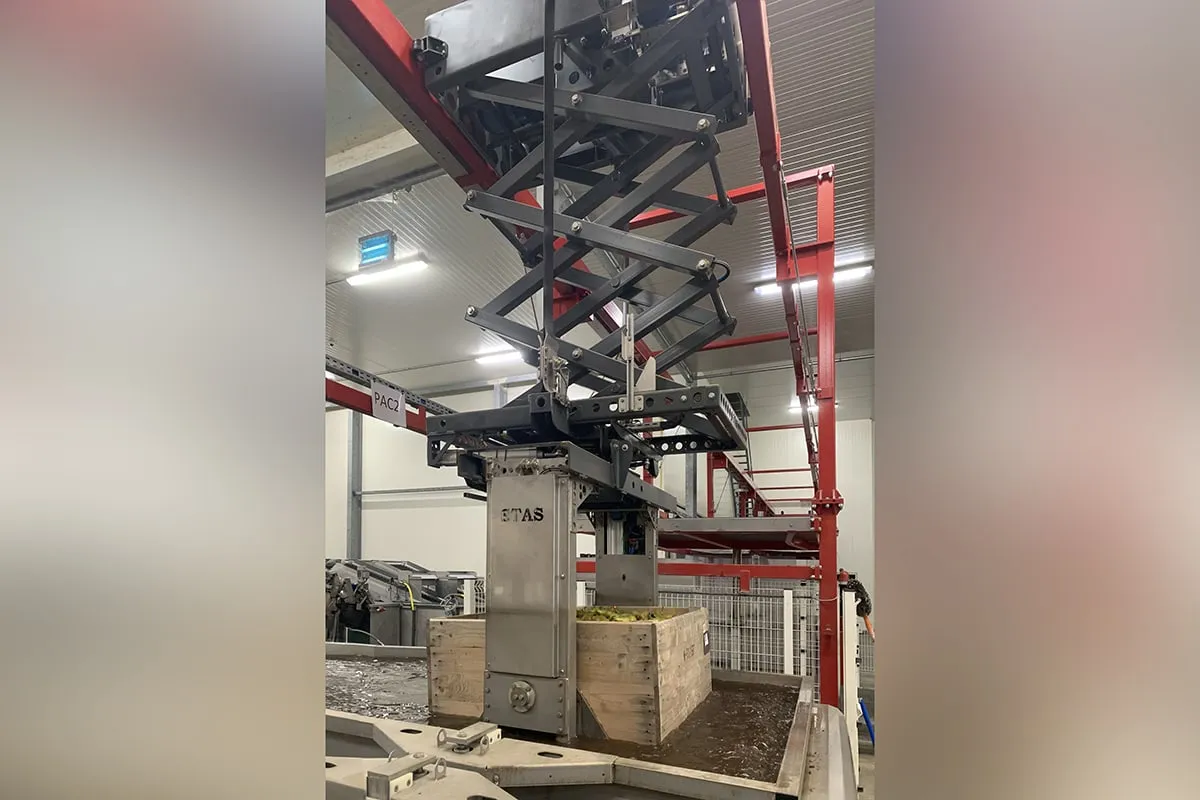
This was not STAS’s first collaboration with Festo. The two companies had previously worked together to develop a gantry robot that can empty large fruit bins into a water tank. Water transport is often used in the sector to prevent damage to the fruit. Several modifications were made to enable the robot to handle pears as well. Unlike apples, pears sink in water. A moving bottom was therefore developed for the water tank at the start of the transport line. Cylinders push it upwards, bringing the pears to the surface and into the water flow towards the conveyor belt. The cylinders’ movements are perfectly synchronised to keep the bottom level.
The new packaging machine now makes it possible to build a complete line that automates the entire handling, sorting and packaging process. “Many companies in the fruit sector are facing staff shortages,” says Kristof Stas. “Our automation solutions can help address this.”
A business enquiry for Festo? Get in touch
Companies in this story

Keep following this
Get an email when a new story is published. No account needed.
- SubjectServices & solutions
- CompanyFesto







