












Machine safety in potentially explosive atmospheres
Text and images Fortop automation & energy control
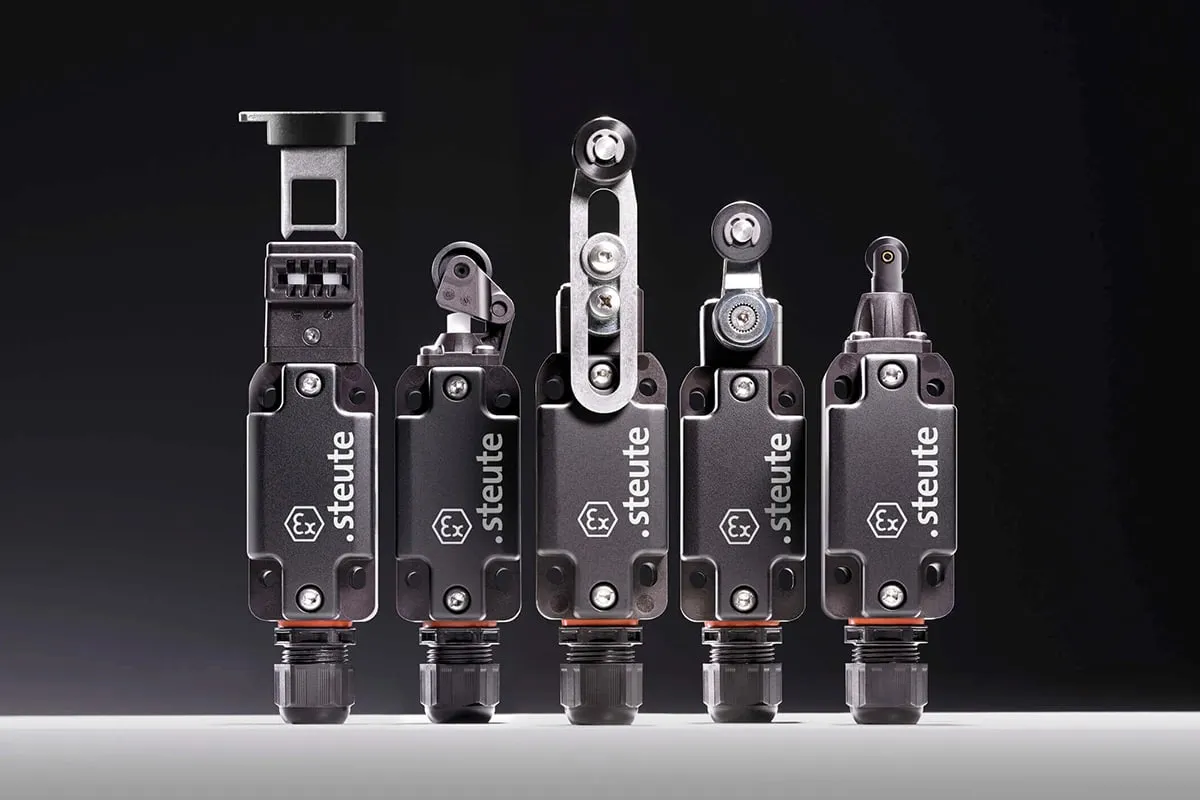
Safety switches used in Ex zones (potentially explosive zones) must meet two complex requirements: explosion protection and machine safety. Designers must also choose between different designs and operating principles. This applies both to extreme applications and to machines used to process and package, for example, dust-explosive food products such as milk powder.
Comprehensive guidelines have been drawn up for both machine safety and explosion protection, and in Europe these are set out in the Machinery Directive and the ATEX Directive. There are also international regulations (e.g. IECEx) and national standards and provisions covering both areas (UL/CSA, Inmetro, Ex CCC and so on). Each of the two directives is demanding in its own right, as designers of machinery and installations for potentially explosive atmospheres know all too well. They also know, however, that some switches must comply equally with both directives. Examples include safety switches that monitor the position of safety doors on machines in Ex zones or perform other safety-related tasks, such as the emergency stop function on conveyor belts.
Versatile applications
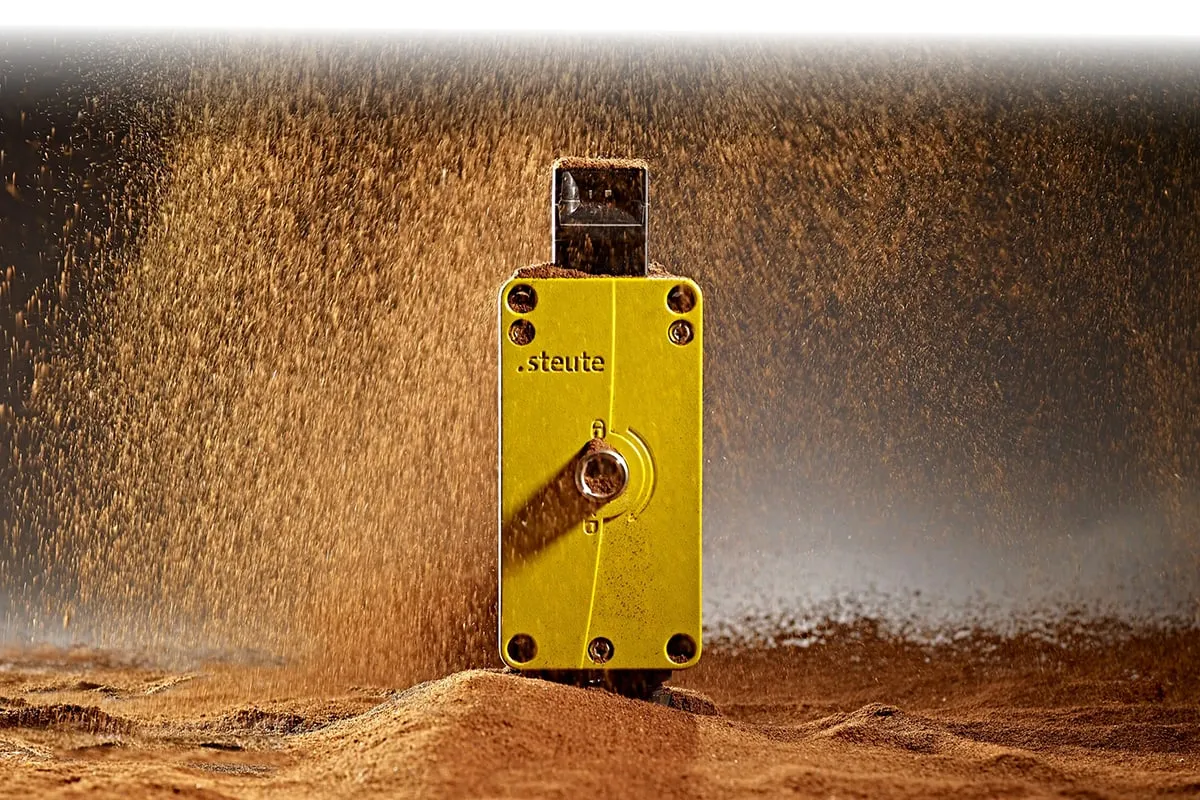
Although this is a niche within the large market for industrial safety switches, Ex safety switches have a wide range of applications, some of which are mandatory. For example, when the safety doors and maintenance hatches of processing, filling and packaging machines for bulk powders or food products need to be monitored, dust explosion requirements almost always apply. Organic dust particles are always combustible and can ignite if they are present in the air at the right concentration and come into contact with an ignition source. In many processes in the chemical industry, powdered and combustible substances (such as additives, pigments and coating powders) and combustible gases are used directly or released during production.
Range expansion: Ex safety interlocking
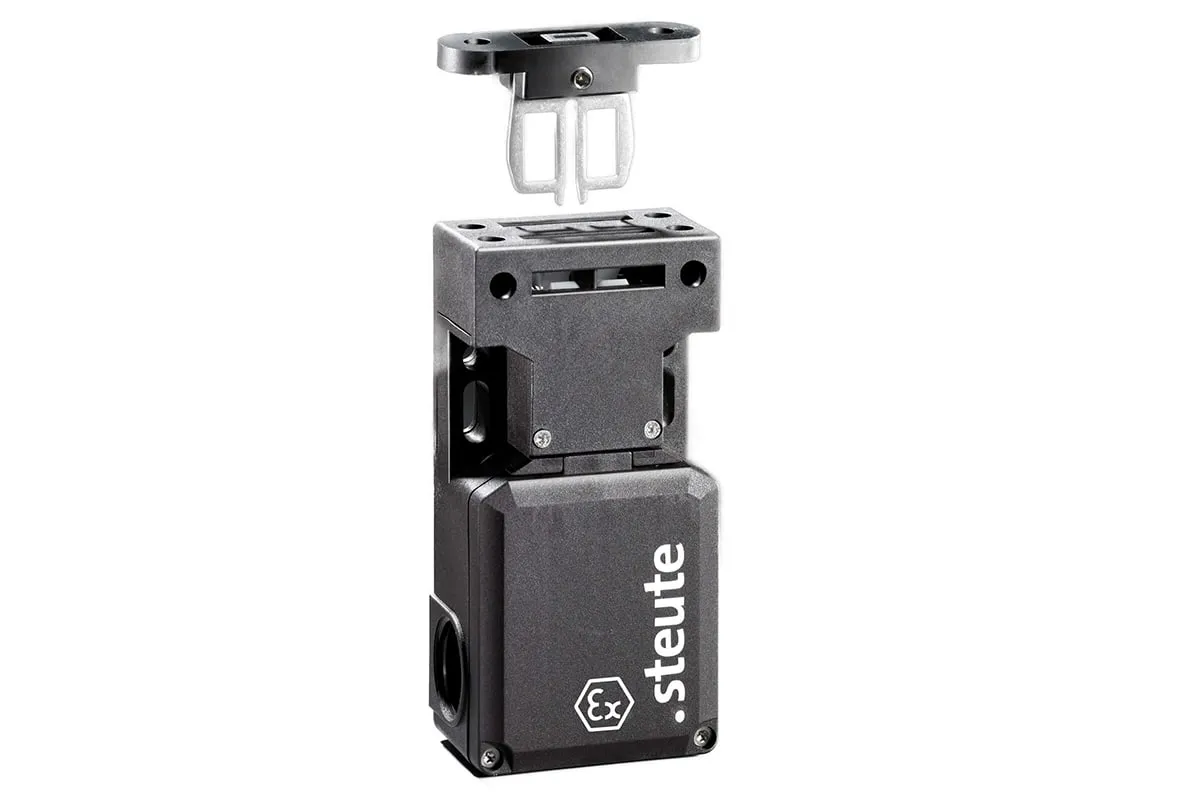
Steute's Ex and Extreme products have been used in this (niche) market for decades, offering manufacturers of machinery and installations for potentially explosive atmospheres a wide range of safety switches. The range is not only well rounded, but is also expanding. The latest addition is the Ex STM 515 series of Ex safety interlocks, with ATEX and IECEx approvals. Their purpose is to keep safety doors and maintenance hatches locked until hazardous movements in machinery and installations have come to a complete stop, both in Ex zones and in challenging environments such as those with extreme temperatures.
This new series is specifically designed to operate safely and reliably in extreme environments, from the cable connection to the actuator. A robust die-cast aluminium housing ensures durability, even under heavy mechanical wear. To achieve this, the housing undergoes several treatments, including passivation, application of a primer and powder coating, providing a high level of corrosion resistance. Effective sealing also enables protection ratings of IP66/67. The electrical connections are well protected in a separate terminal compartment.
Flexible installation in Ex zones 1, 2, 21 and 22
The compact design and actuator head, which can be positioned in 4 x 90° increments, allow flexible installation in any position. The modular design offers a choice of various additional functions. For example, users can choose between normally closed and normally open operation, and optionally select both manual release (on the access side) and escape release (on the hazardous side). According to their ATEX/IECEx approvals, the new safety interlocks in the Ex STM 515 series can be used in Ex zones 1 and 2 (gas Ex) and 21 and 22 (dust Ex). Typical applications considered during development include safety doors and maintenance hatches on mixers and screening machines, as well as packaging systems for powdered or dusty products.
Position monitoring instead of interlocking
If no hazardous movements are expected within the danger zone and interlocking is not required for process safety, a safety switch is used to monitor the position of the safety door. The company, based in Löhne, offers solutions such as the Ex AZ 16 series. These electromechanical safety switches, with a separate actuator, three contacts and a separate terminal compartment, can be used in gas Ex zones 1 and 2, as well as dust Ex zones 21 and 22. Alternatively, two series of Ex position switches are available that are also suitable for functional safety applications. The standard switches in the Ex 97 and Ex 99 series comply with standards EN50047 and EN50041 and can be used in gas Ex zones 1 and 2, as well as dust Ex zones 21 and 22. They are also suitable for temperatures down to -60 °C, placing particularly high demands on the housing design and sealing. The Ex 98 series also includes a position switch with a safety function and a metal housing (aluminium housing with a stainless steel cover).
Alternatively, two series of Ex position switches are available that are also suitable for functional safety applications. The standard switches in the Ex 97 and Ex 99 series comply with standards EN50047 and EN50041 and can be used in gas Ex zones 1 and 2, as well as dust Ex zones 21 and 22. They are also suitable for temperatures down to -60 °C, placing particularly high demands on the housing design and sealing. The Ex 98 series also includes a position switch with a safety function and a metal housing (aluminium housing with a stainless steel cover).
Non-contact instead of electromechanical
As an alternative to electromechanical switching devices, mechanical engineers can also use non-contact safety sensors in Ex zones. For example, the Ex HS Si 4 series can monitor the position of safety doors when used with an actuator. These sensors are particularly shock-resistant and easy to integrate into the design of a safety door. Another option is the Ex RC Si M30 series of safety sensors, which have a cylindrical design and a separate actuator. They are also available in an especially robust version with a stainless steel housing and IP69K protection rating.
Heavy-duty applications in materials handling
Heavy-duty versions of Ex safety switching devices are used in materials handling and extraction systems. The entire installation must not only be mechanically robust, but also suitable for use in areas with high dust levels and varying temperatures. The emergency pull-wire switches in the Ex ZS 92 S series, for example, meet these requirements by providing conveyor belts with an emergency stop function over long distances of up to 2 x 100 metres.
In short, even for highly complex niche applications, such as combining gas or dust explosion protection with functional safety, engineers and plant operators have a wide range of options when choosing safety switches. Even when other requirements must also be met, such as resistance to corrosion or vibration, or protection against the ingress of dust or moisture, safety solutions with Ex protection are available.
The products mentioned above can be ordered via the fortop Product Portal (webshop). They can be found in the Safe Operation knowledge area. Safe Operation is one of fortop's five knowledge areas, each of which represents a part of fortop's product range and expertise. Together, these five areas showcase not only the breadth of fortop's offering, but also where fortop can make a difference through its technical expertise.
Een zakelijke vraag aan fortop automation & energy control? Get in touch
Companies in this story

Keep following this
Get an email when a new story is published. No account needed.
- ThemeSafe and resilient installations
- SubjectServices & solutions
- Companyfortop automation & energy control







