












Lean approach to production expansion
Text Valérie CouplezImage Lean Lead
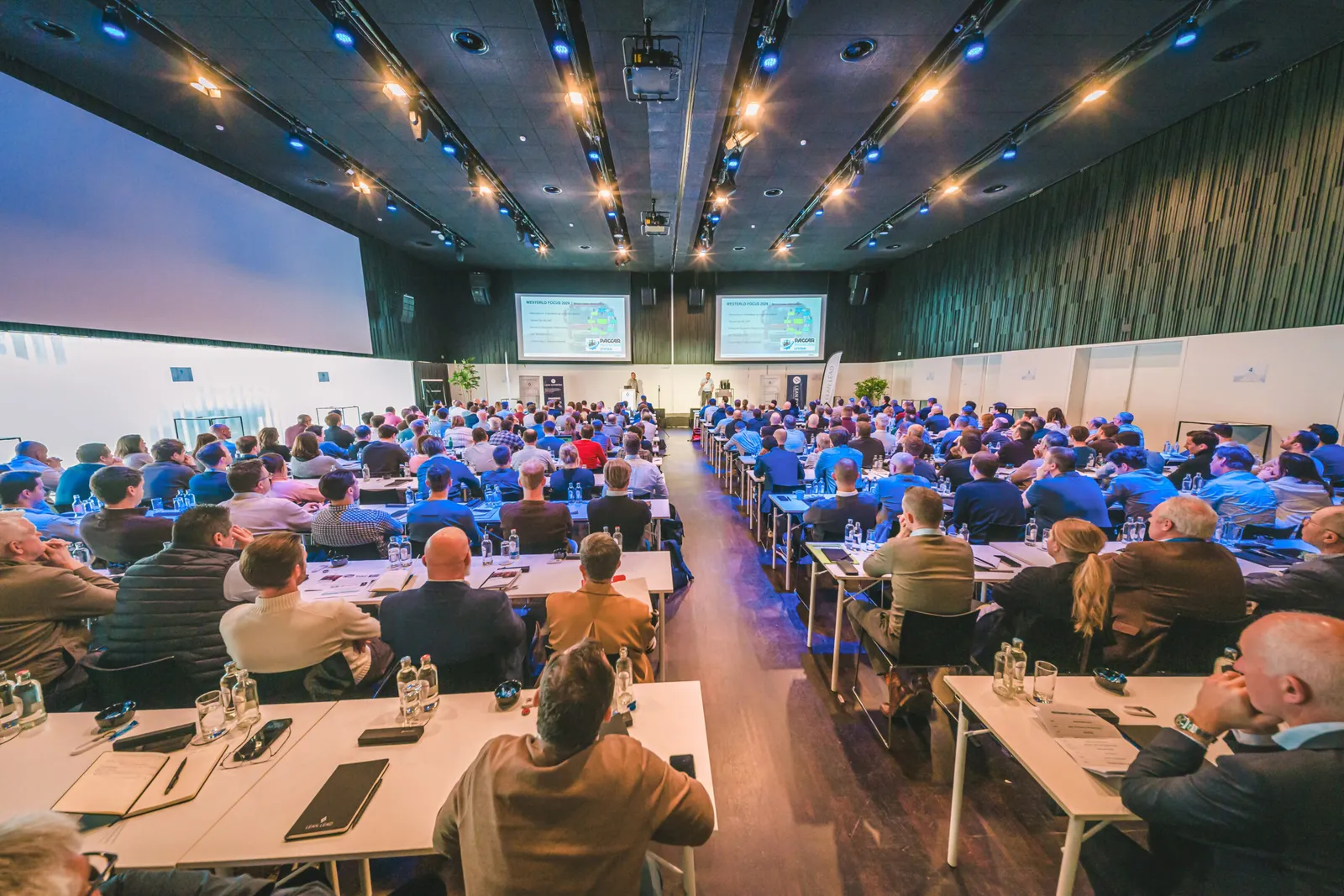
“Lean is the way to go.” Apart from thanking the large audience for turning out, these were Gino Quenis’s opening words at the plenary session of the Lean Lead Excellence Congress. The driving force behind the Lean Lead Network drew inspiration for his words from the impressive turnout. Even in challenging economic times, around 275 delegates thought it worthwhile to spend a whole day immersed in lean and exploring how it can take your production to the next level. Industrial Automation was there and brings you the inspiring session on DAF Trucks in Westerlo, sharing the benefits of lean on these pages too. To borrow Quenis’s words: “Best practices make us all stronger.”
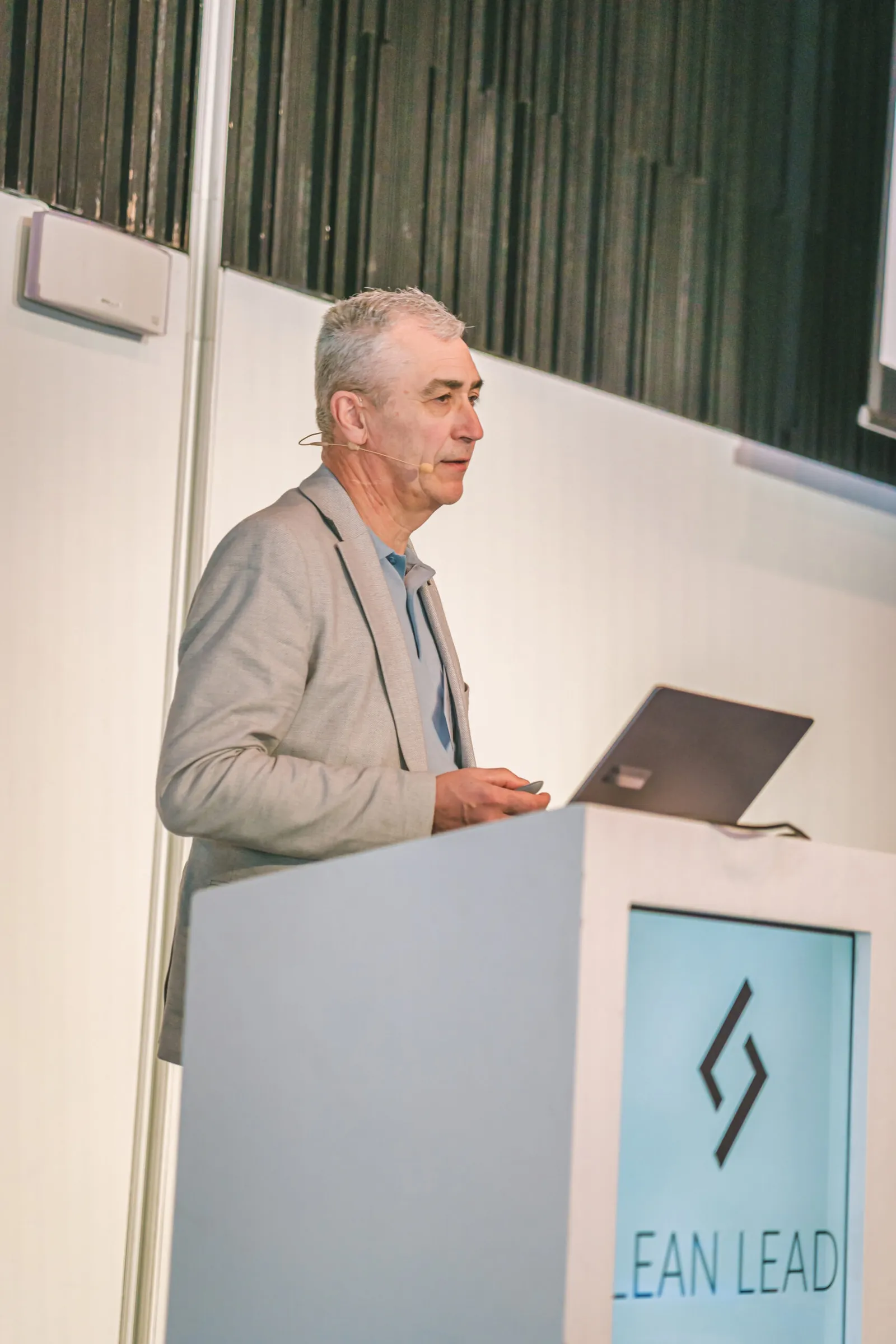
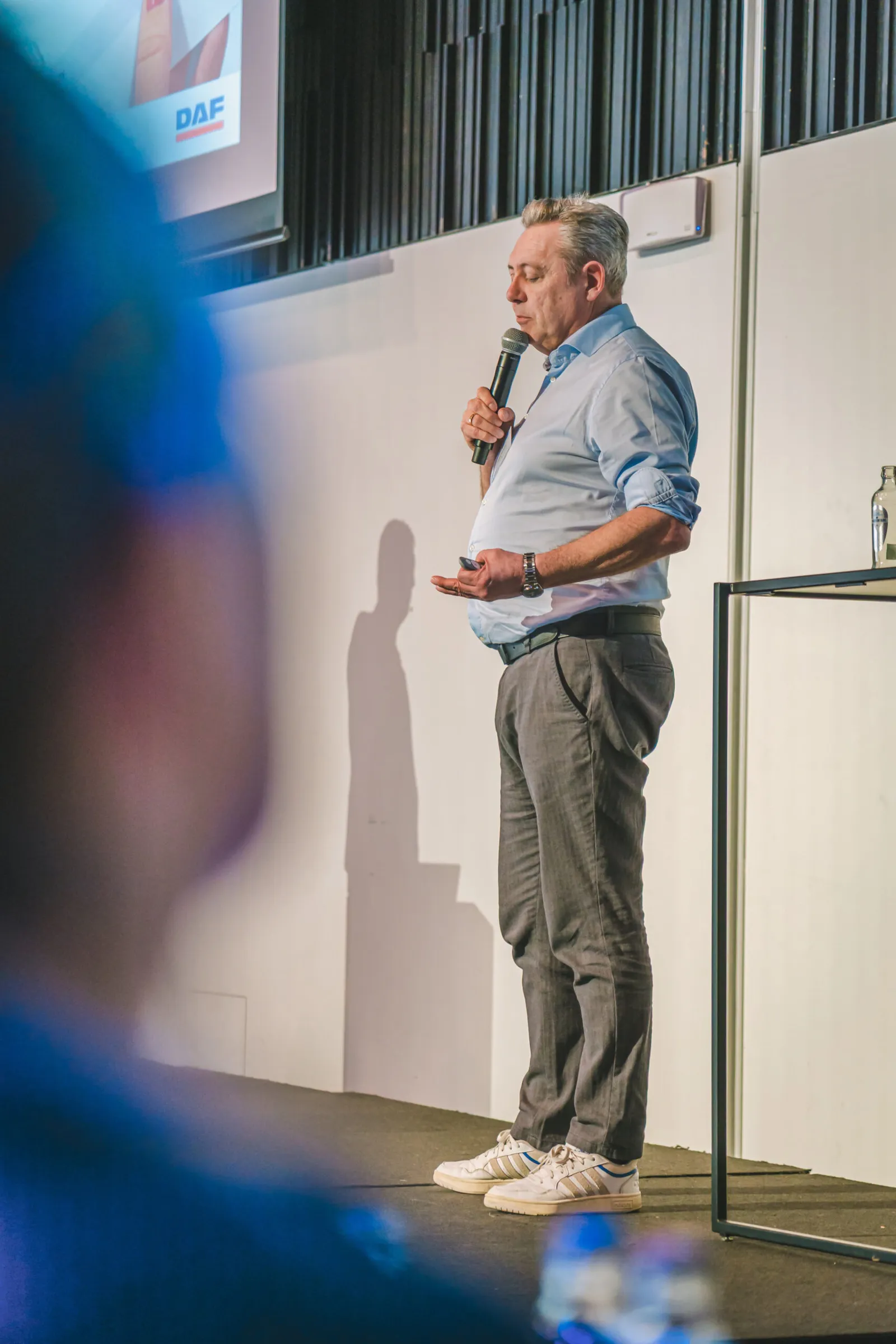
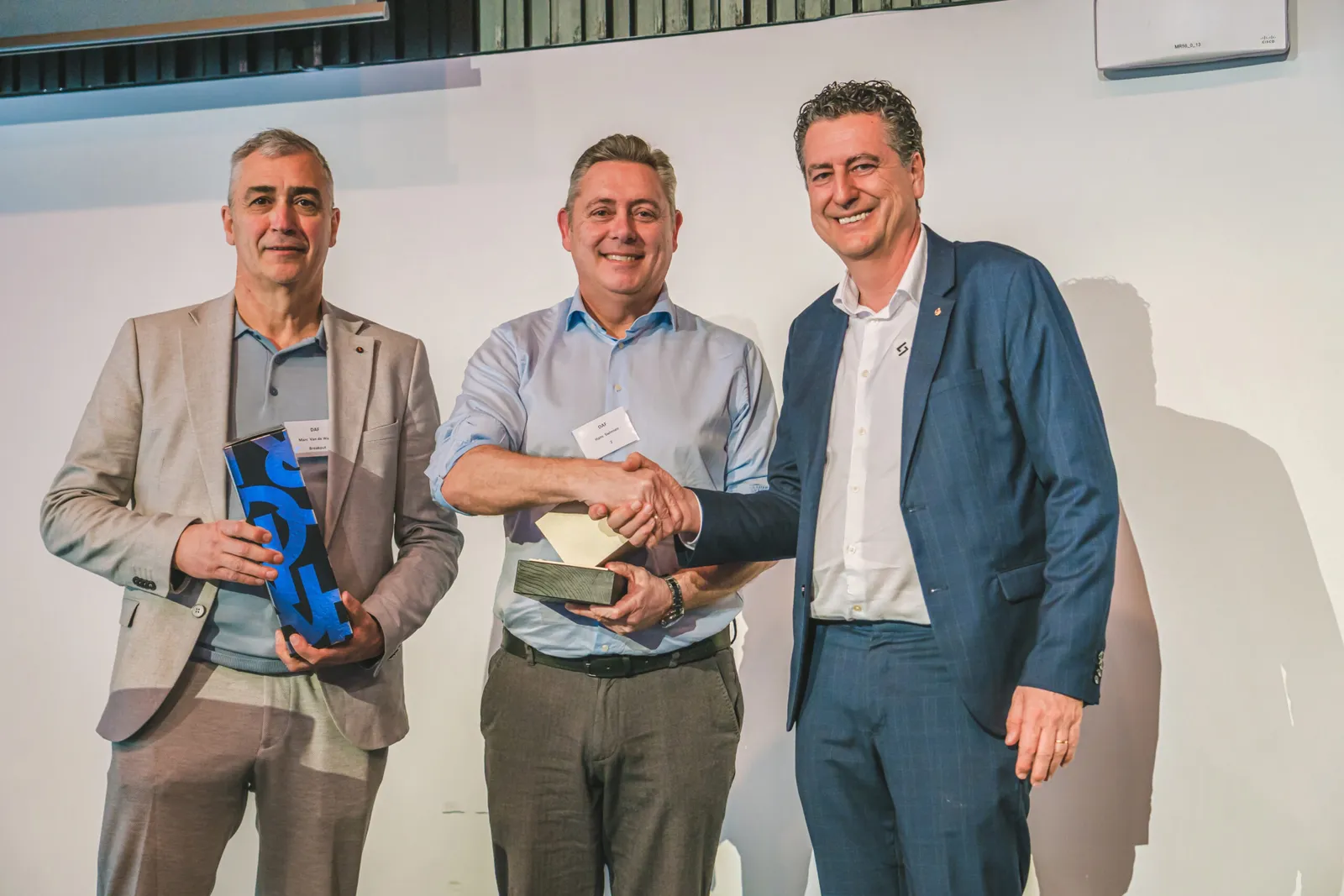
Those who lament the decline of Belgium’s automotive industry are right to do so. But unfortunately, they also overlook the two jewels in the crown that we still have: Volvo in Ghent and DAF Trucks in Westerlo (which, incidentally, celebrates its 60th anniversary in 2026). Surely it is no coincidence that both apply lean principles to remain competitive? Nor that both have been able to expand production as a result. Hans Swinnen, continuous improvement manager, and Marc Van De Water, supervisor of the trimming department, explained how they successfully completed the implementation of the new production operation. This was not just about introducing new technology: the people also had to be willing to get on board.
A new generation of trucks
The expansion in Westerlo was driven by increasingly stringent legislation, particularly on fuel emissions. DAF Trucks went back to the drawing board and developed its Next Generation Design, bringing significant changes to the trucks’ overall weight and dimensions to improve aerodynamics, safety and comfort. This is expected to result in 10% lower fuel consumption and therefore 10% lower CO2 emissions. More than 45,000 m² of workspace was added in total. The largest department, NGD Body, is the highly automated part of production, with most of the work carried out by 144 robots. At NGD Trim, meanwhile, manual tasks are performed with particular attention to ergonomics.
Involved from the outset
“A new product, a new building, different logistics. The challenge was to get 400 people up and running at the same time. The project also involved a digital transformation,” Swinnen explains. “To tackle this properly, you need to be involved from the outset. And I don’t mean when the key is turned and production starts. No, people from Westerlo were already sitting around the table in Eindhoven during the design of the new factory. That way, you achieve the optimum balance between putting the product in the lead and adapting production to it, and vice versa.” He gives the examples of the curved windows, which are positioned perfectly using a special gripper, and the mat that has to be attached beneath the cab. By adapting the mat to the process and dividing it into sections, this can be done at lower cost and with minimal risk.
The impact of change underestimated
There was a clear goal on the horizon: creating autonomous teams focused on continuous improvement. Optimum ergonomics, a more pleasant working environment, a new restaurant, strong teams … With all that taken care of, what could still go wrong? “A lot,” Van De Water recalls. “We had underestimated the people-management aspect. To move towards the autonomous teams we envisaged, we needed trust and involvement. These were the cornerstones for managing the impact of change. We looked for a trainer in each team. They would use the STEP method (stop, rethink, evaluate, proceed) to come up with an effective solution to every bump in the road, with maximum input from the team. After all, you want everyone to support the decisions made.”
Error rate dramatically reduced
With plenty of input and good ideas, new standards and best practices were established. The trainers are now training on-the-job trainers. They check exactly what is going wrong and relay that feedback up the chain. “We’re not there yet, but we can see these principles becoming increasingly embedded. The results confirm it too. Three years ago, 60% of the trucks coming off the production line had at least one fault. These issues cost a great deal of time and money, and sometimes brought the entire line to a standstill. Even on a bad day, our error rate is now only 2% higher, while our operators are proficient in more than 120 standard procedures. That would have been unthinkable in the past,” says a proud Swinnen.
Question about this story? Ask your question
Keep following this
Get an email when a new story is published. No account needed.
- ThemeSmart manufacturing and logistics
- SubjectServices & solutions







