Innovative operator-assistance modules improve comfort and quality
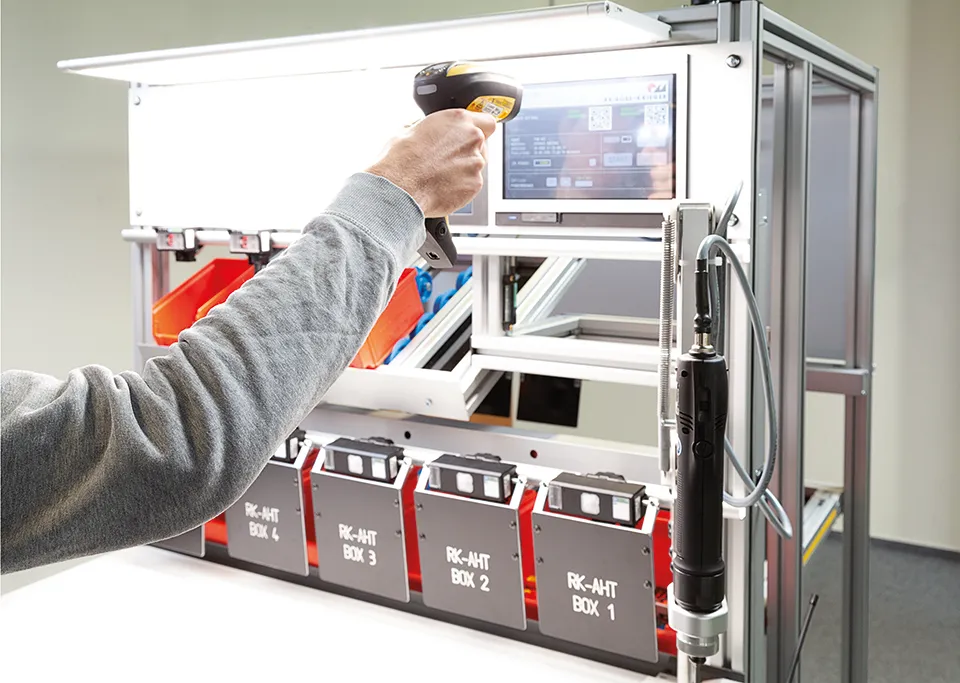
Healthy employees perform much better, so investing in ergonomically designed workstations is well worth the effort for companies.
They not only reduce physical strain, but also boost productivity by significantly reducing the margin for error.
“We offer our customers three different assistance systems to make their workstations as ergonomic as possible,” says account manager Bert Mornie. “For example, they ensure that employees are always given the right parts in the right order. In highly price-sensitive processes that cannot be meaningfully automated, these modules reduce the margin for error and help create a safer working environment that places less strain on operators.”
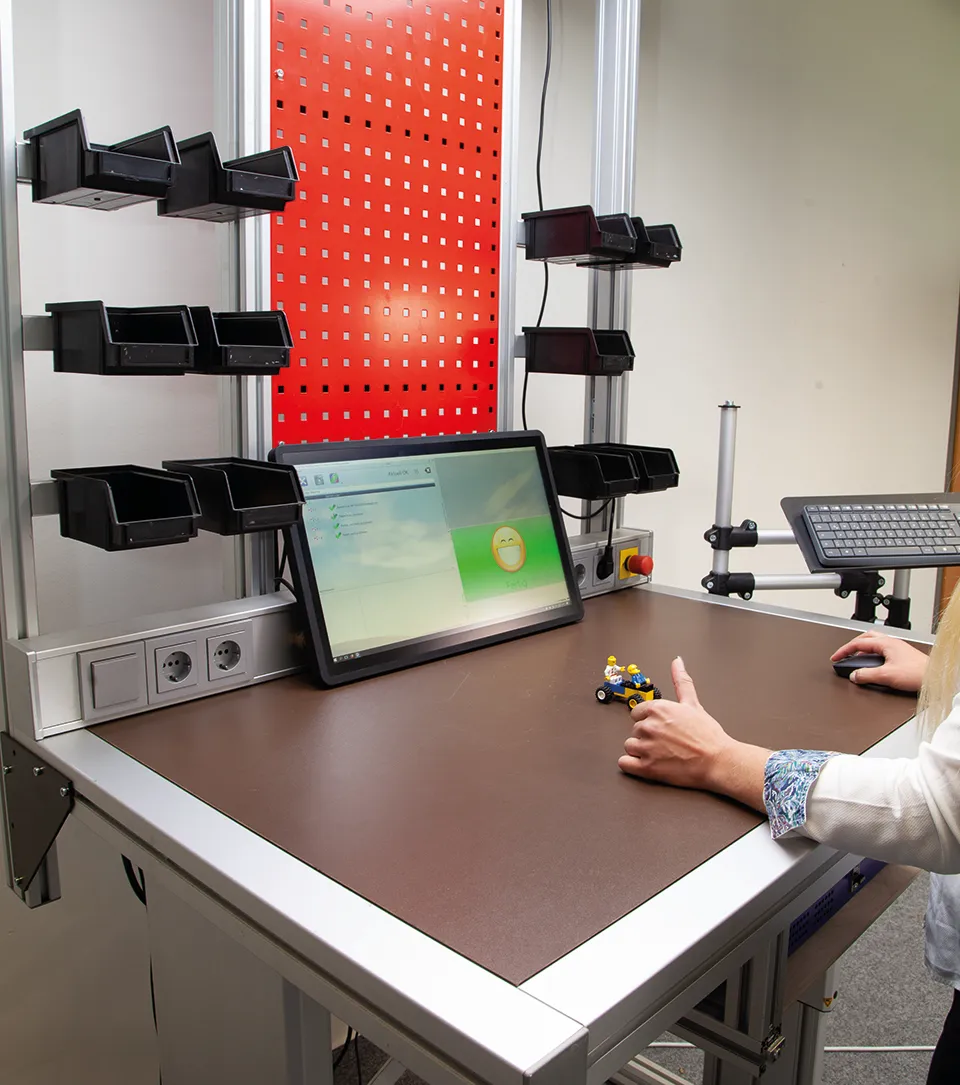
LED guidance
The first system, Pick2Light, uses computer-controlled LED lights to guide the operator. On-screen work instructions show the operator where to pick specific parts before assembling them. “Take the assembly of a simple picture frame, for example. The operator first has to pick the four profiles, then add a wooden or cardboard backing, and finally fit a pane of glass. Pick2Light is therefore not a warehouse application, but works at workstation level, with LED lights fitted to different bins containing different parts. We can supply the system fully customised and, of course, integrate it in software with an existing ERP system, for example.”

Poka Yoke
Poka Yoke is a more advanced system. Originally developed by car manufacturer Toyota, it ensures that the right products are placed in the bins from which the operator then has to pick them. “Flaps control the picking locations at both the front and the rear, ensuring that the right parts are both put in and taken out,” he says. “If required, we can also fit pre-formed, ready-to-use inserts to ensure that an operator can only place a part of a specific shape in a particular location. This is aimed primarily at sectors where it is extremely important to fit the right components in the finished product, as dismantling it afterwards is particularly difficult and therefore very expensive. With this modular system, which we build together with the customer and which can, for example, be incorporated into a workbench, companies can really minimise their reject rate.”
Camera-based assistance system
The most technologically advanced system, Smart Klaus, uses cameras to track the operator and check that the right actions are carried out in the right order. “This can be done, for example, through object recognition or by checking the location where a particular action is performed,” Mornie explains. “We are targeting high-tech production environments in particular, where very small electronic components may need to be assembled and absolute precision is therefore crucial.” The three systems can also be integrated and combined with one another, allowing companies to equip one workstation with one system and the next workstation with another.
“Our different systems can be fully integrated and combined with one another”
Question about this story? Ask your question
Keep following this
Get an email when a new story is published. No account needed.
- SubjectServices & solutions