Increase revenue and uptime by monitoring wear-prone components

Unplanned downtime caused by worn machine components leads to poor customer experiences and rising costs. Condition-based maintenance (CBM) and wear-part monitoring can increase machine availability and create revenue opportunities for machine builders.
Failures in industrial machinery and systems can have dramatic consequences. Keeping your equipment running smoothly is crucial. Otherwise, you and your customer could lose production time and ultimately revenue. These risks can be mitigated with a maintenance strategy that continuously monitors the condition of wear-prone components.
When spare parts are not immediately available
Machines can often stop working because of problems with the smallest components, and spare parts are not always available at short notice. While many machine builders offer spare-part packages and fast delivery of wear parts, they rely on reactive maintenance.
Reactive maintenance, also known as “run to fail”, is often the default strategy and frequently results in significant downtime and reduced throughput, as failures often occur when machines are operating at maximum capacity.
Companies have tried to limit the impact on production by replacing wear-prone components at fixed intervals. For this strategy to work, components must be replaced well before their average service life, increasing repair and parts costs as well as production downtime.
So, how challenging and rewarding is the journey from reactive or preventive to proactive maintenance?Reactive, scheduled, proactive and predictive maintenance strategies
Multiple sources of profit from proactive monitoring
Reactive maintenance simply means running equipment until it fails and only then taking action. Replacing (often perfectly good) components at fixed intervals is also a form of this approach. A proactive maintenance method, by contrast, can improve machine uptime and overall equipment effectiveness (OEE). Using a condition-monitoring-based maintenance service for wear-prone components is an effective strategy that machine manufacturers can adopt as a new commercial opportunity.
Condition monitoring is the core approach in a condition-based maintenance strategy, also known as “predictive maintenance”. This approach can prevent worn components from becoming a recurring problem. Offering these kinds of services can generate more revenue for machine builders from digital services.
Machine builders can offer this as a new digital service by notifying customers in advance for a small fee, helping to prevent production stoppages. This can increase spare-parts sales, generate potential service contracts and improve customer satisfaction.
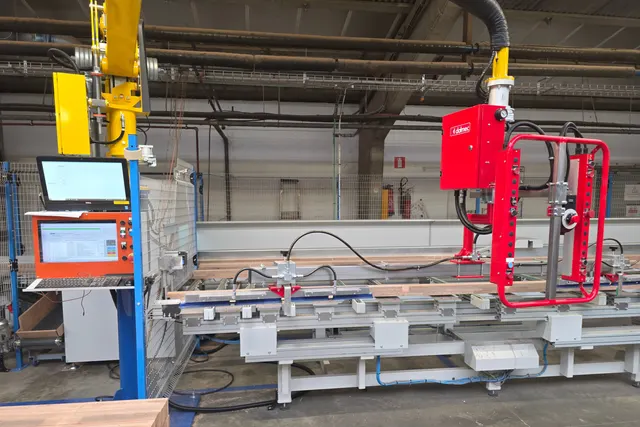
One example is a machine with a flying knife function. You can monitor the current used by the shaft that drives the knife and detect whether it is becoming blunt based on an increase in current. Would a service that supplies these and other spare parts just in time (JIT), while ensuring smooth, reliable operation, be relevant to your customers?
The benefits of condition monitoring wear parts for you as a machine builder:
- Less unplanned downtime for your customers
- Fewer negative experiences and more positive ones
- Increased customer satisfaction and loyalty
- The opportunity to generate additional revenue from monitoring services, contracts or spare-parts sales.
Proactive maintenance: replacing machine wear parts just in time
Developing new business models and revenue streams
The following is a simplified overview of how to create a condition-based business model for wear parts:
1) Starting point: current maintenance method and component data
The first stage is to analyse current maintenance methods. Identify components with a defined service life and establish whether component data is being recorded, with a clear statistical correlation and causal relationship between the value and the condition of the component in question.
Some data already show a clear correlation and causal relationship between standard PLC variables and the condition of the wear component. For others, additional variables may need to be defined and collected, or extra sensors may even be required.
2) Prototyping: testing
Carry out internal tests on test rigs for the components in question to support or disprove the hypothesis. The next step is to plan strategically how to capture data using sensors or PLC parameters. This data can be collected via an edge gateway and stored in the cloud for analysis. Data from the field and the analysis can then build confidence in the model and the potential business model.
3) Rolling out the business model
Determine the most efficient way to deliver this added value to customers and increase revenue, satisfaction and brand recognition. Is this simply a revenue increase and an additional after-sales service offering? Or can it also be used in sales and marketing to further differentiate your machines and services from the competition? What value does it offer end users, and can you use value-based selling to achieve an attractive price point for this service?Steps for building a business model for condition monitoring of wear parts
More satisfied and profitable customers
Would you like more satisfied and profitable customers? Introducing condition monitoring for wear parts will improve your customer service, loyalty and relationships with your customers.
If you need help defining your digital strategy and making the most of condition monitoring, feel free to contact one of our industry experts.
Question about this story? Ask your question
Keep following this
Get an email when a new story is published. No account needed.
- ThemeFrom design to flexible machine
- SubjectServices & solutions