












How virtual simulation, physical AI and modular automation are shaping a new era in logistics
When warehouses become ‘living’ ecosystems
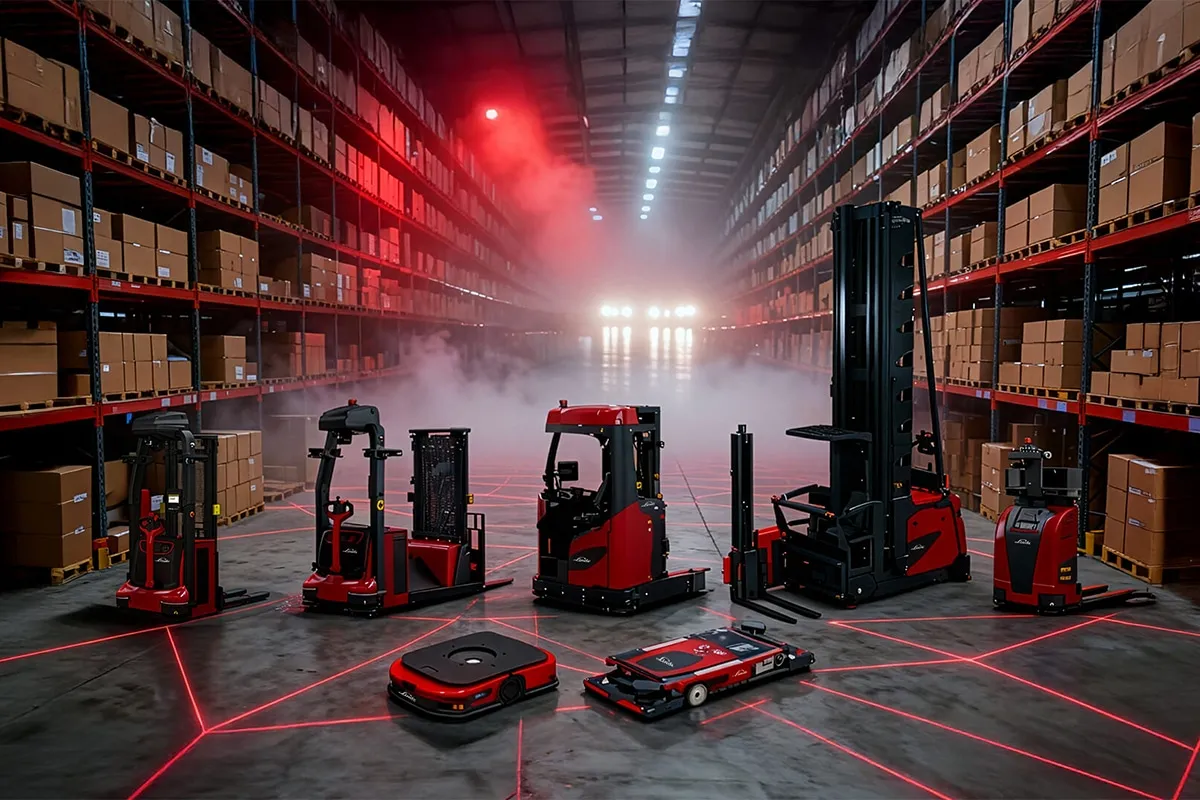
Anyone who visited the Linde Automation Summit 2025 in Aschaffenburg noticed it straight away: automation is at a turning point. It is no longer about a few experimental robots or isolated AGVs. What Linde Material Handling showed over those two days was a thoroughly modern approach to systems thinking, transforming warehouses into precisely orchestrated logistics organisms.
What was the common thread running through all the presentations? Automation has come of age. And that changes everything.
From manual warehouse floor to cyber-physical network
The intralogistics sector has always been highly dynamic, but the changes companies face today are structural. Labour shortages are no longer a temporary peak, but a constant. Lead times are getting shorter, orders smaller and seasonal peaks more extreme. More and more companies are realising that they do not simply need to make their warehouses more efficient, but organise them in a fundamentally different way.
Linde’s Summit brought this evolution to life. Not through keynotes full of buzzwords, but through concrete deep dives, test cases, simulations and robots that simply get on with the job, without any fanfare. In a world where the term ‘AI’ sometimes promises more than it delivers, that was refreshing.
Flow is at the heart of it
Anyone listening closely to the presentations would have noticed that Linde repeatedly returned to one theme: automation is no longer about the technology itself, but about the flow.
As Torsten Rochelmeyer, Senior Director Strategy & Solution Portfolio (Linde), put it: “An AMR that drives from A to B is not automation. A system that understands and optimises every process parameter, that is automation.”
This vision was translated into four clearly recognisable pillars, woven throughout the demonstrations and testimonials:
- Hardware ready for variable environments;
- Software that controls the whole system;
- Digital twins that eliminate risks before they arise;
- An operational system that keeps getting smarter.
That last element may well have been the most revolutionary. Automation does not stop at commissioning: it continues to evolve, learn and optimise, sometimes daily, sometimes seasonally.
Technology that can handle brownfield sites
Nine out of ten warehouses in Europe are in existing buildings. Genuine innovation must therefore work in those settings too. Linde showed that its hardware is designed not only for sleek greenfield sites, but can also cope with variable lighting conditions, unexpected obstacles, ageing infrastructure, sloping floors, seasonal peaks and mixed traffic with manually operated trucks, …
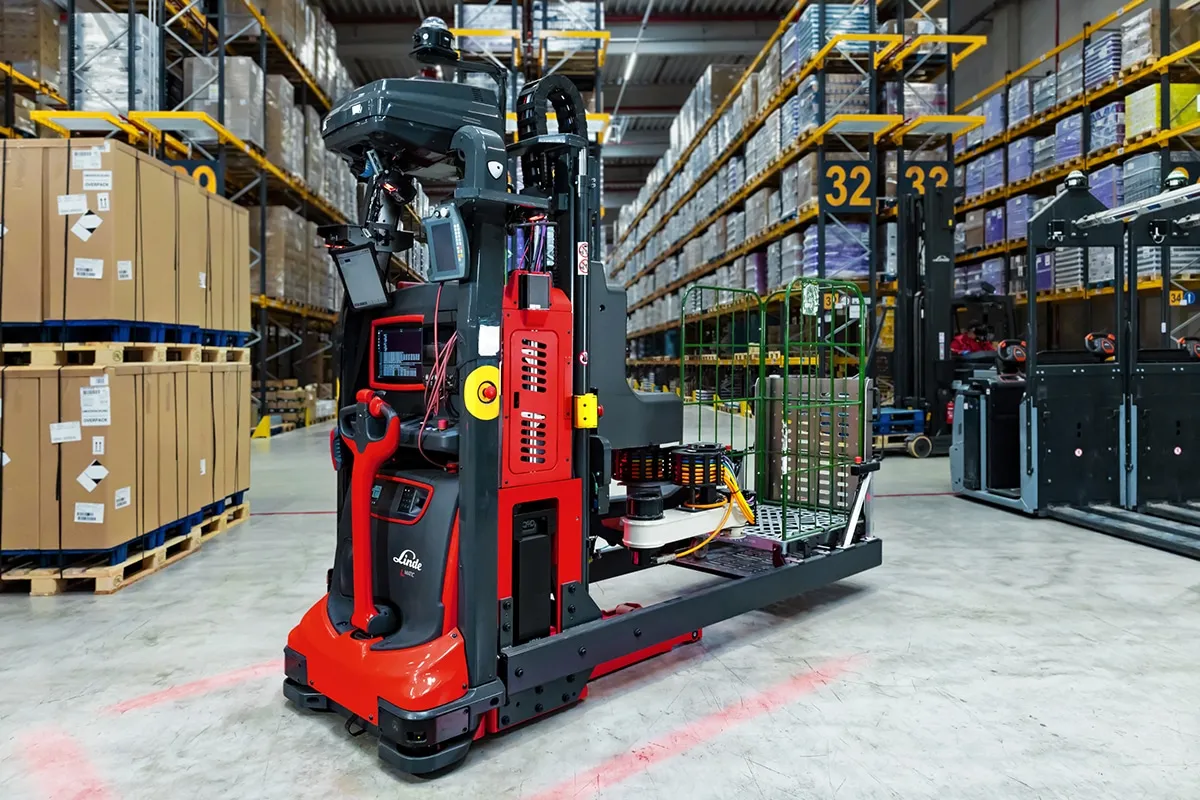
The Linde E-MATIC, the first automated counterbalance forklift truck, stood out in particular. Not because it looks futuristic, but because it can be used in almost any standard application: indoors, outdoors, on loading bays, between racks and on slopes. Automating a forklift truck is technically complex: it requires robust sensors, additional safety layers and advanced navigation. But this is precisely where Linde demonstrates its maturity: a vehicle that is reliable, low-maintenance and future-proof all at once.
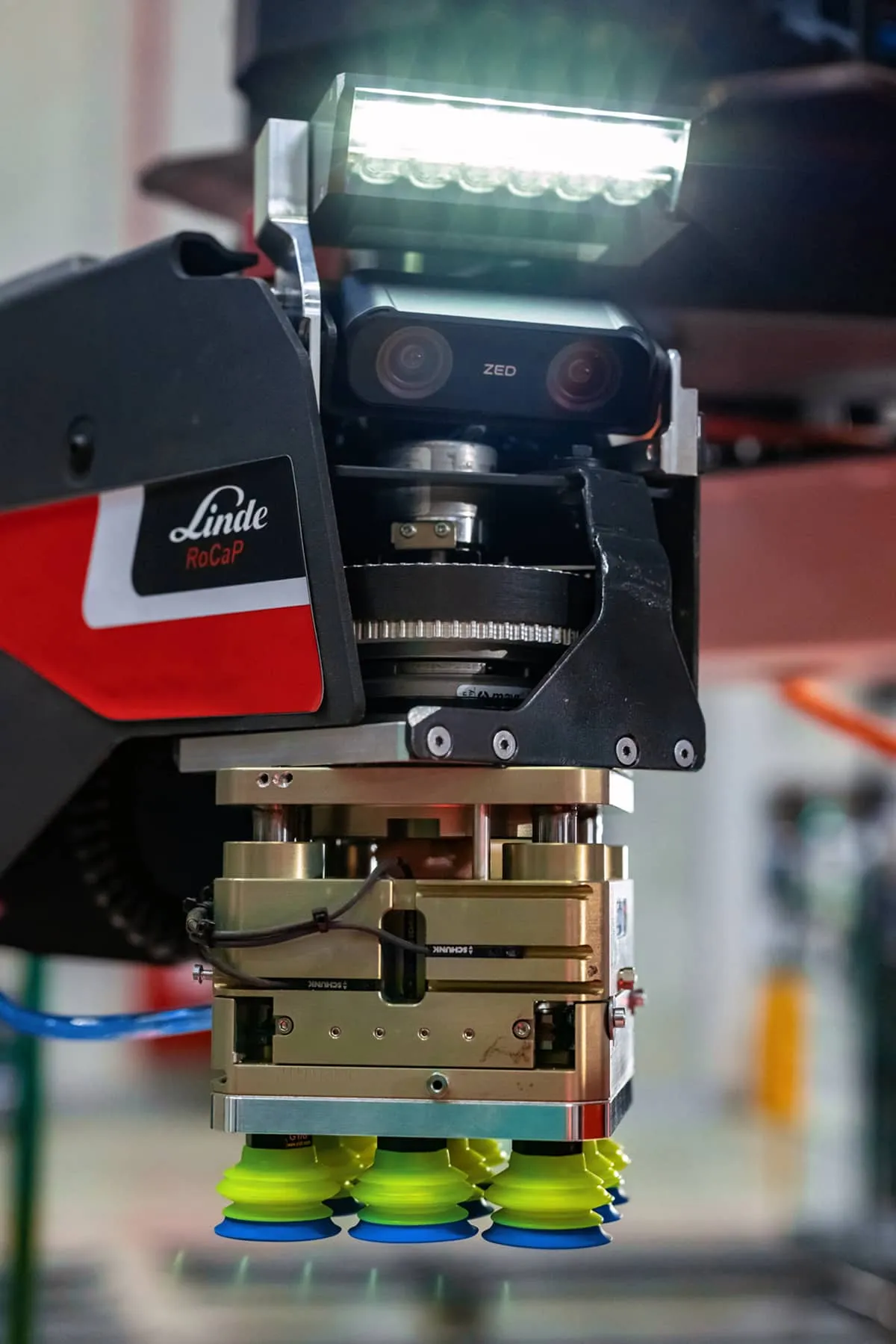
The RoCaP was equally striking. Linde’s robotic case picker was developed in co-creation with drugstore group ROSSMANN. The system combines autonomous navigation with a smart robotic arm that retrieves heavy cases from racks. This is no science fiction, but a direct solution to labour pressures and ergonomic problems. Notably, RoCaP works with existing racks and requires no infrastructure changes. This makes it one of the first robotic picking systems that can be effectively deployed in brownfield sites.
Where the real magic happens: the digital twin
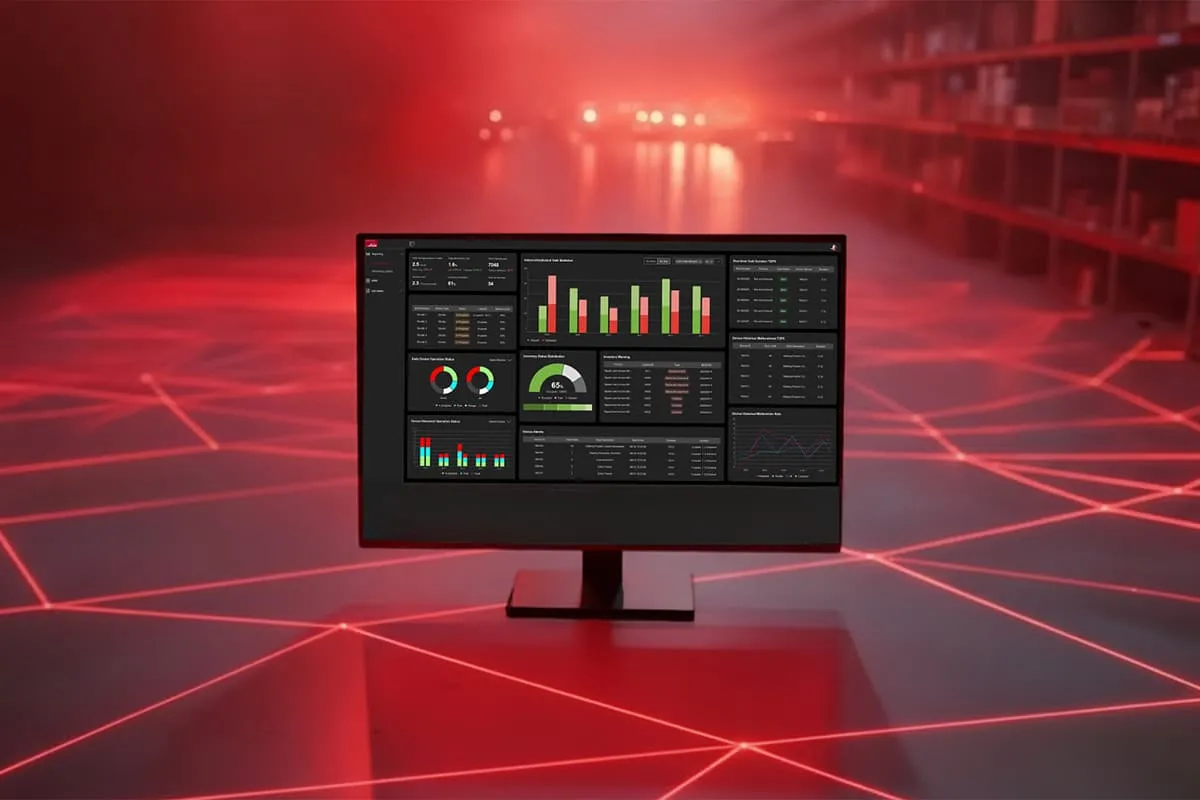
The session by Daan Van Schuylenbergh, Head Of Solution Design Automation Business Unit (Linde), and Piotr Kwiatkowski, Solution Design Engineer Automation Business Unit (Linde), was also a real eye-opener. It became clear that the future of automation does not begin on the warehouse floor, but in a digital replica of it.
Using the portable NavVis VLX 3D scanner, Piotr walked through the Experience Hub. In no time, a crystal-clear, photorealistic digital twin was online. Everything was captured automatically. This makes it possible to simulate every scenario imaginable, including traffic flows, congestion points, picking routes, collision risks, buffer zones, aisle widths, robot density and throughput forecasts, …
The result is a radically shorter design and engineering process. In the past, commissioning was a risky and slow process in which everything had to be tested live. Now, 80% takes place in a virtual environment, completely error-free and safely.
Implementation time is drastically reduced as a result. Errors are detected before they exist. And companies can finally make decisions based on data rather than assumptions.
MEGA is mega!
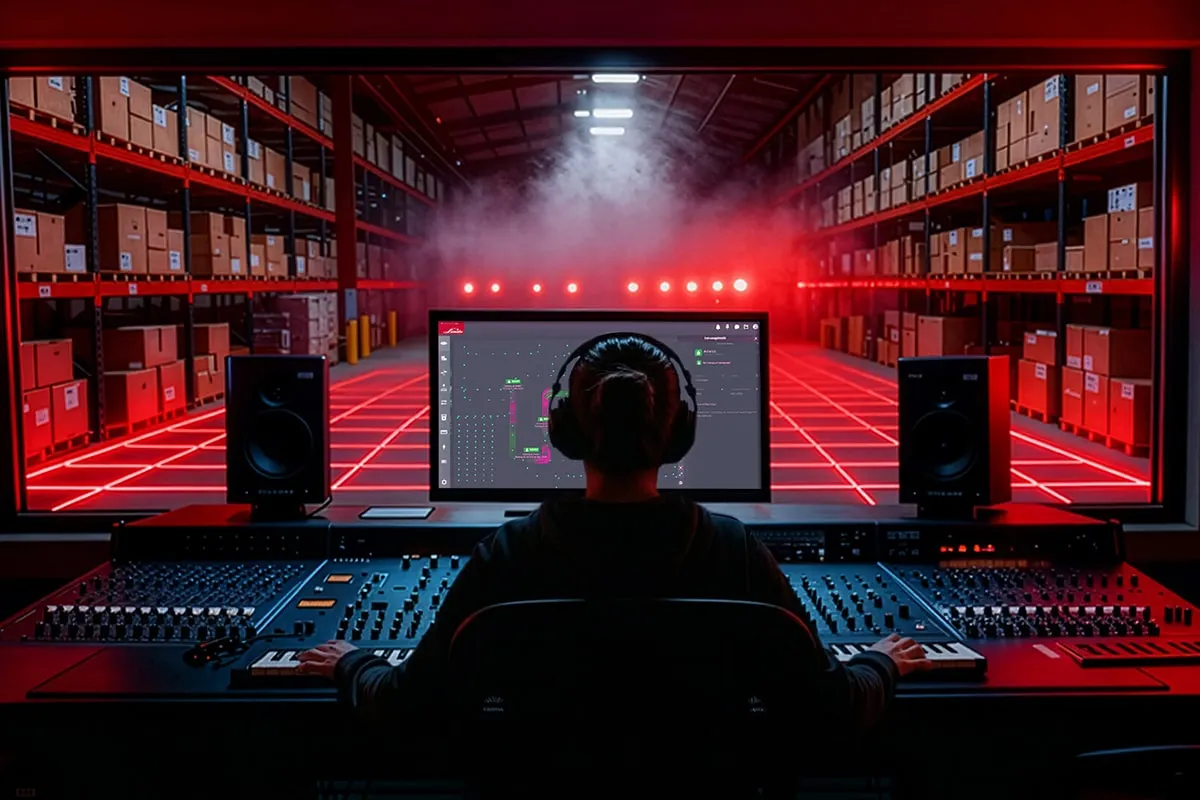
The digital twin does not stand alone, it is at the heart of a much broader transformation. Linde’s parent company, KION Group, has entered into a strategic alliance with Accenture and NVIDIA. Together, they developed MEGA, which stands for Metaverse for Engineering, Guidance & Autonomy. It is not a conventional software platform, but an architectural blueprint for physical AI in intralogistics.
Within MEGA, robots are no longer tested only in the real world. They are trained virtually across thousands of scenarios, ranging from changing order profiles to blocked aisles and atypical human behaviour. NVIDIA Omniverse’s simulation capabilities make it possible to calculate in minutes what used to take weeks, and make ROI estimates and project planning far more reliable.
Crucially, the digital twin remains continuously connected to the real warehouse. Sensors send feedback data to the simulation, which then sends optimised settings back to the physical environment. This creates a closed-loop system that continuously learns, adjusts and grows with changing conditions. The warehouse is no longer a static installation, but a self-learning logistics organism.
MEGA turns automation from a collection of devices into a coherent system architecture, a foundation on which companies can continue to build for decades to come.
The orchestra that makes everything work together
If hardware is the muscle and the digital twin the brain, then software is the conductor. The MATIC:move platform is not only stable and fast, it is also designed for heterogeneous fleets:
- AGVs from different brands,
- AMRs using different protocols,
- Conveyor interfaces,
- Stationary automation,
- WMS and ERP connections.
Where conventional systems are often isolated islands, MATIC:move acts as a hub. A low-code interface allows workflows to be designed visually. For complex operations, there is MATIC:move+, which can handle traffic management and multi-vendor integration.
The key point: automation does not always have to be all or nothing. MATIC:move makes scalable, modular automation possible, perfect for companies looking to grow step by step.
Safety and acceptance as prerequisites for success
One consistent theme at the Summit was the ‘human first’ approach. Although the technology was impressive, there was a strong focus on safety and change management. Luca Borg, Logistics Expert (ROSSMANN), shared how the company involved its employees in its RoCaP journey. Not through major campaigns, but through transparent explanations, live demos, ergonomic benefits, clear safety briefings, direct interaction with the robot, …
The result: employees saw the robot not as a threat, but as a physical aid. Especially because RoCaP consistently takes over the heaviest boxes.
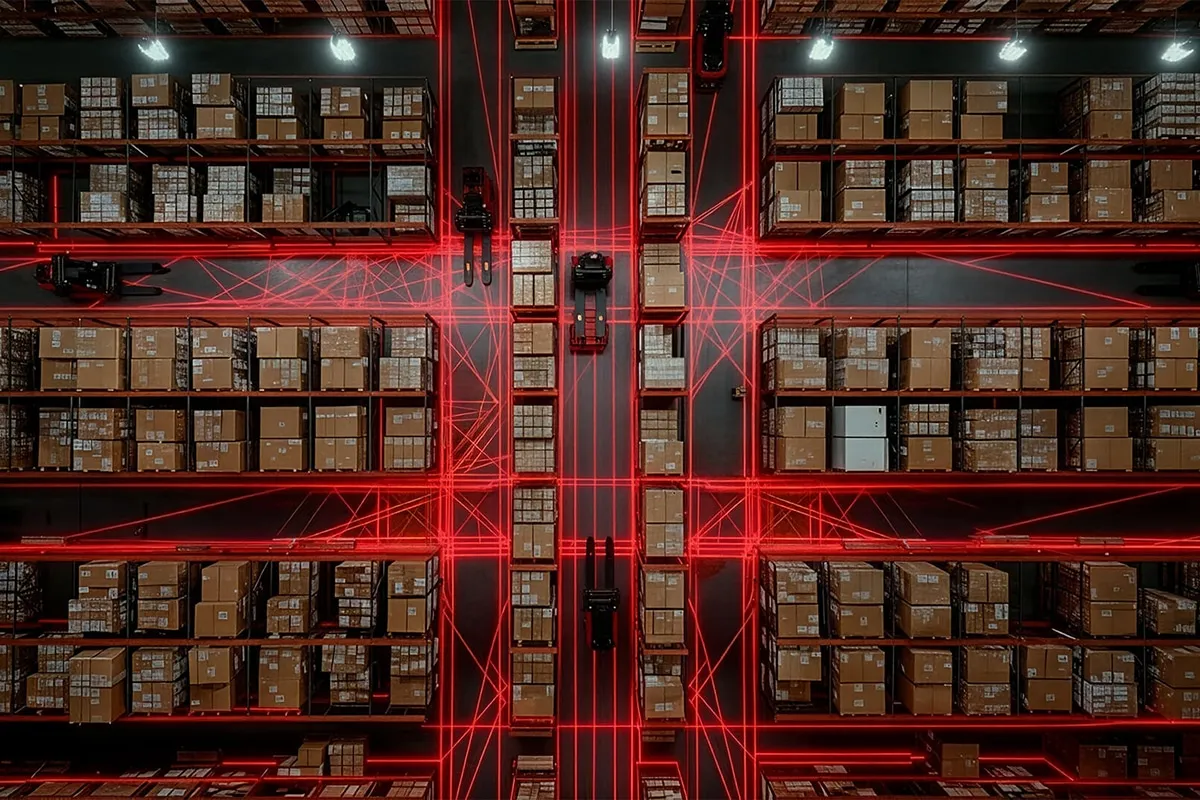
It also became clear that safety is non-negotiable. Linde’s vehicles use multiple sensors, redundant braking systems, clear light signals and safe stop zones. Mixed traffic, the reality in almost every warehouse, was demonstrated live several times.
The acceleration: what we can learn from a global player’s approach
One of the most illuminating contributions at the Summit came from Dr. Oliver Zuchowski, Head of Intralogistics Automation (Bosch), and Matthias Koblitz, Senior Automation Consultant (Bosch). Their presentation made it clear that automation only succeeds when companies think systemically, rather than project by project, guided by a carefully considered set of criteria, standards and partnerships.
They explained how Bosch evolved from ‘automation projects’ to a mature automation framework being rolled out across Europe. No more uncontrolled proliferation of solutions, but predefined selection criteria, a centralised partner catalogue, a clear decision-making model and, above all, radically shorter project lead times.
This approach, known internally as the pit stop methodology, reduces time lost at every stage of a project, from needs analysis to commissioning. Zuchowski emphasised that true scalability only comes when automation is embedded in the organisation. When there is clear governance. When all stakeholders speak the same language. When the technology is standardised without losing the flexibility to optimise locally.
The breakthrough in systems automation
What ultimately stays with you after two days in Aschaffenburg is how automation is gradually taking the shape of a fully fledged business architecture. Companies setting the pace showed that the biggest acceleration comes when technology, processes and organisation are brought together in a coherent framework. The insights on selection criteria, partner catalogues and the pit stop methodology illustrate what mature automation looks like when underpinned by clear governance.
Digital twins and Omniverse technology make it possible to eliminate errors before they arise. Projects become shorter, more predictable and less dependent on trial and error. And solutions such as the case picker or automated forklift truck prove that automation is not reserved for new sites, but can deliver returns in existing infrastructure too, without huge investments.
That is the common thread that made the Summit so compelling: automation is evolving from standalone devices into a scalable, strategic system that continuously learns and grows with the complexity of modern supply chains.
Download the free white paper here: “Automation: Can you afford to invest (or not invest) in it?”
Question about this story? Ask your question
Keep following this
Get an email when a new story is published. No account needed.
- ThemeFrom design to flexible machine
- SubjectServices & solutions







