












How power cables are crucial to the success of global vaccine logistics
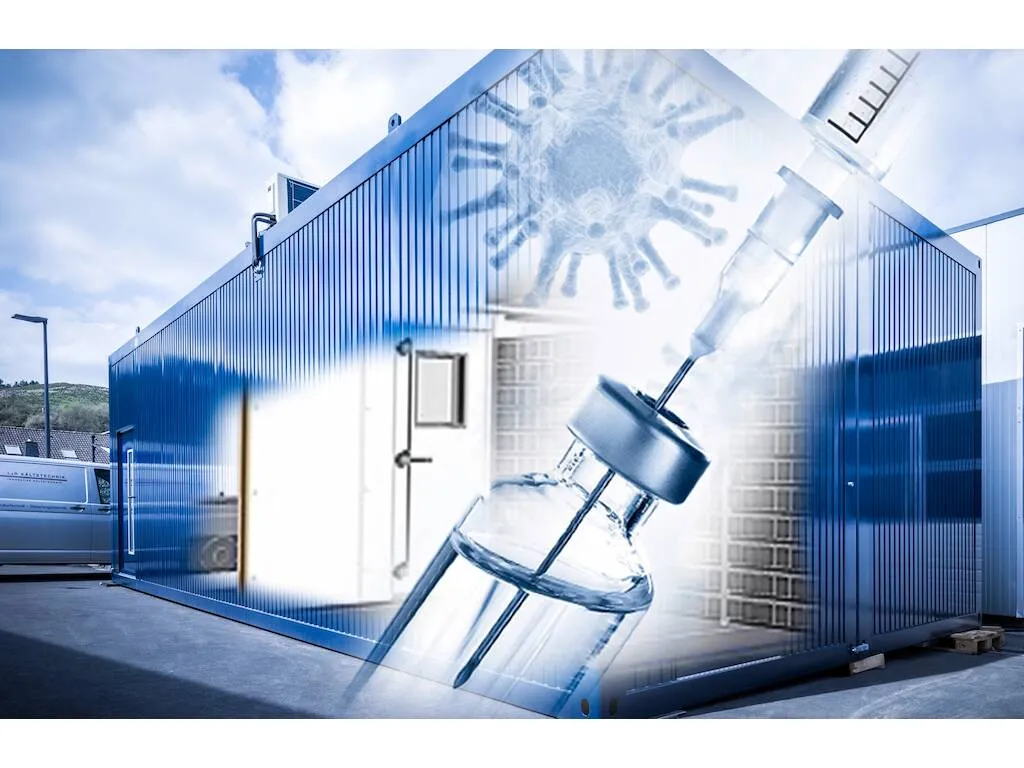
Technical reliability is an absolute prerequisite in pharmaceutical logistics.
With the arrival of Biontech’s first Covid vaccine, however, the required standard was pushed to a whole new level. The main reason was the long-term storage requirement of -70 °C. L&R Kältetechnik met the many technical challenges with converted shipping containers. For the wiring, it opted decisively for LAPP’s advanced cable technology.
For the refrigeration experts at L&R, which has been building stationary cooling systems for 25 years, the challenge of creating a thermally stable transport medium for a vaccine at -70 °C was anything but routine. They had to devise a mobile version of their existing static cold rooms. The solution was to fully integrate a cold room, a liquid nitrogen cooling system and an autonomous emergency power supply inside a single shipping container. Specifically, a standard 40-foot container houses a 40 m³ cold room maintained at a constant temperature of -80 °C, as well as an anteroom at -20 °C that serves as an airlock. This gives each cold room, or shipping container, a useful maximum capacity of 3.5 million doses.
Different temperatures call for the right electrical cabling
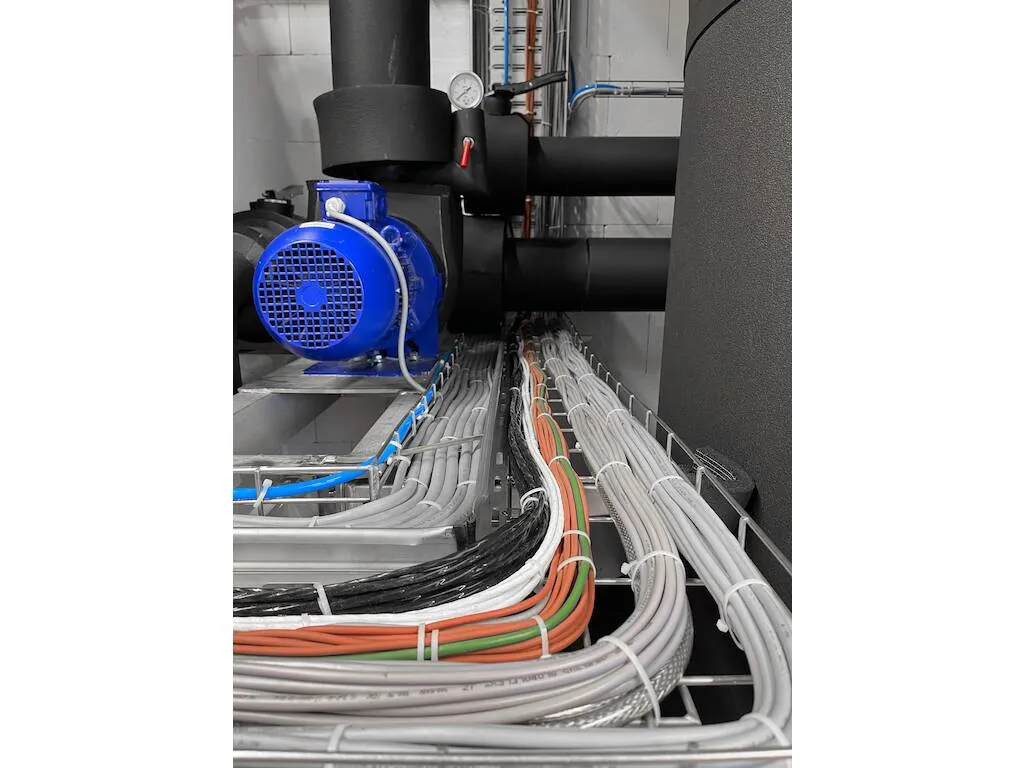
Each container efficiently houses several zones with very different temperatures. As mentioned, the temperature inside the vaccine container itself is a constant -80 °C. However, coolant at -90 °C flows through the refrigeration unit’s evaporator, while the diesel generator housing can quickly reach 100 °C or more. There is also the airlock, where the temperature is -20 °C. Given this range of operating conditions and temperature zones, the electrical cabling must be selected carefully. For example, the two compressors, each rated at 20 kW, are powered by LAPP’s ÖLFLEX Classic 110 power cables, which can easily handle the required continuous current of 40 A. However, minimum temperatures of as low as -100 °C are recorded in parts of the storage area. This is why LAPP’s robust ÖLFLEX HEAT 260 SC cables with a PTFE outer sheath were chosen for this area. This cable type retains its properties at operating temperatures ranging from -190 °C to 260 °C and is suitable for use in the most extreme conditions. The cable is also resistant to chemicals.
Quality and reliability are paramount at critical points
The very cold working environment also meant that the containers required more specialised technology, with LAPP’s cable technology playing a decisive role. For example, some parts of the cold room are heated continuously to ensure reliable, stable operation. LED lighting is a good example: below a certain temperature, the semiconductor material fails, causing the light strips to stop working altogether. Another critical point is the heating fitted to the door frames and door contacts of the airlock doors, which prevents the entrances and exits from freezing shut. Reliable cabling is absolutely essential here, as human lives may be at stake. Another application where cable quality is crucial is the safety circuit with its dead man’s switch, installed in the low-temperature zone. The person inside must press the button at regular intervals, otherwise an alarm is activated
Question about this story? Ask your question
Keep following this
Get an email when a new story is published. No account needed.
- SubjectServices & solutions







