How can you prevent your welding robot from stopping?
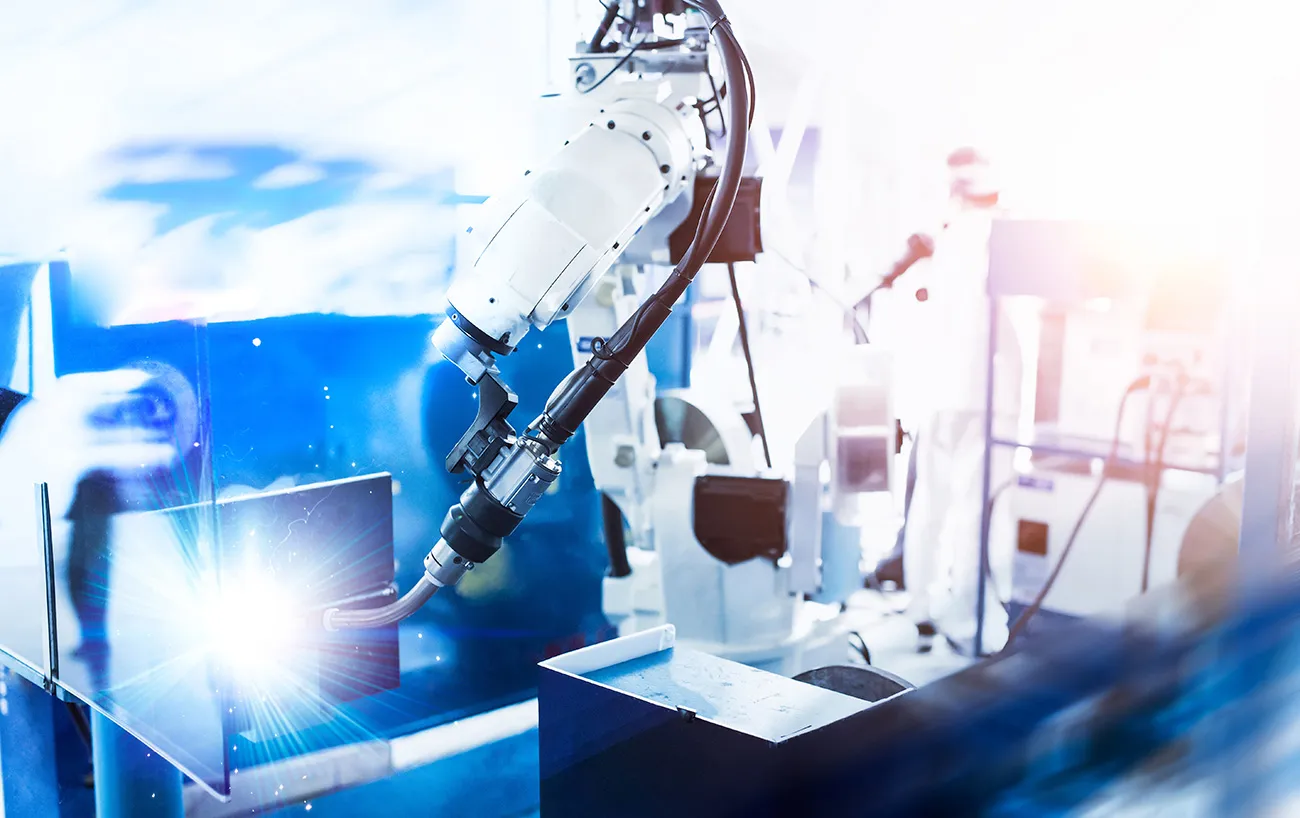
Are you processing high volumes of welding work under pressure from tight deadlines and prices? A welding robot is often the answer. It delivers highly consistent quality in next to no time. But to find out exactly how productive a welding robot is, you need to look at how long and how often it stops. Every second of downtime counts, both for companies with long automated welding lines and for SMEs. Reducing welding robot downtime starts with choosing the right welding torch.
Why do welding robots stop? There can be many reasons, as conditions vary from one company to another. Every welding robot cell in industrial production is an independent system, and faults can occur anywhere. Three golden rules can have a positive impact on your welding robot’s productivity.
Select the right equipment for your welding robot, including the welding torch, wear parts such as nozzles and contact tips, and cable routing. We will look in more detail at choosing a welding torch below. Secondly, ensure the robot is programmed well. The better the robot is programmed, the longer the wear parts will last and the lower the risk of serious damage from a collision. The robot programme is the heartbeat of your welding process, ensuring that everything runs smoothly and accurately. Thirdly, carry out preventive maintenance to keep all components in perfect condition.
Air-cooled or water-cooled welding torch?
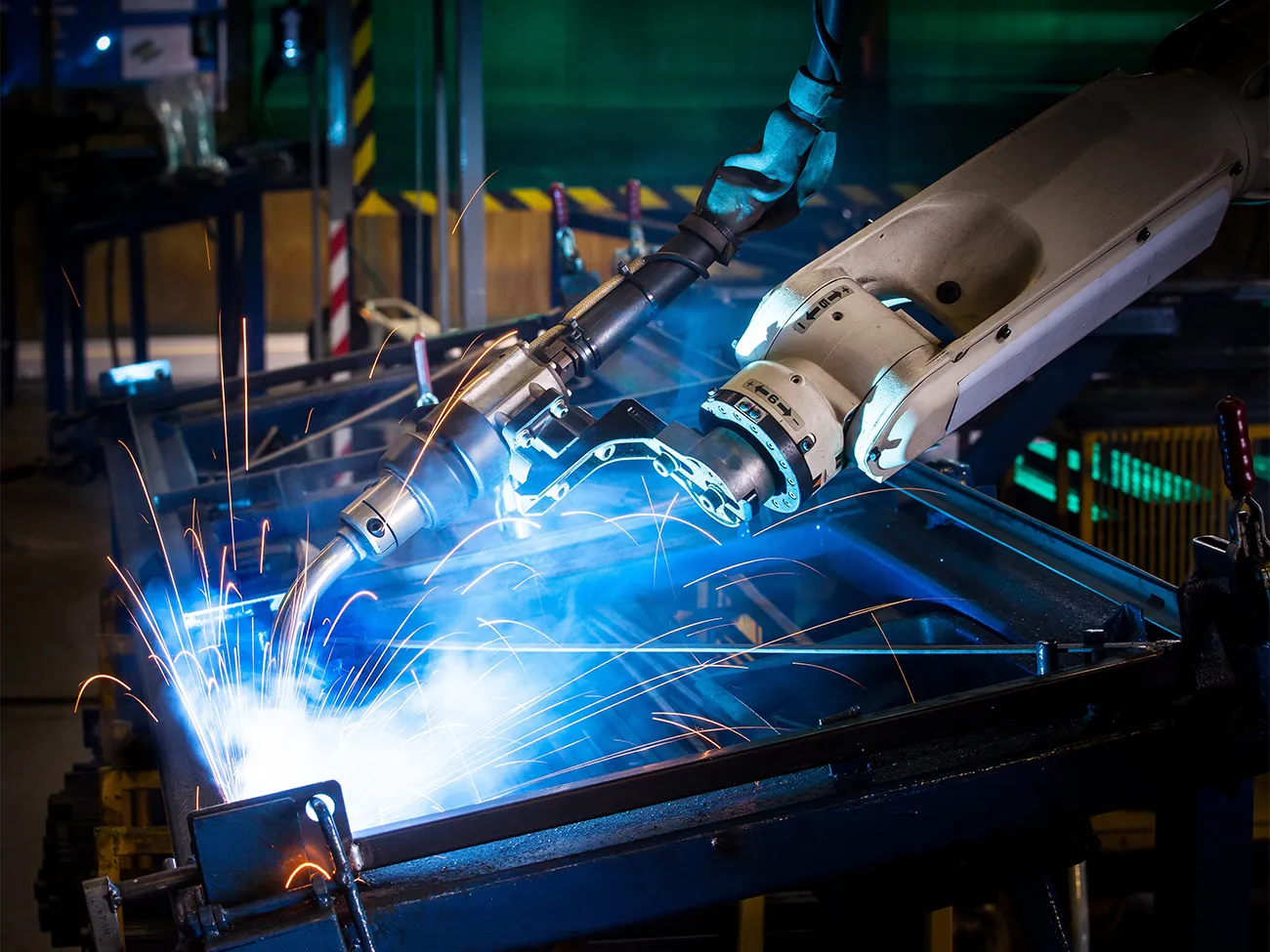
Welding robots are expected to deliver highly consistent quality. Yet they have to do so in harsh conditions. A welding robot’s torch has a particularly tough time in its daily routine: high current, intense heat, weld spatter and even the risk of an occasional crash. The torch therefore needs to be robust, but welding torches on the metalworking market vary considerably.
The first important parameter to consider when choosing a torch is the power of the welding source. Below 300 A, an air-cooled torch will be sufficient. Above 300 A, water cooling is preferable. When the process generates a lot of heat and production cycles are long, the welding robot’s torch needs active cooling to ensure the wear parts last. The slower they wear, the less often they need replacing, and the less often the robot has to stop.
No straight welding torch
The torch geometry must match the welding task. Standard welding torches have bend angles of 22°, 33° or 45°. Straight torches are not suitable. Welding wire has a natural curve as it passes through the torch, because it is usually supplied on spools. This phenomenon is known as pre-dressing. The greater the pre-dressing, the more directly the wire is fed into the contact tip, and the fewer points of contact it has inside the tip. This means a higher current density at each point and therefore greater heat generation. Straight torches make it harder to weld with a large pre-dressing. This refers to diameters of 900 to 1,200 mm. This can be addressed using so-called wire straighteners, a longer contact tip or smaller bores in the contact tip.
Special geometry
Some applications require a specific torch geometry to ensure good access to the workpiece. If the welding robot has to be positioned awkwardly to reach the product being welded, the cables may become twisted or jammed. This will, of course, affect their service life.
Replaceable torch necks
A replaceable torch neck can be a good solution for a welding robot. It can be replaced quickly and easily in the event of maintenance or faults. Maintenance can then be carried out outside the welding robot cell, allowing it to continue welding. The TCP must then be checked using a setting gauge and corrected if necessary, so that it is ready for the next replacement. This can be done manually by the system operator or automatically using torch changing systems.
Question about this story? Ask your question
Keep following this
Get an email when a new story is published. No account needed.
- SubjectServices & solutions