












Functional safety for mobile machinery: an essential approach
Text Parker HannifinImage Parker Hannifin

In the world of mobile machinery, functional safety is not merely an option, but an absolute necessity. Parker Hannifin understands the crucial role safety plays in the design and operation of these machines. The EU Machinery Directive and its associated standards form the foundations on which the company bases its safety strategies. This article provides an overview of the key principles of risk analysis and reliability, with a particular focus on ISO 13849-1.
Compliance with the EU Machinery Directive is vital for machine builders, as it enables them to design systems that meet internationally recognised safety standards. This not only gives customers peace of mind, but also protects manufacturers from legal liability in the event of accidents. For manufacturers operating worldwide, it is essential to maintain consistent design standards. Following ISO-approved standards is considered best practice when designing safe machines. This ensures that machines meet not only legal requirements, but also users’ expectations regarding safety and reliability.
The first step towards safety
The path to compliance with ISO 13849 begins with a thorough risk analysis. Machine designers must clearly define the operational limits of their machines. This means taking into account the environment in which the machine operates and its interaction with the operator and bystanders. Effective risk analysis is crucial for identifying potential hazards and classifying them into five levels, from A to E. Each level represents a different contribution to risk reduction, with higher levels requiring a greater degree of safety.
This classification enables designers to take the appropriate measures to minimise risks. Once the performance level (A to E) has been established, the machine designer can begin designing a system that meets these requirements. This includes selecting the right architecture and calculating the Mean Time to Dangerous Failure (MTTFd) and diagnostic coverage (DCavg). These calculations are essential to ensure that the machine can operate safely within the defined limits.
Functional safety components
Parker Hannifin offers a wide range of components that meet functional safety classifications and have calculated MTTFd values. These components are designed for easy integration into a functionally safe machine. By using these advanced technologies, machine builders can ensure that their designs meet not only legal requirements, but also the highest standards of operational safety.
Support and information
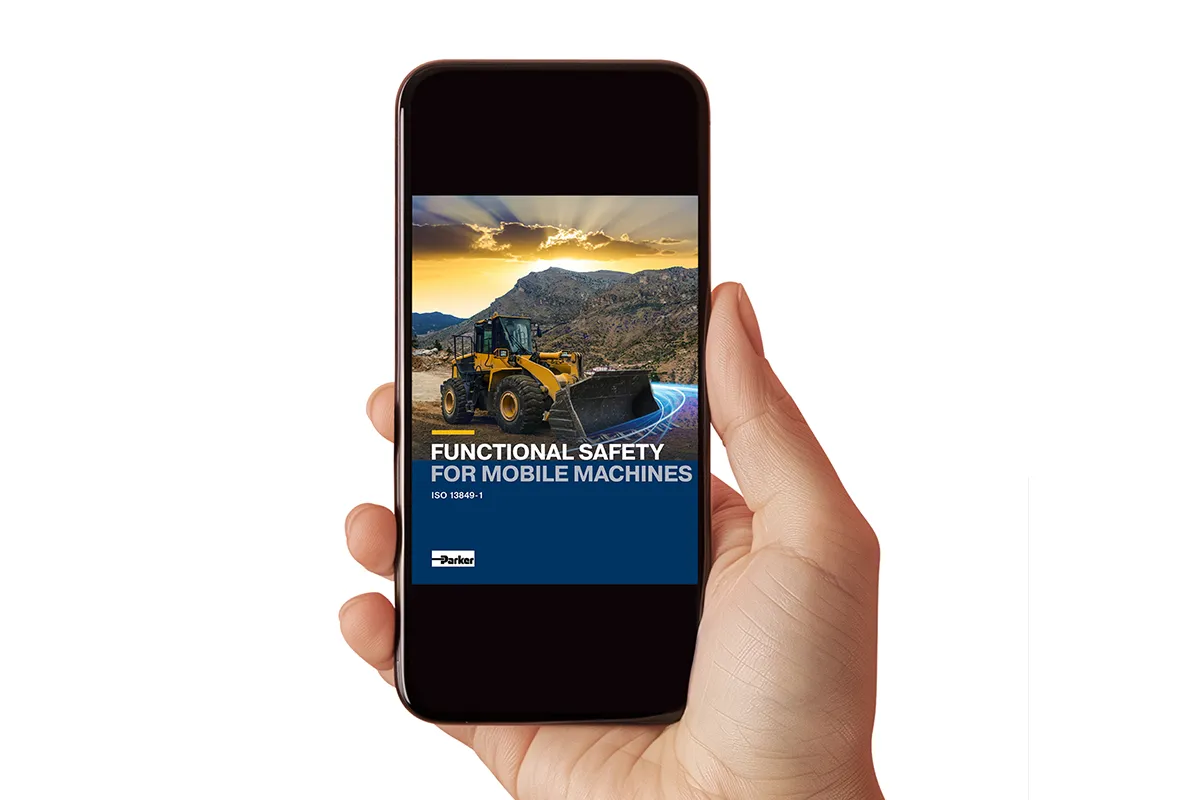
For an in-depth understanding of functional safety and how it can be implemented in designs, we invite you to download our comprehensive white paper. It provides detailed information on the processes, standards and components essential to creating safe mobile machines. By drawing on this knowledge, manufacturers can optimise their designs and ensure the safety of their machines.
Conclusion
Safety is not an option; it is a necessity. At a time when technology is evolving rapidly and customer expectations are rising, it is crucial for manufacturers to commit to functional safety. Parker Hannifin is dedicated to supporting its customers in their efforts to develop safe and reliable mobile machinery. By following the right standards and carrying out thorough risk analyses, we can work together to improve safety across the industry. Download the white paper to discover how Parker Hannifin can support you in ensuring the safety of your machines.
Een zakelijke vraag aan Parker Hannifin Benelux? Get in touch
Companies in this story

Keep following this
Get an email when a new story is published. No account needed.
- ThemeSafe and resilient installations
- SubjectServices & solutions
- CompanyParker Hannifin Benelux







